Quick Answer: What is the best 3 week Egypt itinerary?
The best 3 week Egypt itinerary combines six days exploring Cairo and its surroundings, three days in Aswan, a three-night Nile cruise to Luxor, three days in Luxor, four days on the Red Sea, and a final night in Cairo before departure. This 21-day route covers Egypt’s pyramids, ancient temples, royal tombs, museums, Nile landscapes, and beaches while allowing time for meaningful experiences and comfortable travel.
Three weeks in Egypt changes the way you can experience the country. Instead of rushing between the Pyramids of Giza, Luxor’s temples, and Aswan’s riverside monuments, you have enough time to explore the history behind these places, discover different regions, and enjoy days that are not dominated by airport transfers.
A carefully planned 21-day trip can take you from the monumental architecture of the Old Kingdom to the royal burial grounds of the New Kingdom, then along the Nile to the remarkable temples built during Egypt’s later ancient history.
You can also experience a different side of Egypt: Alexandria’s Mediterranean atmosphere, traditional markets in Cairo, Nubian culture in Aswan, and the coral reefs of the Red Sea.
The key to a successful Egypt 3 week itinerary is choosing the right geographical route. Cairo, Luxor, Aswan, and the Red Sea are separated by considerable distances. Visiting them in a logical sequence reduces unnecessary travel and gives you more time at the attractions you came to see.
This guide provides a complete 21-day Egypt itinerary for 2027, including daily sightseeing plans, transportation choices, Nile cruise arrangements, alternative routes, accommodation advice, estimated budgets, seasonal considerations, and practical planning tips.
The Best 21-Day Egypt Itinerary at a Glance
For most first-time international visitors, the most practical route is:
Cairo → Aswan → Nile Cruise → Luxor → Hurghada → Cairo
This itinerary combines archaeology, culture, local experiences, river cruising, and coastal relaxation without requiring repeated journeys between the same cities.
| Days | Destination | Main experiences |
| 1–3 | Cairo and Giza | Arrival, Pyramids, Grand Egyptian Museum, Saqqara, Dahshur |
| 4–6 | Cairo and surroundings | Historic Cairo, Alexandria, optional Fayoum |
| 7–9 | Aswan | Philae Temple, Abu Simbel, Nubian culture, Nile islands |
| 10–12 | Nile cruise | Sailing north, Kom Ombo Temple, Edfu Temple |
| 13–15 | Luxor | Valley of the Kings, Karnak, Luxor Temple, optional excursions |
| 16–19 | Hurghada and Red Sea | Snorkeling, beaches, diving, relaxation |
| 20–21 | Cairo | Return, flexible sightseeing, international departure |
This plan includes 20 nights and 21 calendar days. The cruise occupies nights 10–12, with disembarkation in Luxor on Day 13.
Why this route works
The itinerary follows Egypt’s geography instead of repeatedly crossing the country.
Cairo and Giza form the northern sightseeing base. Aswan becomes the starting point for the Nile journey. The cruise continues north to Luxor, where travelers can spend additional time exploring ancient Thebes.
Hurghada is then accessible by road from Luxor, making the Red Sea a convenient final destination before returning to Cairo.
The route also gives travelers several opportunities to adjust the pace.
If archaeological sites are your main interest, you can exchange beach days for additional time in Luxor, Middle Egypt, or Cairo. If relaxation matters more, you can shorten the northern excursions and extend your Red Sea stay.
How much can you realistically see in three weeks?
A well-balanced itinerary can include:
- The Great Pyramid of Khufu, the Giza Plateau, and the Great Sphinx.
- The Grand Egyptian Museum and its Tutankhamun collections.
- The Step Pyramid at Saqqara and the pyramids of Dahshur.
- Islamic Cairo, Coptic Cairo, and Khan el-Khalili.
- Alexandria’s Mediterranean waterfront and historic attractions.
- Philae Temple, Abu Simbel, and the Nile islands of Aswan.
- Kom Ombo and Edfu temples during a Nile cruise.
- Karnak Temple, Luxor Temple, and the Valley of the Kings.
- The mortuary temple of Hatshepsut and other West Bank monuments.
- Snorkeling, diving, or beach relaxation beside the Red Sea.
Not every attraction requires a full day. However, some destinations deserve significantly more time than their position on a map might suggest.
The following itinerary distinguishes essential experiences from optional additions, so you can make informed choices without turning every day into a sightseeing marathon.
Week 1: Cairo, Giza, Ancient Pyramids, and Alexandria
Your first week introduces the history, geography, and everyday culture of northern Egypt.
Cairo deserves more than a quick visit to the pyramids. The city brings together ancient Egyptian monuments, medieval Islamic architecture, Coptic Christian heritage, major museums, and neighborhoods shaped by centuries of trade and cultural exchange.
Using Cairo as your first base also allows you to recover from international travel before heading south.
Day 1: Arrive in Cairo and Settle Into Egypt
OVERNIGHT: CAIRO OR GIZA
Arrive at Cairo International Airport or Sphinx International Airport, depending on your flight arrangements.
After immigration, baggage collection, and your airport transfer, check into your hotel and keep the remainder of the day relatively relaxed.
International flights from the United States, Canada, Australia, and some European destinations may involve long connections. Scheduling major sightseeing immediately after arrival creates unnecessary pressure if your flight is delayed.
For your first evening, consider a short walk near your hotel, dinner at a traditional Egyptian restaurant, or a gentle introduction to the Nile.
If staying in central Cairo, a riverside dinner can provide an enjoyable beginning. Travelers staying near Giza might prefer a hotel with pyramid views, particularly if they arrive before sunset.
What to do on your first day:
- Complete airport formalities and meet your transfer.
- Check into your hotel and confirm upcoming arrangements.
- Obtain local currency and set up mobile internet access.
- Enjoy an unhurried Egyptian dinner.
- Rest before your first full sightseeing day.
Try traditional dishes such as koshari, molokhia, or grilled meats. Choose reputable restaurants and bottled or safely filtered drinking water.
Travel tip: If your flight arrives late at night, arrange a direct hotel transfer in advance. Avoid adding a long sightseeing tour before you have had time to rest.
Day 2: Explore the Pyramids of Giza and the Grand Egyptian Museum
OVERNIGHT: CAIRO OR GIZA
Begin with the most recognizable ancient monuments in Egypt: the Pyramids of Giza.
The Giza Necropolis contains three principal royal pyramids associated with the Fourth Dynasty pharaohs Khufu, Khafre, and Menkaure, together with smaller pyramids, tombs, temples, and the Great Sphinx.
Start early to explore the plateau before the busiest part of the day.
A sensible visit includes the Great Pyramid of Khufu, panoramic viewpoints, the smaller royal pyramids, and the Sphinx.
The Great Pyramid was constructed during the Old Kingdom, more than 4,500 years ago. Its surviving architecture makes Giza an essential introduction to ancient Egyptian engineering and kingship.
Entering a pyramid is optional. The interior experience involves enclosed passages and, in places, steep or narrow movement. Travelers with claustrophobia or mobility limitations may prefer exploring the exterior.
After lunch, continue to the Grand Egyptian Museum.
Situated near the Giza Plateau, the Grand Egyptian Museum presents ancient Egyptian civilization through galleries containing monumental statues, royal objects, and archaeological collections.
Its visitor offering includes the Tutankhamun Galleries and the Khufu’s Boats Museum, making it particularly relevant after visiting the pyramids.
Official Ticketing Website+1
A guided Grand Egyptian Museum experience can help connect individual objects with the historical periods and archaeological sites covered throughout your trip.
Suggested schedule:
| Time of day | Experience |
| Early morning | Giza Plateau and the major pyramids |
| Late morning | Great Sphinx and additional viewpoints |
| Midday | Lunch and a short break |
| Afternoon | Grand Egyptian Museum |
| Evening | Return to hotel and dinner |
Allow several hours for the museum alone. Travelers who prefer detailed gallery visits should move some museum time to Day 6 instead of rushing.
Important for 2027: Reserve a suitable museum entry slot in advance and reconfirm the applicable visiting arrangements. The museum operates official online ticketing, and admission arrangements can change.
Day 3: Discover Saqqara, Memphis, and Dahshur
OVERNIGHT: CAIRO OR GIZA
Your third day takes you beyond Giza to explore the development of pyramid architecture.
This is one of the most educational days in the itinerary because the monuments reveal how ancient Egyptian royal tomb construction evolved.
Start at the Saqqara Necropolis, an extensive burial area associated with ancient Memphis.
Its best-known monument is the Step Pyramid of Djoser, attributed to the architect Imhotep during the Third Dynasty.
Unlike the later smooth-sided pyramids at Giza, Djoser’s monument consists of stacked mastaba-like levels.
The surrounding funerary complex introduces travelers to early experiments in monumental stone construction.
Depending on which tombs are accessible during your visit, you may also see beautifully preserved reliefs showing agriculture, fishing, ceremonies, and scenes of daily life.
Continue to Memphis, one of ancient Egypt’s most important administrative and religious centers.
The archaeological area is known for its colossal sculpture of Ramesses II and other surviving monuments. Although far less survives here than at Giza, Memphis helps explain why this region became a center of royal power.
Finish at Dahshur.
The Bent Pyramid and Red Pyramid are associated with Sneferu, the Fourth Dynasty ruler whose building projects preceded Khufu’s Great Pyramid.
The Bent Pyramid is particularly interesting because its changing angle provides visible evidence of the challenges ancient builders encountered while developing large, true pyramids.
The Red Pyramid represents another major achievement in this process.
Why this day matters: Giza shows the mature form of Old Kingdom pyramid construction, while Saqqara and Dahshur help explain the architectural developments that came before it.
Return to Cairo for a relaxed evening.
Day 4: Experience Islamic Cairo and Coptic Cairo
OVERNIGHT: CAIRO
After two days focused primarily on ancient Egypt, explore the city’s later historical layers.
Cairo is not simply a gateway to ancient monuments. Its medieval mosques, historic churches, traditional markets, and religious landmarks are central to understanding the city’s identity.
Begin in Coptic Cairo.
This historic district contains several important Christian sites, including the Hanging Church and the Church of Saints Sergius and Bacchus, commonly known as Abu Serga.
The area also contains the Ben Ezra Synagogue, reflecting the district’s broader religious history.
A knowledgeable guide can explain the differences between the historical traditions associated with these buildings and their documented architectural development.
Next, explore Islamic Cairo.
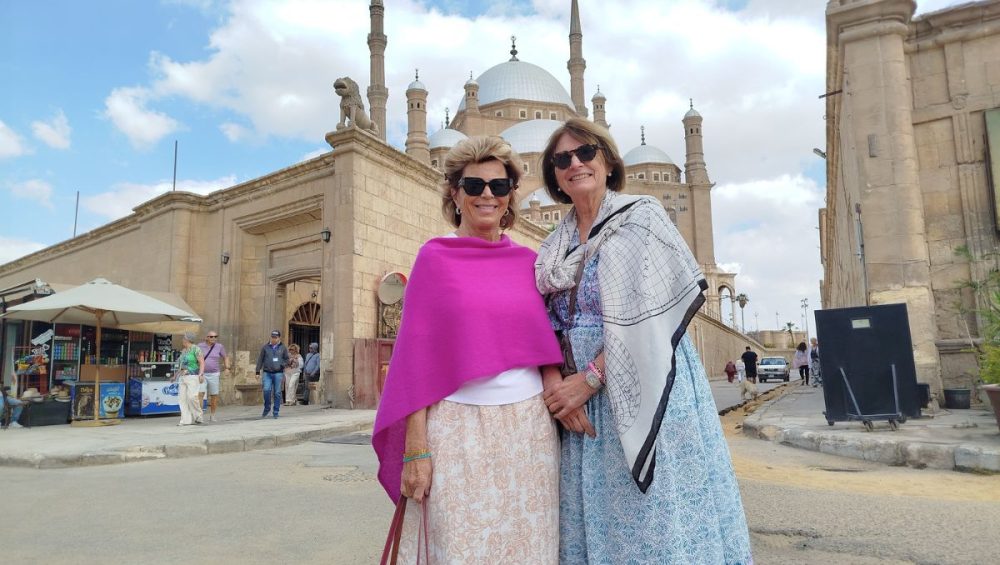
The Citadel of Salah al-Din offers an introduction to medieval Cairo’s political and military history. Within the citadel complex, the Mosque of Muhammad Ali is a prominent nineteenth-century landmark.
Continue toward the historic streets around al-Muizz Street, where Islamic-period architecture includes mosques, religious schools, commercial buildings, and monumental gateways.
A well-organized Islamic and Coptic Cairo day tour can make these geographically separated attractions easier to experience.
End the afternoon at Khan el-Khalili Bazaar.
The market district is known for its crafts, shops, cafés, and lively streets. It is an excellent place to experience Cairo beyond the monuments.
Consider stopping for Egyptian tea or coffee before returning to your hotel.
Travel tip: Dress respectfully when visiting religious sites. Comfortable walking shoes are particularly useful because historic streets can have uneven surfaces.
Day 5: Take a Day Trip to Alexandria
OVERNIGHT: CAIRO
Alexandria offers a different perspective on Egyptian history.
Founded by Alexander the Great in 331 BCE, the city became an important center of the Hellenistic world and later remained a major Mediterranean port under Roman rule.
The atmosphere is noticeably different from Cairo, with coastal promenades, Mediterranean architecture, and archaeological remains that reflect Egypt’s connections with the wider ancient world.
A day trip allows you to see the major highlights without changing hotels.
Begin at the Catacombs of Kom el-Shoqafa, an underground burial complex combining Egyptian, Greek, and Roman artistic influences.
Continue toward Pompey’s Pillar and the remains of the Serapeum, associated with religious life in ancient Alexandria.
Depending on your interests, visit the Citadel of Qaitbay, constructed near the historical site of Alexandria’s famous ancient lighthouse.
The Bibliotheca Alexandrina provides a modern cultural counterpart to the city’s ancient reputation for scholarship.
A thoughtfully planned Alexandria sightseeing tour can combine these attractions with time along the waterfront.
Suggested priorities:
- Catacombs of Kom el-Shoqafa.
- Pompey’s Pillar and Serapeum area.
- Citadel of Qaitbay.
- Bibliotheca Alexandrina.
- A seafood lunch near the Mediterranean.
Alexandria is a long day trip from Cairo, and travel duration varies considerably with traffic.
Start early, choose your most important attractions, and avoid assuming every museum and monument can fit comfortably into one visit.
If Alexandria’s history particularly interests you, consider replacing a later Cairo day with an overnight stay.
Day 6: Enjoy a Flexible Cairo Day or Explore Fayoum Oasis
OVERNIGHT: CAIRO
Day 6 is deliberately flexible.
After visiting Giza, Saqqara, historic Cairo, and Alexandria, you may appreciate a slower day before traveling to Aswan.
The best option depends on your interests and energy level.
Option 1: Spend more time in Cairo
Return to the Grand Egyptian Museum if you did not explore it thoroughly on Day 2.
Alternatively, visit the National Museum of Egyptian Civilization, particularly if you are interested in royal mummies and the long development of Egyptian culture.
The Egyptian Museum in Tahrir Square is another option for travelers who enjoy historic museum collections.
You could also spend time exploring a neighborhood, visiting a traditional café, or enjoying a Nile felucca ride.
Option 2: Take a day trip to Fayoum
Fayoum offers a contrast to Cairo’s urban environment.
Located southwest of the capital, the region contains agricultural landscapes, lakes, desert scenery, and communities known for traditional crafts.
A Fayoum Oasis day tour may include Lake Qarun, Tunis Village, and other accessible natural or cultural attractions, depending on the selected program.
Some excursions venture into desert areas requiring suitable vehicles and local arrangements.
Option 3: Enjoy a complete rest day
If you have traveled internationally with children or prefer a slower pace, staying at your hotel can be a sensible choice.
A three-week trip is long enough that you do not need to fill every day with major attractions.
For most first-time travelers, a relaxed Cairo day is the most useful option before beginning the Upper Egypt portion of the journey.
Week 2: Aswan, Abu Simbel, and the Nile Cruise
The second week brings you into Upper Egypt, where the Nile Valley contains some of the country’s most significant temples, archaeological landscapes, and traditional communities.
Aswan is an excellent place to slow down before continuing north by river.
Unlike Cairo’s densely built metropolitan environment, Aswan is known for its granite formations, river islands, Nubian cultural connections, and remarkable light over the Nile.
Day 7: Fly to Aswan and Visit Philae Temple
OVERNIGHT: ASWAN
Travel from Cairo to Aswan, preferably on a domestic flight that leaves enough time for an afternoon excursion.
After arriving, transfer to your hotel and settle in.
Aswan’s location near Egypt’s southern border gives the city a distinctive historical importance. It served as a gateway for trade and cultural exchange between Egypt and regions farther south.
Begin your exploration with Philae Temple.
Dedicated primarily to the goddess Isis, the temple complex occupies Agilkia Island after being relocated during the international campaign to rescue Nubian monuments threatened by the waters associated with the Aswan High Dam.
The visit normally involves a short boat transfer.
The temple’s columns, carved reliefs, and waterside setting make it one of the most memorable monuments in southern Egypt.
Its surviving structures reflect extensive building activity during the Ptolemaic and Roman periods.
After visiting Philae, return to your hotel.
In the late afternoon, consider a quiet Nile-side walk or a boat ride around the islands.
Recommended pace: Keep the first day in Aswan light. Combining a flight, airport formalities, and several lengthy excursions may be unnecessarily tiring.
If your flight arrives late, move Philae to Day 9.
Day 8: Visit the Temples of Abu Simbel
OVERNIGHT: ASWAN
Abu Simbel is among the most extraordinary archaeological sites in Egypt.
Located south of Aswan near Lake Nasser, the site contains two rock-cut temples associated with Pharaoh Ramesses II.
The larger temple features colossal seated statues of the king at its entrance.
The smaller temple honors Hathor and Queen Nefertari, the royal wife of Ramesses II.
The temples were originally carved into the rock during the nineteenth dynasty. They were subsequently relocated to higher ground during the twentieth century as part of the international campaign to save Nubian monuments from rising waters.
This preservation project is an important part of Abu Simbel’s modern history.
Most travelers reach the site from Aswan by road, with the journey taking several hours in each direction.
A dedicated Abu Simbel temple excursion can simplify transportation and provide historical interpretation.
Plan for an early departure, although the exact departure time should be based on the operator’s arrangements and current access procedures.
What to focus on at Abu Simbel:
- The monumental façade of the Great Temple.
- Statues and reliefs associated with Ramesses II.
- The smaller temple dedicated to Hathor and Nefertari.
- The historical significance of the temples’ relocation.
- The relationship between ancient Nubia, Egyptian power, and the Nile.
The site’s famous solar alignment phenomenon is associated with particular dates in February and October, but those events should not be confused with ordinary visiting conditions throughout the year.
Return to Aswan in the afternoon.
Keep the evening free for rest, especially after the early departure.
Day 9: Discover Nubian Culture and Aswan’s Nile Islands
OVERNIGHT: ASWAN
Spend your third day in Aswan exploring the region’s cultural history and riverside environment.
Begin at the Nubian Museum.
Nubia has a history closely connected with, but distinct from, ancient Egyptian civilization. Nubian kingdoms, languages, artistic traditions, and trading networks played major roles in the Nile Valley over many centuries.
The museum provides valuable historical context before visiting Nubian communities or archaeological sites.
Next, consider the Unfinished Obelisk in Aswan’s ancient granite quarries.
The site reveals aspects of the quarrying techniques used to create monumental stone objects in ancient Egypt.
Because the obelisk remained attached to its bedrock, visitors can see the scale of the intended monument and evidence of the extraction process.
In the afternoon, explore the river.
A private felucca excursion to Kitchener’s Island offers an opportunity to enjoy the Nile and visit the island’s botanical gardens, subject to boat and garden operating arrangements.
Alternatively, arrange a respectful visit to a Nubian village with a local guide.
Look for experiences that allow genuine cultural exchange rather than treating residents’ homes simply as photo opportunities.
Recommended afternoon activities:
- Felucca sailing.
- Botanical gardens.
- Nubian village visit.
- Riverside cafés.
- Local craft markets.
Avoid packing too many excursions into the day.
The quieter rhythm of Aswan is one of the reasons it deserves several nights in a longer Egypt itinerary.
Day 10: Board Your Nile Cruise in Aswan
OVERNIGHT: NILE CRUISE — NIGHT 1
Today begins one of the defining experiences of your 3 week Egypt itinerary: sailing along the Nile between Aswan and Luxor.
A traditional three-night cruise from Aswan to Luxor normally occupies four calendar days, including the day of disembarkation.
However, cruise departure days, sailing schedules, and sightseeing arrangements vary by vessel.
Important: Confirm your cruise departure before booking the hotels and domestic flights around it. The itinerary below is a planning framework, not a guaranteed sailing schedule.
After breakfast, transfer to the cruise vessel and complete the boarding arrangements.
Many cruise programs include sightseeing in Aswan before sailing. Because you have already spent several days here, ask the operator whether any included excursions would duplicate your previous visits.
If the schedule permits, use the afternoon to enjoy the vessel.
Watching the Nile from the sun deck offers a very different perspective from exploring temples by road.
You may see cultivated riverbanks, small settlements, palm groves, and stretches of desert beyond the fertile valley.
The cruise experience also provides a chance to understand how closely the river shaped ancient Egyptian agriculture and transportation.
What to confirm before boarding:
- The exact embarkation and disembarkation locations.
- Which excursions are included.
- Whether entrance tickets are included.
- Meal arrangements and additional charges.
- Guide arrangements and languages.
- Cabin category and accessibility.
- The expected sailing and docking schedule.
A well-designed Aswan-to-Luxor Nile cruise is especially suitable for travelers who want a comfortable combination of cultural sightseeing and river travel.
Enjoy your first evening on board.
Day 11: Explore Kom Ombo and Edfu Temples
OVERNIGHT: NILE CRUISE — NIGHT 2
Today introduces two important temples located along the Nile between Aswan and Luxor.
Your actual visiting order will depend on the cruise’s sailing schedule.
Kom Ombo Temple
Kom Ombo Temple occupies a prominent position overlooking the Nile.
The temple is especially notable for its double dedication to Sobek, the crocodile-associated god, and Haroeris, a form of Horus.
Its architectural arrangement includes paired religious spaces reflecting this dual dedication.
Kom Ombo also contains carved reliefs that provide insight into ancient religious and ceremonial life.
The nearby Crocodile Museum is relevant to the cult of Sobek and the symbolic importance of crocodiles in parts of ancient Egypt.
Edfu Temple
The Temple of Horus at Edfu is among Egypt’s most substantially preserved ancient temples.
Built primarily during the Ptolemaic period, it features a monumental entrance pylon, courtyards, columns, and extensive inscriptions.
The temple was dedicated to Horus, a major deity associated with kingship and represented in several forms, including a falcon.
Its inscriptions and architectural spaces help explain ancient temple rituals and religious traditions.
What makes this cruise day special?
The temples are important individually, but the river journey between them also matters.
For thousands of years, the Nile connected settlements, agricultural lands, religious centers, and administrative regions.
Sailing between these sites helps travelers understand their geographical relationships.
Spend the evening relaxing on board and enjoying views of the river.
Day 12: Sail Toward Luxor and Experience the Nile Valley
OVERNIGHT: NILE CRUISE — NIGHT 3
The next stage of your journey takes you toward Luxor, one of the world’s most important archaeological destinations.
Depending on the ship, the day’s arrangements may include sailing, sightseeing, or visits to attractions near Luxor.
Some cruises organize the major Luxor sites before disembarkation, while others leave certain visits for the final day.
If your cruise includes Karnak Temple, Luxor Temple, or the West Bank, coordinate those visits with the additional days you have planned in Luxor.
There is little value in repeating a major attraction simply because it appears on two separate tour schedules.
Instead, use your extra time for sites not included in the cruise program.
During the sailing, spend time observing the Nile Valley.
The contrast between the green cultivated land and the surrounding desert is especially striking.
Egyptian settlements historically depended upon the Nile’s waters, while the adjacent desert provided locations for cemeteries and funerary monuments.
This geographical relationship becomes particularly important in Luxor, where major temples occupy the East Bank and famous royal burial grounds lie across the river to the west.
Enjoy your final evening aboard the cruise.
Travel tip: Nile cruise schedules can change because of operational conditions, river traffic, docking arrangements, and other factors. Avoid scheduling tightly connected activities immediately after disembarkation.
Week 3: Luxor, the Red Sea, and Your Final Days in Egypt
Your final week combines some of Egypt’s greatest archaeological monuments with several days of relaxation beside the Red Sea.
This balance is particularly valuable after the demanding sightseeing schedule of Cairo, Aswan, and the Nile cruise.
Day 13: Arrive in Luxor and Explore Ancient Thebes
OVERNIGHT: LUXOR
Disembark from your Nile cruise according to the vessel’s confirmed schedule and transfer to your hotel in Luxor.
Known in antiquity as Thebes, Luxor became one of the most important religious and political centers of ancient Egypt, especially during the New Kingdom.
The city occupies both banks of the Nile.
The East Bank contains major temple complexes and modern urban districts, while the West Bank is associated with royal tombs, mortuary temples, and ancient burial landscapes.
If your cruise has already included the main Luxor attractions, consider visiting the Luxor Museum.
The museum presents a carefully selected collection of ancient Egyptian sculptures, artifacts, and objects connected with the history of Thebes.
Alternatively, enjoy a riverside afternoon or explore the city at a gentle pace.
If Karnak and Luxor Temple were not included in your cruise excursions, you can visit one today and reserve the other for Day 15.
Suggested afternoon: Check into your hotel, enjoy lunch, visit one manageable attraction, and spend the evening beside the Nile.
Three nights in Luxor provide valuable flexibility. You will not need to compress all the major monuments into a single exhausting day.
Day 14: Discover the Valley of the Kings and Luxor’s West Bank
OVERNIGHT: LUXOR
Today focuses on the royal burial grounds and mortuary architecture of ancient Thebes.
Begin early at the Valley of the Kings.
Located within the limestone hills of Luxor’s West Bank, the valley contains tombs built for pharaohs and other royal figures of the New Kingdom.
Unlike the massive pyramids associated with earlier royal burials, these tombs were cut into the rock.
Their decorated chambers contain religious texts, images of deities, astronomical representations, and symbolic scenes associated with the king’s journey through the afterlife.
Not every tomb is open at the same time, and some require separate tickets.
Choose tombs based on current access, artistic interest, and the advice of a knowledgeable Egyptologist rather than simply trying to enter as many as possible.
Continue to the Mortuary Temple of Hatshepsut.
Hatshepsut was one of ancient Egypt’s most significant female pharaohs. Her temple at Deir el-Bahari is distinguished by its terraces, colonnades, and dramatic setting against the cliffs.
Its surviving reliefs and architectural design make it one of the major monuments of the Eighteenth Dynasty.
Next, visit the Colossi of Memnon, two monumental seated statues associated with Amenhotep III.
If time and energy permit, consider Medinet Habu, the mortuary temple complex of Ramesses III.
Its reliefs, courtyards, and architectural remains reward travelers who want to explore beyond Luxor’s most frequently visited attractions.
A realistic West Bank schedule:
| Experience | Suggested time |
| Valley of the Kings | 2–3 hours |
| Hatshepsut Temple | 1–1.5 hours |
| Colossi of Memnon | 15–30 minutes |
| Lunch and rest | Flexible |
| Medinet Habu or another selected site | 1–1.5 hours |
These are approximate sightseeing allowances, not official operating times.
In warmer months, reduce midday outdoor sightseeing and prioritize early departures.
Return to Luxor for a relaxed evening.
Day 15: Visit Karnak, Luxor Temple, and More of Ancient Thebes
OVERNIGHT: LUXOR
Dedicate your final full day in Luxor to the magnificent temple complexes of the East Bank.
Start at the Karnak Temple Complex.
Karnak was a major religious center associated especially with Amun-Ra.
Successive Egyptian rulers contributed to the complex over many centuries, creating a vast collection of monumental gateways, obelisks, courtyards, sanctuaries, and ceremonial spaces.
The Great Hypostyle Hall is one of Karnak’s most celebrated architectural features.
Its enormous columns demonstrate the scale of royal temple construction during ancient Egypt’s New Kingdom.
Allow time to appreciate the relationships between the different architectural sections rather than treating the complex as a single building.
Later, visit Luxor Temple.
The temple was closely connected with royal ideology and religious festivals, including the ancient Opet Festival.
Historically, the processional route between Karnak and Luxor Temple formed an important part of Theban religious life.
You can also explore sections of the restored Avenue of Sphinxes linking the two temple areas.
Optional experience: Sunrise hot-air balloon ride
If the weather and operating conditions permit, consider a hot-air balloon ride over Luxor.
A sunrise flight may provide views of the Nile Valley, agricultural fields, desert cliffs, and archaeological landscapes.
Balloon flights are weather-dependent and should be booked through properly authorized operators.
Alternative for serious history enthusiasts
If you have already seen both Karnak and Luxor Temple during your cruise, consider a day excursion to Dendera Temple or Abydos.
These sites contain important religious architecture and decorative reliefs, but a combined excursion can require substantial road travel.
Choose this option only if you are comfortable with another full day of sightseeing.
Day 16: Travel From Luxor to Hurghada
OVERNIGHT: HURGHADA
After nearly two weeks of archaeological sightseeing, travel east toward the Red Sea.
Hurghada is a convenient coastal destination from Luxor, with the journey typically completed by road.
The route crosses desert landscapes before reaching the Red Sea coast.
Arrange transportation through a reputable provider and allow adequate time for the journey, including possible checkpoints and rest stops.
After checking into your hotel, keep the remainder of the day free.
Swim, relax beside the pool, walk along the waterfront, or enjoy dinner at your resort.
The purpose of this day is not to add another list of attractions.
It is to create a genuine break between two very different parts of your Egyptian vacation.
For accommodation, consider which coastal atmosphere suits you:
- Central Hurghada for restaurants, shops, and an active resort environment.
- Sahl Hasheesh for an upscale coastal setting.
- Makadi Bay for a resort-focused stay.
- El Gouna for marinas, restaurants, and a more planned resort environment.
These areas have different transport requirements, so check the precise hotel location before confirming your booking.
Day 17: Enjoy a Red Sea Snorkeling Experience
OVERNIGHT: HURGHADA
The Red Sea offers a completely different experience from the archaeological landscapes of the Nile Valley.
Its marine environment includes coral reefs, reef fish, and a range of underwater habitats.
For many visitors, snorkeling is an excellent way to appreciate the region without requiring scuba diving certification.
Choose a reputable excursion that matches your swimming ability and comfort level.
Some tours involve boat trips with several swimming stops, while certain coastal accommodations provide access to suitable snorkeling areas.
Visibility and sea conditions vary according to weather, location, and season.
Always follow the guide’s safety instructions and use a life jacket when appropriate.
Responsible snorkeling practices:
- Never stand on or touch living coral.
- Avoid chasing, feeding, or handling marine animals.
- Keep a safe distance from boats and other watercraft.
- Use appropriate sun protection.
- Follow all protected-area regulations.
- Do not collect shells, coral, or marine organisms.
Travelers who do not swim confidently can enjoy the beach, a glass-bottom boat experience where available, or a relaxing day at the resort.
The Red Sea portion of the itinerary should be adapted to your interests rather than treated as a mandatory adventure activity.
Day 18: Choose Between Diving, a Boat Trip, or a Beach Day
OVERNIGHT: HURGHADA
Use your second full coastal day to enjoy an experience that suits your travel style.
Option 1: Scuba diving
Certified divers can explore suitable Red Sea dive sites with a licensed dive operator.
The chosen site should match your certification, recent diving experience, and the day’s conditions.
Beginners may be able to arrange a supervised introductory experience, subject to medical screening and the operator’s requirements.
If you are planning to dive, leave the appropriate interval before flying according to the dive agency’s recommendations and your actual dive profile.
Option 2: A boat excursion
A marine excursion can include coastal scenery, swimming opportunities, and time aboard a boat.
Ask about passenger limits, safety equipment, environmental practices, and what is included before booking.
Option 3: Explore Hurghada
Visit local neighborhoods, shops, or waterfront areas.
The city includes both resort districts and established residential communities, giving travelers options beyond the hotel.
Option 4: Take a rest day
After the extensive sightseeing earlier in the trip, spending an entire day at the beach can be one of the most enjoyable decisions.
There is no need to schedule a new excursion every morning.
Day 19: Relax and Enjoy Your Final Full Day on the Red Sea
OVERNIGHT: HURGHADA
Spend your final full day in Hurghada at a comfortable pace.
You might revisit a favorite beach, enjoy a short boat trip, book a spa treatment, or simply relax beside the water.
If traveling as a family, this is an ideal day for children to enjoy the resort’s facilities without another early departure.
Couples may prefer a waterfront dinner, while active travelers can choose a suitable final water-based experience.
If you have been diving, consider keeping this day free of scuba activity before your return flight, depending on your diving schedule and applicable no-fly guidance.
Take some time to organize your luggage and confirm the next day’s transportation.
After several weeks exploring Egypt, the contrast between the Nile Valley and the Red Sea will likely be one of the most memorable features of the trip.
Practical recommendation: Do not add a long desert excursion on your final resort day if it would leave you exhausted before traveling back to Cairo.
Day 20: Return to Cairo for Your Final Night
OVERNIGHT: CAIRO
Travel from Hurghada to Cairo.
Depending on current services, you may be able to choose between a domestic flight and a road transfer.
Flying can reduce the time spent traveling, although airport procedures and transfers must be included in your planning.
Road transportation can be more practical for some families or groups, particularly when traveling with substantial luggage.
After arriving in Cairo, check into your hotel.
Ideally, stay in a location convenient for your departure airport rather than making another complicated journey across the city.
If you arrive early, choose a relaxed final activity.
Possible options include a favorite restaurant, a café, shopping for gifts, or revisiting a neighborhood you particularly enjoyed.
Avoid planning major attractions with strict entry times in case transportation from Hurghada takes longer than expected.
Why return to Cairo one day early?
An additional night before your international departure creates a buffer against transport disruptions, itinerary changes, and delayed connections.
For travelers returning to North America, Australia, or Europe on a long-haul itinerary, this is often preferable to combining a domestic transfer and an international flight on the same day.
Day 21: Depart Egypt
INTERNATIONAL DEPARTURE
Enjoy breakfast at your hotel if your flight schedule allows.
Complete check-out and travel to the airport with sufficient time for traffic, baggage procedures, security, and airline check-in.
The required airport arrival time depends on your airline and destination.
Make sure you have your passport, travel documents, flight information, and any essential medication in your hand luggage.
Your three-week journey has taken you through several distinct sides of Egypt: the pyramids of the Old Kingdom, the cultural heritage of Cairo, the temples of Nubia, the historic cities of the Nile Valley, and the marine environment of the Red Sea.
More importantly, you have had enough time to understand the relationships between these places instead of visiting them as disconnected attractions.
That is the real advantage of spending 21 days in Egypt.
How to Customize Your 3 Week Egypt Itinerary
The route above works especially well for first-time visitors, but three weeks also provide enough flexibility to create a more specialized trip.
The best adjustments depend on what you most want to experience.
Option 1: Three Weeks Focused on Ancient Egyptian History
Travelers with a strong interest in archaeology may prefer to reduce the Red Sea portion and dedicate those days to additional historical sites.
Consider extending your time in Luxor to explore Deir el-Medina, the Ramesseum, the Valley of the Queens, and Medinet Habu.
You might also arrange excursions to Dendera and Abydos, both of which contain important temple complexes.
Another possibility is visiting the archaeological landscapes of Middle Egypt, including sites around Minya, subject to appropriate transport arrangements, current security advice, and access restrictions.
This version is particularly suitable for travelers interested in Egyptian religion, royal history, temple architecture, and archaeology.
Best adjustment: Replace two or three Red Sea days with additional historical excursions, keeping the remaining time for rest.
Option 2: Include Siwa Oasis or the White Desert
Egypt’s Western Desert contains remarkable oasis landscapes and geological formations.
Siwa is known for its distinctive cultural heritage, desert setting, historic settlements, and natural landscapes.
However, Siwa is far from Cairo and requires substantial overland travel.
It is not a convenient day trip or a minor detour between Cairo and Luxor.
A meaningful Siwa extension generally deserves several days, including the long journeys to and from the oasis.
Another option is the White Desert and Bahariya region, where organized excursions may include striking limestone formations, desert camping, and surrounding geological landscapes.
Important safety consideration: Western Desert travel may involve permit requirements, restricted areas, and official travel-advisory warnings. Some areas are subject to advice against all or all but essential travel. Check your government’s current regional guidance, travel insurance conditions, and the legality of any proposed route before booking.
GOV.UK
Do not assume that a tour being advertised means the destination is appropriate or accessible for every nationality.
For travelers prioritizing safety and ease of transport, the main Nile Valley and Red Sea itinerary is a simpler choice.
Option 3: Replace Hurghada With Marsa Alam
Marsa Alam appeals to travelers seeking a quieter Red Sea experience and access to suitable coastal snorkeling and diving areas.
Compared with central Hurghada, some Marsa Alam resorts offer a more secluded atmosphere.
However, the region extends over a considerable coastal distance, and transfer times vary substantially by hotel location.
For a three-week itinerary, Marsa Alam can work particularly well after Luxor, provided that road transfers and your return flight are planned carefully.
Before selecting a resort, check whether you want beach swimming, accessible house reefs, boat excursions, or a quiet hotel environment.
These experiences are not interchangeable, and not every resort provides the same access to the sea.
Travelers interested in the area can explore more about Marsa Alam and its Red Sea attractions.
Option 4: Plan a Family-Friendly 21-Day Egypt Vacation
Traveling around Egypt with children is entirely possible, but a family itinerary benefits from fewer consecutive full-day excursions.
Instead of combining the Giza Plateau and Grand Egyptian Museum on the same day, separate them.
Consider replacing the Alexandria or Fayoum excursion with a relaxing Cairo day.
Choose a Nile cruise with suitable cabin configurations, meal arrangements, and comfortable facilities for children.
In Luxor, prioritize a manageable selection of monuments rather than attempting several large temple complexes in extreme heat.
Finish with additional time at a family-friendly Red Sea resort.
For younger children, four or five nights by the sea can be more enjoyable than additional early-morning historical excursions.
Family planning principle: Keep the essential attractions, but reduce the number of activities per day.
Option 5: Experience Egypt Without a Nile Cruise
A Nile cruise is highly recommended for many travelers, but it is not essential.
You can visit Aswan, Kom Ombo, Edfu, and Luxor using hotels and organized road transfers instead.
This approach may offer more flexibility regarding hotel selection, departure times, and the length of sightseeing visits.
The trade-off is that you will lose the leisurely experience of traveling along the river aboard a vessel.
For travelers who prefer smaller accommodations, consider a dahabiya cruise instead of a conventional larger cruise ship.
Dahabiyas are traditionally styled sailing vessels that may offer a more intimate experience, although actual routes, docking arrangements, duration, and levels of comfort vary.
Always examine the itinerary carefully rather than assuming that every Nile cruise visits the same sites.
What Is the Best Time for a Three-Week Egypt Trip in 2027?
October through April is generally the most comfortable period for a three-week itinerary focused on Cairo, Luxor, Aswan, and outdoor archaeological sightseeing.
However, the ideal month depends on whether you prioritize temples, beaches, lower visitor numbers, or a special event.
| Travel period | Typical conditions | Best suited for |
| January–February | Mild days, potentially cool evenings | Extensive archaeological sightseeing |
| March–April | Generally pleasant to warm, with possible wind or dust | Mixed cultural and coastal itineraries |
| May–June | Increasing heat, especially in Upper Egypt | Early sightseeing and Red Sea stays |
| July–August | Very hot inland, particularly around Luxor and Aswan | Heat-tolerant travelers and special events |
| September–October | Transition toward more comfortable inland conditions | Nile trips and mixed itineraries |
| November–December | Generally favorable sightseeing weather | First-time visits and classic Nile routes |
These descriptions reflect typical seasonal patterns, not precise weather forecasts.
Why winter is popular
Winter is a particularly attractive season for exploring the pyramids, walking around Karnak, and visiting royal tombs.
Daytime conditions are often more comfortable for extended outdoor activities.
However, some evenings can be cool, particularly on the Nile, and popular travel periods may bring higher accommodation demand.
Late December and early January can be especially busy.
Is summer a good time to visit Egypt?
Summer is possible, but a conventional temple-heavy itinerary becomes more demanding.
Luxor and Aswan can experience intense daytime heat.
Plan major outdoor visits early, schedule meaningful midday breaks, and ensure your accommodation has effective air conditioning.
If your travel dates fall in summer, consider increasing the proportion of time spent on the Red Sea.
Special 2027 planning: The total solar eclipse on August 2
One unusual reason to visit Egypt in 2027 is the total solar eclipse taking place on August 2, 2027.
Luxor lies within the path of totality and is expected to experience approximately six minutes and twenty seconds of total eclipse, depending on the exact observation location. Egypt’s National Research Institute of Astronomy and Geophysics has published calculations for the event.
كسوف القرن 2027 – NRIAG+1
This makes Luxor an exceptionally interesting destination for astronomy enthusiasts.
However, an eclipse-focused itinerary requires additional planning.
Accommodation and transportation may be subject to unusually strong demand, so do not rely on normal seasonal booking patterns.
If you want to observe the eclipse, arrange for your itinerary to place you in Luxor or another suitable location within the totality path on August 2.
Do not assume that entry to an archaeological monument, exclusive viewing area, or special permit will be available.
Use appropriate certified solar-viewing equipment for all partial phases, and follow established eclipse-safety guidance.
Most importantly, remember that August is extremely hot in Upper Egypt. Plan the observation around shade, drinking water, medical needs, and realistic outdoor exposure.
How to Travel Around Egypt During Three Weeks
Traveling efficiently is one of the most important aspects of a successful 21-day itinerary.
Egypt offers domestic flights, intercity trains, road transportation, private transfers, and Nile cruises.
The most suitable choice depends on the specific route and your priorities.
| Journey | Recommended method | Planning considerations |
| Cairo Airport to hotel | Prearranged transfer or licensed taxi | Traffic and arrival time |
| Cairo to Alexandria | Private car or train | Day-trip duration and station transfers |
| Cairo to Aswan | Domestic flight | Airport procedures and baggage allowances |
| Aswan to Abu Simbel | Organized road excursion | Long journey and early departure |
| Aswan to Luxor | Nile cruise | Fixed embarkation dates and itinerary |
| Luxor to Hurghada | Private road transfer | Desert-road travel and hotel location |
| Hurghada to Cairo | Domestic flight or road transfer | Available services and onward flights |
Domestic flights
Domestic flights can save substantial travel time on longer routes.
Flying between Cairo and Aswan is particularly helpful when you want to avoid spending a large part of your trip on overnight transportation.
Check baggage allowances carefully, especially if your international ticket and domestic flights are booked separately.
Flights, schedules, and prices should be confirmed for your actual 2027 travel dates.
Egyptian trains
Rail travel can be a useful option between Cairo, Alexandria, Luxor, and Aswan.
Depending on the route, travelers may find conventional seated services and overnight options.
Train categories, booking windows, and availability vary.
Egyptian National Railways provides official ticketing channels, including online and station-based booking arrangements.
Cairo Portal
For travelers with limited mobility or substantial luggage, check accessibility and carriage conditions before choosing rail travel.
A night train may save a hotel night, but it does not necessarily provide the same comfort or rest as a hotel.
Private transportation
Private transfers are especially practical for families, small groups, and travelers wanting predictable arrangements between destinations.
They also allow flexible stops and can reduce the difficulties associated with luggage handling and unfamiliar transportation systems.
However, longer road journeys can still be tiring.
Use properly licensed transport providers and confirm whether the quoted service includes fuel, tolls, parking, waiting time, and driver expenses.
Why a one-way route is better
Avoid repeatedly returning to Cairo between the major southern destinations.
For example, Cairo to Aswan, followed by a Nile cruise to Luxor and a road transfer to Hurghada, is generally more geographically logical than flying back to Cairo after every stop.
Your three-week itinerary should make each long-distance journey serve a clear purpose.
How Much Does a 3 Week Egypt Itinerary Cost in 2027?
The cost of spending three weeks in Egypt depends primarily on accommodation standards, private guiding, transport choices, and the type of Nile cruise you select.
An independent traveler using economical hotels and public transport will have a different budget from a couple booking private Egyptologist guides, premium hotels, and a luxury cruise.
The following figures are broad planning allowances informed by 2026 travel-cost comparisons, not confirmed 2027 package prices.
ILLUSTRATIVE 21-DAY BUDGET — USD PER PERSON, EXCLUDING INTERNATIONAL FLIGHTS
| Travel style | Approximate total | What the budget generally assumes |
| Budget | 1,800–3,000 | Simple accommodation, economical meals, selected guided activities, a value-oriented cruise |
| Comfortable mid-range | 3,200–6,000 | Good hotels, domestic flight, guided sightseeing, standard Nile cruise |
| Luxury | 7,000–16,000+ | Premium accommodation, upscale cruise, private guiding and transfers |
These estimates assume typical two-person room sharing where applicable. Solo travel, holiday dates, high-demand cruise sailings, and premium experiences can significantly change the total.
The figures are intended to establish a preliminary budget before obtaining actual quotes.
What usually costs the most?
Accommodation: Twenty nights of hotels and cruise accommodation represent a major part of your expenditure.
Nile cruise: Cruise prices vary according to vessel category, duration, season, included excursions, and service standards.
Domestic transportation: Flights, private transfers, and long-distance excursions create additional costs.
Entrance tickets: Egypt’s major archaeological sites and museums generally charge admission, with some special tombs, pyramid interiors, or experiences requiring additional tickets.
Professional guiding: A knowledgeable Egyptologist can significantly improve a history-focused itinerary, particularly at large temple complexes.
Costs travelers often forget
Make room in your budget for:
- Tourist visa fees where applicable.
- Travel insurance.
- Optional tomb and pyramid interior tickets.
- Meals not included in your accommodation or cruise.
- Beverages and other cruise extras.
- Tips and gratuities.
- Airport transfers.
- Optional balloon flights and water activities.
- Laundry, mobile data, and incidental purchases.
- Additional baggage charges on domestic flights.
A useful approach is to request a detailed quote that distinguishes included services from optional expenses.
Avoid comparing packages solely by headline price.
One itinerary may include attraction tickets and private guiding, while another charges for those services separately.
Where Should You Stay During a Three-Week Egypt Vacation?
Selecting accommodation in the right neighborhood often matters more than choosing the hotel with the most attractive photographs.
Cairo and Giza
Giza is convenient for travelers interested in the pyramids and the Grand Egyptian Museum.
However, staying near the pyramids may involve longer journeys to central Cairo and historic districts.
Central Cairo, Garden City, and Zamalek can offer more convenient access to parts of the city, depending on your sightseeing plans.
For the first six nights, choose a location based on the activities you expect to do most often.
Aswan
Aswan’s riverside hotels can provide views of the Nile and convenient access to boat excursions.
Accommodation options include central hotels, island properties, and quieter locations outside the busiest areas.
Before booking an island hotel, confirm how luggage and transfers are handled, especially for early Abu Simbel departures.
Luxor
Luxor’s East Bank is convenient for many hotels, restaurants, transport connections, and the city’s principal temple complexes.
West Bank accommodation can suit travelers seeking a quieter village atmosphere and access to the royal necropolis.
Consider how often you will need to cross the river.
Hurghada
For a resort-focused stay, the quality of the beach, swimming access, dining arrangements, and transportation options should guide your selection.
Some hotels offer convenient sandy swimming beaches, while others are better suited to snorkeling from jetties or arranged boat trips.
Read the specific property details rather than assuming every Red Sea hotel offers the same experience.
Essential Travel Advice for Egypt in 2027
Visa and passport requirements
Many travelers visiting Egypt require a tourist visa.
Egypt’s official e-Visa system currently lists numerous eligible nationalities, including passport holders from the United States, United Kingdom, Canada, Australia, and various European countries.
As of November 2026, the official Egyptian e-Visa portal lists a US$30 single-entry tourist visa fee and a six-month passport-validity requirement from arrival. Requirements, fees, and eligibility may change before travel in 2027.
visa2egypt.gov.eg
The visitor must check the conditions applicable to their own passport and travel circumstances.
For a conventional 21-day holiday, verify that your permitted length of stay covers the entire journey, including your departure date.
Do not assume that a short-stay permission applicable to a particular Sinai resort also covers an extended journey through Cairo, Luxor, and Aswan.
Is Egypt safe for a three-week trip?
Many international visitors travel to Egypt’s established tourist destinations, but security considerations vary by region and can change.
Popular sightseeing routes and remote border or desert areas should not be treated as having identical travel conditions.
The United Kingdom’s Foreign, Commonwealth & Development Office maintains specific warnings for parts of Egypt, including North Sinai and certain Western Desert and border areas. Travelers should check their own government’s current advice before departure.
GOV.UK
Use reputable transportation, remain aware of your surroundings, and respect local instructions at archaeological sites and checkpoints.
Travel insurance should cover your intended destinations and activities.
Health and comfort
Long days of sightseeing, strong sunlight, and unfamiliar food can affect your energy.
Drink sufficient safe water and take heat exposure seriously, particularly in Luxor and Aswan.
Carry your regular medication and check any restrictions on bringing medicines into Egypt.
Travelers with health conditions or specific vaccination concerns should consult an appropriate healthcare professional before departure.
If traveling during summer, plan outdoor sightseeing around the cooler parts of the day.
Tickets and attraction access
Purchase tickets through official channels or reputable authorized providers.
Some monuments require additional tickets for particular interior spaces, and access may vary because of conservation work or other operational restrictions.
For the Grand Egyptian Museum, official online reservations involve selecting a date and entry time. The museum’s ticketing procedures should be checked before visiting.
Avoid assuming that a ticket purchased for one attraction automatically includes every nearby monument.
Money, cards, and tipping
Egypt uses the Egyptian pound.
Cards are widely accepted at many larger hotels, restaurants, and established businesses, but smaller transactions may require cash.
Carry a sensible amount of local currency rather than relying entirely on one payment method.
Tipping, often called baksheesh, is a familiar part of many tourism and service settings.
However, amounts depend on the service and circumstances. It is better to understand what is customary and what has already been included than to give money automatically whenever someone requests it.
What should you pack?
For a three-week itinerary, pack for several different environments.
Lightweight clothing is useful for warm sightseeing days, while a warmer layer may be welcome on winter evenings or air-conditioned transport.
Comfortable walking shoes are essential for archaeological sites.
Bring sun protection, a reusable water bottle, swimwear for the Red Sea, and clothing appropriate for visits to religious sites.
A small day bag is helpful for water, essential medication, and personal belongings.
Confirm current rules before bringing professional photography equipment or drones. Such equipment may be subject to restrictions or permit requirements.
Common Mistakes to Avoid on a 21-Day Egypt Trip
Three weeks provide considerable freedom, but poor planning can still create an exhausting itinerary.
Trying to visit every region: Egypt is too geographically diverse to cover thoroughly in 21 days. Choose one major extension beyond the classic Nile route.
Booking the Nile cruise last: Cruise departure patterns can affect your entire schedule. Confirm the cruise before fixing surrounding travel.
Planning long transfers and full sightseeing days together: Travel can be unpredictable. Protect your time at major attractions.
Spending too little time in Luxor: The city contains enough important monuments to justify several days.
Treating Abu Simbel as a short excursion: The road journey from Aswan takes several hours each way.
Ignoring the heat: Summer itineraries need different daily schedules from winter itineraries.
Assuming everything is included: Check tickets, meals, guiding, transfers, and optional experiences individually.
Choosing hotels solely by star rating: Location can have a major impact on transport costs and daily comfort.
Overlooking travel advisories: Remote desert and border regions require particular attention.
Leaving no buffer before the international flight: A final overnight stay near the departure city can reduce connection risk.
The best Egypt itinerary does not necessarily contain the most attractions.
It contains the right experiences in a sequence that allows you to appreciate them.
Frequently Asked Questions About a 3 Week Egypt Itinerary
Is three weeks too long to spend in Egypt?
No. Three weeks is an excellent duration for travelers who want to combine Egypt’s major archaeological destinations with a Nile cruise, cultural experiences, and several relaxing days. A 21-day itinerary also allows more flexibility than a typical one-week or ten-day tour. However, travelers interested exclusively in the most famous historical attractions may prefer a shorter trip.
Can you see all of Egypt in 21 days?
No. Egypt contains far more destinations than can be explored thoroughly in three weeks. A 21-day vacation can cover Cairo, Giza, Aswan, Luxor, and the Red Sea comfortably, but adding multiple distant oases, northern coastal cities, and Sinai destinations will require compromises. It is better to prioritize the experiences that matter most to you.
Should I start my Egypt itinerary in Cairo or Luxor?
Cairo is usually a practical starting point because of its international flight connections and concentration of major attractions. However, travelers arriving through another Egyptian airport may prefer a different route. An open-jaw flight arrangement, arriving in one city and departing from another, can sometimes reduce backtracking.
Is a three-week Egypt itinerary suitable for solo travelers?
Yes. Solo travelers can adapt this route using organized day tours, domestic flights, rail transport, and suitable hotel accommodation. Group excursions may help control costs at remote sites such as Abu Simbel. For a three-week independent journey, prioritize reliable transportation and check accommodation locations carefully.
Can I visit Egypt for three weeks without taking domestic flights?
Yes, but the itinerary will require more time on trains and roads. Rail services connect several important cities along the Nile Valley. The greatest challenge is balancing long-distance travel with adequate rest. Travelers who prefer not to fly may benefit from reducing the number of destinations and spending longer in each region.
How many nights should I spend on a Nile cruise?
A three-night Aswan-to-Luxor cruise can work well within a 21-day itinerary, particularly when you spend additional nights in both cities. Four-night Luxor-to-Aswan cruises are another common option. Longer cruises and dahabiya experiences may suit travelers seeking a slower journey, but routes and included visits should be compared before booking.
Can I combine Egypt’s pyramids and beaches in one trip?
Yes. Three weeks provide enough time to explore the Pyramids of Giza, major temples, and royal tombs before spending several days beside the Red Sea. Hurghada is a practical option after Luxor because it can be reached by road. Marsa Alam and Sharm el-Sheikh may also suit certain itineraries, although their transportation arrangements differ.
Can I visit Siwa Oasis during a three-week Egypt itinerary?
It is possible to include Siwa if you reorganize the itinerary and allocate several days for the journey. However, Siwa is a significant detour from the classic Cairo–Aswan–Luxor route. Travelers must also check regional safety advice, insurance conditions, and any applicable access restrictions before planning a Western Desert extension.
Is Egypt suitable for senior travelers spending 21 days there?
Egypt can be suitable for many older travelers when the itinerary is adapted to individual mobility, health, and comfort requirements. Private transfers, well-located hotels, manageable sightseeing days, and a suitable cruise can reduce physical demands. Some tombs, temples, and archaeological sites involve steps, uneven paths, heat, or restricted access, so accessibility should be checked individually.
How far in advance should I book an Egypt trip for 2027?
Book major arrangements once your dates are reasonably certain, particularly when traveling during popular holiday periods or attending a special event. Secure the Nile cruise and essential flights before organizing less time-sensitive excursions. Travelers interested in the August 2, 2027 total solar eclipse should treat Luxor accommodation and relevant viewing arrangements as especially time-sensitive.
Do I need a private guide for three weeks in Egypt?
A private guide is not essential for every day. However, an experienced Egyptologist can add substantial value at sites such as Giza, Saqqara, Karnak, and the Valley of the Kings. Many travelers benefit from guided archaeological visits combined with independent time in Cairo, Aswan, and the Red Sea.
What is the best three-week itinerary for first-time visitors to Egypt?
For most first-time visitors, the strongest itinerary combines Cairo and Giza, Aswan, a Nile cruise, Luxor, and the Red Sea. This route covers Egypt’s most famous ancient monuments while providing cultural variety and time to rest. Alexandria and Fayoum can be included as optional excursions without substantially changing the main route.
Final Thoughts: How to Make the Most of Three Weeks in Egypt
A well-planned 3 week Egypt itinerary offers the freedom to explore one of the world’s most historically significant destinations without reducing the entire experience to a checklist.
The most rewarding approach is to combine the essential landmarks with time to appreciate each region.
Begin in Cairo, where the pyramids and major museums introduce the remarkable development of ancient Egyptian civilization.
Continue to Aswan, where the Nile, Nubian heritage, and temples provide a different perspective on Egyptian history.
Travel north on a Nile cruise, explore the royal tombs and monumental temples of Luxor, and finish with several relaxing days beside the Red Sea.
The ideal journey should reflect your personal interests, travel dates, and preferred pace.
For a customized 21-day Egypt vacation, Egypt Vacation Tours can help arrange a private itinerary based on your preferred accommodation, sightseeing priorities, Nile cruise arrangements, and transportation needs.
With thoughtful planning, three weeks in Egypt can provide more than an impressive collection of landmarks: it can offer a deeper understanding of the country’s history, landscapes, and living culture.