12 Days Egypt Itinerary

12 Days Egypt Itinerary for 2027: Cairo, Nile Cruise & Luxor

Quick Answer: How should you spend 12 days in Egypt?

The best 12 days Egypt itinerary for first-time visitors combines Cairo and the Giza Pyramids, the Grand Egyptian Museum, Aswan, Abu Simbel, a Nile cruise, and Luxor’s magnificent temples and royal tombs. Spend your first four days exploring Cairo, travel south to Aswan, cruise north toward Luxor, and return to Cairo before departure. This route balances archaeology, culture, scenery, and manageable travel days.

Twelve days in Egypt gives you something that shorter itineraries often cannot: time to explore the country’s greatest archaeological sites without changing hotels every morning.

You can stand beneath the Great Pyramid of Khufu, examine Tutankhamun’s treasures at the Grand Egyptian Museum, visit the remarkable rock-cut temples of Abu Simbel, and sail between ancient settlements along the Nile.

You can also explore the Valley of the Kings, walk among the enormous columns of Karnak Temple, and experience contemporary Egyptian life beyond the monuments.

The challenge is not finding enough places to visit. It is choosing an itinerary that makes geographic sense.

Egypt’s major attractions are spread across several regions. Cairo and Giza occupy the north, Luxor lies farther south, and Aswan and Abu Simbel are deeper into Upper Egypt. Traveling between these destinations requires careful planning, particularly when a Nile cruise operates on fixed departure dates.

This 12-day Egypt travel itinerary focuses on a practical route that works particularly well for international visitors in 2027.

It includes realistic sightseeing priorities, transportation advice, hotel recommendations by area, Nile cruise options, seasonal considerations, and ways to customize the journey without losing valuable vacation time.

12 Days in Egypt Itinerary at a Glance

The following route combines 11 nights of accommodation with 12 calendar days, including arrival and departure.

It begins and ends in Cairo, making it convenient for travelers using round-trip international flights.

DayDestinationMain ExperiencesOvernight
1CairoArrival, airport transfer, easy eveningCairo
2GizaGiza Pyramids, Great Sphinx, Grand Egyptian MuseumCairo
3Saqqara and DahshurStep Pyramid, Red Pyramid, Bent PyramidCairo
4Cairo to AswanHistoric Cairo, evening domestic flightAswan
5Abu Simbel and AswanAbu Simbel Temples, relaxing Nile eveningAswan
6AswanBoard Nile cruise, Philae Temple and Aswan sightsNile cruise
7Nile RiverKom Ombo Temple, Edfu Temple, river sceneryNile cruise
8LuxorValley of the Kings, Hatshepsut TempleNile cruise
9LuxorDisembark, Karnak and Luxor TempleLuxor
10LuxorAdditional archaeological sites or DenderaLuxor
11Luxor to CairoDomestic flight, museum or cultural explorationCairo
12CairoDeparture from Egypt—

Important: This is an illustrative travel sequence, not a confirmed sailing timetable. Some three-night Nile cruises visit Luxor’s East Bank on the third day and the West Bank on the fourth, while others reverse that arrangement. The sightseeing on Days 8 and 9 should be adjusted to the confirmed vessel itinerary.

Why This Is a Good 12-Day Egypt Route

The itinerary follows Egypt’s geography and the natural progression of its history.

You begin with the Old Kingdom pyramids around Cairo and Giza. You then continue to southern Egypt, where temples, Nile landscapes, and Nubian history become increasingly prominent.

After Aswan, the Nile cruise connects the temples of Kom Ombo and Edfu with Luxor, the center of ancient Thebes.

Flying back to Cairo near the end also provides a useful buffer before an international departure.

Rather than attempting Cairo, Alexandria, Luxor, Aswan, Hurghada, and the Western Desert in one exhausting trip, this route concentrates on the experiences that define a first visit to Egypt.

It also creates genuine choices: a deeper archaeological visit, a slower afternoon on the Nile, or an additional attraction that interests you personally.

Detailed 12-Day Egypt Itinerary: Day-by-Day Travel Plan

Day 1: Arrive in Cairo and Settle Into Egypt

Destination: Cairo or Giza | Overnight: Cairo | Pace: Relaxed

Your Egyptian adventure begins at Cairo International Airport, one of the country’s principal international gateways.

After immigration, baggage collection, and customs, transfer to your hotel. Depending on the arrival time and traffic, the journey to central Cairo or Giza may take a substantial part of the afternoon or evening.

For the first night, keep the schedule flexible.

Long-distance visitors from North America and Australia may experience significant jet lag, while travelers from Europe might arrive early enough for dinner and a short walk.

Where Should You Stay on Your First Night?

Choose your hotel based on the next day’s activities.

Giza or the Pyramids area: Useful for travelers who want to visit the Giza Plateau early the following morning. Some hotels offer pyramid views, although the quality of those views varies between rooms.

Downtown Cairo or Garden City: Convenient for museums, restaurants, Nile-side dining, and historic neighborhoods.

Zamalek: A pleasant option for travelers who prefer cafes, restaurants, and a quieter residential setting.

Airport area: Worth considering after a very late arrival, especially if you do not want an additional journey across Cairo.

For this itinerary, Giza or central Cairo generally provides the most convenient base for the first three nights.

What to Do on Your First Evening

If you arrive early enough, enjoy dinner at your hotel or a restaurant overlooking the Nile.

A short evening outing can introduce you to the city’s atmosphere without committing to a demanding sightseeing schedule.

Consider a simple Nile-side walk, a local Egyptian meal, or an early night.

Do not schedule the Pyramids, a major museum, and a long evening excursion on the arrival day unless your flight time genuinely allows it.

Practical advice: Prearranging an airport transfer can reduce confusion after a long flight. Confirm the pickup location, driver contact details, and whether your hotel is in Cairo or Giza.

Day 2: Explore the Giza Pyramids, Great Sphinx and Grand Egyptian Museum

Destination: Giza | Overnight: Cairo | Pace: Full sightseeing day

Today introduces two of Egypt’s most significant attractions: the Giza Pyramid Complex and the Grand Egyptian Museum.

These sites are geographically convenient to combine, but both deserve enough time to explore properly.

Morning: Giza Pyramids and the Great Sphinx

Begin early at the Giza Plateau.

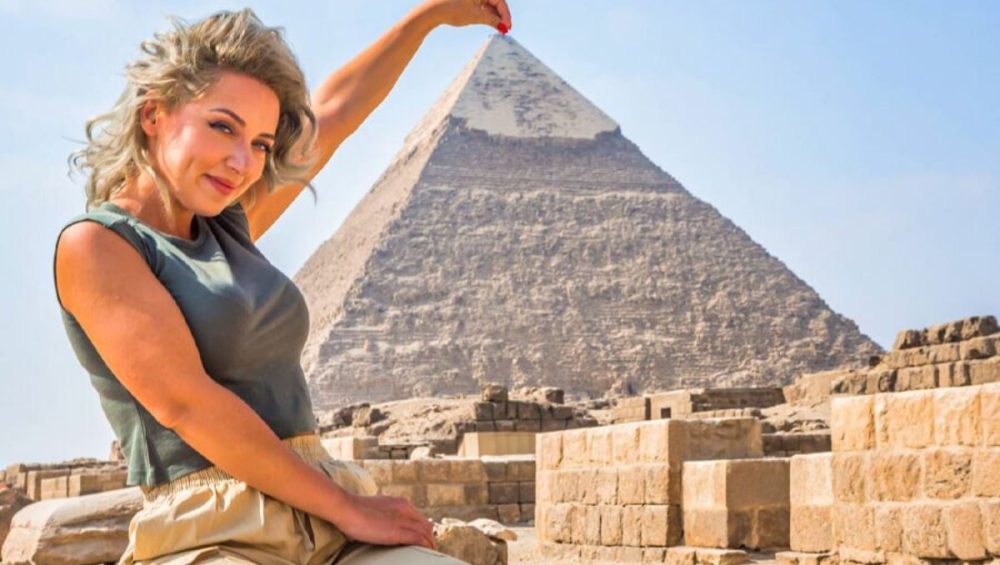
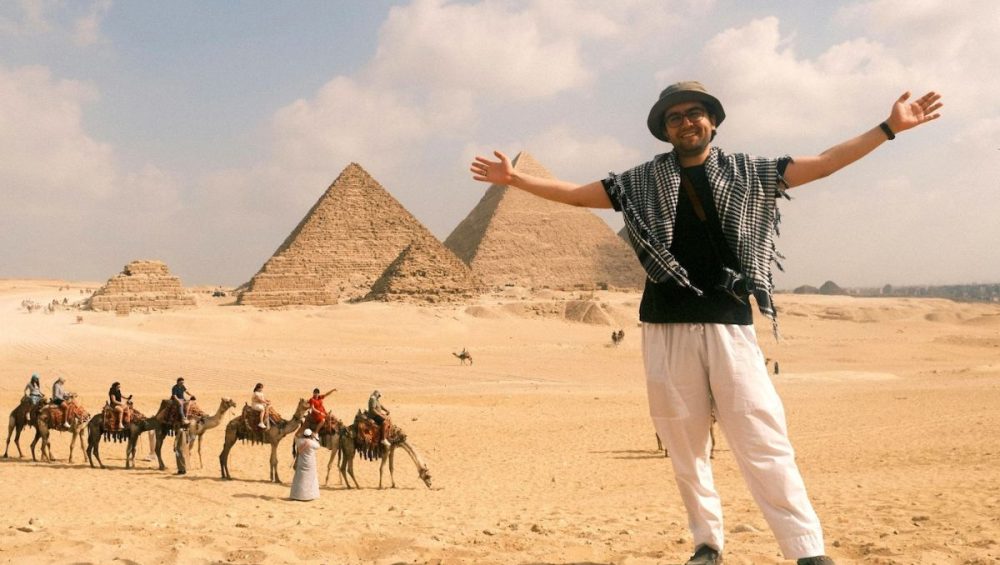
The three principal pyramids were built for Fourth Dynasty pharaohs during Egypt’s Old Kingdom.

The Great Pyramid was constructed for Khufu, while the neighboring pyramids were built for Khafre and Menkaure.

These monuments represent extraordinary achievements in royal tomb architecture, engineering, and ancient Egyptian religious beliefs.

Visit the main pyramid viewpoints and examine the differences between the three monuments.

The Great Sphinx, traditionally associated with Khafre’s pyramid complex, adds another dimension to the site. Its lion’s body and human head embody powerful royal symbolism.

Allow approximately three to four hours for a comfortable visit, including viewpoints and the Sphinx.

Entering a pyramid is an optional additional experience. Interior passages can be narrow, steep, and uncomfortable for visitors with claustrophobia or mobility limitations. Interior admission may also require a separate ticket.

For more historical context, explore the Giza Necropolis and its archaeological significance.

Afternoon: Grand Egyptian Museum

Continue to the Grand Egyptian Museum, located near the Giza Plateau.

The museum provides an excellent opportunity to connect the monuments you have just seen with the people, religious traditions, artistic achievements, and burial practices of ancient Egypt.

Its exhibition spaces include the Tutankhamun Galleries, major collections of ancient Egyptian artifacts, monumental displays, and the Khufu Boats Museum.

The museum’s official ticketing arrangements list access to these important areas, although availability and admission conditions should always be checked for the date of your visit.

Official Ticketing Website+1

Allow at least three hours, and preferably longer if archaeology and museum collections are central interests.

Rather than rushing through every room, concentrate on areas that explain the royal civilization behind the pyramids.

Visitors interested in a guided museum experience can consider the Grand Egyptian Museum VIP tour.

Evening: Relax in Cairo

After a full day of walking, keep the evening uncomplicated.

Enjoy dinner, review photographs, and prepare for tomorrow’s excursion south of Giza.

The strongest part of this day is the connection between the monuments outside and the historical objects inside the museum.

Day 2 priority: Do not sacrifice time at the Giza Pyramids simply to fit another unrelated attraction into the afternoon.

Day 3: Discover Saqqara, Memphis and the Pyramids of Dahshur

Destination: Saqqara and Dahshur | Overnight: Cairo | Pace: Moderate to full

Many travelers visit Giza without realizing that some of Egypt’s most important pyramid history lies farther south.

This day explores the development of royal pyramid construction and reveals why the famous pyramids at Giza were possible.

The archaeological landscape stretching from Giza through Saqqara to Dahshur forms part of the UNESCO-listed Memphis and its Necropolis World Heritage property.

UNESCO World Heritage Centre

Morning: Saqqara and the Step Pyramid of Djoser

Begin at Saqqara, the extensive ancient burial ground associated with Memphis.

The principal attraction is the Step Pyramid of Djoser, built during the Third Dynasty.

Designed under the direction of Imhotep, the monument represents a major development in ancient Egyptian stone architecture.

Unlike the smooth-sided pyramids at Giza, the structure consists of six increasingly smaller levels rising above its funerary complex.

Walk through the surrounding ceremonial architecture, including the remarkable colonnaded entrance.

Depending on available access and your interests, other tombs and decorated burial chambers at Saqqara can provide valuable insight into daily life, religious ceremonies, and funerary beliefs.

The Saqqara Necropolis historical guide offers additional background on this important archaeological area.

Allow approximately two to three hours for Saqqara, particularly if you want to explore more than the main pyramid complex.

Midday: Ancient Memphis

Memphis was an important political and religious center of ancient Egypt.

Although relatively little remains visible compared with the grandeur of Luxor’s temples, the surviving material helps explain the ancient capital’s influence.

A brief visit may include the open-air archaeological area at Mit Rahina, subject to access and the day’s schedule.

This stop is useful for historical context, but it should not take priority over Saqqara if time is limited.

Afternoon: Red Pyramid and Bent Pyramid at Dahshur

Continue to Dahshur, where the architectural evolution of the pyramids becomes especially clear.

Both the Bent Pyramid and the Red Pyramid are associated with Sneferu, a Fourth Dynasty pharaoh and father of Khufu.

The Bent Pyramid is famous for its unusual change in slope, while the Red Pyramid represents an important stage in the development of successful smooth-sided pyramids.

The monuments stand in a comparatively open desert landscape, creating a different atmosphere from Giza.

Visitors comfortable with steep passages may investigate whether entry to the Red Pyramid is available during their visit.

The interior experience is physically demanding and not essential for enjoying the site’s historical importance.

For an organized experience connecting the major pyramid sites, consider the Saqqara, Memphis and Dahshur day tour.

Why Day 3 Matters

Giza becomes more meaningful after seeing the earlier architectural experiments.

The Step Pyramid, Bent Pyramid, Red Pyramid, and Great Pyramid illustrate an important sequence in ancient Egyptian royal tomb development.

These monuments were not isolated achievements. They formed part of an evolving architectural and religious tradition.

Return to Cairo for dinner and an overnight stay.

Day 4: Explore Historic Cairo Before Flying to Aswan

Destination: Cairo to Aswan | Overnight: Aswan | Pace: Moderate with flight

Today offers a change of perspective.

After three days focused mainly on ancient Egypt, explore Cairo’s Islamic or Coptic heritage before traveling south.

Cairo is not simply a gateway to pyramids. Its historic districts reveal medieval architecture, religious traditions, markets, and centuries of urban life.

Because an evening flight is planned, choose a manageable sightseeing route rather than attempting every attraction.

Morning Option: Coptic Cairo

Begin with the historic Christian quarter of Old Cairo.

Important landmarks include the Hanging Church, the Church of Saints Sergius and Bacchus, and nearby religious buildings.

The Coptic Museum is particularly interesting for visitors who want to understand Egyptian Christian art, manuscripts, and cultural history.

If religious heritage is a priority, dedicate the morning to this district rather than combining it with distant monuments.

Alternative: The Egyptian Museum in Tahrir Square

Travelers who prefer ancient history can visit the Egyptian Museum in Tahrir Square instead.

Its historic exhibition halls retain significance within Cairo’s museum landscape, although collections and displays have changed as objects have been transferred to other institutions.

Check the current exhibitions before deciding how much time to allocate.

This alternative is especially appealing to visitors who want a broader museum-focused itinerary.

Afternoon: Islamic Cairo and Khan El Khalili

Depending on your chosen morning activity and flight timing, explore part of Historic Cairo.

Al-Muizz Street contains important buildings from different periods of Cairo’s Islamic history.

The nearby Khan El Khalili district offers traditional shopping streets, cafes, and an atmospheric urban setting.

Explore the history of the Khan El Khalili Bazaar before visiting.

Do not assume that every narrow market street is a souvenir-shopping area. The surrounding neighborhoods contain functioning businesses, religious buildings, and communities.

Be respectful when photographing local residents or visiting places of worship.

Evening: Flight From Cairo to Aswan

Transfer to Cairo International Airport for your domestic flight to Aswan.

The flight itself is relatively short, but the total transfer time must include Cairo traffic, airport procedures, baggage collection, and transport to your hotel in Aswan.

Choose a flight that leaves a reasonable margin after sightseeing.

If suitable evening flights are not available, shorten the Cairo program or adjust the sequence. The itinerary should follow the actual flight schedule rather than requiring a stressful airport connection.

Stay overnight in Aswan, ideally in accommodation that provides convenient access to your next day’s early departure.

Day 5: Abu Simbel Temples and a Relaxing Evening in Aswan

Destination: Abu Simbel and Aswan | Overnight: Aswan | Pace: Early start, relaxed afternoon

Abu Simbel is one of the most memorable experiences on a 12-day Egypt itinerary.

Located south of Aswan near Lake Nasser, the archaeological site contains two monumental rock-cut temples constructed during the reign of Ramses II.

The larger temple is dedicated to major deities and the deified king, while the smaller temple honors Queen Nefertari and the goddess Hathor.

Early Morning: Travel to Abu Simbel

Road excursions generally require several hours in each direction.

Many tours leave Aswan very early to reach the site before the strongest daytime heat.

The exact departure time depends on road arrangements, operating conditions, and the travel provider.

A private vehicle provides useful flexibility, while organized shared excursions may reduce costs.

Ask whether your excursion includes admission, transportation, guide services, and any additional site arrangements.

Exploring the Great Temple of Ramses II

The Great Temple is instantly recognizable by the four colossal seated statues representing Ramses II.

The scale is impressive, but the temple’s historical importance extends beyond its facade.

Its carved interior and religious decoration reflect royal ideology, divine associations, and the political significance of Egypt’s southern frontier.

The smaller temple nearby is particularly notable for the prominent representation of Nefertari.

Give yourself sufficient time to appreciate both buildings rather than treating Abu Simbel as a quick photograph stop.

The Extraordinary Relocation of Abu Simbel

During the construction of the Aswan High Dam and the creation of Lake Nasser, the Abu Simbel temples faced the danger of flooding.

An international preservation campaign helped relocate the monuments to higher ground.

The operation formed part of the wider campaign to safeguard Nubian heritage during the twentieth century.

Today, Abu Simbel and Philae form part of the UNESCO World Heritage property known as the Nubian Monuments from Abu Simbel to Philae.

UNESCO World Heritage Centre

Understanding this conservation history makes the site even more significant.

Afternoon: Return to Aswan

After the excursion, return to Aswan and avoid planning another exhausting day of sightseeing.

If energy permits, visit the Nubian Museum or enjoy a leisurely walk along the Nile.

Alternatively, take a traditional felucca ride in the late afternoon, when conditions allow.

A felucca is a traditional sailing boat that offers a slower perspective on the Nile’s riverbanks and islands.

You could also arrange a private felucca excursion to Kitchener’s Island and the Botanical Gardens, provided the timing works with your arrival back in Aswan.

Spend the night in Aswan.

Important planning distinction: Abu Simbel is not a routine stop on most standard Luxor–Aswan Nile cruises. Confirm whether it is a separate excursion before booking.

Day 6: Visit Philae Temple and Begin Your Nile Cruise

Destination: Aswan | Overnight: Nile cruise | Pace: Moderate

Today marks the transition from hotel-based sightseeing to travel along the Nile.

A three-night Aswan-to-Luxor cruise is a convenient choice for this itinerary because it connects the southern part of Egypt with Luxor.

However, cruise embarkation dates and excursion schedules vary by vessel.

Arrange today’s activities around the confirmed cruise program, particularly if a guided Aswan tour is already included.

Philae Temple: The Sanctuary of Isis

The Temple of Philae is one of Aswan’s most beautiful archaeological attractions.

Its surviving structures are primarily associated with the Ptolemaic and Roman periods, although the religious importance of the site developed over a longer history.

The temple complex is dedicated principally to Isis, an important goddess associated with motherhood, magic, and protection.

Reaching the temple requires a boat journey to Agilkia Island.

That approach is part of the experience.

As the boat crosses the water, columns and temple gateways emerge above the rocky island shoreline.

Like Abu Simbel, Philae was relocated during the Nubian monuments preservation campaign.

For additional information, explore the history of Philae Temple of Isis in Aswan.

Allow time for the boat transfers, temple visit, and return journey.

Additional Aswan Attractions

Depending on your cruise itinerary, you may visit one or more of the following:

Unfinished Obelisk: An ancient granite quarry site showing how monumental stone objects were shaped and worked before transportation.

Aswan High Dam: A major modern engineering project that transformed the Nile’s water management and the surrounding landscape.

Nubian Museum: A valuable cultural institution presenting the history, archaeology, and heritage of Nubia.

Elephantine Island: An island with archaeological remains and distinctive views across the Nile.

Avoid attempting all these attractions in a single short morning.

If your cruise package already includes Philae and the Unfinished Obelisk, let those excursions form the day’s main sightseeing program.

Board Your Nile Cruise

Arrive at the vessel according to its embarkation instructions.

Cruise boats generally provide private cabins, a restaurant, common lounges, and outdoor deck space, although facilities differ considerably between operators.

Some vessels have pools, while smaller boats prioritize quieter, more intimate surroundings.

Check into your cabin, meet the crew, and confirm the sightseeing program.

A particularly useful question is whether your package includes:

  • Archaeological-site tickets.
  • Guided shore excursions.
  • Meals and drinks.
  • Transportation between the ship and temples.
  • Optional activities and gratuities.

This avoids misunderstandings later.

Evening: Life on the Nile

As the boat begins its journey, the scenery changes from Aswan’s rocky landscape to agricultural land, villages, and desert hills.

Depending on the sailing schedule, the vessel may remain docked in Aswan for part of the evening.

Use the time to enjoy dinner and the river atmosphere.

The real attraction of a Nile cruise is not simply transportation. It is the opportunity to experience the river that supported ancient Egyptian civilization.

Day 7: Cruise to Kom Ombo and Edfu Temples

Destination: Nile River, Kom Ombo and Edfu | Overnight: Nile cruise | Pace: Moderate

Today combines two fascinating archaeological sites with time spent traveling along the Nile.

The exact order and visiting hours depend on the boat’s timetable, river conditions, and passage through the Esna Lock.

Kom Ombo Temple: A Remarkable Double Sanctuary

Kom Ombo stands near the Nile and has an unusual symmetrical arrangement.

The surviving temple is primarily associated with the Ptolemaic and Roman periods and was dedicated to two principal divine figures.

Sobek, the crocodile god, was associated with strength, fertility, and protection.

Horus the Elder, often called Haroeris, represented another important aspect of Egyptian religious tradition.

The temple’s paired architectural arrangement reflects these dual dedications.

Look closely at its carved reliefs and inscriptions.

Kom Ombo is particularly interesting because its location beside the Nile helps connect religious life with the natural environment.

The nearby Crocodile Museum may also be included in the excursion.

Travelers interested in both major temples can explore the Kom Ombo and Edfu temple tour.

Edfu Temple: The Temple of Horus

The Temple of Horus at Edfu is one of Egypt’s best-preserved large ancient temple complexes.

Its monumental entrance, broad courtyards, columns, and interior chambers make it especially rewarding for visitors who want to understand ancient temple architecture.

The temple’s surviving structures date largely to the Ptolemaic period.

Its inscriptions and decorative program provide important information about religious ceremonies and the mythology associated with Horus.

Spend time observing the transition from the enormous entrance pylon to the more enclosed interior spaces.

Ancient Egyptian temples were designed around a progression from public ceremonial areas toward increasingly sacred rooms.

At Edfu, this arrangement remains particularly clear.

Cruising Through Upper Egypt

Between excursions, watch the landscape from the ship’s deck.

Palm groves, agricultural fields, villages, and occasional desert escarpments reveal the close relationship between the Nile and settlement.

The fertile land frequently forms a narrow corridor between the river and the surrounding desert.

This geographic relationship helped shape Egypt’s economy and civilization for thousands of years.

Today’s schedule may also include passage through the Esna Lock.

Lock transit and waiting times vary, so avoid scheduling independent excursions that depend on a precise arrival time.

Evening on Board

Return to the ship for dinner and a relaxing evening.

Some cruise vessels organize cultural entertainment, while others provide a quieter atmosphere.

Enjoy the experience according to your preferences rather than feeling obliged to attend every organized activity.

Day 7 priority: The experience should combine archaeology with the pleasure of river travel. Do not treat the time between temples as wasted time.

Day 8: Explore Luxor’s West Bank and the Valley of the Kings

Destination: Luxor | Overnight: Nile cruise | Pace: Full sightseeing day

Luxor contains some of Egypt’s most important surviving archaeological landscapes.

The ancient city of Thebes developed into a major political and religious center, especially during the New Kingdom.

On the Nile’s western bank, royal tombs and mortuary temples reflect ancient Egyptian beliefs about death, kingship, and the afterlife.

The area forms part of the UNESCO-listed Ancient Thebes with its Necropolis World Heritage property.

UNESCO World Heritage Convention

For this example itinerary, Day 8 focuses on the West Bank. Your actual ship may instead schedule these visits on Day 9.

Valley of the Kings

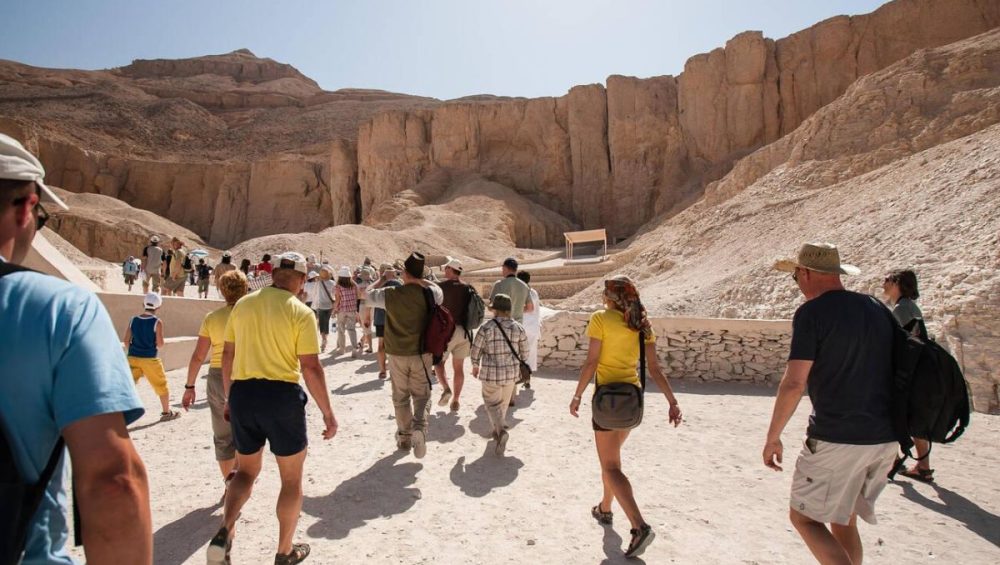
Begin with the Valley of the Kings, the royal burial ground associated with many New Kingdom pharaohs.

The valley contains elaborately decorated tombs cut into the limestone hills.

Their wall paintings, texts, and symbolic scenes were intended to assist the deceased ruler in the journey through the afterlife.

Among the famous individuals associated with this burial ground are Tutankhamun, Seti I, and several kings named Ramses.

Not every tomb is accessible at all times, and different admission arrangements may apply to selected tombs.

Check the available tombs before buying additional tickets.

It is usually better to explore a smaller number of tombs carefully than to rush through every available interior.

The wall decoration, astronomical symbolism, and religious texts differ substantially between tombs.

A knowledgeable guide can explain these differences and help you recognize details that may otherwise be overlooked.

Temple of Hatshepsut at Deir El Bahari

Continue to the mortuary temple of Hatshepsut.

Hatshepsut ruled during the Eighteenth Dynasty and is one of ancient Egypt’s best-known female pharaohs.

Her temple is notable for its terraces and colonnades arranged against the dramatic cliffs of Deir El Bahari.

The architecture creates a striking relationship between the constructed monument and the natural landscape.

The site also provides an opportunity to discuss Hatshepsut’s reign, royal legitimacy, trade expeditions, and religious imagery.

Try to visit during the cooler part of the day because shade can be limited.

Colossi of Memnon

Stop at the Colossi of Memnon, two enormous seated statues originally associated with the mortuary temple of Amenhotep III.

Much of the surrounding temple complex has been lost or remains under archaeological investigation, but the statues continue to dominate the landscape.

They illustrate the monumental ambitions of the New Kingdom.

The site is usually a shorter stop than the Valley of the Kings or Hatshepsut Temple.

Optional: Medinet Habu

If your schedule allows additional exploration, consider Medinet Habu.

This impressive mortuary temple complex is associated with Ramses III and contains important reliefs and monumental architecture.

It can be particularly rewarding for travelers who want a less compressed Luxor experience.

However, the excursion should be scheduled only if your cruise’s arrival and departure arrangements allow it.

Return to Your Cruise

After sightseeing, return to the vessel for your final cruise night.

Avoid organizing an independent evening activity until you know exactly where the boat will be docked.

Some cruise moorings lie outside the most walkable central areas of Luxor.

Day 9: Discover Karnak Temple and Luxor Temple

Destination: Luxor East Bank | Overnight: Luxor hotel | Pace: Moderate

Today focuses on the ceremonial heart of ancient Thebes.

After disembarking from the cruise, transfer to your Luxor hotel or arrange baggage storage while sightseeing.

If your cruise includes Karnak and Luxor Temple on the previous afternoon, use today for additional West Bank attractions or a more relaxed exploration of the city.

Karnak Temple Complex

Karnak is one of the most important religious complexes of ancient Egypt.

Its buildings were expanded and modified across many centuries by successive rulers.

The complex is particularly associated with the worship of Amun-Ra, alongside other major divine figures of the Theban religious tradition.

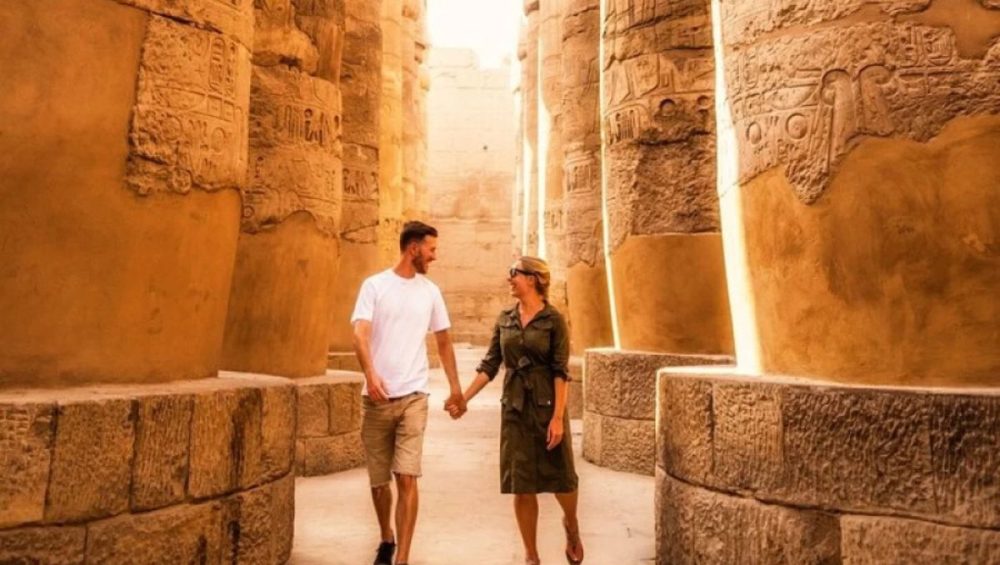
The Great Hypostyle Hall is one of its most recognizable architectural features.

Enormous columns rise above visitors, their surfaces decorated with inscriptions and reliefs.

Walking through the hall makes it easier to appreciate the scale of New Kingdom monumental construction.

Other notable features include obelisks, ceremonial courts, gateways, and the Sacred Lake.

Karnak deserves at least two hours for a useful introduction, and longer for visitors interested in architectural detail.

A guided visit can add considerable value by explaining the complex’s different construction phases.

The Karnak Temple and Luxor Temple day trip is a relevant option for organizing both locations efficiently.

Luxor Temple

Luxor Temple stands closer to the center of the modern city.

Its surviving structures are associated with several rulers, including Amenhotep III and Ramses II.

The temple was connected with major religious festivals, especially the Opet Festival, during which divine images traveled ceremonially between Karnak and Luxor.

The Avenue of Sphinxes formed an important processional connection between the two complexes.

Luxor Temple also reflects later historical periods, including Roman and Islamic activity.

This layering of history makes the site especially interesting.

If available and appropriate to your schedule, visiting around late afternoon or evening can offer a different atmosphere from daytime sightseeing.

Afternoon and Evening in Luxor

After the temples, check into your hotel and enjoy some free time.

Luxor’s East Bank offers restaurants, shops, Nile views, and practical access to many hotels.

Consider a peaceful evening beside the river rather than another extensive excursion.

You will have a full day tomorrow to explore additional attractions.

Day 10: Explore More of Luxor or Visit Dendera Temple

Destination: Luxor or Dendera | Overnight: Luxor | Pace: Flexible

The tenth day is deliberately flexible.

This is one of the biggest advantages of choosing 12 days in Egypt instead of a shorter itinerary.

You can now spend more time on a personal interest without sacrificing the major attractions already visited.

There are three particularly worthwhile approaches.

Option 1: Visit Dendera Temple Complex

Dendera is located north of Luxor, near Qena.

Its principal attraction is the Temple of Hathor, one of Egypt’s most impressive surviving temple buildings.

Hathor was an important goddess associated with music, joy, motherhood, and other religious concepts.

The temple is particularly famous for its astronomical decoration, elaborate columns, and richly carved ceilings.

Its surviving architecture dates mainly to the Ptolemaic and Roman periods.

A trip to Dendera works well for travelers who have developed a particular interest in temple art and religious symbolism.

The journey requires a substantial road excursion, so it is best arranged as a dedicated outing rather than squeezed between unrelated activities.

The Dendera and Abydos day tour from Luxor provides a possible framework for visiting these sites, although combining both creates a longer day than visiting Dendera alone.

Option 2: Explore Luxor’s West Bank in Greater Depth

If your earlier visit covered the Valley of the Kings and Hatshepsut Temple, use today for additional archaeological sites.

Consider the Valley of the Queens, the Ramesseum, Medinet Habu, or selected tombs of nobles.

These locations offer different perspectives on ancient Egyptian society.

Royal tombs emphasize kingship and afterlife beliefs, while other burial sites preserve scenes of work, agriculture, family life, and religious practice.

This option is especially worthwhile for archaeology enthusiasts who want to move beyond the best-known monuments.

It also provides more flexibility than a long intercity road trip.

Option 3: A Slower Luxor Day

For families, senior travelers, or visitors who have experienced several demanding sightseeing days, a slower day may be the better choice.

Spend additional time beside the Nile, visit the Luxor Museum if open, explore local markets, or enjoy a comfortable meal.

A sunset felucca ride can be a memorable way to appreciate the landscape without another early morning departure.

A hot-air balloon excursion is sometimes offered over Luxor’s West Bank, but weather, operator standards, flight permissions, insurance, and safety requirements must be evaluated carefully before booking.

It should not be treated as a guaranteed activity or an essential part of the trip.

Which Option Is Best?

Choose Dendera if you particularly enjoy elaborate temple decoration.

Choose additional West Bank sites if ancient Egyptian archaeology is your strongest interest.

Choose the relaxed day if you want a balanced vacation rather than a continuous sightseeing marathon.

Twelve days should provide room to enjoy Egypt, not simply travel through it.

Day 11: Return to Cairo for Final Sightseeing

Destination: Luxor to Cairo | Overnight: Cairo | Pace: Flexible travel day

Today, take a domestic flight from Luxor back to Cairo.

Returning one day before your international departure is particularly useful for reducing the risk associated with separate flight tickets and possible travel disruptions.

Choose an appropriate departure time based on how much of the day you want to spend in Cairo.

Option 1: The Egyptian Museum in Tahrir Square

If you did not visit the museum on Day 4, today offers another opportunity.

Focus on the collections currently displayed and choose galleries that complement the archaeological sites visited during your journey.

After seeing the original locations of royal temples and tombs, museum objects often acquire additional meaning.

Option 2: Historic Cairo

You may instead explore the Salah El Din Citadel, the Mosque of Muhammad Ali, or selected areas of Islamic Cairo.

A visit to Al-Muizz Street and its historic monuments can reveal another side of the city’s architectural history.

For a more relaxed afternoon, enjoy a traditional cafe or return to a neighborhood you particularly liked earlier in the trip.

Option 3: An Easy Final Day

If your domestic flight arrives late, travel directly to your hotel.

Enjoy dinner, prepare luggage, and avoid unnecessary journeys across Cairo.

An uncomplicated final evening can be more valuable than one extra attraction, especially before a long international flight.

Where to Stay on Your Last Night

If your departure flight is early, consider an airport hotel.

If the flight is later in the day, central Cairo may provide a more enjoyable final evening.

Check transfer times and luggage arrangements before deciding.

Day 12: Depart Cairo With a Complete Egyptian Experience

Destination: Cairo International Airport | Overnight: None | Pace: Departure

Your final day depends on your international flight time.

Allow adequate time for the transfer to Cairo International Airport, check-in, baggage procedures, and security.

Do not plan a major archaeological excursion immediately before departure.

If your flight leaves late in the evening, there may be time for a relaxed breakfast, a short neighborhood walk, or some final shopping.

However, remember that Cairo traffic can be unpredictable.

Keep important documents, medication, and travel essentials accessible.

A carefully planned 12-day Egypt itinerary should leave you with memories of the country’s monuments and landscapes rather than the frustration of constant transfers.

By following this route, you will have explored the ancient pyramid fields, visited world-class museums, traveled to Egypt’s southern monuments, sailed part of the Nile, and experienced the temples and royal tombs of Luxor.

What Makes This 12-Day Egypt Itinerary Different?

The greatest advantage of this itinerary is the relationship between geography, historical context, and travel pace.

Rather than organizing attractions as an unconnected checklist, the route follows three major regions.

Cairo and Giza: Understanding the Old Kingdom

The first section introduces pyramid construction, the early development of Egyptian royal power, and some of the most important archaeological landscapes in the country.

Giza, Saqqara, and Dahshur explain how pyramid architecture evolved.

The Grand Egyptian Museum provides a broader view of ancient Egyptian history and material culture.

Historic Cairo then adds a perspective extending far beyond the pharaonic period.

Aswan and Nubia: Egypt’s Southern Heritage

Aswan introduces a different landscape and cultural setting.

Here, the Nile passes between rocky islands and desert terrain.

Philae reveals the continuing importance of Egyptian religious traditions during the Ptolemaic and Roman periods.

Abu Simbel reflects Ramses II’s monumental building program and the historical importance of the southern frontier.

Nubian history, modern conservation efforts, and the Aswan High Dam add further layers to the experience.

Luxor: Royal Tombs and Monumental Temples

Luxor reveals another important period of Egyptian civilization.

The Valley of the Kings and major temple complexes are closely associated with New Kingdom rulers and religious institutions.

Karnak and Luxor Temple illustrate the monumental architecture of ancient Thebes, while the West Bank provides insight into royal funerary beliefs.

Connecting these locations by Nile cruise gives the journey a geographic continuity that flying directly between every city would not provide.

Where Should You Stay During 12 Days in Egypt?

Choosing the right hotel location can save valuable time.

The most expensive accommodation is not automatically the most practical. A comfortable hotel with reliable transportation can be a better choice than a luxury property far from your planned activities.

DestinationRecommended AreaBest For
Cairo/GizaPyramids areaEarly Giza sightseeing and pyramid views
CairoDowntown or Garden CityMuseums, Nile dining, central sightseeing
CairoZamalekRestaurants, cafes, relaxed neighborhood atmosphere
AswanNile CornicheRiver views and convenient city access
AswanCentral riverfront hotelSightseeing and boat excursions
LuxorEast BankRestaurants, hotels, Karnak and Luxor Temple
LuxorWest BankQuieter atmosphere and archaeological surroundings
Cairo, final nightAirport areaEarly international departures

Cairo Hotels: Giza or Downtown?

Stay near Giza if the pyramids are a major priority and you want convenient access for an early visit.

Stay in central Cairo if restaurants, museums, and historic neighborhoods matter more.

For a three-night stay, changing hotels within Cairo is usually unnecessary.

Choose one convenient base and arrange transportation according to the day’s route.

Aswan Hotels: River Views or Central Convenience?

Aswan’s riverfront properties can offer beautiful views and a calmer atmosphere than central Cairo.

However, hotel location is important when arranging early Abu Simbel departures or transfers to your cruise.

Some hotels are situated on islands and require additional boat transfers.

These can be wonderful places to stay, but transport arrangements should be considered before booking.

Luxor Hotels: East Bank or West Bank?

The East Bank is generally more convenient for travelers who want easy access to restaurants, shops, and major hotels.

The West Bank can offer a quieter atmosphere closer to agricultural landscapes and archaeological areas.

For this itinerary, a comfortable East Bank hotel is a practical choice after disembarking from the cruise.

Travelers seeking a more peaceful environment may prefer the West Bank, provided their transportation arrangements are reliable.

What Hotel Category Should You Choose?

Budget accommodation can work well for travelers who prioritize sightseeing and are comfortable with simpler facilities.

Mid-range hotels often provide a useful balance of comfort, location, and price.

Luxury hotels may offer spacious rooms, Nile views, additional restaurants, and greater service levels.

Whichever category you choose, review recent property-specific feedback, room conditions, air-conditioning, accessibility, and transfer arrangements.

Do not rely on star ratings alone.

Nile Cruise or Land Travel: Which Is Better for a 12-Day Egypt Itinerary?

A Nile cruise is one of the most enjoyable ways to travel between Aswan and Luxor, but it is not the only option.

The best choice depends on your available dates, mobility, budget, and preferred travel style.

Three-Night Nile Cruise From Aswan to Luxor

A three-night sailing is a good fit for the main itinerary.

It generally includes important stops associated with Aswan, Kom Ombo, Edfu, and Luxor.

However, the schedule can be relatively busy because the vessel must cover the journey within a shorter period.

This option suits travelers who want the Nile experience while reserving additional days for sightseeing or relaxation elsewhere.

Four-Night Nile Cruise From Luxor to Aswan

Four-night cruises commonly operate in the opposite direction, from Luxor to Aswan.

This arrangement can provide an additional night aboard and may offer a more relaxed program.

It is particularly suitable for travelers who prefer to begin Upper Egypt sightseeing in Luxor.

The direction and number of nights do not guarantee identical excursions across cruise operators.

Check exactly which temples are included, when they are visited, and whether sightseeing occurs before or after embarkation.

Egypt Vacation Tours also lists a Nile cruise from Luxor to Aswan for travelers exploring this alternative direction.

Dahabiya Nile Cruise

A dahabiya is a smaller traditional-style sailing vessel offering a more intimate experience than a large hotel ship.

These cruises often appeal to couples, photographers, and travelers seeking a quieter atmosphere.

Some dahabiyas have smaller passenger groups and access to different mooring locations.

However, departures and itineraries may be less frequent, and the experience may require a larger budget.

A dedicated dahabiya Nile cruise from Esna to Aswan is another itinerary option to compare.

Private Land-Based Travel

Traveling between Luxor and Aswan by private vehicle can provide greater flexibility.

You can arrange visits to Kom Ombo and Edfu along the route without depending on a cruise timetable.

This approach is particularly useful for travelers who dislike boats, have specific mobility requirements, or prefer longer stays in hotels.

However, land-based travel does not provide the experience of waking up on the Nile or spending unhurried afternoons aboard a river vessel.

Travel OptionMain AdvantageMain LimitationBest For
3-night cruiseEfficient Nile experienceTighter excursion scheduleFirst-time visitors
4-night cruiseAdditional time aboardRequires suitable departure datesRelaxed travelers
DahabiyaSmaller vessel and quieter atmosphereLimited schedules, potentially higher pricesCouples and small groups
Private vehicleFlexible sightseeing stopsMore road travel, no river cruise experienceIndependent travelers

Recommendation: Choose the cruise departure first, then arrange your domestic flights and hotel nights around it. This single decision can prevent expensive itinerary changes.

How to Adapt the Route to a Four-Night Nile Cruise

A four-night cruise can be integrated into 12 days by adjusting the order of the destinations.

One possible alternative is:

DayPlan
1Arrive in Cairo
2Giza Pyramids and Grand Egyptian Museum
3Saqqara and Dahshur
4Historic Cairo, fly to Luxor
5Luxor sightseeing, board cruise
6Luxor West Bank and sail toward Edfu
7Edfu and Kom Ombo
8Aswan and Philae Temple
9Disembark, Abu Simbel excursion
10Additional Aswan sightseeing
11Fly to Cairo
12International departure

This route preserves Cairo, Luxor, Aswan, Abu Simbel, and the Nile cruise while providing four nights aboard.

The exact order of cruise excursions must follow the confirmed ship schedule.

If the vessel offers sightseeing after disembarkation or requires a particular embarkation day, adjust the surrounding hotel nights accordingly.

How Much Does a 12-Day Egypt Itinerary Cost in 2027?

The cost of spending 12 days in Egypt depends on your travel dates, accommodation category, transportation choices, cruise standard, and whether you travel independently or with a private guide.

There is no single reliable price that applies to every traveler.

A journey using budget hotels and selected shared excursions will have a different cost structure from a private luxury itinerary with premium hotels and a high-end Nile cruise.

Because 2027 prices may change and no specific travel dates have been selected, the following comparison is intended for budgeting rather than a live quotation.

Budget, Mid-Range and Luxury Travel Compared

ExpenseBudget StyleMid-Range StyleLuxury Style
Cairo accommodationSimple hotel or guesthouseComfortable hotelPremium hotel
Aswan accommodationBasic hotelRiverfront hotelLuxury riverfront property
Nile experienceShared standard cruise or land travelComfortable cruiseLuxury cruise or dahabiya
TransportationTrains, flights and selected transfersDomestic flights and private transfersPrivate transfers and premium arrangements
GuidesSelected guided excursionsPrivate guides for major sitesExtensive private guiding
MealsLocal restaurantsMixed hotel and restaurant diningPremium dining
FlexibilityModerateHighHigh, subject to vessel schedules

Main Expenses to Include

When preparing your budget, account for:

  • International flights.
  • Domestic flights or long-distance trains.
  • Hotel accommodation.
  • Nile cruise cabin and meals.
  • Archaeological-site admissions.
  • Museum tickets and special tomb access.
  • Licensed guides and private transportation.
  • Airport transfers.
  • Meals not included in your package.
  • Tips, personal expenses, and travel insurance.

A common budgeting mistake is comparing packages based only on their headline price.

A cheaper tour may exclude attraction tickets, domestic flights, guided excursions, or transfers that another package includes.

Always compare the total cost of the same set of services.

Do Nile Cruises Include Everything?

Not necessarily.

Some cruise packages include accommodation, full-board meals, guides, and standard temple visits.

Others separate excursion packages, admission fees, transportation, beverages, and gratuities.

Ask for a written list of inclusions and exclusions.

In particular, confirm whether Abu Simbel is included. It is often sold as an optional excursion from Aswan.

How to Get a Meaningful Quote

Before requesting a price, decide on your approximate travel month, number of travelers, hotel standard, and preferred cruise experience.

For families, include the children’s ages because accommodation and pricing rules can differ by provider.

If you have a particular budget, specify whether it includes international flights.

This information allows a tour operator to prepare a much more useful comparison.

Transportation in Egypt: Flights, Trains, Private Cars and Cruises

Transportation planning has a major effect on the success of an Egypt itinerary of 12 days.

The country’s main tourist destinations are connected by domestic flights, trains, roads, and Nile cruise services.

However, each transport method serves a different purpose.

Cairo to Aswan by Plane

Flying is usually the most practical way to travel from Cairo to Aswan within this itinerary.

The airborne journey is relatively short compared with overland travel, although airport transfers and check-in add to the total time.

Domestic flight schedules vary, and connections should be checked before finalizing accommodation.

For an evening flight, leave adequate time after Cairo sightseeing to reach the airport.

Cairo to Luxor by Plane

Flying between Cairo and Luxor is another efficient option.

It is particularly useful when adapting the itinerary for a four-night cruise starting in Luxor.

When using separately booked international and domestic flights, avoid tight connections.

Delays can create complications when the tickets are not part of a protected itinerary.

Cairo to Luxor or Aswan by Train

Egypt’s rail network connects Cairo with the major cities of Upper Egypt.

Train travel may appeal to visitors who enjoy overland journeys or want an alternative to domestic flights.

Different service categories and travel times are available.

However, rail journeys between Cairo and southern Egypt take considerably longer than flights.

An overnight rail journey can replace a hotel night, but it may also affect your sleep and energy levels.

For a 12-day itinerary, the time saved by flying is often worth considering.

Visitors choosing the train should book through legitimate channels, confirm their departure station, and allow for possible schedule changes.

Luxor to Aswan by Road

Private road transportation is useful when you want to visit Edfu and Kom Ombo without joining a cruise.

The direct road journey is substantially shorter than a multi-day cruise, but sightseeing stops can turn it into a full travel day.

A private vehicle is especially convenient for families, small groups, and travelers carrying significant luggage.

Confirm whether the quoted transfer includes a guide, entry tickets, and waiting time at archaeological sites.

Aswan to Abu Simbel

Abu Simbel requires a separate journey south of Aswan.

Road travel is common, and departure arrangements may depend on local operating rules.

The journey is long enough that many visitors prefer to allocate most of a day to the excursion.

Do not book a tightly timed domestic flight immediately after a road excursion unless sufficient transfer margin is available.

Should You Rent a Car in Egypt?

Self-driving is possible in some locations, but it is not the most convenient choice for many first-time international visitors.

Traffic patterns, city navigation, parking, and road conditions can be demanding.

Private drivers or organized transfers can reduce logistical stress, particularly in Cairo.

Independent travelers should assess road safety, insurance, vehicle requirements, and official travel guidance before driving.

Best Time to Visit Egypt for 12 Days in 2027

For a sightseeing-focused journey covering Cairo, Luxor, Aswan, and Abu Simbel, the cooler months are generally the most comfortable.

However, every season has advantages and trade-offs.

SeasonTypical ConditionsMain AdvantageConsideration
December–FebruaryMild days, cooler nightsComfortable archaeological sightseeingPopular travel period
March–AprilIncreasing warmthGood balance for many visitorsDusty or windy conditions can occur
May–SeptemberVery hot in Upper EgyptPotentially quieter sitesHeat can severely limit outdoor activity
October–NovemberGenerally warm to pleasantStrong sightseeing seasonPopular dates may book early

December to February: Best for Extensive Sightseeing

Winter is particularly appealing for visiting Luxor’s West Bank, Abu Simbel, and the open archaeological sites around Aswan.

Daytime conditions are generally more comfortable than in summer.

However, mornings and evenings can feel cool, especially aboard a Nile cruise.

Bring a light jacket or additional layers.

Hotels and cruise cabins may be in high demand around major holiday periods, so advance planning is helpful.

March and April: Warm Days and Seasonal Changes

Spring can be a good time for the classic Egyptian sightseeing route.

However, temperatures begin to rise, and occasional dust or strong winds may affect visibility and outdoor comfort.

Travelers should leave some flexibility for weather-sensitive activities.

May to September: Is Summer Too Hot?

Summer travel is possible, but Luxor and Aswan can experience intense heat.

Large archaeological sites often have limited shade.

If you visit during summer, arrange outdoor sightseeing early, stay hydrated, and avoid excessive walking during the hottest part of the day.

Families with young children and travelers sensitive to heat should consider a slower itinerary.

October and November: Another Excellent Choice

Autumn often provides favorable conditions for a cultural tour combining Cairo and Upper Egypt.

It is also an attractive period for Nile cruising.

However, popular departure dates can fill early, particularly for smaller vessels.

What About Ramadan in 2027?

Ramadan follows the Islamic lunar calendar, so its dates shift each year.

During Ramadan, some businesses, restaurants, and cultural experiences may operate differently.

Major tourist services often continue, but schedules can change.

Check the confirmed dates and local arrangements for your travel period rather than assuming that ordinary operating hours will apply.

Is 12 Days Enough to See Egypt?

Yes. Twelve days is enough to experience Egypt’s most famous historical destinations at a reasonable pace when the route is organized efficiently.

It is not enough to explore every major destination in the country.

Egypt includes the Mediterranean coast, Red Sea resorts, Western Desert oases, Sinai Peninsula, Nile Valley, Delta cities, and numerous archaeological regions.

Trying to include all of them would undermine the quality of the trip.

What Can You Comfortably See in 12 Days?

A well-organized first visit can usually include the major pyramid sites, important Cairo museums, historic Cairo, Aswan, Abu Simbel, a Nile cruise, and Luxor’s major temples.

This is already a substantial journey.

What Might You Need to Skip?

For the classic itinerary, consider saving the following for another trip unless you have a particularly strong interest:

  • Siwa Oasis and its remote desert landscapes.
  • Multiple nights in the White Desert.
  • Extensive Sinai exploration.
  • Several Red Sea resort destinations.
  • Long excursions to archaeological sites far from the main route.

Skipping these destinations does not make the trip incomplete.

It makes the journey more manageable.

How Many Days Should You Spend in Cairo, Luxor and Aswan?

For a 12-day journey including a cruise, a practical distribution is approximately three to four sightseeing days around Cairo and Giza, two days in Aswan and Abu Simbel, three or four cruise days, and additional time in Luxor.

Because cruise excursions overlap with city sightseeing, the number of nights spent in each destination will not necessarily equal the number of sightseeing days.

The important question is how much usable time you have at each archaeological site.

Alternative 12-Day Egypt Itineraries for Different Travelers

Not every visitor wants the same Egyptian experience.

The classic cultural itinerary is a strong starting point, but it can be customized according to personal interests.

12-Day Egypt Itinerary With the Red Sea

Travelers who want ancient history alongside snorkeling, swimming, or beach relaxation can add Hurghada.

One approach is to shorten the Cairo and Luxor portions, complete a Nile cruise, and travel from Luxor toward the Red Sea.

A suggested distribution is:

DaysDestinationExperience
1–3CairoPyramids, museum, historic Cairo
4–5AswanPhilae and Abu Simbel
6–8Nile cruiseKom Ombo, Edfu, Luxor
9–11HurghadaBeach, snorkeling, relaxation
12Return and departureFlight arrangements required

This version can work, but the final day requires particular care.

If your international flight departs from Cairo, it is often better to return to Cairo the previous evening instead of relying on a same-day domestic connection.

You may need to reduce the Red Sea stay or change your international flight arrangements.

Best for: Couples, families, and travelers who want historical attractions followed by relaxation.

12-Day Egypt Itinerary With Alexandria

Alexandria is an appealing option for visitors interested in Egypt’s Mediterranean history.

Founded by Alexander the Great, the city became an important center of Hellenistic civilization.

Today, visitors may explore archaeological remains, coastal neighborhoods, museums, and the modern Bibliotheca Alexandrina.

A full-day excursion from Cairo is possible, although an overnight stay allows more time.

For a 12-day Egypt itinerary that includes Alexandria, consider replacing the flexible Day 10 or adjusting your Cairo schedule.

However, remember that Alexandria is north of Cairo. It does not fit naturally between Aswan and Luxor.

It is generally better to arrange the Alexandria visit while staying in Cairo.

For a dedicated sightseeing excursion, consider the Alexandria day tour on the Mediterranean Sea.

Best for: Travelers interested in Greco-Roman history, coastal cities, and cultural variety.

12-Day Egypt Itinerary for Families

Families may prefer fewer early departures and more free time.

The main itinerary can work with school-age children, but some adjustments are sensible.

Consider selecting fewer tombs, limiting the number of museums per day, and choosing hotels with pools or outdoor space.

A Nile cruise can be particularly enjoyable for children because it combines transportation and accommodation.

However, inspect cabin arrangements, deck safety, supervision requirements, and pool facilities before booking.

Abu Simbel is impressive but involves a long road excursion. Families with younger children may prefer to replace it with a relaxed Aswan day.

Best for: Families who want educational sightseeing without an exhausting schedule.

Luxury 12-Day Egypt Itinerary

A luxury itinerary should emphasize comfort, thoughtful scheduling, knowledgeable guiding, and appropriate accommodation rather than simply adding expensive services.

Consider high-quality hotels, a premium Nile cruise or dahabiya, and private transportation throughout.

A private Egyptologist guide can provide historical continuity between Cairo, Aswan, and Luxor.

For travelers seeking distinctive experiences, some archaeological locations and venues may offer special-access visits under specific official arrangements.

These must be confirmed in advance and should never be assumed to be included in a standard tour.

Best for: Couples, special occasions, travelers seeking additional comfort, and visitors who value private guiding.

Budget-Friendly 12 Days in Egypt

A lower-cost itinerary can still include many of Egypt’s principal attractions.

Choose accommodation based on location and recent reviews, compare trains with domestic flights, and consider shared excursions.

It may be more economical to replace the Nile cruise with hotel stays and land-based travel between Luxor and Aswan.

However, always compare the full cost.

A cheaper hotel far from the main attractions may create additional transportation expenses.

Similarly, a low-cost excursion may become more expensive if attraction tickets and transfers are excluded.

Best for: Independent travelers and visitors who prioritize destinations over luxury facilities.

12-Day Egypt Itinerary for Senior Travelers

Senior travelers may particularly appreciate the flexibility of a private guided itinerary.

A comfortable vehicle, regular breaks, carefully selected hotels, and fewer very early mornings can improve the experience.

Some archaeological sites contain uneven ground, steep steps, limited shade, or narrow interiors.

Before booking, discuss walking distances, stair access, restroom facilities, and any mobility requirements with the operator.

For a slower itinerary, consider removing the Abu Simbel road excursion or substituting additional time in Aswan.

Best for: Travelers who value comfort, historical interpretation, and manageable physical activity.

Important Travel Tips for Your First 12 Days in Egypt

Passport and Visa Requirements

Egypt’s entry requirements depend on nationality, passport type, and the purpose of travel.

Many travelers from countries such as the USA, UK, Canada, and Australia may be eligible for Egyptian tourist e-visas, subject to the rules in force when they travel.

The official Egyptian e-Visa information requires a passport with at least six months of validity from arrival and specifies documents travelers should have available, including travel and accommodation information.

Visa2Egypt

Check your specific nationality’s rules before purchasing flights, particularly if you hold a refugee travel document or other non-standard passport.

A Sinai-only entry arrangement is not a substitute for the appropriate visa when traveling to Cairo, Luxor, and Aswan.

Travel Safety and Official Advice

Egypt receives international visitors across its major tourist destinations, but travelers should not treat the entire country as having identical security conditions.

Official advisories distinguish between established tourism areas and regions subject to heightened restrictions.

As of November 2026, the UK’s Foreign, Commonwealth & Development Office advises against travel to certain parts of Egypt, and Australia’s Smartraveller advises a high degree of caution overall.

GOV.UK+1

Before traveling in 2027, review your own government’s current guidance and confirm that your travel insurance covers the intended route.

Use reputable transportation, follow local instructions, and remain aware of your surroundings.

Money and Payments

The Egyptian pound is Egypt’s national currency.

Payment methods vary between hotels, restaurants, archaeological sites, small businesses, and local transportation providers.

Cards are commonly accepted at many established tourism businesses, but cash remains useful for smaller purchases and tips.

Carry a reasonable amount of local currency without keeping all your money in one place.

Avoid relying exclusively on one credit card.

Tipping in Egypt

Tipping, often called baksheesh, is common in parts of Egyptian service culture.

Travelers may encounter tipping expectations for guides, drivers, hotel staff, luggage assistance, and other services.

However, tipping practices vary according to the service and circumstances.

Agree on the price of optional services before accepting them, and do not assume every unsolicited offer of assistance is free.

For more context, consult the guide to tipping and baksheesh in Egypt.

What to Wear

Comfortable, breathable clothing is useful for archaeological sightseeing.

Walking shoes with reliable grip are particularly important because many sites have uneven stone surfaces, sandy paths, and stairs.

Bring sun protection, a hat, and sunglasses.

A light jacket can be useful during cooler evenings or on the Nile.

Dress more conservatively when visiting mosques, churches, and traditional neighborhoods.

Food and Drinking Water

Egyptian cuisine offers many delicious options, including koshari, ful medames, taameya, grilled dishes, rice, vegetables, and traditional breads.

Vegetarian travelers can find numerous suitable dishes, although ingredients should still be checked where necessary.

Choose drinking water from safe sources and be attentive to food hygiene.

Travelers with allergies should communicate dietary requirements clearly with hotels, cruise operators, and guides.

Internet and Mobile Connectivity

Hotels and some Nile cruises provide Wi-Fi, but connection quality can vary.

A local SIM or suitable international eSIM may offer additional flexibility.

Check device compatibility, coverage, and current purchasing requirements before traveling.

Offline maps and saved booking documents can be useful when connectivity is limited.

Travel Insurance

Travel insurance should cover your intended activities, medical needs, and transportation arrangements.

If you plan hot-air ballooning, diving, or other specialist activities, confirm that these are covered.

Check cancellation policies for cruise bookings and domestic flights.

Keep important emergency and insurance information accessible throughout the journey.

Common Mistakes to Avoid When Planning 12 Days in Egypt

A carefully planned itinerary can lose much of its value through avoidable logistical mistakes.

Trying to Visit Too Many Cities

Cairo, Luxor, Aswan, Alexandria, Hurghada, Siwa, and the White Desert cannot all receive proper attention during one relaxed 12-day journey.

Choose the destinations that genuinely interest you.

Booking Flights Before Confirming the Nile Cruise

A cruise may operate only on particular days, depending on the vessel and direction.

If you book nonrefundable domestic flights first, you may discover that the sailing dates do not match.

Confirm the cruise schedule before locking in the rest of the itinerary.

Underestimating Cairo Traffic

The physical distance between two attractions does not always reflect the time required to travel between them.

Arrange geographically sensible sightseeing days and allow time for traffic.

Assuming Every Attraction Ticket Is Included

Tour packages and cruise prices vary in what they cover.

Museum admission, special tomb tickets, archaeological-site entry, and optional activities may be separate expenses.

Read the inclusions carefully.

Planning Too Many Tombs in One Day

Luxor contains remarkable tombs, but visiting a large number can become physically demanding and visually repetitive.

Choose a manageable selection and allow time to understand their decoration.

Ignoring the Summer Heat

Temperatures in Upper Egypt can become extreme during summer.

Start outdoor visits early and include regular rest periods.

Booking Extremely Tight Flight Connections

Domestic and international flights may be booked separately.

Allow enough connection time, particularly when traveling from Luxor or Aswan back to Cairo.

Choosing Hotels Only by Price

Accommodation location, comfort, accessibility, and transportation costs can matter more than a small difference in nightly rates.

Forgetting That Cruise Itineraries Can Change

River traffic, locks, local operating arrangements, and other factors can affect sailing schedules.

Do not build independent commitments around an unconfirmed docking time.

Treating Every Day as a Full Sightseeing Day

Arrival, departure, long transfers, and early-morning excursions affect energy levels.

A flexible afternoon can make the following day more enjoyable.

Frequently Asked Questions About a 12-Day Egypt Itinerary

Is 12 days enough to visit Egypt for the first time?

Yes. Twelve days is enough for a substantial first-time Egypt vacation covering Cairo, Giza, Luxor, Aswan, Abu Simbel, and a Nile cruise. The key is selecting an efficient route and avoiding excessive hotel changes. It is better to explore these destinations properly than to include additional distant regions without sufficient sightseeing time.

What is the best 12-day Egypt itinerary for 2027?

A practical 12-day Egypt itinerary starts with Cairo and Giza, continues to Aswan and Abu Simbel, includes a three-night Nile cruise toward Luxor, and finishes with additional Luxor sightseeing before returning to Cairo. The route should be adjusted around confirmed cruise departures and domestic flights. Travelers seeking beach relaxation can substitute Hurghada for some archaeological sightseeing.

Should I visit Luxor or Aswan first?

Either direction works. Visiting Aswan first is convenient when joining a three-night cruise north to Luxor. Visiting Luxor first works well with a four-night cruise south to Aswan. The most important factor is the actual cruise departure date. Choose your sailing, then arrange the remaining itinerary around it.

Can I include Cairo, Luxor and Aswan in 12 days?

Yes. Cairo, Luxor, and Aswan form the core of many classic Egypt itineraries. Twelve days provides enough time to visit the principal attractions and include a Nile cruise or private road transfers. Domestic flights can reduce travel time, while an overnight train is an alternative for travelers who prefer rail travel.

Is Abu Simbel worth visiting on a 12-day Egypt trip?

Abu Simbel is particularly worthwhile for travelers interested in ancient Egyptian architecture, Ramses II, and the history of monument conservation. However, the excursion requires a long journey from Aswan and often begins very early. Travelers with limited mobility, young children, or a preference for slower sightseeing may choose additional time in Aswan instead.

Do I need a Nile cruise for a 12-day Egypt itinerary?

No. A Nile cruise is an attractive experience, but it is not essential. Private land transportation between Luxor and Aswan can include stops at Edfu and Kom Ombo. A cruise offers river scenery and the convenience of traveling without frequent hotel changes, while land travel provides more flexibility over daily schedules.

Can I visit the Red Sea during 12 days in Egypt?

Yes, but adding the Red Sea usually requires shortening the cultural itinerary. Hurghada is a practical option after Luxor because road connections make it possible to combine ancient sites with beach relaxation. Allow enough time to enjoy the resort and plan the final return flight carefully. Two or three nights are more meaningful than a rushed overnight stop.

How many nights do I need for a Nile cruise?

Three-night and four-night cruises are common options between Aswan and Luxor. A three-night cruise often travels from Aswan to Luxor, while a four-night cruise commonly follows the reverse direction. Exact schedules and included excursions vary, so verify your chosen vessel’s program before booking flights and accommodation.

What is the cheapest way to spend 12 days in Egypt?

A budget-friendly approach combines modest accommodation, selected public transportation, and organized shared excursions. Replacing a luxury cruise with a standard cruise or land-based travel can also affect the overall cost. Compare the complete price of transportation, tickets, accommodation, and guides instead of choosing the cheapest advertised package.

What should I pack for 12 days in Egypt?

Pack comfortable walking shoes, lightweight clothing, sun protection, a hat, sunglasses, necessary medication, travel documents, and a suitable power adapter. Add layers for cooler evenings and more conservative clothing for religious sites. Travelers visiting in summer should prioritize heat management, while winter visitors may want a jacket for early mornings and cruise evenings.

Is Egypt suitable for a 12-day family vacation?

Yes. Egypt offers engaging experiences for families, including the Pyramids, museums, temples, and Nile cruises. The itinerary should be adapted to children’s ages and interests. Allow time for swimming, rest, and relaxed meals. Younger children may find long archaeological visits and early Abu Simbel excursions tiring, so a flexible private itinerary can be particularly valuable.

Can Egypt Vacation Tours customize a 12-day Egypt itinerary?

Egypt Vacation Tours offers Egypt sightseeing and multi-day tour options, including an existing 12-day Egypt tour program. Travelers can use the itinerary as a starting point when requesting a quotation, subject to the operator’s confirmation of available services, cruise dates, accommodation, and transportation. Specify your travel dates, group size, interests, and preferred comfort level.

Final Thoughts: How to Make the Most of 12 Days in Egypt

A well-designed 12 days Egypt itinerary provides a remarkable introduction to the country’s historical landscapes, cultural traditions, and modern travel experiences.

Cairo reveals the origins of pyramid building and introduces the extraordinary achievements of ancient Egyptian civilization.

Aswan provides a different perspective through its Nubian heritage, Nile scenery, and remarkable temples.

The river journey connects the southern monuments with Luxor, where the Valley of the Kings and monumental temples preserve some of Egypt’s most important archaeological history.

The key is to plan around realistic travel times rather than trying to fit every possible destination into the schedule.

Confirm your Nile cruise first, choose suitable hotels, leave enough time for the major attractions, and protect the final night before your international departure.

For most first-time visitors, a carefully organized itinerary combining Cairo, Aswan, Abu Simbel, and Luxor is one of the most rewarding ways to experience Egypt in 12 days.

And if your interests lean toward archaeology, Mediterranean history, the Red Sea, or a slower family vacation, the route can be adapted without sacrificing the experiences that matter most.
11 Days Egypt Itinerary

11 Days Egypt Itinerary 2027: Cairo, Luxor, Aswan & Nile Cruise

Quick Answer: How should you spend 11 days in Egypt?

The best 11 days Egypt itinerary for first-time visitors combines Cairo and the Giza Pyramids, the Grand Egyptian Museum, Aswan, Abu Simbel, a three-night Nile cruise, and Luxor’s ancient temples and royal tombs. Plan four nights in Cairo, two in Aswan, three aboard a Nile cruise, and one in Luxor. This 11-day, 10-night journey balances major archaeological attractions with manageable travel days.

Eleven days in Egypt can take you through more than 4,500 years of history, from the pyramids of the Old Kingdom to the decorated tombs of the New Kingdom. You can also experience the Nile as a living river, explore Nubian heritage in Aswan, and spend time in Cairo’s historic neighborhoods.

The secret to a successful trip is not visiting the greatest number of attractions. It is arranging the destinations in a sensible geographical order.

Cairo and Giza are in northern Egypt. Luxor and Aswan lie much farther south along the Nile, while Abu Simbel is near Egypt’s southern border with Sudan. Trying to connect these destinations without accounting for travel and hotel changes can turn a promising vacation into an exhausting schedule.

This 11 day Egypt itinerary for 2027 follows a practical route: begin in Cairo, fly south to Aswan, sail north to Luxor, and return to Cairo for your international departure.

It includes the country’s essential ancient monuments while leaving room for independent exploration, local food, and quieter moments between sightseeing.

11 Days Egypt Itinerary at a Glance

The following itinerary assumes that you arrive at and depart from Cairo International Airport. It also assumes an Aswan-to-Luxor Nile cruise operating over three nights.

DayDestinationMain experiencesOvernight
1CairoArrival, airport transfer, relaxed eveningCairo
2GizaGiza Pyramids, Great Sphinx, Grand Egyptian MuseumCairo
3Saqqara & DahshurStep Pyramid, ancient necropolises, optional MemphisCairo
4AswanDomestic flight, Philae Temple, Nile waterfrontAswan
5Abu Simbel & AswanAbu Simbel temples, relaxed afternoonAswan
6AswanAdditional sightseeing, Nile cruise embarkationNile cruise
7Kom Ombo & EdfuTemple of Sobek, Temple of Horus, river sailingNile cruise
8LuxorValley of the Kings, Hatshepsut, Karnak, Luxor TempleNile cruise
9LuxorAdditional tombs or museums, leisure timeLuxor
10CairoReturn flight, Historic Cairo, Khan el-KhaliliCairo
11CairoBreakfast, airport transfer, departureDeparture

Total duration: 11 days and 10 nights.

Best for: First-time travelers, couples, families with older children, archaeological enthusiasts, and travelers who want a structured journey without changing hotels every night.

Important scheduling note: The table is a suggested route, not a confirmed cruise departure schedule. Some three-night cruises depart Aswan on specific weekdays. Confirm your sailing before purchasing domestic flights or finalizing the sequence.

Day 1: Arrive in Cairo and Settle Into Egypt

Your first day in Egypt should be intentionally uncomplicated.

After arriving at Cairo International Airport, allow enough time for immigration, baggage collection, and the journey to your hotel. Airport formalities and Cairo traffic can make arrivals longer than travelers expect.

For most visitors, a prearranged airport transfer is the easiest way to begin the trip, especially after a long international flight.

Where should you stay in Cairo?

Your preferred location depends on the experience you want.

Giza: A hotel overlooking the pyramids can make the beginning of your vacation particularly memorable. However, a hotel advertising a pyramid view does not necessarily offer an unobstructed view from every room.

Downtown Cairo: Convenient for travelers who enjoy older city neighborhoods, restaurants, and walking around central Cairo.

Zamalek: A useful option for travelers who prefer a relatively relaxed neighborhood with cafés and restaurants.

New Cairo or airport hotels: Practical for late arrivals, early flights, or travelers prioritizing airport access over sightseeing.

For this itinerary, Giza or central Cairo will generally provide a more convenient base for the first three nights.

What should you do on your first evening?

If your flight arrives in the afternoon, enjoy a leisurely dinner and prepare for the following day’s sightseeing.

Consider trying an Egyptian dish such as koshari, a mixture of rice, pasta, lentils, chickpeas, and tomato sauce. Other popular choices include grilled kofta, molokhia, and freshly baked Egyptian bread.

If you arrive early and feel energetic, a short walk around your hotel neighborhood or dinner beside the Nile can be enjoyable.

Avoid scheduling an ambitious museum visit or a lengthy historical excursion immediately after an overnight international flight.

Recommended pace: Light.

Overnight: Cairo.

Day 2: Explore the Giza Pyramids, the Great Sphinx, and the Grand Egyptian Museum

Your first full sightseeing day introduces two of Egypt’s defining attractions: the Giza Plateau and the Grand Egyptian Museum.

Both are in the Greater Cairo area, making them a logical geographical pairing. However, exploring them properly still requires most of the day.

Morning: The Great Pyramids of Giza

Begin at the Giza Plateau, home to the three principal pyramids constructed for the Fourth Dynasty pharaohs Khufu, Khafre, and Menkaure.

The Great Pyramid of Khufu is the only surviving Wonder of the Ancient World.

Standing close to the pyramid reveals something that photographs struggle to communicate: the individual stone blocks are enormous, while the structure as a whole rises far beyond the scale of the people around it.

The Giza Plateau is not simply a collection of three pyramids. It is an extensive ancient funerary landscape containing subsidiary pyramids, tombs, temple remains, causeways, and the Great Sphinx.

UNESCO recognizes the broader Memphis necropolis, extending from Giza to Dahshur, as a World Heritage property.

UNESCO World Heritage Centre

Allow approximately three to four hours at Giza if you want to visit the main viewpoints, the Sphinx, and several monuments without rushing.

Entering the Great Pyramid is an additional decision.

The interior provides an unusual architectural experience, but the passages can be narrow and physically demanding. Travelers with claustrophobia, mobility limitations, or heat sensitivity may prefer to admire the pyramid from outside.

For a coordinated visit, Egypt Vacation Tours offers a Giza Pyramids and Grand Egyptian Museum day tour.

Afternoon: Grand Egyptian Museum

After lunch, continue to the Grand Egyptian Museum, commonly called the GEM.

Located near the Giza Plateau, the museum provides historical context that helps make sense of the monuments you have just visited.

Its collections span major periods of Egyptian civilization. The museum’s official ticketing platform lists access to the Tutankhamun Galleries, Main Galleries, Grand Hall, Grand Stairs, and Khufu’s Boats Museum among the general visitor experience.

Official Ticketing Website

Rather than trying to inspect every object, organize your visit around a few themes:

  • The development of Egyptian kingship.
  • Religious beliefs and funerary traditions.
  • Royal craftsmanship and monumental sculpture.
  • Daily life and material culture.
  • Tutankhamun and the archaeological importance of his burial.

Reserve several hours for the museum, particularly if Egyptian history is one of your main reasons for traveling.

The museum is large, so combining a detailed pyramid visit with an equally detailed museum tour may feel tiring. If you want to enter several pyramids or spend extensive time studying the collection, consider moving part of the museum visit to another Cairo day.

Evening: Return to your hotel

After a full day of walking, enjoy dinner and a relaxed evening.

You will see many more ancient sites later in the itinerary. There is no advantage in exhausting yourself during the opening days.

Recommended pace: Full sightseeing day.

Overnight: Cairo.

Day 3: Discover Saqqara, Dahshur, and the Origins of Pyramid Building

One of the most valuable additions to an 11-day Egypt itinerary is a day devoted to monuments outside the central Giza area.

Saqqara and Dahshur help explain how Egyptian pyramid construction developed.

They also reveal that the history of the pyramids extends far beyond the three famous monuments at Giza.

Morning: Saqqara and the Step Pyramid of Djoser

Travel south from central Cairo toward Saqqara, the extensive necropolis associated with ancient Memphis.

Its best-known monument is the Step Pyramid of Djoser, constructed during the Third Dynasty.

Unlike the later smooth-sided pyramids, Djoser’s monument rises in a sequence of large steps.

The pyramid complex is closely associated with Imhotep, traditionally credited with its design.

The Step Pyramid is particularly important because it represents a major development in ancient Egyptian monumental stone architecture.

Saqqara also contains tombs decorated with scenes of agriculture, food production, fishing, crafts, and social life.

These reliefs reveal a different side of Egyptian civilization.

While royal pyramids communicate power and religious ideology, decorated private tombs provide glimpses of the activities, professions, and beliefs of ancient Egyptian society.

A knowledgeable guide can explain how the scenes were arranged and what they reveal about ancient life.

Midday: Memphis, the ancient capital

If time allows, visit the archaeological area of Memphis, traditionally associated with the early capital of unified Egypt.

Memphis occupied a strategically important position near the beginning of the Nile Delta.

It was connected with royal administration, religious institutions, trade, and craftsmanship.

Much of the ancient city has disappeared beneath later development or changing landscapes, so visitors should not expect a preserved city comparable to Luxor.

The remaining monuments and museum displays are interesting, but Saqqara is usually the greater priority for travelers with limited time.

Afternoon: Dahshur and the evolution of pyramids

Continue to Dahshur if you want a more complete understanding of pyramid development.

Two famous monuments are especially significant.

The Bent Pyramid is associated with Pharaoh Sneferu. Its unusual profile reflects a change in the angle of the structure during construction.

The Red Pyramid, also built for Sneferu, represents an important achievement in the development of the true smooth-sided pyramid.

Together with Saqqara and Giza, these monuments create a compelling architectural story.

You can explore this combination through the Saqqara, Memphis, and Dahshur day tour.

Should you visit all three sites?

A full-day itinerary can include Saqqara, Memphis, and Dahshur with an early departure and efficient transportation.

However, the best choice depends on your interests.

If you enjoy archaeology, spend more time at Saqqara and Dahshur.

If you prefer a lighter day, visit Saqqara and one additional destination instead of attempting everything.

Do not schedule a major evening excursion unless you still have energy.

Recommended pace: Full-day archaeological excursion.

Overnight: Cairo.

Day 4: Fly to Aswan and Visit Philae Temple

On Day 4, the journey moves from northern Egypt to the southern Nile Valley.

Aswan has a noticeably different atmosphere from Cairo.

The river flows between granite outcrops, islands, and desert landscapes. Traditional boats cross the water, while Egyptian and Nubian cultural influences shape the character of the city.

Morning: Travel from Cairo to Aswan

A domestic flight is usually the most practical option for this itinerary.

The flight itself is relatively short, but airport check-in, security, baggage collection, and transfers mean the overall journey requires several hours.

Choose a morning departure when possible.

Once you reach Aswan, transfer to your hotel and leave your luggage before beginning sightseeing.

Afternoon: Visit Philae Temple

Philae is one of the most atmospheric temple complexes in southern Egypt.

Dedicated primarily to the goddess Isis, the temple stands on Agilkia Island, reached by boat.

The sanctuary is important for understanding the continuation of ancient Egyptian religious traditions into the Ptolemaic and Roman periods.

Philae also has an extraordinary modern history.

During the international campaign to protect Nubian monuments threatened by the construction of the Aswan High Dam, the temple complex was dismantled and reassembled on higher ground.

UNESCO identifies Philae and Abu Simbel among the monuments preserved through the international rescue campaign.

UNESCO World Heritage Centre

The result is a site that combines ancient architecture with a remarkable history of modern archaeological conservation.

You can explore the site’s history in the Philae Temple of Isis guide.

What makes Philae worth visiting?

The arrival itself is memorable.

As your boat approaches the island, the temple’s pylons and colonnades appear against the river.

Inside, reliefs depict deities, kings, Roman emperors, and religious ceremonies.

The Temple of Isis provides a useful bridge between Egypt’s earlier pharaonic history and the later periods when Greek and Roman rulers adopted elements of Egyptian religious culture.

Evening: A quiet introduction to Aswan

Finish the day beside the Nile.

Depending on your hotel’s location, you might enjoy watching feluccas cross the river or relaxing on a terrace overlooking the islands.

Do not underestimate how valuable a slower evening can be after several intensive Cairo sightseeing days.

Recommended pace: Moderate, depending on flight arrival.

Overnight: Aswan.

Day 5: Visit Abu Simbel and Explore Aswan at Your Own Pace

Abu Simbel is one of the strongest reasons to spend additional time in Aswan before starting a Nile cruise.

The temples are not located in Aswan city. They lie much farther south near Lake Nasser.

A road excursion involves an early departure and several hours of driving in each direction.

For that reason, Abu Simbel deserves a dedicated day rather than being treated as a quick addition to an already crowded schedule.

Morning: The temples of Abu Simbel

The Great Temple of Abu Simbel was commissioned by Ramses II, one of ancient Egypt’s most prominent pharaohs.

Its façade features four monumental seated statues of the king.

Nearby stands the smaller temple dedicated to Hathor and Queen Nefertari.

The scale of the complex is impressive, but its history is equally remarkable.

The temples were relocated to protect them from the rising waters associated with the creation of Lake Nasser.

The project required extensive international cooperation and became one of the most famous heritage preservation efforts of the twentieth century.

Today, the reconstructed monuments preserve the dramatic visual relationship between the rock-cut temple façades and the surrounding landscape.

Visitors interested in the history of the rescue campaign can explore the Abu Simbel temples excursion.

What should you look for inside Abu Simbel?

Inside the Great Temple, large statues, reliefs, and ceremonial spaces illustrate the political and religious messages that Ramses II wanted to communicate.

The king’s military achievements, divine associations, and royal authority form important themes.

The smaller temple is particularly interesting for its representations of Queen Nefertari.

Rather than viewing the temples as isolated monuments, consider their original purpose and position near Egypt’s southern frontier.

Abu Simbel expressed royal power in a region that was strategically important to Egypt.

Afternoon: Return to Aswan

After the return journey, keep the remainder of the day flexible.

You could spend time at your hotel, enjoy a leisurely lunch, or visit a local cultural attraction if you still have energy.

One excellent alternative is the Nubian Museum.

The museum explores the history, archaeology, and cultural heritage of Nubia, a region extending across southern Egypt and northern Sudan.

Its exhibits help explain the history of the communities, traditions, and landscapes connected with the Nile Valley.

For additional background, see the Nubian Museum in Aswan.

Is Abu Simbel essential?

For travelers particularly interested in Ramses II, monumental architecture, or Egyptian archaeology, Abu Simbel is highly recommended.

However, the journey can be tiring.

Families with very young children, travelers sensitive to early starts, and visitors who prefer slower itineraries may choose to spend the day exploring Aswan instead.

Possible alternatives include a felucca trip, the Nubian Museum, Elephantine Island, or additional time at Philae.

Recommended pace: Long morning excursion followed by a relaxed afternoon.

Overnight: Aswan.

Day 6: Board Your Nile Cruise in Aswan

Day 6 introduces one of Egypt’s most distinctive travel experiences: sailing between the major archaeological centers of the southern Nile Valley.

For this route, a three-night cruise from Aswan to Luxor fits naturally into the itinerary.

The river journey is not simply transportation.

It allows you to observe landscapes that connect modern communities with one of the world’s most historically important river systems.

Morning: Additional Aswan sightseeing

Depending on your cruise’s check-in arrangements, you may have time to visit another attraction before boarding.

The Unfinished Obelisk is particularly interesting.

Located in an ancient granite quarry, the unfinished monument reveals how enormous stone structures could be shaped directly from bedrock.

Its abandonment also provides evidence of the challenges faced by ancient stoneworkers.

Another option is a short boat excursion around Aswan’s islands.

However, avoid booking independent morning activities before checking your ship’s boarding instructions.

Midday: Nile cruise embarkation

Cruise check-in often takes place around midday, although the exact arrangements vary by vessel.

After arriving, settle into your cabin and explore the facilities.

Traditional Nile cruise ships commonly feature restaurants, lounges, an upper deck, and outdoor seating areas.

Some have swimming pools, while others emphasize smaller-scale hospitality.

Check the cabin layout, accessibility, meal arrangements, and included excursions before booking.

Egypt Vacation Tours lists a four-day, three-night Nile cruise from Aswan to Luxor that includes the principal temple visits along this route. The exact sailing and inclusions must be confirmed for your chosen 2027 departure.

Afternoon: The Nile becomes the main attraction

As the ship begins its journey, take some time to observe the surrounding countryside.

Palm trees, villages, agricultural fields, and desert hills create a landscape different from the urban environment of Cairo.

The river is still central to farming, transport, and everyday life in southern Egypt.

This contrast is one of the reasons a Nile cruise deserves a place in an Egyptian itinerary.

Rather than approaching the cruise as several consecutive temple excursions, allow time to enjoy the sailing itself.

Evening: Dinner aboard the ship

Depending on your cruise, the evening may include entertainment, a themed dinner, or simply time to relax on deck.

Some ships spend their first night near Aswan or Kom Ombo. Others sail at different times.

Schedules depend on the vessel, river conditions, and operational planning.

Recommended pace: Moderate.

Overnight: Nile cruise.

Day 7: Visit Kom Ombo and Edfu Temples

The next stage of the cruise introduces two important temples between Aswan and Luxor.

Kom Ombo and Edfu are often included in the same cruise itinerary, although the precise visiting times depend on the ship’s sailing schedule.

Both are important, but they represent different religious traditions and architectural experiences.

Kom Ombo Temple: A sanctuary associated with two gods

Kom Ombo stands beside the Nile and is particularly recognizable for its unusual symmetrical arrangement.

The temple is associated with Sobek, the crocodile god, and Haroeris, a form of Horus.

Its layout reflects the worship of two principal deities within the complex.

The walls contain religious scenes and inscriptions that reveal aspects of temple ritual and ancient beliefs.

Kom Ombo is also associated with a collection of crocodile mummies displayed in a nearby museum.

The site’s position beside the river makes it especially atmospheric during suitable late-afternoon or evening visits.

Edfu Temple: The Temple of Horus

Edfu is one of Egypt’s best-preserved ancient temples.

Dedicated to Horus, the falcon-headed deity, much of the surviving structure dates to the Ptolemaic period.

Its monumental entrance pylon, courtyards, columns, and sanctuary provide an unusually complete impression of how a major Egyptian temple was organized.

At Edfu, pay attention to the relationship between architecture and religious ceremony.

Ancient temples were not built merely as public gathering places.

Their design reflected ritual movement through different spaces, with increasingly restricted access toward the inner sanctuary.

Decorated walls and inscriptions preserve important aspects of Egyptian theology and ceremonial practice.

For travelers who want to visit these temples outside a cruise itinerary, Egypt Vacation Tours also lists a Kom Ombo and Edfu temple tour.

Understanding the history of the Nile Valley

As you travel between the two sites, consider how the Nile connected different regions of ancient Egypt.

The river provided water, fertile land, transportation, and a natural route for exchanging goods and ideas.

It also helped connect royal administrative centers, temples, agricultural communities, and distant regions.

For modern visitors, sailing between ancient sites makes these geographical relationships easier to understand.

Evening: Continue toward Luxor

Depending on the vessel, the cruise continues toward Esna and Luxor.

Some itineraries pass through the Esna Lock during this part of the journey.

The exact timing varies, so treat the printed ship program as the authoritative schedule for the day.

Recommended pace: Two main temple visits with sailing between them.

Overnight: Nile cruise.

Day 8: Discover the Valley of the Kings, Hatshepsut Temple, and Karnak

Luxor contains one of the world’s most extraordinary concentrations of ancient monuments.

Known in antiquity as Thebes, Luxor was an important political and religious center during major periods of Egyptian history.

UNESCO recognizes Ancient Thebes with its Necropolis as a World Heritage property, encompassing major monuments on both sides of the Nile.

UNESCO World Heritage Centre

The city’s archaeological landscape is commonly divided into two areas.

The East Bank contains major temple complexes associated with the living city.

The West Bank contains royal tombs, funerary temples, and other monuments connected with ancient beliefs about death and the afterlife.

Morning: Valley of the Kings

Begin your Luxor sightseeing on the West Bank if your cruise schedule permits.

The Valley of the Kings served as the burial place for numerous rulers of Egypt’s New Kingdom.

Unlike the monumental pyramids built by earlier pharaohs, these royal tombs were cut into the rock of a desert valley.

The tombs contain decorated corridors and burial chambers with religious imagery.

Many scenes depict the pharaoh’s journey through the afterlife, the movement of the sun, and encounters with divine figures.

King Tutankhamun’s tomb is one of the most famous, but the valley contains other tombs with particularly extensive and colorful decorations.

A standard admission ticket does not necessarily include every open tomb. Special tombs may require separate tickets.

For historical context, see the Valley of the Kings in Luxor guide.

Continue to the Temple of Hatshepsut

The Mortuary Temple of Hatshepsut at Deir el-Bahari is among Egypt’s most distinctive architectural monuments.

Its terraces and colonnades stand against the limestone cliffs of the Theban mountains.

Hatshepsut ruled as pharaoh during the Eighteenth Dynasty, a period of significant royal building and trade activity.

The temple includes reliefs associated with religious ceremonies and the famous expedition to Punt.

The relationship between architecture and natural landscape makes this monument especially memorable.

Stop at the Colossi of Memnon

The Colossi of Memnon are two enormous seated statues associated with Pharaoh Amenhotep III.

They originally stood at the entrance to his extensive mortuary temple complex.

Today, the statues are among the most recognizable landmarks of Luxor’s West Bank.

They are usually a short stop rather than a lengthy visit.

Afternoon: Karnak Temple Complex

Cross to Luxor’s East Bank for Karnak.

Karnak is not a single temple built by one pharaoh. It is an immense religious complex that developed through the contributions of different rulers across many centuries.

Its most recognizable architectural feature is the Great Hypostyle Hall, with monumental columns arranged in dense rows.

The complex is principally associated with Amun-Ra and the religious traditions of ancient Thebes.

Karnak helps travelers understand how religious authority, royal patronage, and monumental building projects were connected.

Explore the background in the Karnak Temple history guide.

Luxor Temple

If time permits, continue to Luxor Temple.

Situated closer to the modern city center, Luxor Temple has a distinctive relationship with the surrounding streets and urban landscape.

Its architecture reflects contributions from several rulers, including Amenhotep III and Ramses II.

The temple was historically connected with Karnak through ceremonial traditions and processional routes.

Visiting around late afternoon or evening can be attractive when opening hours and your schedule allow.

Can you visit all these sites in one day?

Yes, a full-day guided program can cover the main West Bank monuments and the two major East Bank temples.

However, it is an intensive day.

If you enjoy photography, detailed explanations, or spending time in individual tombs, divide the visits between Days 8 and 9.

Recommended pace: Intensive archaeological sightseeing.

Overnight: Nile cruise.

Day 9: Explore More of Luxor Without Rushing

After disembarking from the Nile cruise, spend an additional night in Luxor.

This is one of the itinerary’s most useful scheduling decisions.

Many travelers leave Luxor immediately after a compressed cruise sightseeing program. An extra day allows you to explore more selectively and appreciate the city beyond the main group itinerary.

Option 1: Take a hot-air balloon ride

A sunrise hot-air balloon flight is one of Luxor’s most recognizable optional experiences.

Depending on weather conditions and flight permissions, balloons may rise above agricultural land and the western archaeological landscape.

The combination of the Nile Valley, cultivated fields, and desert mountains can provide memorable views.

Balloon rides require an early start and remain dependent on operational and weather conditions.

Travelers should choose appropriately licensed and insured operators and consider whether they are comfortable with the activity.

Egypt Vacation Tours lists a hot-air balloon ride in Luxor as an optional experience.

Option 2: Visit additional West Bank monuments

If the Valley of the Kings was your favorite part of the previous day, consider exploring another West Bank attraction.

Medinet Habu is associated with the mortuary temple of Ramses III.

Its reliefs and large architectural spaces provide important evidence of New Kingdom religious and political history.

Deir el-Medina, the ancient workers’ village, offers a different perspective.

It was home to artisans and workers involved in constructing and decorating royal tombs.

Rather than focusing exclusively on pharaohs, this site helps explain the lives of skilled people whose work contributed to the royal burial complexes.

Other possibilities include selected tombs in the Valley of the Queens or additional noble tombs, subject to access and ticket arrangements.

Option 3: Explore Luxor Museum

Travelers interested in sculpture, archaeological context, and museum collections may prefer a quieter morning at Luxor Museum.

The museum contains objects associated with the history of ancient Thebes and the surrounding region.

It offers an opportunity to appreciate artifacts without the scale of Cairo’s larger museums.

For more information, explore the Luxor Museum guide.

Afternoon: Enjoy modern Luxor

Spend the remainder of the day at a relaxed pace.

Walk along the Nile Corniche, visit a café, or explore the area surrounding Luxor Temple.

A felucca excursion can offer a pleasant alternative to another archaeological visit.

Luxor is not only a collection of historic sites. It is a modern Egyptian city with neighborhoods, markets, restaurants, and daily routines.

A little unscheduled time helps visitors appreciate this side of the destination.

Recommended pace: Flexible, with one or two carefully chosen activities.

Overnight: Luxor.

Day 10: Return to Cairo and Explore Historic Cairo

Day 10 brings you back to Cairo for the final night.

Returning a day before your international flight provides a useful buffer against transportation disruptions and avoids unnecessary pressure on departure day.

Morning: Fly from Luxor to Cairo

Choose a domestic flight that provides enough time for transfers and any planned sightseeing.

After reaching Cairo, leave your luggage at the hotel.

You now have an opportunity to experience a different side of the capital.

The previous Cairo days focused primarily on ancient Egypt.

Today is about the city’s later history, religious heritage, streets, and markets.

Afternoon: Historic Cairo

Historic Cairo contains important religious buildings, traditional streets, architectural monuments, and neighborhoods associated with different periods of Egyptian history.

Depending on your interests, choose between Islamic Cairo and Coptic Cairo or arrange a carefully paced combination.

Islamic Cairo features mosques, historic houses, markets, and important examples of medieval architecture.

Highlights may include the area around Al-Muizz Street, the Sultan al-Ghuri complex, and surrounding historic neighborhoods.

Coptic Cairo includes significant churches and religious monuments connected with the history of Christianity in Egypt.

Sites such as the Hanging Church and Coptic Museum provide a different historical perspective from the pharaonic monuments visited earlier.

Avoid treating these areas as interchangeable attractions. Their histories, architectural traditions, and religious significance are distinct.

Evening: Khan el-Khalili Bazaar

Khan el-Khalili is one of Cairo’s best-known traditional market districts.

The surrounding streets contain shops, cafés, workshops, and historic buildings.

Travelers can browse handicrafts, textiles, spices, jewelry, and souvenirs.

Some shops cater heavily to tourists, so compare prices and do not feel pressured to purchase.

For historical context, read the Khan el-Khalili Bazaar guide.

This is also a good time to enjoy a final Egyptian dinner.

Should you stay near Cairo Airport on the final night?

If your international flight departs very early, an airport-area hotel may be convenient.

Otherwise, central Cairo or a familiar hotel can be more enjoyable.

Consider the departure time, anticipated traffic, and the journey to the airport before making the final reservation.

Recommended pace: Moderate.

Overnight: Cairo.

Day 11: Departure from Egypt

Your final day should be simple.

Enjoy breakfast if your flight schedule allows, complete hotel checkout, and travel to the airport with adequate time for international check-in and security.

The amount of time required depends on your airline, terminal, departure period, and current airport procedures.

For most travelers, arranging a reliable airport transfer in advance is preferable to improvising transportation at the last moment.

If your flight departs late in the evening, you may have some free time for a final meal or short activity.

However, avoid scheduling a distant archaeological excursion that could create unnecessary risk.

An 11-day itinerary works best when the final day is treated as part of the travel schedule rather than another full sightseeing day.

Recommended pace: Departure and airport transfer.

Why This Is One of the Best Routes for 11 Days in Egypt

A good itinerary is not just a list of attractions. The order in which you visit them matters.

This route follows a geographically sensible progression through Egypt.

First, you explore the pyramids and museums around Cairo.

Next, you travel south to Aswan, allowing time for Abu Simbel before the Nile cruise begins.

The cruise then carries you north along the Nile to Luxor.

Finally, you return to Cairo for your departure.

This arrangement reduces unnecessary backtracking compared with repeatedly flying between northern and southern Egypt.

It also separates the most intensive sightseeing days with river travel and less demanding activities.

Why include two nights in Aswan?

Many shorter itineraries arrive in Aswan and immediately board a cruise.

That can work, but it makes the Abu Simbel excursion more difficult to schedule.

Two hotel nights give you a dedicated day for Abu Simbel and the flexibility to explore Philae without depending entirely on the cruise program.

The extra time can also be useful if flight timings change.

Why spend an extra night in Luxor?

Three-night Nile cruises frequently include significant Luxor sightseeing before disembarkation.

An additional hotel night lets you visit attractions that may not be included in the cruise package.

It also provides flexibility if you want more time in royal tombs, prefer shorter guided days, or want to take a hot-air balloon flight.

Why return to Cairo before the international flight?

Travel disruptions can happen anywhere.

A final Cairo night creates a buffer between a domestic journey and the international departure.

This is particularly useful for travelers arriving from countries where a missed long-haul flight could be expensive.

It also allows time to visit Historic Cairo, which is sometimes omitted from shorter archaeological itineraries.

What Is the Best Time to Visit Egypt for 11 Days in 2027?

For a trip including Cairo, Luxor, Aswan, and Abu Simbel, October through April generally offers the most comfortable conditions for extensive outdoor sightseeing.

The hottest months can be challenging, particularly in southern Egypt.

However, the ideal season also depends on your tolerance for heat, budget, and preferred travel atmosphere.

Travel periodGeneral conditionsMain advantageMain consideration
January–FebruaryMild days, cooler eveningsComfortable temple visitsCooler nights and popular winter travel period
March–AprilPleasant to increasingly warmGood for varied sightseeingOccasional wind and dust conditions
May–JuneHot, especially in Upper EgyptLonger daylightMidday heat can be tiring
July–AugustVery hot in Luxor and AswanSuitable for travelers prepared for early startsOutdoor sightseeing may be uncomfortable
SeptemberHot but gradually easingPotentially quieter travelSouthern Egypt can remain very warm
October–NovemberGenerally warm and pleasantExcellent balance for sightseeingDemand can be significant
DecemberMild days and cooler eveningsComfortable winter escapeHoliday travel may be more expensive

Is January a good month for an 11-day Egypt itinerary?

January is an excellent choice for travelers who want to explore archaeological sites comfortably.

Cairo can feel cool in the evenings, while Aswan is often warmer during the day.

Pack a light jacket or extra layer, especially for early morning departures and time on the cruise deck.

Is March a good month to travel?

March can offer a comfortable combination of sightseeing conditions and warmer daytime temperatures.

It is a popular period for touring Egypt’s major historical destinations.

However, spring can bring occasional dusty or windy weather, which may affect outdoor activities.

Can you visit Egypt in summer?

Yes, but summer itineraries require greater attention to heat.

The most practical approach is to schedule outdoor monuments early, minimize time in direct midday sun, and reserve afternoons for shaded activities or rest.

Luxor and Aswan can be particularly demanding during July and August.

Families with younger children and travelers sensitive to high temperatures may find winter or autumn more comfortable.

Important 2027 travel dates

Two events are particularly relevant when choosing your 2027 travel dates.

Ramadan is expected to begin around February 8–9, 2027, subject to the official lunar calendar announcement. Many tourist attractions continue operating, but some local schedules, dining patterns, and business hours may change.

August 2, 2027, brings a total solar eclipse visible in Luxor. Egypt’s National Research Institute of Astronomy and Geophysics has published information about the eclipse path, and Egyptian authorities have reported preparations for this astronomical event. Travelers visiting Luxor around this date should anticipate special interest in the destination and verify accommodation and transport arrangements early.

كسوف القرن 2027 – NRIAG+2

The eclipse does not make August a cooler travel period. Heat management remains especially important.

How Much Does an 11-Day Egypt Trip Cost in 2027?

The cost of an 11-day Egypt vacation depends on accommodation, travel dates, cruise category, transportation, group size, and the excursions included.

There is no reliable single price for every traveler.

A private itinerary with domestic flights, a well-rated Nile cruise, and private Egyptologist guides will generally cost more than a trip built around budget accommodation and shared sightseeing.

Egypt trip costs by travel style

Travel styleAccommodationTransportSightseeing arrangementsBest suited to
BudgetBudget hotels and simple roomsShared transfers and selected public transportMix of independent visits and shared toursPrice-conscious travelers
ComfortableGood midrange hotels and standard Nile cruiseDomestic flights and planned transfersGuided major attractionsMost first-time visitors
PremiumHigher-category hotels and upgraded cruise cabinPrivate transfersPrivate guided sightseeingCouples and travelers seeking comfort
LuxuryLuxury hotels and premium cruise or dahabiyaPrivate premium vehicles and flightsHighly personalized experiencesTravelers prioritizing privacy and service

These are service categories rather than fixed 2027 price quotations.

What should your Egypt travel budget include?

When comparing quotations, request an itemized breakdown covering:

  • International flights.
  • Cairo–Aswan and Luxor–Cairo domestic flights.
  • Four Cairo hotel nights.
  • Two Aswan hotel nights.
  • Three nights aboard a Nile cruise.
  • One Luxor hotel night.
  • Airport and intercity transfers.
  • Guided sightseeing and entrance fees.
  • Abu Simbel transportation.
  • Meals not included in hotels or cruise arrangements.
  • Entry visa, travel insurance, tips, and personal spending.

Some tour packages include entrance tickets while others charge separately for particular sites.

Special tombs, pyramid interiors, optional excursions, and additional museum experiences may require separate payments.

How can you compare two Egypt tour quotations fairly?

Suppose one company quotes a lower total price than another.

That does not automatically mean it offers better value.

One quotation might include domestic flights, private airport transfers, qualified guides, and archaeological entrance fees.

The other might exclude all of those items.

Always compare the final cost after adding the expenses you would realistically incur.

Pay particular attention to Nile cruise cabin category, guide arrangements, and whether Abu Simbel is included.

Is an all-inclusive Egypt itinerary worth it?

An organized package can be worthwhile when it combines the major logistics into one itinerary.

You may save time coordinating domestic flights, hotels, cruise departure dates, and private drivers.

However, the term all-inclusive does not always mean every cost is covered.

Ask specifically about drinks, monument tickets, special tomb entries, tipping, optional tours, and international airfare.

For 2027 bookings, obtain a current written quotation rather than relying on older package prices displayed online.

How to Travel Between Cairo, Aswan, and Luxor

Transportation is one of the most important parts of planning 11 days in Egypt.

Distances between major destinations are significant, and the fastest mode of transport is not always the most economical.

Cairo to Aswan: Domestic flight or sleeper train?

Flying is generally the most efficient choice when time is limited.

An overnight train is an alternative for travelers who want a different experience or prefer not to take another flight.

However, train travel requires more time and may be less predictable than a direct flight.

Egypt’s official tourism website identifies domestic flights, air-conditioned trains, sleeper services, buses, and private vehicles among the available transportation options.

Experience Egypt

Aswan to Luxor: Cruise or road journey?

A Nile cruise is the preferred option for travelers who want to combine transportation with temple visits and time on the river.

A private road transfer can be more flexible, especially if you want to stay in hotels rather than aboard a ship.

Traveling by road also allows you to choose how much time to spend at Kom Ombo and Edfu, subject to opening hours and driving arrangements.

Luxor to Cairo: Flight or train?

For an 11-day itinerary, flying back to Cairo is usually convenient.

A train may be suitable if you prefer rail travel and have sufficient time.

Avoid choosing a connection that leaves little room before an international departure.

How much transfer time should you allow?

Do not calculate travel time using only the flight duration or road distance.

Include hotel checkout, airport transfers, security, baggage handling, waiting time, and possible traffic.

An apparently short journey may use a substantial part of the day.

This is why the itinerary avoids combining long transfers with multiple major attractions whenever possible.

Nile Cruise vs. Land-Based Travel: Which Is Better?

Both options can work well within 11 days.

The best choice depends on how much flexibility you want and whether sailing on the Nile is part of the appeal of visiting Egypt.

FactorThree-night Nile cruiseLand-based itinerary
AccommodationStay aboard one vesselSeparate hotels in different cities
FlexibilityScheduled cruise programMore control over departure times
Temple visitsUsually organized around sailingIndividually scheduled
MealsOften included aboardDepends on hotels and restaurants
AtmosphereRiver views and onboard relaxationGreater immersion in individual cities
SuitabilityTravelers who enjoy structured tripsIndependent travelers and flexible groups

Is a three-night Nile cruise long enough?

A three-night cruise is sufficient to experience the main Aswan-to-Luxor route and visit major attractions, provided the vessel’s itinerary includes them.

However, it is not a completely leisurely experience.

On some days, passengers may visit several archaeological sites before or after sailing.

Four-night cruises generally provide a different pace and operate in the opposite direction on many vessels.

What about a dahabiya cruise?

A dahabiya is a smaller traditional-style Nile vessel, often emphasizing quieter sailing and a more intimate atmosphere.

Some dahabiyas have relatively few cabins and provide a different experience from larger cruise ships.

They may also follow different sailing schedules or include smaller stops.

Travelers looking for this style of journey can explore the dahabiya Nile cruise from Esna to Aswan.

A dahabiya should not automatically be treated as interchangeable with a standard three-night cruise. Compare the actual route and number of nights before changing your itinerary.

Alternative 11-Day Egypt Itineraries for Different Travelers

The recommended route prioritizes major archaeological attractions and a Nile cruise.

However, not everyone wants the same type of Egypt vacation.

The following alternatives illustrate how to adapt the journey.

Option 1: Eleven days in Egypt with Hurghada and the Red Sea

This alternative is ideal for travelers who want a combination of ancient history and beach relaxation.

A possible route is:

DaysDestinationFocus
1–3CairoGiza Pyramids, Grand Egyptian Museum, Saqqara
4AswanPhilae Temple and Aswan
5–7Nile cruiseKom Ombo, Edfu, Luxor
8LuxorAdditional archaeological sightseeing
9–10HurghadaBeach, swimming, snorkeling, relaxation
11DepartureDepart Hurghada or connect onward

This version leaves less time for Abu Simbel and assumes suitable flight or onward travel arrangements from Hurghada.

If Abu Simbel is essential, consider removing another excursion or extending the trip.

The Red Sea portion provides a contrast to the archaeological sites of the Nile Valley.

Hurghada is particularly suitable for travelers who enjoy beach resorts, watersports, and boat excursions.

Option 2: Eleven days in Egypt with Marsa Alam

Marsa Alam offers another coastal alternative, especially for visitors interested in marine life and a quieter resort atmosphere.

However, it requires careful transportation planning.

Driving distances and airport connections can affect how much time you actually spend at the coast.

Egypt Vacation Tours lists a Cairo, Luxor, Aswan, and Marsa Alam 11-day tour, which provides a relevant starting point for comparing a history-and-beach itinerary.

Option 3: Eleven days focused entirely on ancient Egyptian history

If ancient history is your main interest, remove the beach component and allocate additional time to archaeological sites.

Potential additions include:

  • Dahshur and more of Saqqara.
  • Additional West Bank tombs in Luxor.
  • Dendera and Abydos, subject to travel time.
  • More time at the Grand Egyptian Museum.
  • Additional Nubian heritage sites near Aswan.

This option is especially suitable for returning visitors or travelers who prefer in-depth guided explanations.

Do not attempt to include every archaeological site in one trip.

Choose attractions representing different historical periods and types of monuments.

Option 4: Eleven days in Egypt without a Nile cruise

A land-based route can work well for travelers who dislike fixed schedules or prefer hotels.

One possible distribution is three nights in Cairo, three in Luxor, three in Aswan, and one final night in Cairo.

Travel between Luxor and Aswan by road with stops at Edfu and Kom Ombo, or use another suitable transport arrangement.

The benefit is greater control over sightseeing times.

The disadvantage is that you lose the atmosphere of sailing between destinations.

Which itinerary should you choose?

For a first visit centered on ancient Egyptian history, the main Cairo–Aswan–Luxor cruise itinerary is an excellent starting point.

For couples wanting both sightseeing and relaxation, the Red Sea version may be more appealing.

For travelers with a strong archaeological interest, replace some leisure time with additional monuments rather than adding more distant cities.

Where to Stay During Your 11-Day Egypt Itinerary

Hotel location can influence the comfort of your trip almost as much as hotel quality.

A good property in an inconvenient location may create long transfers and reduce sightseeing time.

Cairo accommodation

For the beginning of the trip, consider Giza if the pyramids are your main priority.

Some hotels offer pyramid-facing rooms or rooftops, but views vary significantly.

Central Cairo can be a better base for travelers interested in museums, restaurants, and historic neighborhoods.

For the final night, choose based on your departure airport and flight time.

Aswan accommodation

Hotels overlooking the Nile can provide beautiful views of islands and river activity.

Some properties are located directly on the waterfront, while others are on islands requiring boat transfers.

Island hotels can be atmospheric, but they may be less convenient for very early excursions.

Before booking, ask about transportation arrangements for Abu Simbel departures.

Luxor accommodation

Luxor has hotels on both sides of the Nile.

The East Bank is convenient for Luxor Temple, Karnak, restaurants, and many transportation services.

The West Bank may appeal to travelers who prefer quieter accommodation and easier access to several archaeological areas.

Consider where your cruise disembarks and how you plan to travel to the airport.

Nile cruise accommodation

The vessel’s quality should be assessed separately from the star rating advertised online.

Look carefully at cabin photographs, bathroom facilities, dining arrangements, accessibility, and passenger reviews.

A cabin advertised as having a Nile view may have a window, a French balcony, or a full private balcony. These are not the same feature.

If a private balcony is important, request confirmation of the exact cabin category in writing.

Is 11 Days Enough to See Egypt?

Yes. Eleven days is enough for an excellent first visit to Egypt if you focus on a manageable geographical route.

You can see the Giza Pyramids, the Grand Egyptian Museum, Saqqara, Abu Simbel, the major temples between Aswan and Luxor, and the royal tombs of ancient Thebes.

You can also spend meaningful time sailing the Nile.

However, 11 days is not enough to explore every major region of Egypt comfortably.

Alexandria, Siwa Oasis, the White Desert, Sinai, and several Red Sea destinations deserve additional travel time.

What should first-time visitors prioritize?

The strongest priorities for travelers interested in ancient Egypt are generally Giza, the Grand Egyptian Museum, Luxor’s temples and royal tombs, and at least some time in Aswan.

Abu Simbel is another excellent addition if your schedule and interests allow.

The best sightseeing choices are those that represent different periods and aspects of Egyptian history.

Seeing another pyramid may be less valuable than visiting a museum or temple that helps you understand a different part of Egyptian civilization.

What should you skip when time is limited?

Consider skipping destinations that require long detours without serving your main interests.

A day trip to Alexandria may be appealing, but adding it to a full Cairo–Aswan–Luxor itinerary could create an unnecessarily demanding schedule.

Similarly, Siwa Oasis and the White Desert are better suited to trips with additional days.

Trying to visit Cairo, Alexandria, Siwa, Luxor, Aswan, Abu Simbel, and Hurghada in 11 days would involve substantial travel and limited time at each destination.

Egypt Travel Tips for 2027

Visa and passport requirements

Travelers should check Egyptian entry requirements according to their nationality and passport type.

Egypt’s official e-Visa system lists eligible nationalities, including travelers from the United States, United Kingdom, Canada, Australia, and numerous European countries.

The portal currently states a US$30 single-entry tourist e-Visa fee and advises submitting applications at least seven days before departure. These details were checked in November 2026 and should be reconfirmed for 2027 travel.

Visa2Egypt+1

Official portal: Egypt e-Visa

The portal also states that passports should be valid for at least six months from arrival.

Different requirements may apply to certain travel documents, nationalities, and residency situations.

Booking archaeological tickets

For many Egyptian monuments, tickets can be purchased through the official EgyMonuments platform.

The Grand Egyptian Museum has its own official museum ticketing website.

Check the applicable ticket categories, entry times, and conditions before your visit.

Do not assume that an ordinary entrance ticket includes every interior chamber, special tomb, or optional activity.

Currency and payments

The Egyptian pound is Egypt’s local currency.

Cards are accepted at many hotels and larger businesses, but carrying some Egyptian cash is useful for smaller purchases and situations where card payment is unavailable.

Use reputable banks or exchange services and confirm prices before purchasing.

What should you wear?

Lightweight, breathable clothing is practical for much of the year.

Comfortable walking shoes are essential because archaeological sites often have uneven surfaces, steps, and exposed walking areas.

A hat, sunglasses, sunscreen, and refillable water bottle are useful for long outdoor visits.

Dress respectfully when entering religious buildings, and follow any specific requirements at the location.

Tipping in Egypt

Tipping, sometimes called baksheesh, is common in many tourism-related services.

It is often given to guides, drivers, hotel staff, and other service workers when appropriate.

Amounts vary according to service, trip length, group size, and personal preference.

Before booking a private tour, ask whether gratuities are included in the advertised price.

Avoid assuming that every person offering unsolicited assistance should receive money.

Drinking water and food

Use drinking water from a reliable source and take sensible precautions with food hygiene.

Egyptian cuisine offers many options for travelers who prefer vegetarian meals.

Common dishes include koshari, ful medames, taameya, lentil soup, and vegetable preparations.

Travelers with allergies or dietary restrictions should explain their requirements clearly to their hotel, cruise operator, or guide.

Internet and communication

Mobile data is useful for maps, hotel confirmations, flight details, and communication with guides.

International roaming, a local SIM, or an eSIM may be suitable depending on your phone and provider.

Download important travel documents for offline access before departure.

Common Mistakes to Avoid When Planning 11 Days in Egypt

Trying to visit too many cities

An itinerary becomes less enjoyable when every day involves a hotel checkout or long-distance transfer.

Focus on a few well-connected destinations.

Booking the cruise after everything else

Nile cruises may operate on fixed departure days.

Choose the ship and sailing date before arranging the flights and accommodation around it.

Underestimating Abu Simbel

Abu Simbel requires considerable travel from Aswan.

Treat it as a major excursion rather than a quick sightseeing stop.

Visiting too many monuments in one day

Egypt’s archaeological sites are extensive.

Three major attractions may provide a richer experience than six rushed stops.

Ignoring summer heat

Luxor and Aswan can be extremely hot in summer.

Early starts, shade, hydration, and flexible schedules are particularly important.

Assuming all tours include the same services

Check whether your quotation includes airport transfers, internal flights, entrance tickets, guides, and cruise excursions.

A lower advertised price may exclude important components.

Forgetting the final airport connection

If your international flight departs from Cairo, returning from Luxor or Aswan on the same day may introduce avoidable risk.

An overnight stay in Cairo is often the safer planning choice.

Is an 11-Day Egypt Itinerary Suitable for Families, Couples, and Seniors?

Families with children

Eleven days can work well for families when the schedule includes recovery time.

Children may enjoy the pyramids, boat journeys, museum exhibits, and colorful temple reliefs.

However, long excursions, hot weather, and repeated early departures can be tiring.

Families with younger children should consider replacing Abu Simbel with a relaxed Aswan day or reducing the number of daily attractions.

A private guide and vehicle may make it easier to adjust the program.

Couples and honeymooners

A Nile cruise can provide a pleasant combination of sightseeing and relaxation.

Couples may prefer upgraded hotel rooms, quieter cruise vessels, and more time for evening meals or river views.

A Red Sea extension is another appealing option if relaxation is a major priority.

Senior travelers

Many senior travelers can enjoy this route with suitable planning.

The important considerations are walking distance, steps, uneven terrain, heat, and transportation arrangements.

Some pyramid interiors, royal tombs, and archaeological locations may be physically demanding.

Choose attractions according to individual mobility and comfort rather than assuming all visitors can follow the same pace.

Travelers with accessibility requirements

Accessibility varies substantially among archaeological sites, hotels, ships, and vehicles.

A cruise vessel advertised as comfortable or luxurious should not automatically be assumed to be wheelchair accessible.

Ask about cabin access, elevators, gangways, bathrooms, transfer vehicles, and specific monument pathways before confirming a reservation.

For travelers with significant mobility requirements, a customized land-based itinerary may be preferable to some cruise programs.

How to Customize Your 11-Day Egypt Itinerary

The ideal itinerary depends on what you want to remember most after the journey.

Some travelers prioritize the pyramids and the ancient pharaohs.

Others want more time aboard the Nile, a deeper experience of Nubian culture, or a few days beside the Red Sea.

If you are planning a first visit in 2027, begin with the Cairo–Aswan–Luxor route and make changes only when they serve a clear travel preference.

For travelers who want to avoid managing multiple domestic flights, cruise bookings, and intercity transfers separately, Egypt Vacation Tours can help develop a private itinerary based on travel dates, accommodation preferences, interests, and preferred pace.

Before requesting a quotation, identify your priorities, approximate budget, group size, and whether Abu Simbel and a Nile cruise are essential.

This makes it easier to compare suitable itineraries rather than receiving packages that look similar but provide different experiences.

Frequently Asked Questions About an 11 Days Egypt Itinerary

1. What is the best 11-day Egypt itinerary for first-time visitors?

The best 11-day itinerary for most first-time visitors combines Cairo, Giza, Aswan, a Nile cruise, and Luxor. Spend time exploring the pyramids and Grand Egyptian Museum, visit Abu Simbel if possible, sail between Aswan and Luxor, and discover the Valley of the Kings and major temples. Return to Cairo before your international departure if flying home from the capital.

2. Is 11 days enough to visit Cairo, Luxor, and Aswan?

Yes. Eleven days is enough to explore the main attractions in all three cities at a reasonable pace. Domestic flights help reduce long-distance travel time, while a Nile cruise can connect Aswan and Luxor. The itinerary works best when you choose a limited number of attractions each day and account for transfers, hotel check-ins, and cruise schedules.

3. How many nights do you need for an 11-day Egypt trip?

An 11-day trip typically includes 10 nights if you arrive on the first day and leave on the eleventh. A practical distribution is four hotel nights in Cairo, two in Aswan, three aboard a Nile cruise, and one in Luxor. Other arrangements are possible depending on your international flights, preferred cruise duration, and whether you want to add the Red Sea.

4. Should you visit Luxor or Aswan first?

Either order can work. Visiting Aswan first is convenient when booking a three-night cruise that travels north to Luxor. Starting in Luxor can be better for a four-night cruise traveling south to Aswan. The most important factor is the vessel’s actual departure day and the way it connects with your flights.

5. Can you include Abu Simbel in an 11-day Egypt itinerary?

Yes. Abu Simbel fits well when you allow two nights in Aswan before beginning a Nile cruise. A dedicated excursion avoids having to combine a long journey with cruise embarkation. The temples are especially worthwhile for travelers interested in Ramses II, ancient Egyptian architecture, and UNESCO’s international monument rescue campaign.

6. Is a Nile cruise worth including in an 11-day Egypt vacation?

A Nile cruise is worthwhile if you enjoy structured sightseeing, river scenery, and staying aboard the same vessel while traveling between temples. Three-night cruises can cover the main Aswan-to-Luxor route. However, travelers who prefer independent schedules and hotel stays may be happier with a land-based itinerary and private transportation.

7. Can you see the Pyramids and Grand Egyptian Museum in one day?

Yes, but it requires planning. Begin early at the Giza Plateau, prioritize the main pyramid complex and Sphinx, then spend the afternoon at the Grand Egyptian Museum. Travelers who want to enter several pyramids or explore museum collections in detail may prefer separating the attractions across two days.

8. Is it better to travel independently or book a private Egypt tour?

Independent travel can be rewarding for travelers comfortable arranging transportation, accommodation, tickets, and local logistics. A private tour may be more convenient when visiting several distant destinations in a limited period. Private arrangements can also help families and travelers with specific interests adjust their pace and sightseeing priorities.

9. Can you add Hurghada to an 11-day Egypt itinerary?

Yes, but you will need to reduce time elsewhere. A practical alternative includes Cairo, Aswan, a Nile cruise, a short stay in Luxor, and two nights in Hurghada. This provides a combination of ancient sites and beach relaxation. Choosing a suitable departure airport is essential to avoid spending the final day on unnecessary transfers.

10. What is the cheapest way to spend 11 days in Egypt?

A lower-cost itinerary generally uses budget hotels, selected shared tours, and economical transportation. Reducing domestic flights and choosing simpler accommodation can help, but these decisions may increase travel time. Compare the total cost of flights, tickets, hotels, transfers, and excursions rather than selecting packages solely by their advertised price.

11. What should you pack for 11 days in Egypt?

Pack breathable clothing, comfortable walking shoes, sunscreen, sunglasses, a hat, and layers for cooler evenings. Bring the required travel documents, payment cards, essential medication, charging equipment, and suitable adapters. Travelers visiting in summer should pay particular attention to sun protection and hydration, while winter visitors may need warmer clothing for early mornings and evenings.

12. Is 11 days in Egypt better than 7 or 14 days?

Eleven days provides a useful balance between time and sightseeing coverage. Seven days is enough for a shorter Cairo, Luxor, and Aswan trip, but requires more compromises. Fourteen days allows additional relaxation, a longer Nile cruise, or extra destinations such as the Red Sea. Eleven days is an effective middle ground for travelers wanting Egypt’s essential historical experiences without taking a two-week vacation.

Final Thoughts: How to Make the Most of 11 Days in Egypt

The best 11 days Egypt itinerary is not the one with the most destinations. It is the one that connects the places you genuinely want to see while leaving enough time to appreciate them.

For most first-time visitors, Cairo, Giza, Aswan, and Luxor provide an exceptional introduction to the country.

The pyramids explain the ambitions of Egypt’s Old Kingdom rulers. Saqqara reveals the development of monumental stone architecture. Abu Simbel demonstrates royal power in southern Egypt, while Luxor preserves some of the finest surviving monuments of the New Kingdom.

A Nile cruise connects these experiences through the geography that shaped ancient Egyptian civilization.

By planning the journey around actual travel times, cruise departures, and personal interests, you can experience the country’s greatest historical attractions without making every day feel rushed.

For 2027, begin by confirming your preferred travel dates and cruise availability, then build the hotels, flights, and sightseeing arrangements around them.

9 Day Egypt Itinerary

9 Day Egypt Itinerary for 2027: Cairo, Luxor, Aswan & Abu Simbel

Quick Answer: What is the best 9 day Egypt itinerary for 2027?

The best 9 day Egypt itinerary combines three days in Cairo and Giza, two days exploring Luxor, two days discovering Aswan and the Nile Valley, one day visiting Abu Simbel, and time for international arrival and departure. Travel between Cairo and Upper Egypt by domestic flight, then continue from Luxor to Aswan by private vehicle or Nile cruise. This route covers Egypt’s major ancient landmarks without unnecessary backtracking.

Nine days in Egypt is enough to understand why the Nile Valley became one of the world’s most influential centers of ancient civilization. You can stand beside the Great Pyramid of Khufu, examine Tutankhamun’s treasures, walk through enormous temple columns in Luxor, explore decorated royal tombs, and discover monuments that were rescued from rising Nile waters.

The challenge is not finding enough attractions. It is deciding which experiences deserve your limited time.

Cairo, Luxor, and Aswan are separated by considerable distances. A badly planned trip can consume valuable sightseeing hours in traffic, airports, and hotel transfers. A well-organized route connects the destinations logically, keeps the busiest archaeological visits in the cooler morning hours, and leaves room to enjoy Egypt beyond its monuments.

This Egypt itinerary for 9 days is designed primarily for first-time visitors traveling in 2027. It includes a practical day-by-day schedule, optional Nile cruise arrangements, hotel recommendations by location, transportation guidance, budgeting advice, and alternative routes for families, couples, and travelers who prefer a slower pace.

9 Days in Egypt: Your Complete Itinerary at a Glance

The recommended route follows the Nile from Cairo southward to Luxor and Aswan, with an optional excursion farther south to Abu Simbel.

DayDestinationMain ExperiencesOvernight
1CairoArrival, hotel transfer, relaxed eveningCairo
2GizaGreat Pyramids, Great Sphinx, Giza PlateauCairo
3Cairo and GizaGrand Egyptian Museum, historic Cairo or Saqqara alternativeCairo
4LuxorFlight to Luxor, Karnak Temple, Luxor TempleLuxor
5LuxorValley of the Kings, Hatshepsut Temple, West BankLuxor
6Luxor to AswanEdfu Temple, Kom Ombo Temple, Nile Valley journeyAswan
7AswanPhilae Temple, Nubian heritage, felucca sailingAswan
8Abu Simbel and CairoAbu Simbel temples, return to Aswan, flight to CairoCairo
9CairoInternational departure—

Total duration: 9 calendar days and 8 nights.

Recommended accommodation: 3 nights in Cairo, 2 nights in Luxor, 2 nights in Aswan, and 1 final night in Cairo.

Best for: First-time visitors, history enthusiasts, couples, families with school-age children, and travelers wanting a balanced introduction to ancient Egypt.

Recommended transport: Domestic flights between Cairo and Upper Egypt, private road transfers within the Nile Valley, and locally arranged boats where required.

Optional upgrade: Replace the hotel-based Luxor–Aswan section with a Nile cruise, provided the sailing dates and sightseeing program match the itinerary.

This schedule assumes arrival on Day 1 and departure on Day 9. If your international flights arrive very late or leave early, keep the first and final days free of expensive sightseeing reservations.

Why Cairo, Luxor and Aswan Make the Best Nine-Day Route

Egypt’s archaeological attractions tell different chapters of a continuous story. Visiting Cairo, Luxor, and Aswan in that order gives the trip a clear historical and geographic progression.

Cairo and Giza: Where the pyramid-building tradition reaches its peak

The Giza Plateau contains the pyramids of Khufu, Khafre, and Menkaure, monuments associated with Egypt’s Fourth Dynasty during the Old Kingdom.

Nearby Saqqara preserves an earlier stage of royal pyramid architecture, including the Step Pyramid of Djoser.

The Grand Egyptian Museum adds another dimension by bringing together objects, royal history, and archaeological context.

Cairo also shows that Egypt’s story continued long after the pharaohs. Its medieval mosques, historic churches, markets, and neighborhoods are essential parts of the country’s cultural identity.

Luxor: The ceremonial center of ancient Thebes

Luxor stands on the site of ancient Thebes, a major religious and political center during the New Kingdom.

The Nile divides the city into two complementary archaeological landscapes.

On the East Bank, Karnak and Luxor Temple reveal the scale of Egyptian religious architecture and royal ceremonial life.

On the West Bank, the Valley of the Kings, royal mortuary temples, and decorated tombs reveal ancient beliefs about death and the afterlife.

For more historical background, explore the history and major attractions of Luxor.

Aswan: Nubian heritage and the southern Nile

Aswan offers a different atmosphere from Cairo and Luxor.

The river widens around granite islands, traditional sailing boats cross the water, and Nubian culture contributes an important part of the region’s character.

Historically, Aswan was an important gateway connecting Egypt with Nubia and regions farther south.

Its monuments also illustrate a modern chapter in archaeology: the international effort to preserve ancient sites threatened by the construction of the Aswan High Dam.

Read more about the history and destinations of Aswan.

Abu Simbel: A remarkable conclusion to the journey

Abu Simbel is located south of Aswan, close to Lake Nasser.

Its monumental rock-cut temples were constructed during the reign of Ramses II. Their relocation in the twentieth century became one of the best-known achievements in international heritage preservation.

Including Abu Simbel turns a standard Cairo–Luxor–Aswan vacation into a broader exploration of Egypt’s ancient southern frontier.

However, the excursion requires an early departure and considerable travel time. Travelers who prefer an easier schedule can replace it with an additional day in Aswan.

Day 1: Arrive in Cairo and Settle Into Egypt

Overnight: Cairo | Activity level: Light

Your nine-day Egypt adventure begins at Cairo International Airport or Sphinx International Airport, depending on your flight.

After immigration, baggage collection, and airport procedures, travel to your hotel. The arrival day is best treated as a transition rather than a major sightseeing opportunity.

International travelers, particularly those arriving from North America or Australia, may be dealing with jet lag. Adding the Pyramids of Giza immediately after a long flight can make one of the most anticipated moments of the vacation unnecessarily exhausting.

Where should you stay on your first night?

For this itinerary, the main choices are Giza, Downtown Cairo, and Zamalek.

Giza is convenient if your priority is visiting the pyramids early the following morning. Some hotels offer pyramid views, although the quality of the view varies significantly between rooms and properties.

Downtown Cairo gives you access to restaurants, older city architecture, and major cultural districts. It can be lively and noisy, depending on the street.

Zamalek, on Gezira Island, offers a more residential setting with restaurants, hotels, and access to the Nile.

A hotel in Giza is not automatically convenient for every Cairo attraction. Consider your complete sightseeing plan rather than choosing accommodation solely for the view.

What to do if you arrive early

If your flight lands in the morning and your room is available, take time to recover before venturing out.

Possible low-pressure activities include a walk near your hotel, a relaxed Egyptian meal, or a short Nile outing.

If you are staying centrally and have enough energy, an evening in the historic city can introduce you to Cairo’s food and street life.

Avoid committing to a long museum visit or an expensive guided excursion until you know your actual arrival time.

Your first Egyptian meal

Start with dishes that are widely available and relatively approachable.

Koshari combines rice, pasta, lentils, chickpeas, tomato sauce, and crispy onions. Ful medames is a seasoned fava-bean dish, commonly eaten with Egyptian bread. Taameya, Egypt’s version of falafel, is traditionally prepared using fava beans.

Vegetarian travelers will find several familiar local staples, although sauces and cooking methods should still be checked where dietary restrictions are strict.

Spend the evening preparing for the next morning. Bring comfortable shoes, sunscreen, water, a hat, and a fully charged phone or camera.

Day 1 planning recommendation: Schedule the airport transfer in advance and keep the remainder of the day flexible. A good night’s sleep is more valuable than squeezing in another attraction.

Day 2: Discover the Great Pyramids of Giza and the Sphinx

Overnight: Cairo | Activity level: Moderate to high

Day 2 focuses on the monuments that make Egypt instantly recognizable.

The Giza Plateau is not a single pyramid or a quick photography stop. It is an extensive archaeological landscape containing royal pyramids, smaller tombs, temples, and ancient burial structures.

Allow a substantial part of the day to appreciate it properly.

Visit the Great Pyramid of Khufu

Begin with the Great Pyramid, constructed for Pharaoh Khufu during the Fourth Dynasty.

It is the largest of Giza’s three principal pyramids and the sole surviving member of the traditional Seven Wonders of the Ancient World.

Seeing the pyramid from outside is impressive, but its construction details become more interesting when viewed in context.

Observe the scale of the stone blocks, the remaining original casing near parts of the structure, and the surrounding funerary complex.

The pyramid was not originally an isolated structure standing in open desert. It formed part of a larger royal complex associated with religious rituals and burial traditions.

An interior visit may be possible with a separate ticket, subject to current access arrangements.

However, entering the Great Pyramid involves steep passages, enclosed spaces, and areas that can feel warm or uncomfortable.

If you experience claustrophobia or have mobility limitations, the exterior visit may be the better choice.

Explore the pyramids of Khafre and Menkaure

The Pyramid of Khafre often appears taller than Khufu’s because of its position on higher ground.

It also preserves some original casing stones near its upper section, helping visitors imagine how smooth the pyramids once appeared.

The smaller Pyramid of Menkaure completes the famous group.

Instead of rushing between them, stop at viewpoints where their relative positions and surrounding desert landscape become clear.

For historical context, explore the Giza Necropolis and its royal monuments.

Visit the Great Sphinx

The Great Sphinx has a lion’s body and a human head, commonly associated with Pharaoh Khafre.

It stands close to the valley temple area and remains one of ancient Egypt’s most recognizable monumental sculptures.

The Sphinx is best appreciated from several angles rather than only from the popular front-facing photography area.

Notice how it was carved from natural limestone bedrock, unlike the nearby pyramids assembled from stone blocks.

You can discover additional context in the history of the Great Sphinx of Giza.

Should you enter a pyramid?

Entering a pyramid is a personal choice, not an essential requirement.

The interior experience is primarily architectural. Passages and chambers can be fascinating, but they generally do not contain the elaborate painted decorations associated with many New Kingdom tombs in Luxor.

If you have limited energy, prioritize the exterior archaeological landscape and save your interior tomb experience for the Valley of the Kings.

For travelers who are especially interested in pyramid construction, an interior visit can still be memorable.

How long should you spend at Giza?

A practical visit often takes approximately four to five hours, depending on photography stops, walking pace, crowds, and whether you enter a pyramid.

A deeper visit can take longer.

Do not assume that Giza, Saqqara, Dahshur, and the Grand Egyptian Museum can all be explored thoroughly in one day.

They belong to a related historical story, but each deserves time.

Is a camel ride worth adding?

Camel experiences are available around the Giza area, but they are optional.

Choose a reputable provider, confirm the full price and route before starting, and assess the animals’ condition and handling.

Travelers who would rather spend time exploring the monuments can skip the ride without missing anything essential about ancient Egyptian history.

Evening in Cairo

Return to your hotel in the afternoon.

After a busy morning, consider a quiet dinner, a short walk, or time overlooking the Nile.

If you still have energy, an evening cultural activity is possible, but avoid adding another long guided visit.

Day 2 planning recommendation: Make Giza the main event. Arrange the Grand Egyptian Museum for Day 3 unless you specifically prefer a faster-paced schedule.

Day 3: Grand Egyptian Museum and Cairo’s Cultural Heritage

Overnight: Cairo | Activity level: Moderate

Day 3 introduces the objects, stories, and artistic achievements behind the monuments visited yesterday.

The Grand Egyptian Museum is the recommended morning priority.

Explore the Grand Egyptian Museum

The Grand Egyptian Museum is located near the Giza Plateau.

Its galleries present major aspects of ancient Egyptian civilization through sculpture, funerary objects, royal artifacts, and other archaeological material.

The Tutankhamun Galleries are particularly significant because they allow visitors to examine objects associated with the young king’s burial and the broader world of New Kingdom royalty.

The museum also includes displays associated with Khufu’s royal boats, which deepen the visitor’s understanding of the Giza pyramid complexes.

Plan several hours for the museum rather than treating it as a brief stop between other attractions.

For travelers who enjoy museums, it can be one of the most rewarding experiences of the entire trip.

Choose a manageable set of galleries rather than attempting to absorb every exhibit.

A guide knowledgeable in ancient Egyptian history can help connect objects to the historical sites you will visit in Luxor and Aswan.

For an additional museum-focused experience, Egypt Vacation Tours offers a behind-the-scenes Grand Egyptian Museum tour, subject to the tour’s current arrangements and access conditions.

2027 booking advice: Reserve the museum for a suitable date and entry time using the officially authorized ticketing channel. Verify the galleries, admission conditions, and availability before finalizing the day’s schedule.

Choose one afternoon experience

After the museum, the best afternoon activity depends on your interests and energy level.

Trying to combine all of historic Cairo in a few hours is unlikely to be satisfying.

Option A: Islamic Cairo and Khan el-Khalili

Explore a historic district known for medieval Islamic architecture, traditional markets, narrow streets, and atmospheric courtyards.

The famous Khan el-Khalili market is a natural place to experience Cairo’s commercial and social life.

Nearby Al-Muizz Street contains remarkable historic buildings associated with different periods of Islamic Cairo.

A guided walk offers useful context for the district’s changing dynasties and architectural styles.

Read more about Khan el-Khalili Bazaar and its history.

This is a good choice for travelers who want to experience Cairo beyond ancient Egyptian monuments.

Option B: Coptic Cairo

Coptic Cairo is associated with some of Egypt’s most important early Christian religious sites.

The Hanging Church, the Church of Saints Sergius and Bacchus, and the surrounding historic district reveal another chapter of Egyptian history.

The area is well suited to travelers interested in religious heritage, architecture, and the development of Christianity in Egypt.

Choose a few meaningful sites rather than trying to visit every church and museum.

Option C: National Museum of Egyptian Civilization

The National Museum of Egyptian Civilization in Fustat presents Egypt’s heritage across multiple historical periods.

Its Royal Mummies Gallery offers a distinctive experience focused on the ancient rulers whose temples and tombs appear throughout this itinerary.

For visitors particularly interested in mummification, this can be a strong alternative to a longer walk around historic Cairo.

See the National Museum of Egyptian Civilization guide.

An alternative Day 3 for archaeology enthusiasts: Saqqara and Dahshur

If museums are not your main interest, consider using Day 3 to explore the pyramid-building landscape south of Giza.

Saqqara contains the Step Pyramid of Djoser, an important example of early monumental stone architecture associated with the Third Dynasty.

The site also includes Old Kingdom tombs, religious structures, and decorated burial chambers.

The nearby Dahshur archaeological area contains the Bent Pyramid and Red Pyramid, associated with Pharaoh Sneferu.

Together, these sites illustrate how pyramid architecture developed before the Great Pyramid of Khufu.

The Saqqara Necropolis historical guide provides further context.

A trip combining Saqqara and Dahshur is better treated as a substantial archaeological excursion rather than a short detour.

If you choose this version, skip the additional historic Cairo attractions and focus your energy on the ancient sites.

Which Day 3 option is best?

Your main interestRecommended choice
Tutankhamun and ancient artifactsGrand Egyptian Museum
Markets, architecture and local atmosphereGEM plus a short Islamic Cairo visit
Christian historyGEM plus selected Coptic Cairo sites
Royal mummiesGEM or NMEC, depending on priorities
Pyramid development and archaeologySaqqara and Dahshur
Families with younger childrenGEM and a relaxed afternoon

Day 3 planning recommendation: Treat the museum as your central activity or devote the day to Saqqara. The afternoon should complement your interests, not become a race through Cairo.

Day 4: Fly to Luxor and Explore the Temples of the East Bank

Overnight: Luxor | Activity level: Moderate

Today marks the transition from Cairo to Upper Egypt.

A domestic flight is generally the most practical way to preserve sightseeing time on a nine-day trip.

Arrive at Cairo Airport with sufficient time for check-in and security procedures. The flight itself is relatively short, but airport transfers and formalities mean the journey occupies more than the published flying time.

After landing in Luxor, transfer to your hotel and begin exploring the East Bank.

Discover Karnak Temple

Karnak is an enormous complex of temples, chapels, monumental gateways, and sacred spaces developed by successive rulers over many centuries.

The most famous part is the Great Hypostyle Hall, where massive columns create an extraordinary architectural interior.

Rather than simply photographing the columns, consider why they were built on such a grand scale.

Karnak was one of the principal religious centers of ancient Egypt, closely associated with the worship of Amun and the divine authority of kings.

Pharaohs expanded and modified the complex to demonstrate religious devotion and royal power.

The site’s surviving inscriptions reveal information about rulers, religious ceremonies, and military achievements.

For more information, explore the history of Karnak Temple in Luxor.

Allow enough time to walk through the principal precinct and appreciate the scale of the architecture.

Visit Luxor Temple

Luxor Temple stands within the modern city, creating an unusual relationship between ancient architecture and contemporary urban life.

The temple is strongly associated with the Opet Festival, which involved the ceremonial movement of sacred images between Karnak and Luxor.

The surviving processional route, commonly called the Avenue of Sphinxes, helps explain the connection between the two temple complexes.

Luxor Temple is particularly atmospheric in the late afternoon or evening when lighting conditions can emphasize its monumental columns and statues.

Evening access depends on current opening arrangements and should be checked for the travel date.

You can learn more in the Luxor Temple historical guide.

Where should you stay in Luxor?

For a short first visit, an East Bank hotel is usually the most convenient base.

The East Bank contains the airport, main urban center, many hotels, and the city’s best-known temple complexes.

A Nile-view hotel can offer relaxing evenings after sightseeing, while accommodation near the city center may provide easier access to restaurants and shops.

The West Bank has quieter guesthouses and rural surroundings, which may appeal to travelers seeking a less urban atmosphere.

However, staying on the West Bank can add logistical considerations when crossing the river or traveling to the airport.

An evening beside the Nile

After visiting the temples, enjoy a relaxed dinner or a short riverside walk.

Luxor is more manageable than Cairo in scale, and the Nile is central to its atmosphere.

A hotel terrace or riverside restaurant can be a pleasant place to recover before tomorrow’s West Bank excursion.

Day 4 planning recommendation: Choose an early flight if available, but avoid scheduling a demanding full-day tour immediately after a long airport transfer. Prioritize Karnak and Luxor Temple.

Day 5: Valley of the Kings, Hatshepsut Temple and Luxor’s West Bank

Overnight: Luxor | Activity level: Moderate to high

The West Bank contains some of Egypt’s most important New Kingdom archaeological sites.

For ancient Egyptians, the western horizon had a powerful association with the setting sun, regeneration, and the world of the dead.

Royal tombs and mortuary temples were constructed within this landscape, creating one of the world’s most remarkable concentrations of funerary architecture.

Start early at the Valley of the Kings

The Valley of the Kings was a royal burial area used primarily during Egypt’s New Kingdom.

Unlike the monumental pyramids of the Old Kingdom, many New Kingdom kings were buried in tombs cut into the rocky terrain.

Their interiors can contain painted scenes, hieroglyphic inscriptions, and religious texts intended to guide the deceased ruler through the afterlife.

The Valley of the Kings is especially associated with the tomb of Tutankhamun, discovered by Howard Carter in 1922.

However, Tutankhamun’s tomb is not necessarily the most visually elaborate tomb open to visitors.

Other royal tombs can contain larger chambers and more extensive decorations.

Which royal tombs should you visit?

The answer depends on which tombs are open during your visit and which require additional tickets.

A standard admission ticket generally provides access to a selected number of eligible tombs, while certain tombs may require separate payment.

Do not assume that every famous tomb is included.

Before your visit, check the current list of accessible tombs and any supplementary ticket requirements.

A knowledgeable Egyptologist can explain the significance of each tomb’s decoration and help you choose based on your interests.

Photography regulations can differ between tombs and may change. Follow the instructions displayed at each location.

Explore the history and monuments of the Valley of the Kings.

Visit the Mortuary Temple of Hatshepsut

The Mortuary Temple of Hatshepsut stands against the dramatic cliffs of Deir el-Bahari.

Its terraced architecture makes it one of the most visually distinctive monuments in Egypt.

Hatshepsut ruled as a female pharaoh during the Eighteenth Dynasty.

Her reign is remembered for ambitious building projects and the famous expedition to Punt depicted in temple reliefs.

The temple’s alignment with the surrounding cliffs is a major part of its visual effect.

The building was both a religious structure and an expression of royal legitimacy.

A visit helps connect Hatshepsut’s political identity with the architecture and ceremonial landscape of ancient Thebes.

Read more about the Temple of Hatshepsut at Deir el-Bahari.

Stop at the Colossi of Memnon

The Colossi of Memnon are two enormous seated statues associated with Pharaoh Amenhotep III.

They once stood before his vast mortuary temple, much of which disappeared or was damaged over time.

Today, the surviving statues are an impressive reminder of the monumental scale of royal construction on Luxor’s West Bank.

A short stop is usually sufficient unless you have a specialist interest in the archaeological site.

Optional visit: Medinet Habu

If you are particularly interested in temple reliefs and New Kingdom history, consider adding Medinet Habu.

The mortuary temple complex associated with Ramses III contains impressive decorative scenes and architectural elements.

It is often less prominent in standard first-time itineraries than the Valley of the Kings and Hatshepsut Temple.

However, including it makes the day longer.

For most travelers, the Valley of the Kings and Hatshepsut Temple should remain the priorities.

Should you take a hot-air balloon ride in Luxor?

Hot-air balloon flights are a popular optional experience, typically arranged around sunrise.

When conditions permit, a flight can provide broad views over the West Bank’s agricultural fields, desert hills, and archaeological landscape.

However, ballooning depends on weather, aviation regulations, operator arrangements, and other safety considerations.

Flights may be delayed or canceled.

Choose a properly authorized operator, follow safety instructions, and avoid making the balloon ride an essential part of your itinerary.

A hot-air balloon ride in Luxor may be considered as an optional addition.

Because a balloon flight often requires a very early start, travelers combining it with a full West Bank excursion should expect a demanding morning.

Afternoon and evening

Return to your hotel after sightseeing.

The afternoon can be used for a swim, a rest, or a leisurely meal.

If you still have energy, visit the Luxor Museum or explore a small section of the city’s riverside promenade.

Avoid adding every remaining West Bank attraction simply because you have a private vehicle available.

Day 5 planning recommendation: Visit the royal tombs early and select a limited number of supplementary attractions. The quality of your West Bank experience depends more on time spent understanding the monuments than on the total number visited.

Day 6: Travel from Luxor to Aswan via Edfu and Kom Ombo

Overnight: Aswan | Activity level: Moderate

Day 6 connects two of Egypt’s most important Upper Egyptian destinations.

The recommended hotel-based route uses a private vehicle from Luxor to Aswan, stopping at Edfu and Kom Ombo.

The direct road journey ordinarily takes several hours, but visiting both temples, taking breaks, and managing local travel conditions can turn the transfer into a substantial sightseeing day.

This is an example of using a travel day effectively without pretending the destinations are next door to each other.

First stop: Temple of Horus at Edfu

Edfu contains one of Egypt’s best-preserved ancient temple complexes.

The temple was primarily built during the Ptolemaic period and dedicated to Horus, the falcon-associated deity.

Its towering entrance pylon, courtyard, hypostyle halls, and sanctuary help visitors understand the organization of an Egyptian temple complex.

Edfu is especially valuable because so much of its architectural structure survives.

You can examine the relationship between open ceremonial spaces and increasingly restricted interior rooms.

The temple’s inscriptions also preserve important religious traditions and mythological narratives.

For a deeper understanding, read about the Temple of Horus at Edfu.

Allow enough time to explore the principal parts of the complex without rushing directly from the entrance to the sanctuary.

Second stop: Kom Ombo Temple

Continue south toward Kom Ombo.

Kom Ombo is unusual because of its paired architectural organization, traditionally associated with the gods Sobek and Horus the Elder.

Sobek was represented with crocodile characteristics and held important religious associations in the region.

The temple’s reliefs and inscriptions reveal aspects of religious life during the Ptolemaic and Roman periods.

Its position overlooking the Nile makes the setting especially memorable.

The nearby Crocodile Museum adds useful context about the ancient religious significance of crocodiles.

For additional historical background, see the Temple of Kom Ombo and the worship of Sobek and Horus.

What makes this journey worthwhile?

The stretch between Luxor and Aswan follows a landscape closely connected to the history of ancient Egypt.

Agricultural land, villages, riverbanks, and desert edges reveal the geographic relationship that supported Egyptian civilization.

The Nile supplied water and fertile land, but it also functioned as a major transportation route connecting communities and ceremonial centers.

Traveling through the region helps place the temples within the landscape that sustained them.

Arrive in Aswan

After reaching Aswan, check into your hotel and allow time to relax.

The evening is best kept light.

Enjoy dinner near the Nile, take a short walk, or appreciate the quieter surroundings after several days of intensive archaeological sightseeing.

If you arrive too late for an evening activity, save the river experience for tomorrow.

Day 6 planning recommendation: Arrange a legitimate private transfer with suitable stops, or use a Nile cruise alternative if its schedule fits your travel dates. Do not underestimate the amount of time required to visit Edfu and Kom Ombo properly.

Day 7: Philae Temple, Nubian Heritage and a Felucca Ride in Aswan

Overnight: Aswan | Activity level: Light to moderate

Aswan provides a welcome change of pace.

After several days of large monuments and busy archaeological sites, the landscape becomes a central part of the experience.

Granite islands rise from the river, traditional boats move between the banks, and the historical relationship between Egypt and Nubia becomes increasingly visible.

Visit the Temple of Philae

Philae Temple is dedicated primarily to Isis, one of the most important goddesses in ancient Egyptian religion.

The temple complex stands on Agilkia Island and is reached by boat.

Its present location is the result of an extraordinary international preservation project.

The original Philae monuments were threatened by changes to Nile water levels associated with dam construction. They were carefully dismantled and reconstructed on higher ground.

The site is therefore significant for two reasons: its ancient religious history and its modern conservation story.

The surviving architecture contains temple gateways, colonnades, decorated walls, and smaller structures.

Its island setting also makes it particularly attractive for photography.

Explore the history of Philae Temple and the goddess Isis.

Discover the Unfinished Obelisk

The Unfinished Obelisk lies in the ancient granite quarries of Aswan.

It provides an unusual opportunity to see the process of monumental stoneworking.

Rather than viewing a completed obelisk standing in a temple, visitors can examine a huge unfinished monument still connected to its original bedrock.

Evidence of quarrying techniques helps explain the enormous effort required to produce stone monuments in ancient Egypt.

The site is particularly interesting for travelers curious about ancient construction methods.

It also helps connect Aswan’s geology with the temples and statues found throughout Egypt.

Learn more about the Unfinished Obelisk and Aswan’s ancient granite quarries.

Should you visit the Aswan High Dam?

The Aswan High Dam is important to Egypt’s modern history, economic development, and management of Nile water.

Its construction contributed to the creation of Lake Nasser and transformed the southern Nile Valley.

It also created the circumstances that required major archaeological rescue efforts.

The dam can be included as a relatively short stop, but travelers whose priority is ancient monuments may prefer to spend additional time at Philae or along the Nile.

The most interesting aspect for many visitors is understanding the relationship between the dam and the preservation of Nubian antiquities.

Explore Nubian history and culture

Nubian communities have a long history in southern Egypt and northern Sudan.

Their cultural traditions, languages, architectural styles, and historical experiences are not simply extensions of ancient Egyptian culture.

Nubia has its own distinctive heritage and longstanding interactions with Egypt.

If time permits, the Nubian Museum provides a valuable introduction to this history.

Its collections help explain the region’s archaeology, the impact of modern development, and the preservation of Nubian cultural heritage.

Explore the Nubian Museum in Aswan for additional background.

Visit a Nubian community respectfully

Some travelers choose to visit a Nubian village or neighborhood to learn more about contemporary culture.

A meaningful visit should respect that these communities are living places, not open-air exhibits.

Choose a locally guided experience where possible, ask permission before photographing residents, and support locally owned businesses.

Cultural experiences are more valuable when there is genuine conversation and context rather than simply photographing colorful buildings.

Finish the day with a felucca ride

A felucca is a traditional sailing boat commonly associated with the Nile.

In Aswan, a short sailing experience can provide views of the river, islands, gardens, and surrounding landscape.

It offers a quieter alternative to another major monument.

Sailing depends on wind and river conditions, so routes and durations may vary.

If you would prefer a structured excursion, consider a private felucca trip toward Kitchener’s Island and the Botanical Gardens.

A late-afternoon outing can be especially pleasant when temperatures are lower and the light softens over the Nile.

Day 7 planning recommendation: Prioritize Philae Temple and one or two complementary experiences. Allow time to appreciate Aswan’s scenery rather than filling the day with every available excursion.

Day 8: Visit Abu Simbel and Return to Cairo

Overnight: Cairo | Activity level: High

Day 8 is the longest planned excursion of the itinerary.

Abu Simbel is among Egypt’s most extraordinary ancient temple complexes, but reaching it from Aswan requires careful arrangements.

Travelers should decide in advance whether the experience is worth the early start and extended journey.

How do you get from Aswan to Abu Simbel?

Abu Simbel lies approximately 280 kilometers south of Aswan by road, depending on the starting point and route.

Road transfers commonly take around three to four hours each way.

A typical road excursion begins very early, followed by time exploring the temples and a return journey to Aswan.

Schedules, road arrangements, and travel conditions vary, so confirm the actual departure and arrival times with your operator.

Limited flight options may sometimes provide an alternative, but services and connections should be verified rather than assumed.

Discover the Great Temple of Ramses II

The Great Temple of Abu Simbel was commissioned during the reign of Ramses II.

Its entrance is dominated by four colossal seated statues of the pharaoh.

The temple’s interior extends into the rock, with monumental pillars and reliefs reflecting royal authority, religious belief, and Ramses II’s presentation of his achievements.

Its design also has a celebrated astronomical dimension connected to the illumination of the inner sanctuary.

This complex represents one of the most ambitious rock-cut temple projects of the New Kingdom.

Visit the Small Temple of Nefertari

The nearby Small Temple is dedicated to Hathor and Queen Nefertari.

Its façade includes standing figures of the queen and Ramses II.

The relatively prominent representation of Nefertari is especially notable in the context of royal Egyptian temple architecture.

Together, the temples offer a valuable perspective on royal representation, religion, and the politics of monumental building.

The extraordinary relocation of Abu Simbel

Abu Simbel’s modern preservation history is nearly as remarkable as its ancient construction.

During the twentieth century, the development of the Aswan High Dam threatened monuments throughout Nubia.

An international campaign coordinated through UNESCO involved recording, dismantling, moving, and rebuilding numerous archaeological structures.

The Abu Simbel temples were relocated to higher ground to protect them from the rising waters of Lake Nasser.

The work required enormous technical precision to preserve the monuments’ appearance and spatial relationships.

Today, the reconstructed setting continues to demonstrate the scale of international cooperation involved in cultural heritage preservation.

How long should you spend at Abu Simbel?

Allow sufficient time to examine both temples, walk between them, and appreciate the monumental façades.

A visit of roughly one and a half to two hours may be reasonable for many travelers, although enthusiasts may want longer.

The complete excursion is much longer because of the transportation involved.

Remember that the site can be extremely hot, particularly in the warmer months.

Bring water, sun protection, and comfortable walking shoes.

Can you fly back to Cairo on the same day?

Yes, this can be possible if a suitable Aswan–Cairo flight operates after you return from Abu Simbel.

However, it must be confirmed against the actual flight schedule.

Do not book a domestic flight based on an optimistic assumption about road travel or the excursion’s finish time.

Allow a generous buffer between returning to Aswan and checking in for the flight.

If the available connection is too tight, consider one of these alternatives:

  • Omit Abu Simbel and fly to Cairo earlier.
  • Visit Abu Simbel on Day 7 and rearrange the Aswan activities.
  • Fly from Aswan on Day 9 and connect to an international departure only if the itinerary allows a reliable connection.
  • Add another night in Aswan if you have flexibility beyond nine days.

A final night in Cairo is generally preferable when the international flight departs from Cairo the following day.

Is Abu Simbel worth the long journey?

For travelers fascinated by Ramses II, monumental architecture, or the history of archaeological preservation, Abu Simbel can be one of the highlights of Egypt.

For families with young children, travelers with limited stamina, or anyone who dislikes lengthy transfers, the excursion may be less appealing.

There is no obligation to include Abu Simbel simply because it appears in popular travel itineraries.

An additional day exploring Aswan can be equally rewarding for someone whose interests are cultural experiences, photography, and relaxed travel.

Day 8 planning recommendation: Book Abu Simbel and the onward flight as one coordinated travel day. Prioritize realistic transfer buffers over adding another attraction.

Day 9: Depart from Cairo

Departure day | Activity level: Light

Your final day in Egypt depends on the international flight departure time.

For an early flight, enjoy breakfast if time allows and transfer directly to the airport.

For a later departure, you may have time for a relaxed meal, a short walk, or souvenir shopping.

Avoid committing to a major excursion unless your flight schedule genuinely provides enough time.

Cairo traffic can be unpredictable, and international departures require time for airline check-in, airport security, and other procedures.

What if your flight leaves late at night?

A late departure provides some flexibility.

You could consider a short visit to an attraction close to your hotel, but do not schedule a demanding cross-city sightseeing program.

If you want a final cultural activity, choose something that can be shortened or canceled without affecting your departure.

Keep your luggage arrangements clear, especially if you have already checked out of the hotel.

What should you take home from a nine-day trip?

A successful first visit should leave you with more than photographs of famous monuments.

By following the Nile southward, you will have explored several major phases of Egyptian history, from Old Kingdom pyramid construction to New Kingdom royal tombs and later temple traditions.

You will also have seen how ancient sites exist within modern Egyptian cities and communities.

Day 9 planning recommendation: Protect your international departure. The final day should provide a calm conclusion rather than another stressful sightseeing challenge.

Should You Include a Nile Cruise in a 9 Day Egypt Itinerary?

A Nile cruise can be one of the most memorable ways to explore Upper Egypt, but it changes how a nine-day itinerary must be organized.

The main difference is flexibility.

A hotel-based itinerary allows you to decide when to travel between Luxor and Aswan, how long to spend at each attraction, and whether to add extra stops.

A cruise follows a more structured sailing schedule, often with predetermined arrival times, temple visits, and docking arrangements.

Hotel-based itinerary vs Nile cruise

FeatureHotel-Based ItineraryNile Cruise Itinerary
AccommodationHotels in Luxor and AswanCruise cabin for part of the trip
SightseeingFlexible, privately arrangedUsually follows a set program
TransportationCar, train or domestic flightsRiver sailing with local excursions
Edfu and Kom OmboVisited during road transferOften included as cruise stops
MealsFlexible restaurants and hotelsCommonly included aboard
Best advantageControl over time and paceRiver scenery and fewer hotel changes
Main limitationMore transfer coordinationFixed sailing and excursion schedules
Best suited toIndependent and private travelersCouples and travelers seeking a structured experience

Neither approach is automatically better.

The right choice depends on your dates, budget, preferences, and how you want to experience the Nile.

How does a four-night Nile cruise fit into nine days?

A possible cruise-based schedule follows this structure:

DaySuggested Plan
1Arrive in Cairo
2Giza Pyramids and Sphinx
3Grand Egyptian Museum and Cairo
4Fly to Luxor, embark on cruise
5Luxor West Bank sightseeing
6Sail toward Edfu and Kom Ombo
7Arrive in Aswan and visit major sites
8Disembark, optional Abu Simbel, fly to Cairo
9International departure

This version can work particularly well for travelers who want a comfortable cruise experience without adding extra nights to their vacation.

However, four-night Luxor-to-Aswan cruises do not necessarily depart on every day of the week.

You may need to adjust the Cairo portion so that your Luxor arrival matches the correct embarkation date.

A cruise itinerary also depends on navigation conditions, docking arrangements, and the operator’s confirmed excursion program.

Before booking, request the exact ship name, sailing dates, cabin category, sightseeing inclusions, and any separately charged entrance tickets.

What about a three-night Nile cruise?

A three-night cruise commonly travels in the reverse direction, from Aswan toward Luxor.

This can be particularly convenient if you prefer to visit Abu Simbel before beginning the cruise.

The route might involve flying from Cairo to Aswan, spending time in Aswan, and then cruising north through Kom Ombo and Edfu before arriving in Luxor.

Your final domestic flight would then depart from Luxor rather than Aswan.

This is a reasonable alternative, but the complete nine-day schedule must be built around the ship’s actual departure date.

Is a dahabiya cruise suitable for nine days?

A dahabiya is a smaller traditional-style Nile sailing vessel, generally offering a more intimate experience than a large cruise ship.

Many travelers appreciate the quieter atmosphere and the opportunity to enjoy the river at a slower pace.

However, some dahabiya itineraries take longer than standard cruises and may depart from locations such as Esna rather than central Luxor.

For a nine-day vacation that also includes Cairo, a longer dahabiya sailing may require eliminating other destinations or shortening the Cairo portion.

A shorter dahabiya program may be possible where available.

The important point is to compare actual nights, sailing dates, routes, and transfers rather than relying only on a package title.

How Much Does a 9 Day Egypt Trip Cost in 2027?

The cost of a nine-day Egypt itinerary depends on accommodation, transportation, travel season, group size, entrance tickets, guiding, and whether a Nile cruise is included.

A reliable 2027 budget should be based on the exact travel dates and a written quotation. Hotel rates, domestic flight fares, and cruise prices can change significantly, so a single advertised package price is not a dependable estimate for every traveler.

Compare three travel styles

Travel StyleAccommodationTransportationMain Characteristics
BudgetBasic hotels or guesthousesTrains, shared transfers, selected private transportLower accommodation costs, more independent coordination
ComfortGood mid-range hotelsDomestic flights and private transfersBalanced convenience, flexibility and sightseeing
LuxuryUpscale hotels and cruise cabinsPrivate transfers and premium arrangementsGreater comfort, personalized services and higher overall cost

For a first-time international visitor with only nine days, the comfort category often provides a useful balance.

The biggest benefit is not necessarily the hotel rating. It is reducing unnecessary transportation time and simplifying travel between major destinations.

What should your Egypt travel budget include?

Break the quotation into separate categories:

  • International flights to and from Egypt.
  • Domestic flights between Cairo and Upper Egypt.
  • Accommodation for eight nights.
  • Airport transfers and intercity transportation.
  • Licensed tour guides or qualified Egyptologists.
  • Archaeological site and museum entrance tickets.
  • Meals and drinks not included with accommodation.
  • Optional excursions such as Abu Simbel or hot-air ballooning.
  • Visas, travel insurance, tips, and personal expenses.

Travelers often compare prices without checking whether the same services are included.

One nine-day Egypt tour may include domestic flights and major entrance tickets, while another may exclude both.

A package with a lower advertised price may therefore produce a higher final expense.

How can you save money without reducing the quality of the trip?

Choose hotels based on location rather than star rating alone. A comfortable, well-positioned hotel can save time and transportation costs.

Book flights with enough advance notice. Domestic fares vary, and last-minute choices may limit your options.

Prioritize essential attractions. Focus on major archaeological experiences before purchasing every optional excursion.

Travel as a small private group. Families and groups of friends can share the cost of vehicles and guides.

Avoid unnecessary overnight transfers. Spending every other night in a different location can create additional transportation and luggage-handling expenses.

Compare packages on total inclusions. Ask for the final quoted amount in writing, including mandatory taxes, fees, and supplements.

Is a private Egypt tour worth the additional cost?

For some travelers, private arrangements can be especially useful.

A private guide and vehicle allow greater control over departure times, sightseeing duration, and rest breaks.

Families may appreciate being able to adapt the schedule when children become tired.

Travelers interested in photography or archaeology may prefer spending longer at specific locations.

However, private touring is not essential for every visitor.

Independent travelers comfortable arranging flights, accommodation, transportation, and tickets may prefer to organize some elements themselves.

The important comparison is the combination of price, flexibility, support, and experience.

How to Travel Between Cairo, Luxor and Aswan

Transportation decisions can determine whether your nine days feel comfortable or exhausting.

Egypt’s main archaeological destinations are connected by air, road, rail, and the Nile, but these options serve different purposes.

Cairo to Luxor: Flight or sleeper train?

Flying is generally the most time-efficient option for a nine-day itinerary.

The flight itself takes approximately an hour, although the complete airport-to-hotel transfer requires several additional hours.

The sleeper train offers a different experience.

It allows travelers to spend the night traveling between cities rather than using a conventional hotel, but it is not automatically more restful or economical.

Sleep quality, cabin type, schedules, and personal comfort can vary.

For travelers arriving after a long international flight, a domestic flight and proper hotel accommodation may be more appealing.

Luxor to Aswan: Road, train or cruise?

The main choices are:

Private road transfer: Recommended for travelers who want to visit Edfu and Kom Ombo en route.

Train: Useful for travelers seeking a comparatively direct connection without sightseeing stops.

Nile cruise: Recommended when the river experience itself is an important part of the vacation.

The cruise is not simply a slower version of a road transfer. It is a separate experience built around the river, onboard accommodation, and scheduled excursions.

Choose it for what it offers, rather than merely as transportation.

Aswan to Cairo: Domestic flight

For the hotel-based itinerary, flying from Aswan to Cairo is the most practical option when a suitable direct service is available.

Confirm the airline’s current schedule and baggage allowances.

Avoid assuming that a late-evening departure will operate on your selected date.

If your flight from Aswan connects to an international departure, allow sufficient time and consider the risks associated with separate tickets.

A final night in Cairo provides a useful buffer.

Is renting a car a good idea in Egypt?

Self-driving is possible in some circumstances, but it is not necessarily the best choice for a first-time nine-day itinerary.

Traffic patterns, local driving practices, parking arrangements, and unfamiliar roads can add considerable stress.

Private transfers or a combination of flights, trains, and organized excursions may provide a more relaxing experience.

Travelers who plan to drive should review licensing requirements, insurance coverage, route restrictions, and local travel advice.

Where to Stay During Your Nine Days in Egypt

Accommodation should support the itinerary rather than dictate it.

A hotel with excellent photographs may be poorly positioned for your planned sightseeing. Consider actual transfer distances, neighborhood characteristics, and how much time you intend to spend at the property.

Cairo: Giza, Downtown or Zamalek?

For the first three nights, staying near Giza can be convenient for the pyramids and Grand Egyptian Museum.

However, the distance to historic Cairo should be considered.

Downtown Cairo offers a more urban experience and can be suitable for travelers interested in architecture, museums, and city life.

Zamalek appeals to visitors seeking restaurants, a Nile-side environment, and a comparatively residential neighborhood.

For short stays, reducing hotel changes is usually more valuable than moving between several Cairo neighborhoods.

Luxor: East Bank or West Bank?

The East Bank is the most straightforward choice for a short visit.

It offers convenient access to many hotels, restaurants, airport transfers, and the major temple complexes.

The West Bank can be an excellent choice for travelers interested in quieter guesthouses and rural surroundings.

However, consider the additional transfer arrangements before booking.

Aswan: Nile-view hotel or Nubian guesthouse?

A centrally located Nile-view hotel can provide convenient access to restaurants, boats, and departure points for excursions.

A Nubian guesthouse can offer a more culturally focused stay, depending on its location and services.

The best choice depends on your preferences.

If you plan an early Abu Simbel departure and a domestic flight the following day, transport convenience should be a significant factor.

What should families check before booking?

Families should confirm room configuration rather than assuming that a listed family room has suitable beds for everyone.

Ask about connecting rooms, child policies, breakfast arrangements, elevator access, pool safety, and transfer capacity.

For travelers with mobility limitations, confirm step-free access, accessible bathrooms, and the suitability of transportation vehicles.

Accessibility standards vary, and an accommodation’s general description may not provide enough detail.

When Is the Best Time for a Nine-Day Egypt Vacation?

For most travelers interested in archaeology, the cooler part of the year offers the most comfortable sightseeing conditions.

The ideal travel month depends on your tolerance for heat, budget, preferred crowd levels, and any special events.

Travel PeriodTypical ConditionsPlanning Considerations
December–FebruaryGenerally mild days; cooler mornings and nightsPopular sightseeing season; bring warm layers
March–AprilSpring temperatures; increasing warmthComfortable on many days; occasional dust or strong winds
May–JuneIncreasing heat, especially in Upper EgyptEarly archaeological visits become more important
July–AugustVery hot, particularly in Luxor and AswanIntensive outdoor sightseeing can be difficult
SeptemberOften still hot in Upper EgyptBegin outdoor activities early
October–NovemberGenerally favorable sightseeing conditionsStrong choice for Cairo, Luxor and Aswan

These are broad seasonal patterns, not daily forecasts.

Weather conditions can vary considerably between Cairo and Upper Egypt.

Is winter the best season?

December, January, and February are often attractive months for archaeological sightseeing.

Daytime temperatures are generally more comfortable for walking around temples and open-air sites.

However, mornings can feel cool, particularly on the Nile or during early departures.

Bring a light jacket or warmer layer.

Winter holidays may also create greater demand for popular hotels, guides, and cruise sailings.

Are March and April good for visiting Egypt?

Spring can be a good compromise between cooler winter conditions and the intense heat of summer.

However, occasional dust events and strong winds may affect comfort and outdoor activities.

Travelers should remain flexible with balloon flights, boat outings, and other weather-dependent experiences.

Is summer too hot for a nine-day itinerary?

Summer travel is possible, but the itinerary should be adapted.

Luxor and Aswan can experience intense daytime heat, and prolonged outdoor exploration may become uncomfortable.

Plan archaeological visits early, spend more time in shaded or air-conditioned spaces, and avoid overly ambitious afternoon schedules.

Travelers with health conditions affected by heat should seek appropriate medical advice before committing to demanding outdoor excursions.

Important 2027 travel event: The total solar eclipse

On August 2, 2027, a major total solar eclipse will cross parts of Egypt, including Luxor. Egypt’s National Research Institute of Astronomy and Geophysics is preparing for the event, which could affect travel demand and arrangements in the region.

كسوف القرن 2027 – NRIAG+1

Travelers visiting Luxor around that date should plan accommodation, transportation, and specialized viewing arrangements well in advance.

The eclipse is an extraordinary astronomical event, but it occurs during one of the hottest periods of the year.

Anyone planning to observe it should follow authoritative solar-viewing safety guidance and use appropriate certified eye protection.

For travelers whose primary objective is comfortable temple sightseeing rather than eclipse observation, another season may be preferable.

For general seasonal planning, consult the best time to visit Egypt guide.

Can You Include the Red Sea in a 9 Day Egypt Itinerary?

Yes, but adding Hurghada or another Red Sea resort means reducing the time available elsewhere.

A nine-day Egypt itinerary can combine cultural sightseeing with beach relaxation, but travelers should make a conscious choice about what to omit.

Option 1: Cairo, Luxor and Hurghada

This route works well for visitors who want to see the pyramids and Luxor’s major monuments before spending a few days at the beach.

It generally requires omitting Aswan and Abu Simbel.

A possible structure is three days in Cairo, two or three days in Luxor, and the remaining time in Hurghada, subject to flight and transfer arrangements.

This itinerary is suitable for couples and families who want a mix of archaeological visits and resort time.

Option 2: Cairo, Nile cruise and Hurghada

This option combines major archaeological destinations with a structured river journey and some beach relaxation.

However, the number of cruise nights, transfer time to the Red Sea, and international departure airport must be carefully coordinated.

A cruise does not automatically eliminate the time required to reach Hurghada.

For a commercial example, compare the 9-day Cairo, Nile cruise and Hurghada vacation package.

Review the exact published itinerary and inclusions before choosing it over the hotel-based route.

Is Alexandria possible in nine days?

Alexandria is possible, but adding it to Cairo, Luxor, Aswan, and Abu Simbel produces a substantially busier trip.

For travelers who prefer Mediterranean history, architecture, and coastal scenery, Alexandria may be worth replacing an Upper Egyptian destination.

However, it is not an efficient addition to an already full north-to-south itinerary.

A first-time visitor whose main interest is ancient Egypt will usually gain more from the Cairo–Luxor–Aswan route.

How to Customize a 9 Day Egypt Itinerary for Different Travelers

The ideal itinerary is not the one containing the largest number of attractions.

It is the one matching your interests, physical comfort, and expectations.

Nine days in Egypt for families

Families with younger children should reduce the number of long sightseeing days.

Concentrate on experiences that are visually engaging and easy to understand.

The pyramids, Grand Egyptian Museum, selected Luxor tombs, and a felucca ride can provide considerable variety.

Consider replacing the Abu Simbel road excursion with a slower day in Aswan.

Choose accommodation with comfortable family rooms, dependable air conditioning, and facilities suitable for children.

For families with teenagers interested in archaeology, the complete route may work well with appropriate rest breaks.

Nine days in Egypt for couples

Couples may prefer a combination of guided archaeological sightseeing and relaxed accommodation.

A Nile-view hotel in Luxor or Aswan can make the evenings more enjoyable.

A cruise may also appeal to travelers seeking a structured, slower-paced experience.

If romance and relaxation are more important than extensive archaeology, reduce the number of temple excursions or replace Abu Simbel with an additional Nile experience.

Nine days in Egypt for solo travelers

Independent travelers can organize the journey using domestic flights, trains, hotels, and individual guided tours.

For major archaeological sites, hiring a qualified guide can improve historical understanding.

Private transfers may be practical for the Luxor–Aswan journey if visiting Edfu and Kom Ombo.

Solo travelers should compare shared excursions with private transport, especially where long distances affect cost.

Nine days in Egypt for older travelers

Older travelers and people who prefer a gentler pace may benefit from private transport and fewer daily attractions.

Archaeological sites can involve uneven ground, steps, prolonged standing, and exposed areas with little shade.

Avoid stacking a balloon ride, extensive West Bank sightseeing, and additional evening activities into one day.

Consider the comfort of the hotel, vehicle, and overall schedule rather than focusing only on the number of destinations.

Nine days in Egypt for archaeology enthusiasts

Travelers with specialist interests may prefer to skip the Red Sea entirely.

Additional time can be devoted to Saqqara, Dahshur, Medinet Habu, the Luxor Museum, or selected tombs on Luxor’s West Bank.

A knowledgeable Egyptologist can provide valuable context about chronology, religious beliefs, royal propaganda, architectural development, and archaeological interpretation.

This approach may be more rewarding than adding another city.

What Should You Know Before Visiting Egypt in 2027?

Preparing for practical travel requirements is just as important as selecting attractions.

Entry regulations, transportation arrangements, and site conditions should be checked close to departure.

Passport and visa requirements

Visa requirements depend on nationality, passport type, purpose of visit, and other circumstances.

Travelers from the USA, UK, Canada, Australia, and European countries should check the Egyptian government’s official entry requirements for their specific passport.

Do not assume that all travelers qualify for the same visa arrangements.

Egypt’s official e-visa guidance currently lists a passport-validity requirement of at least six months from arrival, but travelers should verify the applicable rules before traveling.

Carry the appropriate confirmation documents and ensure that accommodation and travel information is available if requested.

What about travel insurance?

Travel insurance is worth considering for medical emergencies, cancellations, unexpected delays, and other covered circumstances.

Check the policy rather than assuming every activity is included.

Special activities, such as hot-air ballooning, may be subject to policy exclusions or additional conditions.

Review the coverage for domestic flight disruptions and any relevant travel-advisory restrictions.

Is Egypt safe for international travelers?

Egypt receives international tourists throughout the year, but safety conditions and official travel advice can change.

Before traveling, consult the current government advice issued by your country of residence or citizenship.

Exercise normal precautions against theft, scams, and unwanted solicitation.

Use reliable transportation providers, safeguard your documents, and avoid entering restricted areas.

Tourism-focused guidance should never replace official security information.

What currency should you carry?

The Egyptian pound is the local currency.

Cards are accepted at many hotels and established businesses, but cash can remain useful for smaller purchases and certain services.

Exchange rates change, so check the current rate before traveling.

Carry a practical combination of payment methods and avoid relying on a single card.

Should you tip in Egypt?

Tipping, often called baksheesh, is common in parts of Egypt’s hospitality and service economy.

The appropriate amount depends on the service, circumstances, and whether gratuities are already included.

Ask your tour operator which services are covered and which tips are discretionary.

For additional background, read the guide to tipping and baksheesh in Egypt.

Should you hire an Egyptologist guide?

A qualified guide is particularly useful at archaeological sites where the monuments contain extensive inscriptions, religious imagery, and complex historical relationships.

Without context, visitors may appreciate the architecture but miss much of its significance.

An effective guide should explain the history clearly, answer questions, and adapt the visit to your interests.

Ask about language proficiency, qualifications, and the exact services included.

What to Pack for Nine Days in Egypt

Packing for Cairo, Luxor, and Aswan requires preparation for outdoor archaeological visits and changing temperatures.

Travelers do not need highly specialized equipment, but comfortable clothing and sensible accessories can make sightseeing much easier.

Essential travel items

  • Comfortable walking shoes with suitable grip for uneven surfaces.
  • Breathable clothing appropriate for the season.
  • Sun protection, including a hat and sunscreen.
  • A refillable water bottle.
  • Sunglasses and a small day bag.
  • A light jacket for cool winter mornings or evenings.
  • Passport, travel documents, and booking confirmations.
  • Phone charger, suitable plug adapter, and power bank.
  • Personal medications and a basic travel health kit.
  • A scarf or additional layer where modest clothing is appropriate.

Egyptian archaeological sites often involve walking across stone, gravel, and sandy surfaces.

Choose footwear based on comfort rather than appearance.

What clothing is appropriate?

Cairo and the main tourist destinations are accustomed to international visitors, but cultural expectations can vary by location.

Lightweight, modest clothing is often practical, particularly when visiting religious buildings and traditional neighborhoods.

A loose shirt and breathable trousers can also help protect against strong sun.

When visiting mosques or other places of worship, follow posted clothing requirements.

Should you bring a professional camera?

A smartphone is sufficient for many travelers.

Photographers who prefer dedicated equipment may appreciate a camera with useful wide-angle and moderate zoom capabilities.

However, rules regarding professional photography, tripods, drones, and particular sites can be restrictive.

Never assume that equipment allowed in one attraction will be permitted everywhere.

Confirm photography requirements before visiting.

Common Mistakes to Avoid During a Nine-Day Egypt Trip

The most common itinerary problems arise from unrealistic schedules rather than a lack of attractions.

Trying to visit too many cities

Cairo, Alexandria, Luxor, Aswan, Abu Simbel, Hurghada, and Siwa are not realistic sightseeing destinations to combine thoroughly in nine days.

A trip covering every region superficially may provide less satisfaction than a coherent journey through three principal destinations.

Choose the experiences that matter most.

Underestimating airport transfers

A one-hour flight does not represent a one-hour travel day.

You also need to account for hotel checkout, road transfers, airport check-in, security, baggage collection, and reaching the next hotel.

Build these elements into the schedule.

Planning extensive outdoor sightseeing at midday

Luxor and Aswan can be extremely hot during warmer months.

Visit exposed archaeological sites early and take adequate breaks.

Do not sacrifice comfort and safety simply to fit another monument into the day.

Booking a Nile cruise before checking its route

A cruise title does not always tell you the exact sailing direction, embarkation location, or temple program.

Confirm the itinerary in writing.

Pay particular attention to whether excursions and entrance tickets are included.

Booking Abu Simbel too close to a flight

The Abu Simbel excursion involves considerable road travel.

A delayed return can affect your onward flight.

Allow generous transfer buffers and consider moving the excursion to another day if necessary.

Choosing hotels solely for photographs

A pyramid-view room may be attractive, but transportation convenience, cleanliness, room conditions, and service quality also matter.

Choose accommodation that supports your sightseeing plan.

Assuming all tombs are covered by one ticket

Some archaeological sites offer general admission and separate tickets for particular monuments or tombs.

Check the specific inclusions before visiting.

Ignoring local culture

Egypt is not only an archaeological destination.

Its contemporary communities, food traditions, neighborhoods, religious history, and daily life are important parts of the travel experience.

Make time to enjoy them respectfully.

Frequently Asked Questions About a 9 Day Egypt Itinerary

Is 9 days enough to see Egypt?

Nine days is enough to explore Egypt’s main first-time destinations, particularly Cairo, Luxor, and Aswan. Travelers can visit the Pyramids of Giza, Grand Egyptian Museum, Karnak, Valley of the Kings, Philae Temple, and potentially Abu Simbel. However, nine days is not enough to explore every region of Egypt. A carefully selected route is more rewarding than attempting to cover the entire country.

What is the best 9 day itinerary in Egypt for first-time visitors?

The best first-time route is Cairo and Giza for three days, Luxor for two days, Aswan and the Nile Valley for two days, followed by an Abu Simbel excursion and departure arrangements. This itinerary combines famous ancient monuments with historical context and manageable transportation. Travelers who prefer less activity can replace Abu Simbel with additional time in Aswan.

Should I start my nine-day Egypt trip in Cairo or Luxor?

Cairo is usually the most convenient starting point for international travelers arriving through Cairo International Airport. Beginning with Giza and the Grand Egyptian Museum also creates a useful historical introduction before visiting Luxor. However, travelers with suitable international connections or cruise departures may prefer to begin in Luxor or Aswan and reverse the route.

Can I visit Cairo, Luxor and Aswan in nine days?

Yes. Cairo, Luxor, and Aswan form a practical nine-day sightseeing route when transportation is arranged efficiently. Domestic flights are useful between Cairo and Upper Egypt, while Luxor and Aswan can be connected by road, train, or Nile cruise. The main planning consideration is giving each destination enough time rather than treating major archaeological sites as quick stops.

How many days should I spend in Cairo during a nine-day trip?

Three calendar days in Cairo, including arrival, are a reasonable starting point for many travelers. This allows time for the Pyramids of Giza, Grand Egyptian Museum, and a selected additional attraction. Travelers particularly interested in Saqqara, Dahshur, Islamic Cairo, or Coptic heritage may benefit from more time or should reduce another part of the itinerary.

Can I include a Nile cruise in nine days in Egypt?

Yes. A three-night or four-night Nile cruise can fit into a nine-day trip when its departure schedule matches your flights and Cairo sightseeing. Cruises typically operate between Luxor and Aswan and may include Edfu and Kom Ombo. Because sailing dates and excursion programs vary, choose the cruise before finalizing all hotel reservations and domestic flights.

Is Abu Simbel worth visiting during a nine-day trip?

Abu Simbel is worth considering for travelers particularly interested in Ramses II, monumental temples, or the preservation of ancient heritage. However, the journey from Aswan can involve approximately three to four hours of road travel each way. It makes for a demanding day, so travelers who prefer a slower pace may enjoy an additional day exploring Aswan instead.

Can I combine the Pyramids, Nile cruise and Red Sea in nine days?

Yes, but it requires careful scheduling and some compromises. A trip might combine Cairo’s major attractions, a short Nile cruise, and a limited beach stay in Hurghada. However, it may not provide enough time for extensive Luxor sightseeing, Aswan cultural activities, and Abu Simbel. Decide whether the priority is archaeology, river cruising, or relaxation before selecting the route.

What is the cheapest way to explore Egypt in nine days?

Budget-conscious travelers can reduce costs by choosing simple hotels, comparing train and flight fares, joining suitable shared excursions, and limiting optional activities. However, the cheapest arrangement is not always the most efficient. Long transfers, poor hotel locations, and additional taxi expenses can reduce the value of apparent savings. Compare the complete trip cost rather than individual booking prices.

What is the best month for a nine-day Egypt itinerary?

October through April generally offers more comfortable conditions for extensive archaeological sightseeing than the hottest summer months. December through February can be especially pleasant for daytime temple visits, while March, April, October, and November also provide attractive options. Conditions and visitor demand vary, so choose dates based on personal preferences and any special events.

Is Egypt suitable for a nine-day family holiday?

Egypt can be an excellent family destination when the itinerary matches the children’s ages and interests. The pyramids, major museums, selected royal tombs, and short Nile boat trips can offer varied experiences. Families with younger children should schedule more breaks, avoid excessive heat, and consider replacing the lengthy Abu Simbel excursion with a relaxed day in Aswan.

Do I need a private tour guide for a nine-day Egypt trip?

A private guide is not mandatory, but qualified guidance can be particularly valuable at major archaeological sites. An Egyptologist can explain the historical background, inscriptions, religious symbolism, and architectural features that visitors might otherwise overlook. Private arrangements can also simplify transport and scheduling. Independent travelers may prefer to combine self-organized transportation with guided visits at selected sites.

Final Recommendation: How to Make the Most of Nine Days in Egypt

A carefully planned 9 day Egypt itinerary can deliver an exceptional introduction to the country’s ancient history and contemporary culture.

The most effective route follows a logical geographic sequence: Cairo and Giza, followed by Luxor, then Aswan and the southern Nile.

For first-time visitors, the Pyramids of Giza, Grand Egyptian Museum, Karnak Temple, Valley of the Kings, Hatshepsut Temple, and Philae Temple provide an outstanding foundation.

Edfu and Kom Ombo add historical variety during the journey between Luxor and Aswan. Abu Simbel is a rewarding extension for travelers comfortable with a demanding excursion.

The most important planning decision is choosing the right pace.

If you prefer flexibility, a hotel-based itinerary with private transfers may be ideal. If the river itself is a central part of your travel plans, a Nile cruise can provide a memorable alternative.

Planning your Egypt vacation for 2027? Egypt Vacation Tours can help organize a customized nine-day itinerary based on your preferred hotels, sightseeing interests, transportation requirements, and travel dates. You can also compare the company’s existing nine-day Egypt tour package as a starting point for planning.

Give yourself enough time to appreciate the monuments, understand the stories behind them, and experience the Nile beyond the sightseeing schedule.

Nine days will not reveal everything Egypt has to offer, but with the right route, they can provide a meaningful and memorable first visit.

4 Days Egypt Itinerary

4 Days Egypt Itinerary 2027: The Perfect First-Time Trip

Quick Answer: What is the best 4 days Egypt itinerary for 2027?

The best 4 days Egypt itinerary for first-time visitors includes the Pyramids of Giza, the Great Sphinx, the Grand Egyptian Museum, Saqqara, and historic Cairo. Staying in Cairo or Giza for all four days minimizes travel time and allows a comfortable sightseeing schedule. Travelers particularly interested in royal tombs and temples can instead combine Cairo with Luxor using domestic flights.

Four days in Egypt can be enough to experience some of the most extraordinary surviving monuments of the ancient world. The challenge is deciding which attractions deserve your limited time.

You could spend one morning standing beneath the Great Pyramid of Khufu, another examining ancient artifacts at the Grand Egyptian Museum, and an afternoon exploring the streets and markets of historic Cairo.

You could also travel south to Luxor, where the Valley of the Kings and the temples of ancient Thebes reveal a very different chapter of Egyptian history.

But there is an important difference between what is geographically possible and what makes an enjoyable holiday.

This 4 day Egypt itinerary explains the best routes, realistic daily schedules, transportation choices, accommodation locations, approximate sightseeing durations, and alternative plans for different travel styles.

The objective is simple: help you experience Egypt’s highlights without turning your entire trip into a race between airports, roads, and archaeological sites.

Is 4 Days Enough to Visit Egypt?

Yes, four days is enough for a rewarding introduction to Egypt, provided you concentrate on one region or carefully combine two destinations.

Four full sightseeing days give you time to explore the main attractions of Cairo and Giza, including monuments from the Old Kingdom, major museums, and parts of the historic city.

However, four days is not enough to comfortably experience Cairo, Luxor, Aswan, Alexandria, and the Red Sea together.

Egypt’s principal tourist destinations are spread across a large geographic area. Cairo is in northern Egypt, Luxor lies much farther south along the Nile, and Aswan is farther south again.

Traveling between these destinations requires additional time beyond the journey itself, including hotel transfers, airport formalities, check-in procedures, and luggage arrangements.

What Can You Realistically See in Four Days?

A well-organized four-day visit can include:

  • The three principal Pyramids of Giza.
  • The Great Sphinx and surrounding archaeological landscape.
  • The Grand Egyptian Museum.
  • The Step Pyramid of Djoser at Saqqara.
  • Selected pyramids at Dahshur.
  • The Citadel of Saladin or historic Islamic Cairo.
  • Khan El Khalili Bazaar.
  • An optional experience on the Nile.

Not every visitor will want to see all these places.

For example, families traveling with young children may prefer two major activities per day, while travelers especially interested in archaeology may spend considerably longer at individual sites.

What Should You Leave for Another Trip?

The most important decision is often what not to include.

A traditional multi-night Nile cruise normally needs several days on its own. Abu Simbel is a substantial excursion from Aswan. The White Desert requires dedicated desert travel, and combining a Red Sea beach holiday with several cities creates additional transfers.

These experiences deserve sufficient time rather than being squeezed into an already crowded itinerary.

For visitors who only have four days, depth and geographic efficiency usually provide more value than the number of destinations visited.

Four Full Days vs. Four Calendar Days

Before booking, determine how much actual sightseeing time you have.

A trip advertised as four days and three nights may include the arrival and departure days. If your international flight lands at 5:00 PM and you depart on the fourth morning, you may have only two complete sightseeing days.

That changes the itinerary considerably.

Your Available TimeRecommended Approach
Four full sightseeing daysComplete Cairo and Giza itinerary
Four calendar days with an early arrival and late departureCondensed Cairo itinerary
Four days with late arrival and early departureTwo major sightseeing days plus flexible activities
Four full days with internal flightsCairo and Luxor
Four days with a coastal interestCairo and Alexandria
Four days with children or senior travelersSlower Cairo and Giza itinerary

Planning recommendation: If this is your first visit, protect time for the Giza Pyramids and the Grand Egyptian Museum before adding distant destinations.

Best 4-Day Egypt Itinerary Options for 2027

There is no single route that suits every traveler.

A history enthusiast who has always wanted to see Tutankhamun’s tomb may be willing to fly to Luxor. A family with younger children may enjoy Cairo more when every night is spent in the same hotel.

The following options provide useful starting points.

ItinerarySuggested ScheduleBest ForTravel Pace
Classic Cairo and GizaGiza, GEM, Saqqara, historic CairoFirst-time visitorsComfortable
Cairo and LuxorTwo days Cairo, two days LuxorAncient Egyptian history enthusiastsActive
Cairo and AlexandriaThree days Cairo, one day AlexandriaCulture and coastal historyModerate to active
Relaxed CairoGiza, GEM, Old Cairo, flexible dayFamilies and seniorsRelaxed
Archaeology-focused CairoGiza, Saqqara, Dahshur, museumsPyramid and archaeology enthusiastsModerate

Our Recommended Route: Four Days Based in Cairo

For most first-time visitors, the best arrangement is to stay in Cairo or Giza and visit a different geographic cluster each day.

This approach avoids domestic flights and unnecessary hotel changes while offering considerable historical variety.

You can explore the pyramid-building tradition, understand the development of Egyptian civilization through museum collections, and experience Cairo’s medieval architecture and contemporary culture.

When Cairo and Luxor Is the Better Choice

Choose Cairo and Luxor when Karnak Temple, the Valley of the Kings, or Hatshepsut’s Temple is a personal priority.

This is especially suitable for travelers who have four genuinely full days, are comfortable with early starts, and can arrange convenient flights.

An open-jaw international itinerary, arriving in Cairo and departing from Luxor or the reverse, may reduce backtracking when suitable flights are available.

Otherwise, an internal flight must be included in the schedule.

When Cairo and Alexandria Is Worth Considering

Alexandria offers Mediterranean scenery, Greco-Roman history, and a different atmosphere from Cairo.

It is a logical alternative for travelers who prefer a coastal city to another day among monuments.

However, a round trip from Cairo generally means several hours on the road or train, so it should be treated as a substantial day excursion.

The Perfect 4 Days in Egypt Itinerary at a Glance

The following schedule assumes you have four complete sightseeing days and are staying in Cairo or Giza.

DayMain DestinationKey AttractionsRecommended Time
Day 1Giza PlateauGreat Pyramid, Khafre and Menkaure pyramids, Great Sphinx4–6 hours
Day 2Grand Egyptian MuseumTutankhamun galleries, royal collections, Egyptian civilization4–6 hours
Day 3Saqqara and DahshurStep Pyramid, decorated tombs, Red Pyramid, Bent Pyramid6–8 hours including transfers
Day 4Historic CairoCitadel, Al-Muizz Street, Khan El Khalili, optional Coptic Cairo6–8 hours including transfers

These durations are planning allowances, not guaranteed journey times or official opening hours.

A late international arrival, severe traffic, extreme heat, or additional ticketed activities may require adjustments.

Day 1: Discover the Pyramids of Giza and the Great Sphinx

<text></text>

Your first full day introduces one of the most recognizable archaeological landscapes anywhere in the world.

The Giza Plateau contains three major royal pyramids, smaller pyramids, tombs, funerary structures, and the Great Sphinx.

These monuments were built during Egypt’s Old Kingdom, particularly the Fourth Dynasty, when the royal administration had developed the resources and organizational capacity to undertake enormous construction projects.

The plateau belongs to the wider Memphis necropolis, a landscape that also includes Saqqara and Dahshur.

For more historical context, explore the Giza Necropolis and its archaeological monuments.

Morning: Begin at the Great Pyramid of Khufu

Aim to begin sightseeing early, particularly between April and September, when temperatures can become uncomfortable as the day progresses.

The Great Pyramid was built for Pharaoh Khufu, also known as Cheops, during the Fourth Dynasty.

Originally approximately 146.6 meters tall, it remains the only surviving member of the traditional Seven Wonders of the Ancient World.

Standing beside the monument gives visitors a powerful impression of its scale.

The enormous limestone blocks, carefully aligned sides, and surviving passages demonstrate the sophistication of Old Kingdom engineering.

Allow sufficient time to walk around the exterior, examine the surrounding structures, and understand how the pyramid functioned within a larger royal funerary complex.

Should you go inside the Great Pyramid?

Entering the pyramid is optional and normally requires a separate ticket.

The interior has steep or narrow passages, confined spaces, and limited architectural decoration. The experience is more about entering an extraordinary ancient structure than viewing elaborate artwork.

Travelers with claustrophobia, certain mobility difficulties, or heat sensitivity may prefer exploring the exterior.

If you choose to enter, allow additional time and avoid rushing.

Explore the Pyramids of Khafre and Menkaure

Continue through the plateau to view the other two principal royal pyramids.

The Pyramid of Khafre appears particularly prominent because it stands on higher ground and retains some of its original outer casing near the summit.

Khafre was Khufu’s successor within the Fourth Dynasty royal family, and his pyramid complex is associated with the Great Sphinx.

The Pyramid of Menkaure is smaller but remains important to understanding the development of the Giza necropolis.

Rather than attempting to enter every pyramid, concentrate on the differences in size, construction, and surviving architectural details.

This makes the visit more meaningful and leaves time for the surrounding monuments.

Visit the Great Sphinx

The Great Sphinx is a monumental limestone sculpture with a lion’s body and a human head.

It is widely associated with Pharaoh Khafre, although aspects of its history and interpretation remain subjects of archaeological discussion.

The sculpture stands near a valley temple and causeway system connected with the ancient funerary landscape.

Explore the history of the Great Sphinx of Giza to understand its location, symbolism, and relationship with the neighboring pyramids.

Spend time observing the Sphinx from the designated visitor areas.

Its position within the landscape is as important as the sculpture itself. The surrounding pyramid complexes, ancient processional routes, and temples help explain the monument’s role.

Stop at the Panoramic Viewpoint

A panoramic viewpoint on the plateau offers one of the most rewarding views of the principal pyramids.

It is an excellent place to understand their arrangement across the desert landscape.

For photographers, this is also an opportunity to capture several monuments in one composition.

However, the exact route between viewpoints may depend on current site traffic arrangements, visitor transport systems, and access restrictions.

Follow official signs and your guide’s instructions.

Optional Activities at Giza

Depending on your interests and remaining time, consider a brief camel experience with a reputable, clearly priced operator or a visit to additional tombs when accessible.

These activities are not essential to appreciating Giza.

If considering animal rides, assess the animal’s condition and the operator’s treatment before agreeing to participate.

Another option is to spend more time examining architectural details and asking questions about how the pyramid complexes were constructed and used.

Afternoon: Lunch and a Relaxed Finish

After several hours at Giza, stop for lunch.

Choose a restaurant near the plateau or in your hotel area to avoid unnecessary travel across Cairo.

Popular Egyptian dishes include grilled meats, lentil soup, rice, vegetable dishes, and freshly prepared bread.

Vegetarian travelers can enjoy koshari, a combination of rice, pasta, lentils, chickpeas, and tomato sauce, although ingredients should always be checked individually.

Avoid automatically adding another large attraction after a long outdoor morning.

For many visitors, returning to the hotel for a break provides a better experience.

Evening: Dinner With a Pyramid View or Beside the Nile

If staying in Giza, consider dinner at a restaurant with an appropriate view of the pyramids.

Alternatively, return to central Cairo for an evening beside the Nile.

The river offers a different perspective on modern Egyptian life, particularly after dark when riverfront restaurants and boats become active.

A relaxed first evening also helps visitors adapt to travel fatigue and the following day’s museum visit.

Day 1 planning summary

  • Main focus: Giza Pyramids and Great Sphinx.
  • Ideal start: Morning.
  • Sightseeing allowance: Approximately four to six hours.
  • Optional addition: Pyramid interior or panoramic photography.
  • Best avoided: Scheduling Saqqara, Dahshur, and several museums on the same day.

Day 2: Explore the Grand Egyptian Museum

The second day of this Egypt itinerary is dedicated to the Grand Egyptian Museum, commonly called the GEM.

Located near the Giza Plateau, the museum provides a valuable historical counterpart to the pyramids you explored on Day 1.

The pyramids demonstrate the monumental achievements of the Old Kingdom. The museum broadens the story to include Egyptian religious beliefs, art, daily life, royal authority, craftsmanship, and changing traditions across thousands of years.

The Grand Egyptian Museum and its historical significance provide useful background before your visit.

Why the GEM Deserves a Dedicated Visit

The Grand Egyptian Museum is designed around the presentation and preservation of ancient Egyptian civilization.

Its collections include monumental sculpture, funerary objects, royal artifacts, and material associated with Tutankhamun.

The museum’s principal visitor areas include the Grand Hall, Grand Staircase, Main Galleries, Tutankhamun Galleries, and Khufu’s Boats Museum.

The large galleries can reward several hours of exploration.

Attempting to examine the museum thoroughly immediately after a long morning on the pyramid plateau can lead to fatigue and rushed decisions.

For a four-day itinerary, a dedicated museum day is a strong choice.

Morning: Begin With the Grand Hall and Grand Staircase

The Grand Hall introduces visitors to the monumental scale of ancient Egyptian royal art.

One of its most recognizable objects is the colossal statue of Ramesses II.

Ramesses II ruled during the Nineteenth Dynasty, many centuries after the construction of the Great Pyramid.

This contrast is a useful reminder that ancient Egyptian civilization developed over an exceptionally long period.

From the Grand Hall, continue to the Grand Staircase.

The architectural sequence introduces visitors to royal sculptures and monumental objects while creating a gradual transition toward the museum’s principal exhibition areas.

Explore the Tutankhamun Galleries

Tutankhamun is among the most famous rulers of ancient Egypt, largely because of the discovery of his tomb in the Valley of the Kings in 1922 by Howard Carter’s archaeological team.

Although Tutankhamun’s reign was relatively short, the contents of his tomb transformed modern understanding of royal burial customs.

The Grand Egyptian Museum presents a major collection associated with this king.

Rather than viewing the objects simply as impressive treasures, consider what they reveal about royal identity, beliefs about the afterlife, artistic production, and ceremonial life.

Look for relationships between different categories of objects.

Funerary equipment, jewelry, religious symbols, and everyday items were not unrelated possessions. They formed part of a broader system of beliefs and royal representation.

If Tutankhamun is a priority, allocate additional museum time accordingly.

Afternoon: Discover the Main Galleries

The Main Galleries trace broad developments in Egyptian civilization through different periods and themes.

Visitors can encounter objects reflecting changes in kingship, religious practices, artistic techniques, and society.

One useful way to approach the collections is to connect what you saw at Giza with later developments.

For example, the highly centralized Old Kingdom state that built the pyramids was not identical to the New Kingdom empire associated with Luxor and the Valley of the Kings.

Changes in architecture, funerary traditions, and royal art reflect this historical development.

A knowledgeable Egyptologist guide can provide context, but independent visitors can also benefit from selecting a few major themes rather than trying to memorize every object label.

Visit Khufu’s Boats Museum

The ancient boat associated with Khufu provides another link between the museum and the Giza Plateau.

Boat burials were connected with royal funerary practices and the symbolism of the journey beyond death.

Seeing this material after visiting Khufu’s pyramid helps visitors understand that royal burial complexes involved far more than pyramid-shaped buildings.

Allow time for the exhibition rather than treating it as a brief stop.

How Long Should You Spend at the Grand Egyptian Museum?

For most visitors, approximately four to six hours is a reasonable planning allowance.

A focused visit may be shorter, while travelers who enjoy detailed museum interpretation could comfortably spend longer.

Museum fatigue is real, particularly after several hours of walking and standing.

Plan a meal or refreshment break and decide in advance which collections are most important.

Important for 2027: Reserve your admission through the museum’s authorized ticketing system and check the current booking instructions. The museum operates with timed entry arrangements, and schedules can change during special events or holidays.

Should You Also Visit the Egyptian Museum in Tahrir?

The historic Egyptian Museum in central Cairo remains an important cultural institution.

However, travelers with only four days should not automatically schedule both major museums.

The Egyptian Museum in Tahrir Square is worth considering when you have a specific interest in its collections or the history of Egyptian museum displays.

If your principal goal is to experience the GEM thoroughly, make that the priority.

Evening: Keep the Schedule Flexible

After the museum, consider a relaxed dinner, a walk in a suitable neighborhood, or time at your hotel.

If you strongly prefer combining Giza and the GEM into one full day, it is possible to arrange a private Giza Pyramids and Grand Egyptian Museum tour.

This combination works best when you accept that your time at each attraction will be more limited.

For the standard four-day itinerary, separate visits provide a more comfortable experience.

Day 2 planning summary

  • Main focus: Grand Egyptian Museum.
  • Suggested allowance: Four to six hours.
  • Priority collections: Tutankhamun, Main Galleries, monumental sculpture, Khufu’s boat.
  • Important preparation: Advance timed admission.
  • Best avoided: Trying to explore every museum in Cairo on the same day.

Day 3: Explore Saqqara, Memphis and Dahshur

Day 3 explores an essential part of Egyptian history that many short itineraries overlook.

Although Giza attracts the greatest international attention, the development of pyramid architecture cannot be understood through Giza alone.

Saqqara and Dahshur contain monuments that illustrate how ancient Egyptian architects experimented with tomb design before and during the emergence of the great smooth-sided pyramids.

Both destinations lie south of central Cairo and are best explored as a coordinated excursion.

Morning: Visit the Step Pyramid of Djoser at Saqqara

The Step Pyramid of Djoser is among Egypt’s most important architectural monuments.

Built during the Third Dynasty, it is traditionally associated with the architect Imhotep.

Its stepped design represents an early monumental phase in the evolution of Egyptian royal pyramid architecture.

Unlike the smooth-sided pyramids at Giza, the Step Pyramid consists of progressively smaller levels rising above its base.

The structure stands within a larger funerary complex that includes courtyards, ceremonial areas, and surrounding architectural features.

Before visiting, read about the Saqqara Necropolis and its ancient monuments.

Saqqara was not simply the location of one royal tomb.

It served as an extensive burial landscape over many centuries, preserving monuments from different phases of Egyptian history.

Explore Selected Decorated Tombs

Saqqara is also known for its decorated mastaba tombs.

Many contain wall scenes illustrating agriculture, food preparation, craftsmanship, hunting, fishing, and other activities.

These depictions are valuable because they offer a perspective on ancient Egyptian life beyond kings and monumental temples.

Although the scenes had religious and funerary purposes, they preserve fascinating details about social organization, work, and the environment.

Visitors often discover that these smaller tombs are as memorable as the larger pyramids.

Choose two or three important tombs based on current access rather than attempting to visit everything.

Some areas and individual tombs require supplementary tickets.

Understand Why Saqqara Matters

Giza demonstrates the maturity of the Old Kingdom pyramid-building tradition.

Saqqara helps explain its development.

A visit to Saqqara followed by Dahshur creates a chronological narrative rather than a collection of unrelated monuments.

It shows how royal burial architecture developed through experimentation, refinement, and changes in construction methods.

This makes Day 3 especially rewarding for visitors interested in archaeology.

Continue to Dahshur

After Saqqara, travel to Dahshur, another major pyramid field within the wider Memphis necropolis.

The site contains monuments associated with Pharaoh Sneferu, father of Khufu.

Two of its most recognizable structures are the Bent Pyramid and the Red Pyramid.

The Dahshur Necropolis and its pyramid complexes help explain how the evolution of pyramid construction continued before Giza.

The Bent Pyramid

The Bent Pyramid is particularly interesting because its angle changes partway up the structure.

This change gives the pyramid its distinctive appearance.

The monument is associated with architectural adjustments during construction and offers insight into early experiments with large smooth-sided pyramids.

Its surviving exterior casing also provides an important visual reference for understanding how ancient pyramids originally appeared.

The pyramid is not merely unusual because of its shape.

It represents an important stage in the development of royal monumental engineering.

The Red Pyramid

The Red Pyramid, also built for Sneferu, is generally recognized as one of the earliest successful large-scale smooth-sided pyramids.

Its lower angle distinguishes it from the pyramids of Giza.

Travelers interested in the development of pyramid architecture will find the sequence from Djoser’s Step Pyramid to Sneferu’s structures and finally Khufu’s pyramid particularly meaningful.

Interior visits may be available subject to current access arrangements and physical suitability.

Like other pyramid interiors, the experience can involve steep passages and enclosed spaces.

Should You Include Memphis?

The ancient city of Memphis served as an important political and religious center during different periods of Egyptian history.

Its archaeological remains and museum displays help connect the royal pyramid fields with the society that created them.

However, the modern open-air museum area is comparatively modest in size.

For a four-day visit, Memphis is a useful optional stop rather than an absolute requirement.

If you are fascinated by sculpture and the ancient capital, include it.

If you prefer more time among the decorated tombs at Saqqara or the pyramids at Dahshur, prioritize those sites.

Recommended Visiting Order

The most efficient sequence will depend on your hotel location and the local road conditions.

A reasonable outline is:

  1. Early departure from Cairo or Giza.
  2. Visit the Step Pyramid complex.
  3. Explore selected Saqqara tombs.
  4. Lunch or a short refreshment break.
  5. Visit Dahshur’s principal pyramids.
  6. Optional Memphis stop where practical.
  7. Return to your hotel.

Egypt Vacation Tours offers a relevant Saqqara, Memphis and Dahshur day tour for travelers who prefer organized transportation and historical interpretation.

What Should You Skip if Time Is Limited?

If you cannot comfortably visit all three locations, prioritize Saqqara and Dahshur.

For an especially short day, Saqqara alone provides considerable archaeological depth.

Do not add a museum in central Cairo late in the afternoon unless opening arrangements, traffic, and your energy levels make it genuinely practical.

Day 3 planning summary

  • Main focus: Pyramid development and Old Kingdom archaeology.
  • Main sites: Saqqara and Dahshur.
  • Optional addition: Memphis.
  • Recommended allowance: Approximately six to eight hours including transportation.
  • Best suited for: Archaeology enthusiasts, first-time visitors, and travelers seeking more than the Giza highlights.

Day 4: Discover Historic Cairo, Islamic Architecture and Local Culture

The final day introduces another side of Egypt.

After three days focused largely on ancient monuments and archaeological collections, historic Cairo reveals the city’s Islamic, medieval, and more recent heritage.

Cairo developed over many centuries and contains monuments associated with different ruling dynasties, religious institutions, commercial communities, and architectural traditions.

Its historic districts are not isolated archaeological parks. They form part of a living city.

Morning: Visit the Citadel of Saladin

Begin at the Citadel of Saladin, one of Cairo’s most important medieval landmarks.

The fortress complex developed during the Ayyubid period and continued to serve significant governmental and military functions under later rulers.

Its elevated position provides extensive views across Cairo when weather and visibility permit.

One of the principal monuments is the Mosque of Muhammad Ali, built in the nineteenth century during Egypt’s Ottoman-era modernization.

The mosque’s domes, minarets, and architectural character distinguish it from many earlier monuments in the city.

The citadel also provides a useful opportunity to understand how Cairo’s political geography evolved.

Explore the history of the Salah El Din Citadel in Islamic Cairo before visiting.

Allow approximately one and a half to two hours, depending on your interests and current access.

Continue to Al-Muizz Street

Al-Muizz Street is among the most historically significant urban streets in Cairo.

It passes through the heart of the medieval city and is associated with monuments from several Islamic dynasties.

The surrounding area contains mosques, madrasas, historic residences, commercial buildings, and monumental gateways.

Architectural details reveal the changing artistic traditions of Fatimid, Ayyubid, Mamluk, and Ottoman Cairo.

Rather than simply walking quickly between buildings, select a few monuments for closer examination.

Look at the stone carving, wooden doors, geometric decoration, courtyards, and architectural transitions.

The historic monuments of Al-Muizz Street offer a useful introduction to this remarkable urban environment.

Lunch: Experience Egyptian Food

Historic Cairo offers opportunities to try traditional Egyptian food.

Popular choices include koshari, falafel-style taameya, ful medames, grilled dishes, and various breads.

Food stalls and restaurants vary in quality and hygiene.

Choose busy, reputable establishments, confirm ingredients when necessary, and consider dietary restrictions.

Travelers with allergies should communicate these clearly.

Afternoon: Explore Khan El Khalili Bazaar

Khan El Khalili is one of Cairo’s most famous historic commercial districts.

Its narrow lanes, shops, cafés, and surrounding monuments offer a different experience from the archaeological sites visited earlier in the trip.

The market is known for souvenirs, traditional crafts, decorative metalwork, textiles, perfumes, and other goods.

Not every product sold there is locally handmade, so ask questions if authenticity matters.

Bargaining may be common in some souvenir shops, but prices in fixed-price establishments should be respected.

The objective is not to purchase as much as possible.

Spend time observing the architecture, street activity, and commercial traditions.

Learn more about the history of Khan El Khalili Bazaar before your visit.

Alternative Afternoon: Explore Coptic Cairo

Travelers interested in religious history may prefer Coptic Cairo instead of an extended bazaar visit.

The district includes churches and religious landmarks associated with Egypt’s Christian heritage.

Among its most recognizable monuments is the Hanging Church, also known as the Church of the Virgin Mary.

Coptic Cairo illustrates an important period of Egyptian history that is sometimes overlooked in short tourist itineraries.

The Hanging Church and the heritage of Coptic Cairo provide additional historical background.

For a balanced day, choose either a substantial Islamic Cairo itinerary or a combined but shorter visit to selected Islamic and Coptic landmarks.

Trying to examine every monument in both areas can become exhausting.

Should You Visit the National Museum of Egyptian Civilization?

The National Museum of Egyptian Civilization, known as NMEC, is another important museum in Cairo.

Its collections and presentation explore Egyptian civilization across different historical periods.

The Royal Mummies Hall is a particular point of interest for many visitors.

Consider the National Museum of Egyptian Civilization if royal mummies are a major priority.

However, adding NMEC to a complete day of historic Cairo sightseeing may require sacrificing other activities.

If visiting NMEC, consider replacing part of the afternoon walking itinerary rather than extending the day indefinitely.

Evening: Finish With a Relaxed Nile Experience

For your final evening, consider dining beside the Nile or taking a short boat experience when weather and services permit.

The Nile has shaped Egypt’s geography, agriculture, transportation, and settlement patterns over thousands of years.

Experiencing the river at the end of your trip creates a connection between the ancient civilization you have been studying and contemporary Egyptian life.

An elaborate dinner cruise is not necessary.

A quiet meal or simple river experience can be equally enjoyable.

Day 4 planning summary

  • Main focus: Historic Cairo and contemporary culture.
  • Core attractions: Citadel, Al-Muizz Street, Khan El Khalili.
  • Optional alternatives: Coptic Cairo or NMEC.
  • Best strategy: Select attractions according to your interests and departure schedule.
  • Important reminder: Leave adequate time for any international airport transfer.

Alternative Itinerary: Cairo and Luxor in 4 Days

For travelers interested primarily in ancient Egyptian monuments, Cairo and Luxor offer a compelling alternative.

This route connects two historically important regions.

Giza illustrates the monumental pyramid-building achievements of the Old Kingdom, while Luxor contains major surviving monuments associated with the New Kingdom and the ancient city of Thebes.

Luxor is situated along the Nile in Upper Egypt, several hundred kilometers south of Cairo.

The temples and necropolises of ancient Thebes are recognized internationally for their archaeological significance.

For a general introduction, explore Luxor’s history and major attractions.

The Best Cairo and Luxor Schedule

DayDestinationRecommended Activities
Day 1Cairo and GizaGiza Pyramids and Great Sphinx
Day 2CairoGrand Egyptian Museum, evening flight to Luxor
Day 3Luxor West BankValley of the Kings, Hatshepsut Temple, Colossi of Memnon
Day 4Luxor East BankKarnak Temple, Luxor Temple, departure

This version works best when you have four complete sightseeing days and suitable flight arrangements.

If your international departure must take place from Cairo, you will need to include the journey back from Luxor.

That may reduce your available sightseeing time on Day 4.

Luxor Day 3: Valley of the Kings and the West Bank

The Valley of the Kings is one of the most significant archaeological locations in Egypt.

During the New Kingdom, many pharaohs were buried in rock-cut tombs within this desert valley.

Unlike the enormous pyramids of the Old Kingdom, these tombs were constructed within the surrounding mountains and decorated with religious texts and images.

The surviving paintings and inscriptions provide insight into royal funerary beliefs and concepts of the afterlife.

Your experience will depend partly on which tombs are open during your visit.

Individual tombs may have different admission requirements, and some famous royal tombs require supplementary tickets.

Read about the Valley of the Kings and its royal tombs before making ticket decisions.

After the valley, continue to the Temple of Hatshepsut at Deir El Bahari.

Hatshepsut was one of Egypt’s most important female pharaohs.

Her terraced mortuary temple is set against dramatic limestone cliffs and represents a distinctive form of New Kingdom monumental architecture.

A brief stop at the Colossi of Memnon can complete the main West Bank highlights.

Do not assume you can visit every tomb, temple, and archaeological site on the West Bank in a single day.

Choose the most important attractions and allow time for heat, walking, and transportation.

Luxor Day 4: Karnak and Luxor Temple

Karnak is a vast temple complex that developed over many centuries.

Its monumental halls, pylons, courts, obelisks, and sanctuaries reflect the religious and political importance of ancient Thebes.

The Great Hypostyle Hall is particularly impressive.

Its enormous columns were constructed and decorated during the reigns of several Egyptian kings.

Understanding the history of Karnak Temple adds context to the experience.

Luxor Temple is another important monument on the East Bank.

It was closely associated with royal ceremonies and religious festivals, including the Opet Festival.

The temple also illustrates the long-term reuse and transformation of ancient sacred spaces.

Together, Karnak and Luxor Temple provide a powerful introduction to Egyptian New Kingdom architecture.

Is a Luxor Day Trip From Cairo Worth It?

A Luxor day trip by air is possible when flight schedules align, but it is demanding.

Although the flight itself generally takes around an hour to an hour and a half, the overall journey includes transportation to the airport, security procedures, waiting time, arrival formalities, and ground transfers in Luxor.

A day trip may require an early departure and a late return.

It is best suited to energetic travelers with a specific list of priority monuments.

For visitors who want to see both the West Bank and East Bank in depth, staying overnight in Luxor is preferable.

You can compare the logistics with a Luxor day tour by plane from Cairo.

When Should You Choose Five Days Instead?

If you have flexibility, an additional day can make Cairo and Luxor significantly more comfortable.

Five days provide more room for flights, rest, and separate visits to Luxor’s West Bank and East Bank.

Travelers interested in a longer arrangement can review the five-day Cairo and Luxor tour package rather than compressing every experience into four days.

Alternative Itinerary: Cairo and Alexandria in 4 Days

Alexandria offers a different perspective on Egypt.

Founded by Alexander the Great in 331 BC, the city developed into a major center of Mediterranean trade, scholarship, and culture.

It later became one of the most important cities of the Hellenistic and Roman worlds.

Modern Alexandria combines historic monuments with waterfront scenery, neighborhoods, cafés, and a distinctive coastal atmosphere.

Travelers interested in the city’s background can explore Alexandria’s history and principal attractions.

Recommended Four-Day Cairo and Alexandria Route

DayDestinationActivities
Day 1GizaPyramids and Great Sphinx
Day 2GizaGrand Egyptian Museum
Day 3AlexandriaCatacombs, Qaitbay Citadel, Bibliotheca Alexandrina
Day 4CairoHistoric Cairo or selected museum visits

Alexandria is commonly reached by road or rail.

Actual travel times depend on the departure station or hotel, traffic, train service, and the location of the attractions being visited.

For a road journey, allow roughly three hours in each direction as a planning estimate, with additional time when traffic is heavy.

A same-day return is achievable but creates a long sightseeing day.

What Should You See in Alexandria?

The Catacombs of Kom El Shoqafa are among Alexandria’s most interesting ancient sites.

The burial complex reflects the combination of Egyptian, Greek, and Roman artistic traditions that developed in the city.

Qaitbay Citadel stands near the historic location associated with the ancient Lighthouse of Alexandria.

The fortress itself dates to the Mamluk period and offers a striking example of later coastal military architecture.

Bibliotheca Alexandrina is a modern cultural institution inspired by Alexandria’s famous ancient library.

Its architecture, exhibitions, and cultural activities provide another perspective on the city’s intellectual identity.

Opening schedules vary, and the library may have different arrangements on Fridays and public holidays.

For a four-day visit, verify access before choosing Alexandria as your excursion day.

Who Should Choose Alexandria Instead of Luxor?

Alexandria is a particularly attractive alternative for visitors who enjoy Mediterranean history, architecture, coastal scenery, and a mixture of ancient and modern culture.

Luxor is the stronger choice for travelers focused primarily on pharaonic temples and royal tombs.

Neither option is universally better.

They provide different experiences.

Egypt Vacation Tours also offers a four-day Cairo and Alexandria package for travelers seeking an organized route.

Where Should You Stay for a Four-Day Egypt Trip?

Choosing the right hotel location can save significant time.

Cairo is a large metropolitan area, and the distance between major attractions is only one factor in journey duration.

Traffic, road access, neighborhood location, and departure time can all affect transportation.

For a four-day visit, consider where most of your sightseeing will take place.

Giza: Best for Pyramid-Focused Travelers

Staying near the Giza Plateau can be convenient for early pyramid visits.

Some hotels and guesthouses offer pyramid views, although room categories and sightlines vary.

Accommodation ranges from modest guesthouses to internationally recognized hotels.

Potential disadvantages include longer journeys to parts of historic Cairo and differences in neighborhood conditions.

Check the exact hotel location rather than relying only on a description such as “near the pyramids.”

Downtown Cairo: Best for Central Access

Downtown Cairo provides access to restaurants, shops, historic buildings, and several cultural attractions.

It can be useful for visitors planning time around Tahrir Square, the Nile, and central Cairo.

Travel to Giza is still manageable but can vary considerably with traffic.

Some historic downtown hotels offer architectural character, while newer properties may provide different levels of comfort.

Zamalek: Best for a Relaxed City Atmosphere

Zamalek occupies an island in the Nile and is known for embassies, cultural venues, cafés, and residential streets.

It can be an attractive base for couples and independent travelers who want an urban experience beyond archaeological sightseeing.

However, it is not directly beside the Giza Plateau.

Factor transportation into your daily schedule.

Garden City: Best for Central Cairo Convenience

Garden City is another established neighborhood near the Nile and central Cairo.

Its location can be useful for travelers who prefer a central hotel with convenient access to several parts of the city.

The exact experience depends heavily on the accommodation.

Which Location Is Best?

Accommodation AreaMain AdvantageMain Consideration
GizaConvenient access to pyramidsLonger journeys to some Cairo districts
Downtown CairoCentral atmosphere and cultural accessTraffic and street activity
ZamalekRestaurants and established urban neighborhoodTravel to Giza required
Garden CityCentral location near the NileAccommodation choices vary
Luxor East BankUseful for a Cairo–Luxor tripRequires a different itinerary and hotel change

For the classic four-day Cairo itinerary, one hotel is usually sufficient.

For Cairo and Luxor, plan one hotel in each destination unless making a same-day air excursion.

Changing hotels unnecessarily can consume valuable hours that could otherwise be spent sightseeing.

How to Travel Around Egypt During Four Days

Transport decisions have a major influence on how comfortably your trip operates.

The best method depends on your route, budget, travel experience, and mobility requirements.

Private Car and Driver

A private vehicle with a professional driver is a practical option for full sightseeing days, particularly when visiting Giza, Saqqara, and Dahshur.

It allows you to coordinate hotel pickup, attraction order, rest stops, and transportation between sites.

For families or small groups, the cost can also be shared among travelers.

A driver should not automatically be assumed to provide Egyptologist guiding services.

If historical interpretation is important, confirm that a licensed guide is included.

Ride-Hailing Services

Ride-hailing applications can be useful for individual journeys within Cairo where service is available.

They are especially practical for relatively straightforward transfers between hotels, restaurants, and urban attractions.

However, they may be less convenient for a full day involving multiple archaeological sites or remote pickup locations.

Check the pickup point, vehicle details, and fare before traveling.

Domestic Flights

Domestic flights are the fastest practical option for a short Cairo and Luxor itinerary.

However, the time spent in the air is only one part of the journey.

A flight between Cairo and Luxor may take roughly one to one and a half hours, but airport transfers, check-in, security, baggage collection, and ground transportation can add several hours.

Schedules and baggage policies vary by airline.

For a trip lasting only four days, select flights for their overall convenience rather than simply the lowest fare.

Trains

Egypt has rail connections between several major cities.

Train travel may be useful for Cairo–Alexandria journeys or travelers who prefer overland transportation.

However, longer-distance rail trips to Upper Egypt can consume a substantial part of a short holiday.

A sleeper train may sound appealing because it combines travel with an overnight journey, but it does not provide the same flexibility as arriving rested at a hotel.

For a four-day Cairo and Luxor itinerary, flights are generally the more time-efficient choice.

Airport Transfers

Cairo International Airport is a major entry point for international travelers.

Travel time from the airport to your hotel depends on the terminal, destination, traffic, and time of day.

Allow a generous buffer for immigration, baggage collection, and the journey to your accommodation.

Avoid scheduling an important prepaid attraction immediately after an international flight unless the timing leaves ample flexibility.

How Much Does a Four-Day Trip to Egypt Cost in 2027?

The cost of a four-day Egypt itinerary depends on accommodation standards, transportation, entrance tickets, guiding services, internal flights, meals, and travel dates.

A Cairo-based trip is often simpler to budget than one involving multiple destinations.

However, there is no reliable universal price for a four-day holiday.

Two travelers staying in a small guesthouse and using individual transfers will have different costs from a family booking a private vehicle and a full-time guide.

Main Cost Categories

ExpenseWhat Affects the PriceBudgeting Advice
International flightsOrigin, season, advance bookingCompare total journey duration as well as fare
AccommodationLocation, hotel category, room typeCheck taxes, breakfast, and transfer costs
SightseeingNationality, age, separate site ticketsConfirm exactly which admissions are included
TransportationPrivate vehicle, transfers, flightsCompare total trip cost, not individual rides
Tour guidingLanguage, duration, group sizeConfirm whether a licensed guide is included
MealsRestaurant category and inclusionsAllow for food and drinking water
TipsService arrangements and personal preferenceKeep small local-currency notes available
Travel insuranceCoverage and traveler circumstancesReview medical and disruption coverage

Budget Travel

A budget itinerary generally prioritizes modest accommodation, shared or individually booked transportation, and carefully selected attractions.

Staying in Cairo for all four days reduces hotel changes and avoids the additional expense of domestic flights.

Budget travelers should still allocate money for essential entrance tickets.

Cutting major attractions from an Egypt holiday simply to reduce costs can undermine the purpose of the trip.

Mid-Range Travel

A mid-range itinerary may include a comfortable hotel, private airport transfers, guided sightseeing, and a mixture of local and hotel restaurants.

This is often a practical arrangement for first-time visitors who value convenience.

A private guide can improve the experience at complex sites, especially Giza and Saqqara, where historical context makes a substantial difference.

Luxury Travel

Luxury travel may involve premium accommodation, private Egyptologist guiding, higher-category vehicles, and specialized experiences.

Some exclusive activities require special permissions or advance arrangements.

These should never be assumed to be included in a standard itinerary.

Always confirm the exact arrangements, access conditions, and costs before making payment.

How to Compare Four-Day Egypt Tour Quotes

When requesting quotations, ask every operator to specify:

  • Exact hotel names and room categories.
  • Number of nights and meal inclusions.
  • Entrance tickets included or excluded.
  • Whether special pyramid or tomb tickets are covered.
  • Private or shared transportation.
  • Guide availability and language.
  • Domestic flight details, if applicable.
  • Airport transfers.
  • Cancellation conditions.
  • Taxes, service charges, and tipping arrangements.

A lower headline price does not necessarily mean better overall value.

One offer may exclude important admission tickets or transportation that another includes.

Compare the complete itinerary and all mandatory costs before choosing.

2027 pricing note: Attraction fees, visa charges, hotel rates, and transport fares can change. Confirm current prices for your actual dates instead of treating older published figures as guaranteed 2027 rates.

Best Time to Visit Egypt for Four Days in 2027

Egypt can be visited throughout the year, but seasonal conditions influence how comfortably you can explore outdoor sites.

Cairo and Luxor also experience different temperature patterns.

For a four-day archaeological itinerary, cooler weather generally makes long sightseeing days more enjoyable.

October to April: A Popular Sightseeing Period

Late autumn, winter, and early spring are generally favorable for exploring Cairo, Giza, and Upper Egypt.

Daytime conditions are often more comfortable than in midsummer.

However, evenings and early mornings can be cool, particularly during winter.

Popular sites and accommodation may be busier during major holidays and peak travel periods.

Reserve accommodation and time-specific tickets in advance.

May and September: Warmer Conditions

May and September can be suitable for visitors comfortable with higher temperatures.

Start outdoor archaeological visits early.

Plan indoor museum activities or rest periods during the hottest parts of the day.

Luxor can be significantly hotter than Cairo, which matters when deciding whether to include Upper Egypt.

June to August: Plan Around the Heat

Summer temperatures can make extended outdoor sightseeing difficult.

This is particularly relevant for desert archaeological sites and Luxor’s exposed monuments.

A summer itinerary should prioritize early morning starts, reliable air-conditioned transport, drinking water, and realistic walking durations.

The Grand Egyptian Museum provides an opportunity for a substantial indoor activity, although transportation and outdoor areas still require planning.

Avoid filling every afternoon with exposed archaeological sites.

Ramadan and Public Holidays in 2027

Ramadan is expected to fall during February and March 2027, although the exact dates depend on the official lunar-calendar announcement.

Tourist attractions generally continue operating, but some businesses, restaurants, and services may adjust their schedules.

Traffic and dining patterns can also change around sunset when people gather for iftar.

Visiting during Ramadan can provide meaningful cultural experiences, but travelers should confirm current opening schedules and show consideration for local customs.

Public holidays may also affect crowds, transportation, and attraction access.

For broader seasonal guidance, consult the best time to visit Egypt.

Essential Travel Planning for Egypt in 2027

A well-designed itinerary is only useful if travel documents, bookings, and practical arrangements are handled correctly.

International visitors should prepare these details before departure.

Passport and Visa Requirements

Visa rules depend on nationality, passport type, and the purpose of travel.

Citizens of several countries, including the United States, United Kingdom, Canada, Australia, and many European countries, may be eligible for Egyptian tourist e-visas.

Some travelers may also be eligible for visa-on-arrival arrangements.

However, eligibility should not be assumed for all passport holders, including residents of those countries who hold different nationalities or travel documents.

For many international tourists, passports must be valid for at least six months after arrival.

Check the latest Egyptian government requirements and the travel advice issued by your home country before departure.

Using the official Egyptian e-visa system, when eligible, can simplify advance preparation.

Do not confuse permission to visit certain South Sinai resorts with a visa that permits travel to Cairo and Luxor.

Book Important Attractions in Advance

The Grand Egyptian Museum operates with timed admission arrangements.

Secure the necessary tickets before organizing a tightly scheduled sightseeing day.

For Giza and other archaeological sites, check whether the main admission ticket covers the specific monument you want to enter.

Some pyramid interiors, tombs, and specialized attractions require separate tickets.

Do not assume a general archaeological-site admission includes every feature.

Currency and Payments

Egypt uses the Egyptian pound, abbreviated EGP.

Cards are accepted at many hotels and established businesses, while smaller purchases may still require cash.

Carry small denominations for minor expenses.

Check the official payment rules at archaeological sites, as electronic payment systems are widely used and cash acceptance may be restricted.

Avoid depending entirely on one payment method.

Tipping in Egypt

Tipping, often called baksheesh, is common in parts of Egypt’s tourism and service sectors.

The appropriate amount depends on the service, whether a service charge is already included, and your satisfaction.

A small reserve of local currency can make everyday transactions easier.

For more context, read the guide to tipping and baksheesh in Egypt.

Safety and Travel Awareness

Egypt’s major tourism destinations receive substantial international visitor traffic, but travelers should use normal precautions and consult current official travel advisories.

Avoid leaving valuables unattended, use reputable transport providers, and follow local instructions at archaeological sites.

Be cautious of unofficial guides, unsolicited services, and unclear prices.

For transport or optional activities, agree on the price and inclusions before beginning.

Keep digital copies of important reservations and travel documents in addition to any required originals.

Travel conditions can change, so check current guidance for your destinations before departure.

What to Wear

Clothing should reflect the weather and planned activities.

For pyramid sites, comfortable walking shoes, lightweight breathable clothing, sunglasses, and sun protection are useful.

In cooler months, bring an additional layer for mornings and evenings.

When visiting mosques or other religious locations, dress respectfully and follow any posted requirements.

Comfortable footwear is particularly important because archaeological sites often include uneven stone surfaces, sand, steps, and long walking distances.

How to Adapt a Four-Day Itinerary to Your Travel Style

A good itinerary should reflect who is traveling rather than requiring every visitor to follow the same schedule.

The route can change considerably based on age, mobility, personal interests, and travel preferences.

Four Days in Egypt for Families With Children

Families generally benefit from shorter visits and more breaks.

For children, the scale of the pyramids may be more engaging than a long sequence of historical explanations.

Choose a small number of highlights at each location.

Consider keeping the four days centered on Giza, the Grand Egyptian Museum, a shorter Saqqara excursion, and selected Cairo attractions.

The museum can provide a useful contrast to the outdoor archaeological sites.

However, children may still become tired during extended gallery visits.

Plan meals, rest periods, and activities according to the youngest traveler.

Families using strollers should confirm accessibility at each site.

Ancient archaeological areas are not uniformly equipped with smooth pathways or accessible facilities.

Four Days in Egypt for Senior Travelers

Senior travelers may prefer fewer hotel changes, private transfers, and flexible daily schedules.

A comfortable Cairo-based itinerary is often suitable.

Choose attractions carefully according to walking requirements and physical ability.

Pyramid interiors, steep temple stairways, uneven archaeological terrain, and crowded areas may be difficult for some visitors.

Request details about accessible entrances and services directly from the attraction or tour provider.

Do not assume every ancient monument offers full wheelchair access.

Four Days in Egypt for Couples

Couples can combine archaeological sightseeing with relaxed evenings and selected cultural experiences.

The classic Cairo itinerary provides opportunities for restaurants, museum visits, markets, and Nile views.

For a more active holiday, Cairo and Luxor may be appealing.

For a more relaxed visit, choose one major attraction cluster each day and reserve evenings for your own activities.

Four Days in Egypt for Solo Travelers

Solo travelers can use guided day tours to simplify transportation and gain historical context.

Group tours may also offer opportunities to meet other visitors.

Those exploring independently should consider transport arrangements carefully, particularly when traveling between several archaeological sites.

A private guide may be valuable for a particularly complex day, even if the rest of the trip is independent.

Four Days in Egypt for Archaeology Enthusiasts

If ancient history is your primary interest, consider a focused itinerary emphasizing Giza, Saqqara, Dahshur, and museum collections.

This gives you a strong chronological introduction to pyramid development and ancient Egyptian material culture.

Another option is Cairo and Luxor, which provides a contrast between Old Kingdom monuments and New Kingdom royal architecture.

Choose based on whether you value archaeological depth or a broader geographical sample.

Common Mistakes to Avoid When Planning 4 Days in Egypt

A short holiday leaves little margin for avoidable delays.

Most itinerary problems arise from unrealistic schedules rather than a lack of interesting places.

Trying to Visit Too Many Cities

Cairo, Luxor, Aswan, Alexandria, and Hurghada cannot be explored comfortably in four days.

Each additional destination consumes time through transportation and logistical arrangements.

Choose one principal base and add a second city only when it contributes strongly to your travel priorities.

Combining Giza, Saqqara, Dahshur and the GEM Into One Day

Although all four locations are associated with Cairo and its surrounding region, they are not a single attraction.

The driving distances, walking requirements, admission procedures, and scale of the museums make such a day unnecessarily demanding.

Combining Giza and the GEM is feasible for a focused visit.

Adding Saqqara and Dahshur generally makes the schedule excessive.

Underestimating Cairo Traffic

A journey that appears short on a map may take considerably longer during busy periods.

Plan sightseeing by geographic cluster rather than moving repeatedly across the city.

Avoid traveling back and forth between Giza and central Cairo multiple times in one day.

Forgetting Airport Time

A domestic flight is not just its scheduled flying time.

Factor in transfers, airport procedures, baggage, and the possibility of delays.

A flight booked in the middle of the day may substantially reduce sightseeing time on both sides of the journey.

Ignoring the Weather

Egyptian archaeological sites are often exposed.

Long periods in direct sunlight can make even a carefully organized itinerary uncomfortable.

In warm weather, begin outdoor visits early and place museum visits or rest periods later in the day.

Booking an Overly Ambitious Departure Day

Do not schedule a distant attraction shortly before your international flight.

A delayed return journey can create unnecessary stress or result in a missed connection.

For early departures, prioritize the airport transfer rather than additional sightseeing.

Assuming All Tickets Are Included

Entrance fees and special admission tickets are not always included in tour prices.

Check the difference between site admission, entry into a particular pyramid or tomb, and guided experiences.

Confirm what your hotel, transport provider, or tour operator actually supplies.

Choosing a Hotel Only for Its View

A pyramid-view hotel may be attractive, but location, service quality, cleanliness, transport access, and room category also matter.

A good view cannot compensate for poor practical arrangements.

Read recent accommodation details carefully and compare the full experience.

How to Plan Four Days When You Arrive Late or Depart Early

Not every traveler has four complete days.

If your itinerary includes arrival and departure, adjust the activities before making reservations.

Example: Arrival on Day 1 in the Afternoon

For an afternoon arrival, keep the first day light.

After immigration, baggage collection, and the transfer to your hotel, focus on checking in and having dinner.

Use Day 2 for Giza, Day 3 for the GEM, and Day 4 for a selected half-day activity before departure, assuming your flight schedule allows it.

Saqqara and Dahshur may need to be left for a future visit.

Example: Early Arrival and Late Departure

If you land early on Day 1 and depart late on Day 4, more sightseeing may be possible.

However, international arrival formalities can be unpredictable.

Schedule a flexible activity on the first day rather than a strictly timed museum reservation immediately after landing.

One possible sequence is a light Cairo introduction on arrival, Giza on Day 2, the GEM on Day 3, and selected historic Cairo attractions on Day 4.

Example: A Four-Day Stopover

For travelers visiting Egypt during a larger international journey, consider staying entirely in Cairo.

The pyramids, museum, and historic districts provide enough variety to create a memorable short visit without the complexity of domestic flights.

A stopover can work particularly well when flights arrive and depart through Cairo International Airport.

The key principle: Count the actual sightseeing hours available, not simply the number of dates shown on your travel booking.

Is a Private Egypt Tour Worth It for Four Days?

A private tour can be particularly useful when time is limited.

The main advantages are coordinated transportation, historical interpretation, and the ability to organize the itinerary around your interests.

This is not necessary for every traveler.

Independent visitors who enjoy arranging their own transport and researching attractions may prefer a flexible schedule.

However, sites such as Saqqara and Dahshur can be easier to visit with a planned vehicle and guide.

When a Private Tour Makes Sense

Consider a private arrangement when traveling with family members, visiting several archaeological sites in one day, or seeking detailed Egyptologist explanations.

It can also be useful if you have mobility considerations or want to minimize logistical uncertainty.

For Cairo and Luxor, assistance with domestic flights and transfers may be particularly valuable.

What Should You Request From a Tour Operator?

Ask for a day-by-day itinerary that distinguishes sightseeing time from transportation time.

Confirm the exact attractions, hotels, ticket inclusions, guide services, and cancellation terms.

You should also be able to identify which activities are optional.

For a four-day holiday, a clear schedule is more valuable than an impressive-looking list of monuments that cannot comfortably fit into the available time.

If you prefer private transportation and a customizable program, Egypt Vacation Tours can help organize a short Egypt itinerary around your travel dates, preferred hotel category, and main sightseeing interests.

Frequently Asked Questions About a 4 Days Egypt Itinerary

Is 4 days enough to see the Pyramids and Luxor?

Yes, four full days can be enough to see the Pyramids of Giza and selected highlights of Luxor. The most practical arrangement usually involves domestic flights and carefully planned sightseeing. However, visiting Cairo and Luxor in four days is considerably more demanding than staying in Cairo. If you have five or six days, the journey can be more comfortable.

What is the best 4 day itinerary Egypt offers for first-time visitors?

For most first-time visitors, the best itinerary includes Giza Pyramids on Day 1, the Grand Egyptian Museum on Day 2, Saqqara and Dahshur on Day 3, and historic Cairo on Day 4. This route combines archaeology, museum collections, architecture, and local culture without requiring domestic flights or multiple hotels.

Can I visit Cairo, Luxor and Aswan in four days?

It is technically possible to travel between these cities quickly, but four days is not enough to explore all three comfortably. Frequent transfers can consume much of your available sightseeing time. Choose Cairo with Luxor, or remain in Cairo and Giza. For all three cities, a longer itinerary is generally preferable.

How many nights do I need for four days in Egypt?

Four complete sightseeing days typically require careful arrival and departure planning and may involve four nights or more, depending on your flights. A package advertised as four days and three nights may offer fewer than four full days of sightseeing. Always compare the actual arrival and departure times before deciding which attractions can fit.

Is it better to stay in Cairo or Giza?

Giza is convenient for visitors prioritizing the pyramids and nearby attractions, while central Cairo can provide easier access to certain museums, restaurants, and historic districts. Neither is universally better. Choose based on your daily itinerary, hotel quality, and preferred atmosphere. The exact property location matters more than the general neighborhood name.

Can I visit the Grand Egyptian Museum and Giza Pyramids in one day?

Yes, the Grand Egyptian Museum and Giza Pyramids can be combined into one active sightseeing day. However, both attractions deserve considerable time. Travelers interested in exploring the museum’s major galleries thoroughly may prefer separate days. If combining them, reserve tickets appropriately and prioritize the exhibits and monuments you most want to see.

Is a Nile cruise possible in a 4 days in Egypt itinerary?

A traditional multi-night Nile cruise between Luxor and Aswan would occupy much of a four-day holiday, leaving very limited time for Cairo. For a short Cairo-based itinerary, a local Nile boat experience or dinner cruise is a more practical alternative. Travelers who specifically want a full Nile cruise should plan a longer trip or concentrate their entire holiday on the cruise region.

What is the cheapest way to plan an Egypt itinerary for 4 days?

A Cairo-based itinerary generally helps control costs by avoiding domestic flights and hotel changes. Choose modest accommodation, group geographically close attractions, and compare guided tours with independent transportation. Budget for entrance tickets separately, especially when entering pyramid interiors or additional tombs. The lowest initial tour price does not always represent the lowest final cost.

Is Egypt suitable for a four-day family vacation?

Yes, Egypt can be an excellent destination for a short family holiday. The Giza Pyramids, Great Sphinx, and Grand Egyptian Museum are particularly suitable as major highlights. Families should avoid overloading each day and include rest periods. Private transportation can simplify sightseeing with children, while museum and archaeological-site accessibility should be checked in advance.

Can I visit Alexandria as a day trip from Cairo?

Yes, Alexandria is a possible day trip from Cairo by road or rail. Travel typically takes several hours each way, depending on traffic and transport arrangements. A focused visit can include the Catacombs of Kom El Shoqafa, Qaitbay Citadel, and Bibliotheca Alexandrina when opening schedules permit. It is a substantial day excursion and should not be combined with major Cairo attractions.

What should I pack for four days in Egypt?

Pack comfortable walking shoes, breathable clothing, sun protection, sunglasses, a hat, and suitable clothing for religious sites. Bring a light layer in cooler months, personal medication, necessary travel documents, and appropriate charging equipment. A reusable water bottle can be useful when filled with safe drinking water. Pack according to your destination and season, particularly if visiting Luxor in summer.

Is a guided tour necessary for a four-day Egypt itinerary?

A guided tour is not mandatory, but a knowledgeable licensed guide can significantly enhance visits to archaeological sites and museums. Historical interpretation is particularly helpful at Giza, Saqqara, Dahshur, and Luxor. Independent travelers can still organize an excellent holiday, especially when staying in Cairo, but should plan transportation and attraction tickets carefully.

Final Recommendation: The Best Way to Spend Four Days in Egypt

The best four-day Egypt itinerary is not necessarily the one with the most attractions.

For most first-time visitors, spending four complete days in Cairo and Giza offers an excellent balance between ancient history, modern museum experiences, cultural exploration, and practical travel arrangements.

The Pyramids of Giza introduce the monumental achievements of the Old Kingdom. The Grand Egyptian Museum provides context across thousands of years of Egyptian civilization. Saqqara and Dahshur explain how pyramid architecture developed, while historic Cairo reveals the city’s rich religious, architectural, and commercial heritage.

Travelers particularly interested in New Kingdom monuments should consider a carefully organized Cairo and Luxor itinerary instead.

And if Mediterranean history and coastal scenery are more appealing, Alexandria provides a worthwhile alternative.

For 2027, the most important planning decisions remain the same: confirm actual sightseeing days, choose geographically efficient routes, reserve important tickets, and allow sufficient time between activities.

Four days will not reveal everything Egypt has to offer. But with the right itinerary, they can provide an extraordinary introduction and a strong reason to return.

3 Week Egypt Itinerary

3 Week Egypt Itinerary for 2027: The Ultimate 21-Day Travel Guide

Quick Answer: What is the best 3 week Egypt itinerary?

The best 3 week Egypt itinerary combines six days exploring Cairo and its surroundings, three days in Aswan, a three-night Nile cruise to Luxor, three days in Luxor, four days on the Red Sea, and a final night in Cairo before departure. This 21-day route covers Egypt’s pyramids, ancient temples, royal tombs, museums, Nile landscapes, and beaches while allowing time for meaningful experiences and comfortable travel.

Three weeks in Egypt changes the way you can experience the country. Instead of rushing between the Pyramids of Giza, Luxor’s temples, and Aswan’s riverside monuments, you have enough time to explore the history behind these places, discover different regions, and enjoy days that are not dominated by airport transfers.

A carefully planned 21-day trip can take you from the monumental architecture of the Old Kingdom to the royal burial grounds of the New Kingdom, then along the Nile to the remarkable temples built during Egypt’s later ancient history.

You can also experience a different side of Egypt: Alexandria’s Mediterranean atmosphere, traditional markets in Cairo, Nubian culture in Aswan, and the coral reefs of the Red Sea.

The key to a successful Egypt 3 week itinerary is choosing the right geographical route. Cairo, Luxor, Aswan, and the Red Sea are separated by considerable distances. Visiting them in a logical sequence reduces unnecessary travel and gives you more time at the attractions you came to see.

This guide provides a complete 21-day Egypt itinerary for 2027, including daily sightseeing plans, transportation choices, Nile cruise arrangements, alternative routes, accommodation advice, estimated budgets, seasonal considerations, and practical planning tips.

The Best 21-Day Egypt Itinerary at a Glance

For most first-time international visitors, the most practical route is:

Cairo → Aswan → Nile Cruise → Luxor → Hurghada → Cairo

This itinerary combines archaeology, culture, local experiences, river cruising, and coastal relaxation without requiring repeated journeys between the same cities.

DaysDestinationMain experiences
1–3Cairo and GizaArrival, Pyramids, Grand Egyptian Museum, Saqqara, Dahshur
4–6Cairo and surroundingsHistoric Cairo, Alexandria, optional Fayoum
7–9AswanPhilae Temple, Abu Simbel, Nubian culture, Nile islands
10–12Nile cruiseSailing north, Kom Ombo Temple, Edfu Temple
13–15LuxorValley of the Kings, Karnak, Luxor Temple, optional excursions
16–19Hurghada and Red SeaSnorkeling, beaches, diving, relaxation
20–21CairoReturn, flexible sightseeing, international departure

This plan includes 20 nights and 21 calendar days. The cruise occupies nights 10–12, with disembarkation in Luxor on Day 13.

Why this route works

The itinerary follows Egypt’s geography instead of repeatedly crossing the country.

Cairo and Giza form the northern sightseeing base. Aswan becomes the starting point for the Nile journey. The cruise continues north to Luxor, where travelers can spend additional time exploring ancient Thebes.

Hurghada is then accessible by road from Luxor, making the Red Sea a convenient final destination before returning to Cairo.

The route also gives travelers several opportunities to adjust the pace.

If archaeological sites are your main interest, you can exchange beach days for additional time in Luxor, Middle Egypt, or Cairo. If relaxation matters more, you can shorten the northern excursions and extend your Red Sea stay.

How much can you realistically see in three weeks?

A well-balanced itinerary can include:

  • The Great Pyramid of Khufu, the Giza Plateau, and the Great Sphinx.
  • The Grand Egyptian Museum and its Tutankhamun collections.
  • The Step Pyramid at Saqqara and the pyramids of Dahshur.
  • Islamic Cairo, Coptic Cairo, and Khan el-Khalili.
  • Alexandria’s Mediterranean waterfront and historic attractions.
  • Philae Temple, Abu Simbel, and the Nile islands of Aswan.
  • Kom Ombo and Edfu temples during a Nile cruise.
  • Karnak Temple, Luxor Temple, and the Valley of the Kings.
  • The mortuary temple of Hatshepsut and other West Bank monuments.
  • Snorkeling, diving, or beach relaxation beside the Red Sea.

Not every attraction requires a full day. However, some destinations deserve significantly more time than their position on a map might suggest.

The following itinerary distinguishes essential experiences from optional additions, so you can make informed choices without turning every day into a sightseeing marathon.

Week 1: Cairo, Giza, Ancient Pyramids, and Alexandria

Your first week introduces the history, geography, and everyday culture of northern Egypt.

Cairo deserves more than a quick visit to the pyramids. The city brings together ancient Egyptian monuments, medieval Islamic architecture, Coptic Christian heritage, major museums, and neighborhoods shaped by centuries of trade and cultural exchange.

Using Cairo as your first base also allows you to recover from international travel before heading south.

Day 1: Arrive in Cairo and Settle Into Egypt

OVERNIGHT: CAIRO OR GIZA

Arrive at Cairo International Airport or Sphinx International Airport, depending on your flight arrangements.

After immigration, baggage collection, and your airport transfer, check into your hotel and keep the remainder of the day relatively relaxed.

International flights from the United States, Canada, Australia, and some European destinations may involve long connections. Scheduling major sightseeing immediately after arrival creates unnecessary pressure if your flight is delayed.

For your first evening, consider a short walk near your hotel, dinner at a traditional Egyptian restaurant, or a gentle introduction to the Nile.

If staying in central Cairo, a riverside dinner can provide an enjoyable beginning. Travelers staying near Giza might prefer a hotel with pyramid views, particularly if they arrive before sunset.

What to do on your first day:

  • Complete airport formalities and meet your transfer.
  • Check into your hotel and confirm upcoming arrangements.
  • Obtain local currency and set up mobile internet access.
  • Enjoy an unhurried Egyptian dinner.
  • Rest before your first full sightseeing day.

Try traditional dishes such as koshari, molokhia, or grilled meats. Choose reputable restaurants and bottled or safely filtered drinking water.

Travel tip: If your flight arrives late at night, arrange a direct hotel transfer in advance. Avoid adding a long sightseeing tour before you have had time to rest.

Day 2: Explore the Pyramids of Giza and the Grand Egyptian Museum

OVERNIGHT: CAIRO OR GIZA

Begin with the most recognizable ancient monuments in Egypt: the Pyramids of Giza.

The Giza Necropolis contains three principal royal pyramids associated with the Fourth Dynasty pharaohs Khufu, Khafre, and Menkaure, together with smaller pyramids, tombs, temples, and the Great Sphinx.

Start early to explore the plateau before the busiest part of the day.

A sensible visit includes the Great Pyramid of Khufu, panoramic viewpoints, the smaller royal pyramids, and the Sphinx.

The Great Pyramid was constructed during the Old Kingdom, more than 4,500 years ago. Its surviving architecture makes Giza an essential introduction to ancient Egyptian engineering and kingship.

Entering a pyramid is optional. The interior experience involves enclosed passages and, in places, steep or narrow movement. Travelers with claustrophobia or mobility limitations may prefer exploring the exterior.

After lunch, continue to the Grand Egyptian Museum.

Situated near the Giza Plateau, the Grand Egyptian Museum presents ancient Egyptian civilization through galleries containing monumental statues, royal objects, and archaeological collections.

Its visitor offering includes the Tutankhamun Galleries and the Khufu’s Boats Museum, making it particularly relevant after visiting the pyramids.

Official Ticketing Website+1

A guided Grand Egyptian Museum experience can help connect individual objects with the historical periods and archaeological sites covered throughout your trip.

Suggested schedule:

Time of dayExperience
Early morningGiza Plateau and the major pyramids
Late morningGreat Sphinx and additional viewpoints
MiddayLunch and a short break
AfternoonGrand Egyptian Museum
EveningReturn to hotel and dinner

Allow several hours for the museum alone. Travelers who prefer detailed gallery visits should move some museum time to Day 6 instead of rushing.

Important for 2027: Reserve a suitable museum entry slot in advance and reconfirm the applicable visiting arrangements. The museum operates official online ticketing, and admission arrangements can change.

Day 3: Discover Saqqara, Memphis, and Dahshur

OVERNIGHT: CAIRO OR GIZA

Your third day takes you beyond Giza to explore the development of pyramid architecture.

This is one of the most educational days in the itinerary because the monuments reveal how ancient Egyptian royal tomb construction evolved.

Start at the Saqqara Necropolis, an extensive burial area associated with ancient Memphis.

Its best-known monument is the Step Pyramid of Djoser, attributed to the architect Imhotep during the Third Dynasty.

Unlike the later smooth-sided pyramids at Giza, Djoser’s monument consists of stacked mastaba-like levels.

The surrounding funerary complex introduces travelers to early experiments in monumental stone construction.

Depending on which tombs are accessible during your visit, you may also see beautifully preserved reliefs showing agriculture, fishing, ceremonies, and scenes of daily life.

Continue to Memphis, one of ancient Egypt’s most important administrative and religious centers.

The archaeological area is known for its colossal sculpture of Ramesses II and other surviving monuments. Although far less survives here than at Giza, Memphis helps explain why this region became a center of royal power.

Finish at Dahshur.

The Bent Pyramid and Red Pyramid are associated with Sneferu, the Fourth Dynasty ruler whose building projects preceded Khufu’s Great Pyramid.

The Bent Pyramid is particularly interesting because its changing angle provides visible evidence of the challenges ancient builders encountered while developing large, true pyramids.

The Red Pyramid represents another major achievement in this process.

Why this day matters: Giza shows the mature form of Old Kingdom pyramid construction, while Saqqara and Dahshur help explain the architectural developments that came before it.

Return to Cairo for a relaxed evening.

Day 4: Experience Islamic Cairo and Coptic Cairo

OVERNIGHT: CAIRO

After two days focused primarily on ancient Egypt, explore the city’s later historical layers.

Cairo is not simply a gateway to ancient monuments. Its medieval mosques, historic churches, traditional markets, and religious landmarks are central to understanding the city’s identity.

Begin in Coptic Cairo.

This historic district contains several important Christian sites, including the Hanging Church and the Church of Saints Sergius and Bacchus, commonly known as Abu Serga.

The area also contains the Ben Ezra Synagogue, reflecting the district’s broader religious history.

A knowledgeable guide can explain the differences between the historical traditions associated with these buildings and their documented architectural development.

Next, explore Islamic Cairo.

The Citadel of Salah al-Din offers an introduction to medieval Cairo’s political and military history. Within the citadel complex, the Mosque of Muhammad Ali is a prominent nineteenth-century landmark.

Continue toward the historic streets around al-Muizz Street, where Islamic-period architecture includes mosques, religious schools, commercial buildings, and monumental gateways.

A well-organized Islamic and Coptic Cairo day tour can make these geographically separated attractions easier to experience.

End the afternoon at Khan el-Khalili Bazaar.

The market district is known for its crafts, shops, cafés, and lively streets. It is an excellent place to experience Cairo beyond the monuments.

Consider stopping for Egyptian tea or coffee before returning to your hotel.

Travel tip: Dress respectfully when visiting religious sites. Comfortable walking shoes are particularly useful because historic streets can have uneven surfaces.

Day 5: Take a Day Trip to Alexandria

OVERNIGHT: CAIRO

Alexandria offers a different perspective on Egyptian history.

Founded by Alexander the Great in 331 BCE, the city became an important center of the Hellenistic world and later remained a major Mediterranean port under Roman rule.

The atmosphere is noticeably different from Cairo, with coastal promenades, Mediterranean architecture, and archaeological remains that reflect Egypt’s connections with the wider ancient world.

A day trip allows you to see the major highlights without changing hotels.

Begin at the Catacombs of Kom el-Shoqafa, an underground burial complex combining Egyptian, Greek, and Roman artistic influences.

Continue toward Pompey’s Pillar and the remains of the Serapeum, associated with religious life in ancient Alexandria.

Depending on your interests, visit the Citadel of Qaitbay, constructed near the historical site of Alexandria’s famous ancient lighthouse.

The Bibliotheca Alexandrina provides a modern cultural counterpart to the city’s ancient reputation for scholarship.

A thoughtfully planned Alexandria sightseeing tour can combine these attractions with time along the waterfront.

Suggested priorities:

  • Catacombs of Kom el-Shoqafa.
  • Pompey’s Pillar and Serapeum area.
  • Citadel of Qaitbay.
  • Bibliotheca Alexandrina.
  • A seafood lunch near the Mediterranean.

Alexandria is a long day trip from Cairo, and travel duration varies considerably with traffic.

Start early, choose your most important attractions, and avoid assuming every museum and monument can fit comfortably into one visit.

If Alexandria’s history particularly interests you, consider replacing a later Cairo day with an overnight stay.

Day 6: Enjoy a Flexible Cairo Day or Explore Fayoum Oasis

OVERNIGHT: CAIRO

Day 6 is deliberately flexible.

After visiting Giza, Saqqara, historic Cairo, and Alexandria, you may appreciate a slower day before traveling to Aswan.

The best option depends on your interests and energy level.

Option 1: Spend more time in Cairo

Return to the Grand Egyptian Museum if you did not explore it thoroughly on Day 2.

Alternatively, visit the National Museum of Egyptian Civilization, particularly if you are interested in royal mummies and the long development of Egyptian culture.

The Egyptian Museum in Tahrir Square is another option for travelers who enjoy historic museum collections.

You could also spend time exploring a neighborhood, visiting a traditional café, or enjoying a Nile felucca ride.

Option 2: Take a day trip to Fayoum

Fayoum offers a contrast to Cairo’s urban environment.

Located southwest of the capital, the region contains agricultural landscapes, lakes, desert scenery, and communities known for traditional crafts.

A Fayoum Oasis day tour may include Lake Qarun, Tunis Village, and other accessible natural or cultural attractions, depending on the selected program.

Some excursions venture into desert areas requiring suitable vehicles and local arrangements.

Option 3: Enjoy a complete rest day

If you have traveled internationally with children or prefer a slower pace, staying at your hotel can be a sensible choice.

A three-week trip is long enough that you do not need to fill every day with major attractions.

For most first-time travelers, a relaxed Cairo day is the most useful option before beginning the Upper Egypt portion of the journey.

Week 2: Aswan, Abu Simbel, and the Nile Cruise

The second week brings you into Upper Egypt, where the Nile Valley contains some of the country’s most significant temples, archaeological landscapes, and traditional communities.

Aswan is an excellent place to slow down before continuing north by river.

Unlike Cairo’s densely built metropolitan environment, Aswan is known for its granite formations, river islands, Nubian cultural connections, and remarkable light over the Nile.

Day 7: Fly to Aswan and Visit Philae Temple

OVERNIGHT: ASWAN

Travel from Cairo to Aswan, preferably on a domestic flight that leaves enough time for an afternoon excursion.

After arriving, transfer to your hotel and settle in.

Aswan’s location near Egypt’s southern border gives the city a distinctive historical importance. It served as a gateway for trade and cultural exchange between Egypt and regions farther south.

Begin your exploration with Philae Temple.

Dedicated primarily to the goddess Isis, the temple complex occupies Agilkia Island after being relocated during the international campaign to rescue Nubian monuments threatened by the waters associated with the Aswan High Dam.

The visit normally involves a short boat transfer.

The temple’s columns, carved reliefs, and waterside setting make it one of the most memorable monuments in southern Egypt.

Its surviving structures reflect extensive building activity during the Ptolemaic and Roman periods.

After visiting Philae, return to your hotel.

In the late afternoon, consider a quiet Nile-side walk or a boat ride around the islands.

Recommended pace: Keep the first day in Aswan light. Combining a flight, airport formalities, and several lengthy excursions may be unnecessarily tiring.

If your flight arrives late, move Philae to Day 9.

Day 8: Visit the Temples of Abu Simbel

OVERNIGHT: ASWAN

Abu Simbel is among the most extraordinary archaeological sites in Egypt.

Located south of Aswan near Lake Nasser, the site contains two rock-cut temples associated with Pharaoh Ramesses II.

The larger temple features colossal seated statues of the king at its entrance.

The smaller temple honors Hathor and Queen Nefertari, the royal wife of Ramesses II.

The temples were originally carved into the rock during the nineteenth dynasty. They were subsequently relocated to higher ground during the twentieth century as part of the international campaign to save Nubian monuments from rising waters.

This preservation project is an important part of Abu Simbel’s modern history.

Most travelers reach the site from Aswan by road, with the journey taking several hours in each direction.

A dedicated Abu Simbel temple excursion can simplify transportation and provide historical interpretation.

Plan for an early departure, although the exact departure time should be based on the operator’s arrangements and current access procedures.

What to focus on at Abu Simbel:

  • The monumental façade of the Great Temple.
  • Statues and reliefs associated with Ramesses II.
  • The smaller temple dedicated to Hathor and Nefertari.
  • The historical significance of the temples’ relocation.
  • The relationship between ancient Nubia, Egyptian power, and the Nile.

The site’s famous solar alignment phenomenon is associated with particular dates in February and October, but those events should not be confused with ordinary visiting conditions throughout the year.

Return to Aswan in the afternoon.

Keep the evening free for rest, especially after the early departure.

Day 9: Discover Nubian Culture and Aswan’s Nile Islands

OVERNIGHT: ASWAN

Spend your third day in Aswan exploring the region’s cultural history and riverside environment.

Begin at the Nubian Museum.

Nubia has a history closely connected with, but distinct from, ancient Egyptian civilization. Nubian kingdoms, languages, artistic traditions, and trading networks played major roles in the Nile Valley over many centuries.

The museum provides valuable historical context before visiting Nubian communities or archaeological sites.

Next, consider the Unfinished Obelisk in Aswan’s ancient granite quarries.

The site reveals aspects of the quarrying techniques used to create monumental stone objects in ancient Egypt.

Because the obelisk remained attached to its bedrock, visitors can see the scale of the intended monument and evidence of the extraction process.

In the afternoon, explore the river.

A private felucca excursion to Kitchener’s Island offers an opportunity to enjoy the Nile and visit the island’s botanical gardens, subject to boat and garden operating arrangements.

Alternatively, arrange a respectful visit to a Nubian village with a local guide.

Look for experiences that allow genuine cultural exchange rather than treating residents’ homes simply as photo opportunities.

Recommended afternoon activities:

  • Felucca sailing.
  • Botanical gardens.
  • Nubian village visit.
  • Riverside cafés.
  • Local craft markets.

Avoid packing too many excursions into the day.

The quieter rhythm of Aswan is one of the reasons it deserves several nights in a longer Egypt itinerary.

Day 10: Board Your Nile Cruise in Aswan

OVERNIGHT: NILE CRUISE — NIGHT 1

Today begins one of the defining experiences of your 3 week Egypt itinerary: sailing along the Nile between Aswan and Luxor.

A traditional three-night cruise from Aswan to Luxor normally occupies four calendar days, including the day of disembarkation.

However, cruise departure days, sailing schedules, and sightseeing arrangements vary by vessel.

Important: Confirm your cruise departure before booking the hotels and domestic flights around it. The itinerary below is a planning framework, not a guaranteed sailing schedule.

After breakfast, transfer to the cruise vessel and complete the boarding arrangements.

Many cruise programs include sightseeing in Aswan before sailing. Because you have already spent several days here, ask the operator whether any included excursions would duplicate your previous visits.

If the schedule permits, use the afternoon to enjoy the vessel.

Watching the Nile from the sun deck offers a very different perspective from exploring temples by road.

You may see cultivated riverbanks, small settlements, palm groves, and stretches of desert beyond the fertile valley.

The cruise experience also provides a chance to understand how closely the river shaped ancient Egyptian agriculture and transportation.

What to confirm before boarding:

  • The exact embarkation and disembarkation locations.
  • Which excursions are included.
  • Whether entrance tickets are included.
  • Meal arrangements and additional charges.
  • Guide arrangements and languages.
  • Cabin category and accessibility.
  • The expected sailing and docking schedule.

A well-designed Aswan-to-Luxor Nile cruise is especially suitable for travelers who want a comfortable combination of cultural sightseeing and river travel.

Enjoy your first evening on board.

Day 11: Explore Kom Ombo and Edfu Temples

OVERNIGHT: NILE CRUISE — NIGHT 2

Today introduces two important temples located along the Nile between Aswan and Luxor.

Your actual visiting order will depend on the cruise’s sailing schedule.

Kom Ombo Temple

Kom Ombo Temple occupies a prominent position overlooking the Nile.

The temple is especially notable for its double dedication to Sobek, the crocodile-associated god, and Haroeris, a form of Horus.

Its architectural arrangement includes paired religious spaces reflecting this dual dedication.

Kom Ombo also contains carved reliefs that provide insight into ancient religious and ceremonial life.

The nearby Crocodile Museum is relevant to the cult of Sobek and the symbolic importance of crocodiles in parts of ancient Egypt.

Edfu Temple

The Temple of Horus at Edfu is among Egypt’s most substantially preserved ancient temples.

Built primarily during the Ptolemaic period, it features a monumental entrance pylon, courtyards, columns, and extensive inscriptions.

The temple was dedicated to Horus, a major deity associated with kingship and represented in several forms, including a falcon.

Its inscriptions and architectural spaces help explain ancient temple rituals and religious traditions.

What makes this cruise day special?

The temples are important individually, but the river journey between them also matters.

For thousands of years, the Nile connected settlements, agricultural lands, religious centers, and administrative regions.

Sailing between these sites helps travelers understand their geographical relationships.

Spend the evening relaxing on board and enjoying views of the river.

Day 12: Sail Toward Luxor and Experience the Nile Valley

OVERNIGHT: NILE CRUISE — NIGHT 3

The next stage of your journey takes you toward Luxor, one of the world’s most important archaeological destinations.

Depending on the ship, the day’s arrangements may include sailing, sightseeing, or visits to attractions near Luxor.

Some cruises organize the major Luxor sites before disembarkation, while others leave certain visits for the final day.

If your cruise includes Karnak Temple, Luxor Temple, or the West Bank, coordinate those visits with the additional days you have planned in Luxor.

There is little value in repeating a major attraction simply because it appears on two separate tour schedules.

Instead, use your extra time for sites not included in the cruise program.

During the sailing, spend time observing the Nile Valley.

The contrast between the green cultivated land and the surrounding desert is especially striking.

Egyptian settlements historically depended upon the Nile’s waters, while the adjacent desert provided locations for cemeteries and funerary monuments.

This geographical relationship becomes particularly important in Luxor, where major temples occupy the East Bank and famous royal burial grounds lie across the river to the west.

Enjoy your final evening aboard the cruise.

Travel tip: Nile cruise schedules can change because of operational conditions, river traffic, docking arrangements, and other factors. Avoid scheduling tightly connected activities immediately after disembarkation.

Week 3: Luxor, the Red Sea, and Your Final Days in Egypt

Your final week combines some of Egypt’s greatest archaeological monuments with several days of relaxation beside the Red Sea.

This balance is particularly valuable after the demanding sightseeing schedule of Cairo, Aswan, and the Nile cruise.

Day 13: Arrive in Luxor and Explore Ancient Thebes

OVERNIGHT: LUXOR

Disembark from your Nile cruise according to the vessel’s confirmed schedule and transfer to your hotel in Luxor.

Known in antiquity as Thebes, Luxor became one of the most important religious and political centers of ancient Egypt, especially during the New Kingdom.

The city occupies both banks of the Nile.

The East Bank contains major temple complexes and modern urban districts, while the West Bank is associated with royal tombs, mortuary temples, and ancient burial landscapes.

If your cruise has already included the main Luxor attractions, consider visiting the Luxor Museum.

The museum presents a carefully selected collection of ancient Egyptian sculptures, artifacts, and objects connected with the history of Thebes.

Alternatively, enjoy a riverside afternoon or explore the city at a gentle pace.

If Karnak and Luxor Temple were not included in your cruise excursions, you can visit one today and reserve the other for Day 15.

Suggested afternoon: Check into your hotel, enjoy lunch, visit one manageable attraction, and spend the evening beside the Nile.

Three nights in Luxor provide valuable flexibility. You will not need to compress all the major monuments into a single exhausting day.

Day 14: Discover the Valley of the Kings and Luxor’s West Bank

OVERNIGHT: LUXOR

Today focuses on the royal burial grounds and mortuary architecture of ancient Thebes.

Begin early at the Valley of the Kings.

Located within the limestone hills of Luxor’s West Bank, the valley contains tombs built for pharaohs and other royal figures of the New Kingdom.

Unlike the massive pyramids associated with earlier royal burials, these tombs were cut into the rock.

Their decorated chambers contain religious texts, images of deities, astronomical representations, and symbolic scenes associated with the king’s journey through the afterlife.

Not every tomb is open at the same time, and some require separate tickets.

Choose tombs based on current access, artistic interest, and the advice of a knowledgeable Egyptologist rather than simply trying to enter as many as possible.

Continue to the Mortuary Temple of Hatshepsut.

Hatshepsut was one of ancient Egypt’s most significant female pharaohs. Her temple at Deir el-Bahari is distinguished by its terraces, colonnades, and dramatic setting against the cliffs.

Its surviving reliefs and architectural design make it one of the major monuments of the Eighteenth Dynasty.

Next, visit the Colossi of Memnon, two monumental seated statues associated with Amenhotep III.

If time and energy permit, consider Medinet Habu, the mortuary temple complex of Ramesses III.

Its reliefs, courtyards, and architectural remains reward travelers who want to explore beyond Luxor’s most frequently visited attractions.

A realistic West Bank schedule:

ExperienceSuggested time
Valley of the Kings2–3 hours
Hatshepsut Temple1–1.5 hours
Colossi of Memnon15–30 minutes
Lunch and restFlexible
Medinet Habu or another selected site1–1.5 hours

These are approximate sightseeing allowances, not official operating times.

In warmer months, reduce midday outdoor sightseeing and prioritize early departures.

Return to Luxor for a relaxed evening.

Day 15: Visit Karnak, Luxor Temple, and More of Ancient Thebes

OVERNIGHT: LUXOR

Dedicate your final full day in Luxor to the magnificent temple complexes of the East Bank.

Start at the Karnak Temple Complex.

Karnak was a major religious center associated especially with Amun-Ra.

Successive Egyptian rulers contributed to the complex over many centuries, creating a vast collection of monumental gateways, obelisks, courtyards, sanctuaries, and ceremonial spaces.

The Great Hypostyle Hall is one of Karnak’s most celebrated architectural features.

Its enormous columns demonstrate the scale of royal temple construction during ancient Egypt’s New Kingdom.

Allow time to appreciate the relationships between the different architectural sections rather than treating the complex as a single building.

Later, visit Luxor Temple.

The temple was closely connected with royal ideology and religious festivals, including the ancient Opet Festival.

Historically, the processional route between Karnak and Luxor Temple formed an important part of Theban religious life.

You can also explore sections of the restored Avenue of Sphinxes linking the two temple areas.

Optional experience: Sunrise hot-air balloon ride

If the weather and operating conditions permit, consider a hot-air balloon ride over Luxor.

A sunrise flight may provide views of the Nile Valley, agricultural fields, desert cliffs, and archaeological landscapes.

Balloon flights are weather-dependent and should be booked through properly authorized operators.

Alternative for serious history enthusiasts

If you have already seen both Karnak and Luxor Temple during your cruise, consider a day excursion to Dendera Temple or Abydos.

These sites contain important religious architecture and decorative reliefs, but a combined excursion can require substantial road travel.

Choose this option only if you are comfortable with another full day of sightseeing.

Day 16: Travel From Luxor to Hurghada

OVERNIGHT: HURGHADA

After nearly two weeks of archaeological sightseeing, travel east toward the Red Sea.

Hurghada is a convenient coastal destination from Luxor, with the journey typically completed by road.

The route crosses desert landscapes before reaching the Red Sea coast.

Arrange transportation through a reputable provider and allow adequate time for the journey, including possible checkpoints and rest stops.

After checking into your hotel, keep the remainder of the day free.

Swim, relax beside the pool, walk along the waterfront, or enjoy dinner at your resort.

The purpose of this day is not to add another list of attractions.

It is to create a genuine break between two very different parts of your Egyptian vacation.

For accommodation, consider which coastal atmosphere suits you:

  • Central Hurghada for restaurants, shops, and an active resort environment.
  • Sahl Hasheesh for an upscale coastal setting.
  • Makadi Bay for a resort-focused stay.
  • El Gouna for marinas, restaurants, and a more planned resort environment.

These areas have different transport requirements, so check the precise hotel location before confirming your booking.

Day 17: Enjoy a Red Sea Snorkeling Experience

OVERNIGHT: HURGHADA

The Red Sea offers a completely different experience from the archaeological landscapes of the Nile Valley.

Its marine environment includes coral reefs, reef fish, and a range of underwater habitats.

For many visitors, snorkeling is an excellent way to appreciate the region without requiring scuba diving certification.

Choose a reputable excursion that matches your swimming ability and comfort level.

Some tours involve boat trips with several swimming stops, while certain coastal accommodations provide access to suitable snorkeling areas.

Visibility and sea conditions vary according to weather, location, and season.

Always follow the guide’s safety instructions and use a life jacket when appropriate.

Responsible snorkeling practices:

  • Never stand on or touch living coral.
  • Avoid chasing, feeding, or handling marine animals.
  • Keep a safe distance from boats and other watercraft.
  • Use appropriate sun protection.
  • Follow all protected-area regulations.
  • Do not collect shells, coral, or marine organisms.

Travelers who do not swim confidently can enjoy the beach, a glass-bottom boat experience where available, or a relaxing day at the resort.

The Red Sea portion of the itinerary should be adapted to your interests rather than treated as a mandatory adventure activity.

Day 18: Choose Between Diving, a Boat Trip, or a Beach Day

OVERNIGHT: HURGHADA

Use your second full coastal day to enjoy an experience that suits your travel style.

Option 1: Scuba diving

Certified divers can explore suitable Red Sea dive sites with a licensed dive operator.

The chosen site should match your certification, recent diving experience, and the day’s conditions.

Beginners may be able to arrange a supervised introductory experience, subject to medical screening and the operator’s requirements.

If you are planning to dive, leave the appropriate interval before flying according to the dive agency’s recommendations and your actual dive profile.

Option 2: A boat excursion

A marine excursion can include coastal scenery, swimming opportunities, and time aboard a boat.

Ask about passenger limits, safety equipment, environmental practices, and what is included before booking.

Option 3: Explore Hurghada

Visit local neighborhoods, shops, or waterfront areas.

The city includes both resort districts and established residential communities, giving travelers options beyond the hotel.

Option 4: Take a rest day

After the extensive sightseeing earlier in the trip, spending an entire day at the beach can be one of the most enjoyable decisions.

There is no need to schedule a new excursion every morning.

Day 19: Relax and Enjoy Your Final Full Day on the Red Sea

OVERNIGHT: HURGHADA

Spend your final full day in Hurghada at a comfortable pace.

You might revisit a favorite beach, enjoy a short boat trip, book a spa treatment, or simply relax beside the water.

If traveling as a family, this is an ideal day for children to enjoy the resort’s facilities without another early departure.

Couples may prefer a waterfront dinner, while active travelers can choose a suitable final water-based experience.

If you have been diving, consider keeping this day free of scuba activity before your return flight, depending on your diving schedule and applicable no-fly guidance.

Take some time to organize your luggage and confirm the next day’s transportation.

After several weeks exploring Egypt, the contrast between the Nile Valley and the Red Sea will likely be one of the most memorable features of the trip.

Practical recommendation: Do not add a long desert excursion on your final resort day if it would leave you exhausted before traveling back to Cairo.

Day 20: Return to Cairo for Your Final Night

OVERNIGHT: CAIRO

Travel from Hurghada to Cairo.

Depending on current services, you may be able to choose between a domestic flight and a road transfer.

Flying can reduce the time spent traveling, although airport procedures and transfers must be included in your planning.

Road transportation can be more practical for some families or groups, particularly when traveling with substantial luggage.

After arriving in Cairo, check into your hotel.

Ideally, stay in a location convenient for your departure airport rather than making another complicated journey across the city.

If you arrive early, choose a relaxed final activity.

Possible options include a favorite restaurant, a café, shopping for gifts, or revisiting a neighborhood you particularly enjoyed.

Avoid planning major attractions with strict entry times in case transportation from Hurghada takes longer than expected.

Why return to Cairo one day early?

An additional night before your international departure creates a buffer against transport disruptions, itinerary changes, and delayed connections.

For travelers returning to North America, Australia, or Europe on a long-haul itinerary, this is often preferable to combining a domestic transfer and an international flight on the same day.

Day 21: Depart Egypt

INTERNATIONAL DEPARTURE

Enjoy breakfast at your hotel if your flight schedule allows.

Complete check-out and travel to the airport with sufficient time for traffic, baggage procedures, security, and airline check-in.

The required airport arrival time depends on your airline and destination.

Make sure you have your passport, travel documents, flight information, and any essential medication in your hand luggage.

Your three-week journey has taken you through several distinct sides of Egypt: the pyramids of the Old Kingdom, the cultural heritage of Cairo, the temples of Nubia, the historic cities of the Nile Valley, and the marine environment of the Red Sea.

More importantly, you have had enough time to understand the relationships between these places instead of visiting them as disconnected attractions.

That is the real advantage of spending 21 days in Egypt.

How to Customize Your 3 Week Egypt Itinerary

The route above works especially well for first-time visitors, but three weeks also provide enough flexibility to create a more specialized trip.

The best adjustments depend on what you most want to experience.

Option 1: Three Weeks Focused on Ancient Egyptian History

Travelers with a strong interest in archaeology may prefer to reduce the Red Sea portion and dedicate those days to additional historical sites.

Consider extending your time in Luxor to explore Deir el-Medina, the Ramesseum, the Valley of the Queens, and Medinet Habu.

You might also arrange excursions to Dendera and Abydos, both of which contain important temple complexes.

Another possibility is visiting the archaeological landscapes of Middle Egypt, including sites around Minya, subject to appropriate transport arrangements, current security advice, and access restrictions.

This version is particularly suitable for travelers interested in Egyptian religion, royal history, temple architecture, and archaeology.

Best adjustment: Replace two or three Red Sea days with additional historical excursions, keeping the remaining time for rest.

Option 2: Include Siwa Oasis or the White Desert

Egypt’s Western Desert contains remarkable oasis landscapes and geological formations.

Siwa is known for its distinctive cultural heritage, desert setting, historic settlements, and natural landscapes.

However, Siwa is far from Cairo and requires substantial overland travel.

It is not a convenient day trip or a minor detour between Cairo and Luxor.

A meaningful Siwa extension generally deserves several days, including the long journeys to and from the oasis.

Another option is the White Desert and Bahariya region, where organized excursions may include striking limestone formations, desert camping, and surrounding geological landscapes.

Important safety consideration: Western Desert travel may involve permit requirements, restricted areas, and official travel-advisory warnings. Some areas are subject to advice against all or all but essential travel. Check your government’s current regional guidance, travel insurance conditions, and the legality of any proposed route before booking.

GOV.UK

Do not assume that a tour being advertised means the destination is appropriate or accessible for every nationality.

For travelers prioritizing safety and ease of transport, the main Nile Valley and Red Sea itinerary is a simpler choice.

Option 3: Replace Hurghada With Marsa Alam

Marsa Alam appeals to travelers seeking a quieter Red Sea experience and access to suitable coastal snorkeling and diving areas.

Compared with central Hurghada, some Marsa Alam resorts offer a more secluded atmosphere.

However, the region extends over a considerable coastal distance, and transfer times vary substantially by hotel location.

For a three-week itinerary, Marsa Alam can work particularly well after Luxor, provided that road transfers and your return flight are planned carefully.

Before selecting a resort, check whether you want beach swimming, accessible house reefs, boat excursions, or a quiet hotel environment.

These experiences are not interchangeable, and not every resort provides the same access to the sea.

Travelers interested in the area can explore more about Marsa Alam and its Red Sea attractions.

Option 4: Plan a Family-Friendly 21-Day Egypt Vacation

Traveling around Egypt with children is entirely possible, but a family itinerary benefits from fewer consecutive full-day excursions.

Instead of combining the Giza Plateau and Grand Egyptian Museum on the same day, separate them.

Consider replacing the Alexandria or Fayoum excursion with a relaxing Cairo day.

Choose a Nile cruise with suitable cabin configurations, meal arrangements, and comfortable facilities for children.

In Luxor, prioritize a manageable selection of monuments rather than attempting several large temple complexes in extreme heat.

Finish with additional time at a family-friendly Red Sea resort.

For younger children, four or five nights by the sea can be more enjoyable than additional early-morning historical excursions.

Family planning principle: Keep the essential attractions, but reduce the number of activities per day.

Option 5: Experience Egypt Without a Nile Cruise

A Nile cruise is highly recommended for many travelers, but it is not essential.

You can visit Aswan, Kom Ombo, Edfu, and Luxor using hotels and organized road transfers instead.

This approach may offer more flexibility regarding hotel selection, departure times, and the length of sightseeing visits.

The trade-off is that you will lose the leisurely experience of traveling along the river aboard a vessel.

For travelers who prefer smaller accommodations, consider a dahabiya cruise instead of a conventional larger cruise ship.

Dahabiyas are traditionally styled sailing vessels that may offer a more intimate experience, although actual routes, docking arrangements, duration, and levels of comfort vary.

Always examine the itinerary carefully rather than assuming that every Nile cruise visits the same sites.

What Is the Best Time for a Three-Week Egypt Trip in 2027?

October through April is generally the most comfortable period for a three-week itinerary focused on Cairo, Luxor, Aswan, and outdoor archaeological sightseeing.

However, the ideal month depends on whether you prioritize temples, beaches, lower visitor numbers, or a special event.

Travel periodTypical conditionsBest suited for
January–FebruaryMild days, potentially cool eveningsExtensive archaeological sightseeing
March–AprilGenerally pleasant to warm, with possible wind or dustMixed cultural and coastal itineraries
May–JuneIncreasing heat, especially in Upper EgyptEarly sightseeing and Red Sea stays
July–AugustVery hot inland, particularly around Luxor and AswanHeat-tolerant travelers and special events
September–OctoberTransition toward more comfortable inland conditionsNile trips and mixed itineraries
November–DecemberGenerally favorable sightseeing weatherFirst-time visits and classic Nile routes

These descriptions reflect typical seasonal patterns, not precise weather forecasts.

Why winter is popular

Winter is a particularly attractive season for exploring the pyramids, walking around Karnak, and visiting royal tombs.

Daytime conditions are often more comfortable for extended outdoor activities.

However, some evenings can be cool, particularly on the Nile, and popular travel periods may bring higher accommodation demand.

Late December and early January can be especially busy.

Is summer a good time to visit Egypt?

Summer is possible, but a conventional temple-heavy itinerary becomes more demanding.

Luxor and Aswan can experience intense daytime heat.

Plan major outdoor visits early, schedule meaningful midday breaks, and ensure your accommodation has effective air conditioning.

If your travel dates fall in summer, consider increasing the proportion of time spent on the Red Sea.

Special 2027 planning: The total solar eclipse on August 2

One unusual reason to visit Egypt in 2027 is the total solar eclipse taking place on August 2, 2027.

Luxor lies within the path of totality and is expected to experience approximately six minutes and twenty seconds of total eclipse, depending on the exact observation location. Egypt’s National Research Institute of Astronomy and Geophysics has published calculations for the event.

كسوف القرن 2027 – NRIAG+1

This makes Luxor an exceptionally interesting destination for astronomy enthusiasts.

However, an eclipse-focused itinerary requires additional planning.

Accommodation and transportation may be subject to unusually strong demand, so do not rely on normal seasonal booking patterns.

If you want to observe the eclipse, arrange for your itinerary to place you in Luxor or another suitable location within the totality path on August 2.

Do not assume that entry to an archaeological monument, exclusive viewing area, or special permit will be available.

Use appropriate certified solar-viewing equipment for all partial phases, and follow established eclipse-safety guidance.

Most importantly, remember that August is extremely hot in Upper Egypt. Plan the observation around shade, drinking water, medical needs, and realistic outdoor exposure.

How to Travel Around Egypt During Three Weeks

Traveling efficiently is one of the most important aspects of a successful 21-day itinerary.

Egypt offers domestic flights, intercity trains, road transportation, private transfers, and Nile cruises.

The most suitable choice depends on the specific route and your priorities.

JourneyRecommended methodPlanning considerations
Cairo Airport to hotelPrearranged transfer or licensed taxiTraffic and arrival time
Cairo to AlexandriaPrivate car or trainDay-trip duration and station transfers
Cairo to AswanDomestic flightAirport procedures and baggage allowances
Aswan to Abu SimbelOrganized road excursionLong journey and early departure
Aswan to LuxorNile cruiseFixed embarkation dates and itinerary
Luxor to HurghadaPrivate road transferDesert-road travel and hotel location
Hurghada to CairoDomestic flight or road transferAvailable services and onward flights

Domestic flights

Domestic flights can save substantial travel time on longer routes.

Flying between Cairo and Aswan is particularly helpful when you want to avoid spending a large part of your trip on overnight transportation.

Check baggage allowances carefully, especially if your international ticket and domestic flights are booked separately.

Flights, schedules, and prices should be confirmed for your actual 2027 travel dates.

Egyptian trains

Rail travel can be a useful option between Cairo, Alexandria, Luxor, and Aswan.

Depending on the route, travelers may find conventional seated services and overnight options.

Train categories, booking windows, and availability vary.

Egyptian National Railways provides official ticketing channels, including online and station-based booking arrangements.

Cairo Portal

For travelers with limited mobility or substantial luggage, check accessibility and carriage conditions before choosing rail travel.

A night train may save a hotel night, but it does not necessarily provide the same comfort or rest as a hotel.

Private transportation

Private transfers are especially practical for families, small groups, and travelers wanting predictable arrangements between destinations.

They also allow flexible stops and can reduce the difficulties associated with luggage handling and unfamiliar transportation systems.

However, longer road journeys can still be tiring.

Use properly licensed transport providers and confirm whether the quoted service includes fuel, tolls, parking, waiting time, and driver expenses.

Why a one-way route is better

Avoid repeatedly returning to Cairo between the major southern destinations.

For example, Cairo to Aswan, followed by a Nile cruise to Luxor and a road transfer to Hurghada, is generally more geographically logical than flying back to Cairo after every stop.

Your three-week itinerary should make each long-distance journey serve a clear purpose.

How Much Does a 3 Week Egypt Itinerary Cost in 2027?

The cost of spending three weeks in Egypt depends primarily on accommodation standards, private guiding, transport choices, and the type of Nile cruise you select.

An independent traveler using economical hotels and public transport will have a different budget from a couple booking private Egyptologist guides, premium hotels, and a luxury cruise.

The following figures are broad planning allowances informed by 2026 travel-cost comparisons, not confirmed 2027 package prices.

ILLUSTRATIVE 21-DAY BUDGET — USD PER PERSON, EXCLUDING INTERNATIONAL FLIGHTS

Travel styleApproximate totalWhat the budget generally assumes
Budget1,800–3,000Simple accommodation, economical meals, selected guided activities, a value-oriented cruise
Comfortable mid-range3,200–6,000Good hotels, domestic flight, guided sightseeing, standard Nile cruise
Luxury7,000–16,000+Premium accommodation, upscale cruise, private guiding and transfers

These estimates assume typical two-person room sharing where applicable. Solo travel, holiday dates, high-demand cruise sailings, and premium experiences can significantly change the total.

The figures are intended to establish a preliminary budget before obtaining actual quotes.

What usually costs the most?

Accommodation: Twenty nights of hotels and cruise accommodation represent a major part of your expenditure.

Nile cruise: Cruise prices vary according to vessel category, duration, season, included excursions, and service standards.

Domestic transportation: Flights, private transfers, and long-distance excursions create additional costs.

Entrance tickets: Egypt’s major archaeological sites and museums generally charge admission, with some special tombs, pyramid interiors, or experiences requiring additional tickets.

Professional guiding: A knowledgeable Egyptologist can significantly improve a history-focused itinerary, particularly at large temple complexes.

Costs travelers often forget

Make room in your budget for:

  • Tourist visa fees where applicable.
  • Travel insurance.
  • Optional tomb and pyramid interior tickets.
  • Meals not included in your accommodation or cruise.
  • Beverages and other cruise extras.
  • Tips and gratuities.
  • Airport transfers.
  • Optional balloon flights and water activities.
  • Laundry, mobile data, and incidental purchases.
  • Additional baggage charges on domestic flights.

A useful approach is to request a detailed quote that distinguishes included services from optional expenses.

Avoid comparing packages solely by headline price.

One itinerary may include attraction tickets and private guiding, while another charges for those services separately.

Where Should You Stay During a Three-Week Egypt Vacation?

Selecting accommodation in the right neighborhood often matters more than choosing the hotel with the most attractive photographs.

Cairo and Giza

Giza is convenient for travelers interested in the pyramids and the Grand Egyptian Museum.

However, staying near the pyramids may involve longer journeys to central Cairo and historic districts.

Central Cairo, Garden City, and Zamalek can offer more convenient access to parts of the city, depending on your sightseeing plans.

For the first six nights, choose a location based on the activities you expect to do most often.

Aswan

Aswan’s riverside hotels can provide views of the Nile and convenient access to boat excursions.

Accommodation options include central hotels, island properties, and quieter locations outside the busiest areas.

Before booking an island hotel, confirm how luggage and transfers are handled, especially for early Abu Simbel departures.

Luxor

Luxor’s East Bank is convenient for many hotels, restaurants, transport connections, and the city’s principal temple complexes.

West Bank accommodation can suit travelers seeking a quieter village atmosphere and access to the royal necropolis.

Consider how often you will need to cross the river.

Hurghada

For a resort-focused stay, the quality of the beach, swimming access, dining arrangements, and transportation options should guide your selection.

Some hotels offer convenient sandy swimming beaches, while others are better suited to snorkeling from jetties or arranged boat trips.

Read the specific property details rather than assuming every Red Sea hotel offers the same experience.

Essential Travel Advice for Egypt in 2027

Visa and passport requirements

Many travelers visiting Egypt require a tourist visa.

Egypt’s official e-Visa system currently lists numerous eligible nationalities, including passport holders from the United States, United Kingdom, Canada, Australia, and various European countries.

As of November 2026, the official Egyptian e-Visa portal lists a US$30 single-entry tourist visa fee and a six-month passport-validity requirement from arrival. Requirements, fees, and eligibility may change before travel in 2027.

visa2egypt.gov.eg

The visitor must check the conditions applicable to their own passport and travel circumstances.

For a conventional 21-day holiday, verify that your permitted length of stay covers the entire journey, including your departure date.

Do not assume that a short-stay permission applicable to a particular Sinai resort also covers an extended journey through Cairo, Luxor, and Aswan.

Is Egypt safe for a three-week trip?

Many international visitors travel to Egypt’s established tourist destinations, but security considerations vary by region and can change.

Popular sightseeing routes and remote border or desert areas should not be treated as having identical travel conditions.

The United Kingdom’s Foreign, Commonwealth & Development Office maintains specific warnings for parts of Egypt, including North Sinai and certain Western Desert and border areas. Travelers should check their own government’s current advice before departure.

GOV.UK

Use reputable transportation, remain aware of your surroundings, and respect local instructions at archaeological sites and checkpoints.

Travel insurance should cover your intended destinations and activities.

Health and comfort

Long days of sightseeing, strong sunlight, and unfamiliar food can affect your energy.

Drink sufficient safe water and take heat exposure seriously, particularly in Luxor and Aswan.

Carry your regular medication and check any restrictions on bringing medicines into Egypt.

Travelers with health conditions or specific vaccination concerns should consult an appropriate healthcare professional before departure.

If traveling during summer, plan outdoor sightseeing around the cooler parts of the day.

Tickets and attraction access

Purchase tickets through official channels or reputable authorized providers.

Some monuments require additional tickets for particular interior spaces, and access may vary because of conservation work or other operational restrictions.

For the Grand Egyptian Museum, official online reservations involve selecting a date and entry time. The museum’s ticketing procedures should be checked before visiting.

Avoid assuming that a ticket purchased for one attraction automatically includes every nearby monument.

Money, cards, and tipping

Egypt uses the Egyptian pound.

Cards are widely accepted at many larger hotels, restaurants, and established businesses, but smaller transactions may require cash.

Carry a sensible amount of local currency rather than relying entirely on one payment method.

Tipping, often called baksheesh, is a familiar part of many tourism and service settings.

However, amounts depend on the service and circumstances. It is better to understand what is customary and what has already been included than to give money automatically whenever someone requests it.

What should you pack?

For a three-week itinerary, pack for several different environments.

Lightweight clothing is useful for warm sightseeing days, while a warmer layer may be welcome on winter evenings or air-conditioned transport.

Comfortable walking shoes are essential for archaeological sites.

Bring sun protection, a reusable water bottle, swimwear for the Red Sea, and clothing appropriate for visits to religious sites.

A small day bag is helpful for water, essential medication, and personal belongings.

Confirm current rules before bringing professional photography equipment or drones. Such equipment may be subject to restrictions or permit requirements.

Common Mistakes to Avoid on a 21-Day Egypt Trip

Three weeks provide considerable freedom, but poor planning can still create an exhausting itinerary.

Trying to visit every region: Egypt is too geographically diverse to cover thoroughly in 21 days. Choose one major extension beyond the classic Nile route.

Booking the Nile cruise last: Cruise departure patterns can affect your entire schedule. Confirm the cruise before fixing surrounding travel.

Planning long transfers and full sightseeing days together: Travel can be unpredictable. Protect your time at major attractions.

Spending too little time in Luxor: The city contains enough important monuments to justify several days.

Treating Abu Simbel as a short excursion: The road journey from Aswan takes several hours each way.

Ignoring the heat: Summer itineraries need different daily schedules from winter itineraries.

Assuming everything is included: Check tickets, meals, guiding, transfers, and optional experiences individually.

Choosing hotels solely by star rating: Location can have a major impact on transport costs and daily comfort.

Overlooking travel advisories: Remote desert and border regions require particular attention.

Leaving no buffer before the international flight: A final overnight stay near the departure city can reduce connection risk.

The best Egypt itinerary does not necessarily contain the most attractions.

It contains the right experiences in a sequence that allows you to appreciate them.

Frequently Asked Questions About a 3 Week Egypt Itinerary

Is three weeks too long to spend in Egypt?

No. Three weeks is an excellent duration for travelers who want to combine Egypt’s major archaeological destinations with a Nile cruise, cultural experiences, and several relaxing days. A 21-day itinerary also allows more flexibility than a typical one-week or ten-day tour. However, travelers interested exclusively in the most famous historical attractions may prefer a shorter trip.

Can you see all of Egypt in 21 days?

No. Egypt contains far more destinations than can be explored thoroughly in three weeks. A 21-day vacation can cover Cairo, Giza, Aswan, Luxor, and the Red Sea comfortably, but adding multiple distant oases, northern coastal cities, and Sinai destinations will require compromises. It is better to prioritize the experiences that matter most to you.

Should I start my Egypt itinerary in Cairo or Luxor?

Cairo is usually a practical starting point because of its international flight connections and concentration of major attractions. However, travelers arriving through another Egyptian airport may prefer a different route. An open-jaw flight arrangement, arriving in one city and departing from another, can sometimes reduce backtracking.

Is a three-week Egypt itinerary suitable for solo travelers?

Yes. Solo travelers can adapt this route using organized day tours, domestic flights, rail transport, and suitable hotel accommodation. Group excursions may help control costs at remote sites such as Abu Simbel. For a three-week independent journey, prioritize reliable transportation and check accommodation locations carefully.

Can I visit Egypt for three weeks without taking domestic flights?

Yes, but the itinerary will require more time on trains and roads. Rail services connect several important cities along the Nile Valley. The greatest challenge is balancing long-distance travel with adequate rest. Travelers who prefer not to fly may benefit from reducing the number of destinations and spending longer in each region.

How many nights should I spend on a Nile cruise?

A three-night Aswan-to-Luxor cruise can work well within a 21-day itinerary, particularly when you spend additional nights in both cities. Four-night Luxor-to-Aswan cruises are another common option. Longer cruises and dahabiya experiences may suit travelers seeking a slower journey, but routes and included visits should be compared before booking.

Can I combine Egypt’s pyramids and beaches in one trip?

Yes. Three weeks provide enough time to explore the Pyramids of Giza, major temples, and royal tombs before spending several days beside the Red Sea. Hurghada is a practical option after Luxor because it can be reached by road. Marsa Alam and Sharm el-Sheikh may also suit certain itineraries, although their transportation arrangements differ.

Can I visit Siwa Oasis during a three-week Egypt itinerary?

It is possible to include Siwa if you reorganize the itinerary and allocate several days for the journey. However, Siwa is a significant detour from the classic Cairo–Aswan–Luxor route. Travelers must also check regional safety advice, insurance conditions, and any applicable access restrictions before planning a Western Desert extension.

Is Egypt suitable for senior travelers spending 21 days there?

Egypt can be suitable for many older travelers when the itinerary is adapted to individual mobility, health, and comfort requirements. Private transfers, well-located hotels, manageable sightseeing days, and a suitable cruise can reduce physical demands. Some tombs, temples, and archaeological sites involve steps, uneven paths, heat, or restricted access, so accessibility should be checked individually.

How far in advance should I book an Egypt trip for 2027?

Book major arrangements once your dates are reasonably certain, particularly when traveling during popular holiday periods or attending a special event. Secure the Nile cruise and essential flights before organizing less time-sensitive excursions. Travelers interested in the August 2, 2027 total solar eclipse should treat Luxor accommodation and relevant viewing arrangements as especially time-sensitive.

Do I need a private guide for three weeks in Egypt?

A private guide is not essential for every day. However, an experienced Egyptologist can add substantial value at sites such as Giza, Saqqara, Karnak, and the Valley of the Kings. Many travelers benefit from guided archaeological visits combined with independent time in Cairo, Aswan, and the Red Sea.

What is the best three-week itinerary for first-time visitors to Egypt?

For most first-time visitors, the strongest itinerary combines Cairo and Giza, Aswan, a Nile cruise, Luxor, and the Red Sea. This route covers Egypt’s most famous ancient monuments while providing cultural variety and time to rest. Alexandria and Fayoum can be included as optional excursions without substantially changing the main route.

Final Thoughts: How to Make the Most of Three Weeks in Egypt

A well-planned 3 week Egypt itinerary offers the freedom to explore one of the world’s most historically significant destinations without reducing the entire experience to a checklist.

The most rewarding approach is to combine the essential landmarks with time to appreciate each region.

Begin in Cairo, where the pyramids and major museums introduce the remarkable development of ancient Egyptian civilization.

Continue to Aswan, where the Nile, Nubian heritage, and temples provide a different perspective on Egyptian history.

Travel north on a Nile cruise, explore the royal tombs and monumental temples of Luxor, and finish with several relaxing days beside the Red Sea.

The ideal journey should reflect your personal interests, travel dates, and preferred pace.

For a customized 21-day Egypt vacation, Egypt Vacation Tours can help arrange a private itinerary based on your preferred accommodation, sightseeing priorities, Nile cruise arrangements, and transportation needs.

With thoughtful planning, three weeks in Egypt can provide more than an impressive collection of landmarks: it can offer a deeper understanding of the country’s history, landscapes, and living culture.

3 Days Egypt Itinerary

3 Days in Egypt Itinerary (2027): The Best of Cairo Without Rushing

Quick Answer: What is the best 3 days Egypt itinerary for 2027?

The best 3 days Egypt itinerary for first-time visitors is to spend all three days in Cairo and Giza. Visit the Giza Pyramids, Great Sphinx, and Grand Egyptian Museum on Day 1; explore Coptic Cairo, the National Museum of Egyptian Civilization, and Islamic Cairo on Day 2; then discover Saqqara and Dahshur on Day 3. This route combines major ancient attractions with historic neighborhoods while minimizing unnecessary travel.

Three days in Egypt can be surprisingly rewarding, but the difference between a memorable short trip and an exhausting one often comes down to geography.

The Great Pyramid of Khufu stands on the Giza Plateau, while the Grand Egyptian Museum is nearby. Saqqara and Dahshur lie south of Cairo, and the city’s historic Islamic and Coptic districts occupy a different part of the metropolitan area.

Planning these attractions in sensible groups saves valuable time.

For travelers visiting Egypt in 2027, the Grand Egyptian Museum adds another major reason to spend meaningful time around Giza rather than treating the pyramids as a quick photo stop.

But there is an important distinction: three full sightseeing days are not necessarily the same as a three-day holiday.

If your first day starts with an international arrival and your final day ends with an early flight, you may have less than two days for sightseeing.

This guide explains how to plan a realistic three-day Egypt itinerary, what to prioritize, which attractions can comfortably fit together, and how to adapt the experience for different travel styles.

It also covers alternative three-day routes through Luxor and Aswan, travel costs, accommodation, tickets, transportation, seasonal considerations, and essential advice for first-time visitors.

Is 3 Days Enough to Visit Egypt?

Yes, three days are enough to experience some of Egypt’s most important attractions, provided you concentrate on one destination or a compact region.

You cannot realistically explore the entire country in three days. Egypt’s major attractions are spread across Cairo, Luxor, Aswan, Alexandria, the Western Desert, and the Red Sea coast.

However, a carefully planned three-day visit can deliver an excellent introduction to ancient Egyptian civilization.

What Can You Realistically See in Three Days?

A Cairo-based itinerary can include:

  • The three principal pyramids of the Giza Plateau.
  • The Great Sphinx and surrounding archaeological complex.
  • The Grand Egyptian Museum and its major collections.
  • Historic Coptic Cairo and its religious landmarks.
  • The Royal Mummies Hall at the National Museum of Egyptian Civilization.
  • Islamic Cairo, Al-Muizz Street, and Khan el-Khalili.
  • The Step Pyramid of Djoser at Saqqara.
  • The Red Pyramid and Bent Pyramid at Dahshur.

That is already a substantial itinerary.

The objective should not be to visit every possible attraction. It should be to understand what you are seeing and have enough time to appreciate it.

For example, the Great Pyramid belongs to Egypt’s Old Kingdom, while the famous royal mummies displayed at the National Museum of Egyptian Civilization largely represent rulers of the New Kingdom.

Seeing these different periods helps travelers understand that ancient Egyptian civilization developed over thousands of years.

What Will You Miss?

A Cairo-focused three-day trip generally excludes Luxor’s Valley of the Kings, Karnak Temple, Aswan’s Philae Temple, Abu Simbel, and extended Nile cruises.

These destinations deserve additional time.

You can visit Luxor instead of Cairo, or arrange a carefully coordinated two-city trip, but combining Cairo, Luxor, Aswan, and the Red Sea into three days would require sacrificing much of the actual sightseeing experience.

Three Full Days Versus Three Calendar Days

Before reserving attractions, calculate your usable sightseeing time.

Travel scheduleRealistic sightseeing timeRecommendation
Arrive the evening before Day 1; depart after Day 3Three full daysIdeal
Arrive early on Day 1; leave late on Day 3Approximately 2–2.5 daysPossible with adjustments
Arrive midday on Day 1; depart late on Day 3Approximately two daysPrioritize Cairo and Giza
Arrive late on Day 1; depart early on Day 3Roughly one full dayChoose one focused sightseeing area
Stay three nights and depart on the fourth morningUp to three full days, depending on arrivalExcellent if arrival is early

A three-night booking does not automatically provide three full days, and a two-night visit may still offer substantial sightseeing if flight schedules are favorable.

Travel planning tip: If possible, arrive the evening before your sightseeing begins and depart the morning after your third day. That arrangement prevents airport procedures from consuming the most valuable hours of your visit.

Where Should You Spend 3 Days in Egypt?

For a first-time international visitor, Cairo and Giza are usually the strongest choices.

However, the ideal destination depends on whether you want pyramids, royal tombs, temples, Red Sea relaxation, or a combination of experiences.

Compare the Best Three-Day Egypt Routes

DestinationMain experiencesTravel intensityBest suited for
Cairo and GizaPyramids, Sphinx, GEM, museums, historic CairoModerateFirst-time visitors
Cairo and LuxorPyramids, museum highlights, temples or royal tombsHighTravelers prioritizing famous ancient sites
Luxor onlyKarnak, Luxor Temple, Valley of the Kings, West BankModerateAncient history enthusiasts
Luxor and AswanTemples, Nile scenery, Philae, selected historical sitesHighTravelers already in Upper Egypt
Hurghada or Sharm el-SheikhBeaches, snorkeling, diving, relaxationLow to moderateTravelers seeking a short coastal holiday

Why Cairo Is the Best Starting Point for Most Visitors

Cairo gives you the greatest variety without requiring domestic flights.

The Giza Plateau and Grand Egyptian Museum form a natural sightseeing cluster. Historic Cairo offers Islamic architecture, centuries-old streets, churches, markets, and museums.

Saqqara and Dahshur extend the historical experience beyond Giza, showing how Egyptian pyramid construction evolved.

Cairo is also served by major international air connections, making it convenient for travelers arriving from Europe, the Middle East, North America, and other international markets.

When Luxor May Be a Better Choice

Choose Luxor when your priority is New Kingdom history rather than the Giza Pyramids.

Luxor contains the enormous Karnak temple complex, Luxor Temple, royal tombs in the Valley of the Kings, and several major funerary temples on the Nile’s western bank.

Unlike Cairo, Luxor has an especially dense concentration of monumental temples and tombs.

Three full days based entirely in Luxor can be more relaxing than a rushed trip involving multiple cities.

If you are continuing through Egypt after your short visit, an itinerary combining destinations may be appropriate. Otherwise, one primary base is usually the better decision.

Recommended 3-Day Egypt Itinerary at a Glance

This is the recommended route for first-time visitors with three full sightseeing days.

DayMain areaAttractionsSuggested timeOvernight
Day 1GizaPyramids of Giza, Great Sphinx, Grand Egyptian Museum8–10 hours including breaksCairo or Giza
Day 2Historic CairoCoptic Cairo, NMEC, selected Islamic Cairo attractions7–9 hours including breaksCairo or Giza
Day 3Southern pyramid fieldsSaqqara, Dahshur, optional Nile experience6–8 hours including transfersCairo or departure

Recommended accommodation: Stay at one hotel for the entire trip.

Recommended transportation: Private vehicle with driver for the main sightseeing days, or a carefully organized combination of taxis and ride-hailing services.

Recommended arrival: The evening before Day 1.

Recommended departure: The morning after Day 3, when possible.

Most important reservation: Book a suitable Grand Egyptian Museum entry time before finalizing your Giza sightseeing schedule.

The times below are planning estimates, not guaranteed transfer durations or fixed attraction opening hours.

Day 1: Giza Pyramids, Great Sphinx and Grand Egyptian Museum

Theme: Ancient Egyptian engineering, royal power, and archaeological discoveries

Your first day should concentrate on the two attractions that define a modern visit to Giza: the pyramid complex and the Grand Egyptian Museum.

Together, they provide an introduction to ancient Egyptian civilization that connects monumental architecture with extraordinary archaeological objects.

8:00 AM – Start at the Giza Plateau

Begin your visit at the Giza Necropolis, one of the world’s most important archaeological landscapes.

The plateau contains the pyramids built for the Fourth Dynasty pharaohs Khufu, Khafre, and Menkaure, along with temples, subsidiary pyramids, tombs, and the Great Sphinx.

The Great Pyramid of Khufu is the oldest surviving Wonder of the Ancient World.

It was constructed during Egypt’s Old Kingdom, approximately 4,500 years ago, and originally rose to around 146.6 meters.

What makes the site remarkable is not simply the scale of its monuments.

The Giza complex demonstrates the organization, craftsmanship, mathematical knowledge, and royal authority that supported one of the ancient world’s most ambitious building programs.

Recommended time: Approximately 2.5–4 hours.

Arriving early gives you more flexibility for walking, photography, and exploring before the strongest midday heat.

The Great Pyramid of Khufu

Start with the largest pyramid.

Standing close to its limestone blocks reveals the massive scale that distant photographs cannot communicate.

You may have the option to enter the Great Pyramid through an internal passage system, depending on access arrangements and ticket availability.

However, entering the pyramid is not essential for every visitor.

The interior involves confined spaces, sloping passages, and physical effort. The main chambers are architecturally important but are not decorated like the royal tombs of Luxor.

Visitors with claustrophobia, mobility limitations, or respiratory concerns may prefer to appreciate the pyramid from outside.

Interior access typically requires an additional ticket. Confirm the applicable arrangements before visiting.

Pyramid of Khafre and Pyramid of Menkaure

Continue toward the other two principal pyramids.

Khafre’s pyramid can appear taller than Khufu’s because it stands on higher ground, although the Great Pyramid was originally the tallest.

The Pyramid of Menkaure is smaller, but its proportions and surrounding remains provide further insight into royal pyramid complexes.

Allow enough time to view the entire plateau rather than focusing exclusively on one monument.

The wider landscape explains the relationships between the pyramids, subsidiary structures, funerary temples, and surrounding necropolis.

The Great Sphinx

The Great Sphinx of Giza is another essential stop.

Carved primarily from natural limestone bedrock, this monumental statue combines a lion’s body with a human head.

It is commonly associated with Pharaoh Khafre, although aspects of its precise historical interpretation remain subjects of scholarly discussion.

The Sphinx stands near the valley temple complex traditionally connected with Khafre.

From this area, you can appreciate how the Sphinx and pyramids form part of a connected royal funerary landscape.

Photography advice: Look for different viewpoints rather than trying to reproduce the same crowded photograph. The scale of the monuments often becomes clearer when nearby structures or people provide perspective.

11:30 AM – Take a Break Before the Museum

After several hours outdoors, take time for lunch, water, and a short rest.

The Giza Plateau requires more walking than many visitors anticipate.

Even during cooler months, exposed sections can feel warm under direct sunlight.

A relaxed lunch is preferable to rushing immediately between major attractions.

If your schedule is running behind, prioritize reaching the Grand Egyptian Museum at your reserved admission time rather than attempting another optional stop.

1:00 PM – Explore the Grand Egyptian Museum

The Grand Egyptian Museum, commonly abbreviated GEM, is located near the Giza Pyramids.

It is one of the most significant additions to Egypt’s visitor experience and is especially relevant to travelers planning a 2027 itinerary.

The museum connects ancient Egyptian artifacts with the archaeological monuments visible nearby.

Its principal collections include extensive displays spanning different periods of Egyptian civilization, the famous Tutankhamun galleries, monumental sculptures, and the Khufu boat exhibition.

For background on the museum’s role and significance, explore this guide to the Grand Egyptian Museum.

Recommended museum time: Approximately 3–4 hours for a focused first visit, longer for travelers with a strong interest in archaeology.

What Should You Prioritize Inside the GEM?

The museum is substantial. With only three days in Egypt, trying to examine every artifact in detail is not realistic.

Focus on:

  • The monumental displays and museum entrance areas.
  • The Grand Staircase and its statuary.
  • The Tutankhamun galleries.
  • Selected Main Galleries representing different historical periods.
  • The Khufu boats exhibition, if time permits.

The Tutankhamun collection is particularly important because it connects visitors with the burial of the young Eighteenth Dynasty pharaoh whose tomb was discovered by Howard Carter’s team in 1922.

Tutankhamun’s reign was brief, but the survival of so many objects from his tomb provides extraordinary evidence of New Kingdom royal life, religion, craftsmanship, and burial practices.

Why Visit the Museum After the Pyramids?

Visiting the pyramids first helps establish a geographical and historical foundation.

You begin by seeing the scale of Old Kingdom royal architecture, then encounter artifacts and interpretive displays covering a much broader span of ancient Egyptian civilization.

The experience becomes more meaningful when you connect objects with the people, beliefs, and monuments they represent.

There is also a practical advantage: the museum provides a largely indoor afternoon activity after a morning on the exposed plateau.

Important GEM Booking Advice for 2027

The museum’s official booking system uses dated admission arrangements and specified entry times.

Its published November 2026 schedule includes standard gallery hours of 9:00 AM–6:00 PM, with extended gallery hours until 9:00 PM on Wednesdays and Saturdays.

These arrangements may change in 2027.

Reserve an appropriate admission time, check the galleries and exhibitions covered by your ticket, and avoid relying on outdated admission details from older travel articles.

Do not assume the museum and Giza Plateau share the same ticket or entrance procedures.

5:00 PM – Enjoy a Relaxed Evening in Giza or Cairo

After visiting two major attractions, avoid scheduling another demanding archaeological excursion.

Instead, choose an easy evening.

Possible activities include dinner at a restaurant overlooking the pyramid area, a relaxed meal in central Cairo, or a quiet evening at your hotel.

If you still have energy and the timing works, a short Nile-side outing offers a pleasant contrast to the day’s archaeological sites.

A sunset view or dinner beside the river can provide time to reflect on everything you have seen.

Day 1: What Should You Skip?

If your main goal is a rewarding first experience, skip unnecessary detours.

Do not add Saqqara, Dahshur, central Cairo’s major museums, and the Citadel to the same day.

Trying to include all these attractions creates excessive travel and leaves too little time at the Giza Plateau and GEM.

For travelers who prefer an organized excursion, Egypt Vacation Tours offers a Giza Pyramids and Grand Egyptian Museum day tour that can serve as a practical starting point for planning.

Day 1 takeaway: Give Giza and the Grand Egyptian Museum enough attention to appreciate both. These attractions alone justify a full day of a short Egypt holiday.

Day 2: Coptic Cairo, Royal Mummies and Historic Islamic Cairo

Theme: Egypt’s religious heritage, royal history, and living traditions

Day 2 introduces a side of Egypt that visitors sometimes overlook when concentrating entirely on pyramids.

Cairo is not simply a gateway to ancient monuments. It is also a historic city shaped by Christian, Islamic, and earlier civilizations.

This itinerary begins in Old Cairo, continues to a museum dedicated to Egyptian civilization, and ends in the atmospheric streets of Islamic Cairo.

9:00 AM – Discover Coptic Cairo

Coptic Cairo is one of the most historically important neighborhoods in the Egyptian capital.

Located around the ancient Roman fortress of Babylon, the area contains churches, religious buildings, and cultural landmarks associated with Egypt’s Christian heritage.

Unlike the vast open spaces around Giza, many important attractions here are relatively close together.

That makes walking between selected landmarks an effective way to explore.

Recommended time: Approximately 1.5–2 hours.

The Hanging Church

Begin with the Hanging Church in Coptic Cairo, formally known as the Church of the Virgin Mary.

Its name comes from its elevated position above part of the historic Roman fortress.

The church is celebrated for its wooden ceiling, religious icons, architectural features, and long association with Cairo’s Coptic Christian community.

It remains a functioning place of worship rather than simply a historical monument.

Visitors should dress respectfully, keep noise to a minimum, and observe any restrictions during religious services.

Abu Serga Church

Another significant landmark is the Church of Saints Sergius and Bacchus, commonly called Abu Serga.

The church is traditionally associated with the Holy Family’s journey through Egypt.

Its importance comes from both its religious traditions and its place within the development of Christianity in Egypt.

The church’s architecture and historical setting offer insight into how religious communities continued to evolve across different periods.

Ben Ezra Synagogue

The nearby Ben Ezra Synagogue adds another layer to the area’s religious history.

It is particularly significant for its association with the Cairo Geniza, a remarkable collection of historical Jewish manuscripts discovered in a storage area of the synagogue.

The manuscripts have contributed extensively to scholarly understanding of Jewish life, trade, language, and society across the medieval Mediterranean world.

Access arrangements can vary, so check whether the synagogue is open to visitors on your chosen date.

11:30 AM – Visit the National Museum of Egyptian Civilization

Continue to the National Museum of Egyptian Civilization, commonly known as NMEC.

The museum is located in the Fustat area of Cairo, relatively convenient to reach from Coptic Cairo.

It presents Egyptian history across multiple periods, including prehistoric, ancient, Coptic, Islamic, and modern eras.

The highlight for many international visitors is the Royal Mummies Hall.

You can explore the museum’s historical background in this National Museum of Egyptian Civilization guide.

Recommended time: Approximately 1.5–2.5 hours.

The Royal Mummies Hall

The Royal Mummies Hall displays the preserved remains of ancient Egyptian kings and queens.

Among the best-known figures represented are Hatshepsut and Thutmose III.

These rulers belonged to the New Kingdom, a period associated with major military campaigns, extensive temple construction, and the development of monumental royal tombs.

Seeing the mummies adds a human dimension to the history encountered at Giza and in the Grand Egyptian Museum.

The displays also help explain ancient Egyptian beliefs about death, burial, preservation, and the afterlife.

The Royal Mummies Hall is a solemn exhibition space. Respect all photography rules and visitor instructions.

Important distinction: The Royal Mummies Hall is at NMEC, not the Grand Egyptian Museum. The two museums have different collections and visitor experiences.

2:00 PM – Enjoy Lunch and a Short Break

After the museum, take time for lunch before continuing.

A traditional Egyptian meal could include koshari, grilled meats, rice, vegetables, or other familiar local dishes.

Koshari is a popular Egyptian dish made with rice, pasta, lentils, chickpeas, tomato sauce, and crispy onions.

It can be a practical choice for travelers who want an affordable, filling meal, although ingredients and preparation should always be checked for dietary restrictions.

Use this break to decide how much more sightseeing you want.

If you are tired, return to your hotel and save the historic streets for another visit.

If you are still comfortable walking, continue toward Islamic Cairo.

3:30 PM – Explore Al-Muizz Street

Islamic Cairo is one of the most rewarding areas of the city for travelers interested in architecture and cultural history.

The district contains medieval mosques, historic residences, schools, markets, and monuments associated with different Islamic dynasties.

A particularly interesting route follows Al-Muizz Street.

The street is associated with the historic heart of Fatimid Cairo, founded in the tenth century.

Over subsequent centuries, the area developed into an important center of religious, commercial, and civic activity.

Its surviving monuments illustrate different architectural styles and historical periods.

What Makes Al-Muizz Street Special?

Unlike archaeological landscapes where daily life has largely disappeared, Al-Muizz Street remains connected to a living urban environment.

Historic buildings stand alongside shops, local businesses, and pedestrian activity.

Depending on the route, travelers may encounter monumental gateways, historic religious buildings, decorative stone façades, and traditional commercial streets.

The most rewarding way to explore is slowly.

Instead of trying to enter every monument, choose a few sites that genuinely interest you and appreciate the architectural details.

Look for carved doors, geometric decoration, distinctive minarets, and the relationship between historic buildings and surrounding streets.

Some monuments may require separate entry tickets or have restricted access during religious activities.

5:00 PM – Experience Khan el-Khalili Bazaar

Finish your sightseeing around Khan el-Khalili Bazaar.

This famous commercial district is associated with centuries of trading activity in historic Cairo.

Today, visitors encounter shops selling souvenirs, textiles, metalwork, jewelry, spices, perfume, and decorative items.

The experience is not limited to shopping.

The surrounding streets provide opportunities to observe local commercial life, enjoy Egyptian tea, and discover traditional cafés.

Practical Shopping Advice

Tourist-facing market prices may be negotiable.

Ask the price before purchasing, compare items when possible, and remain polite if you decide not to buy.

Avoid assuming every object marketed as handmade or antique is authentic.

If you purchase valuable jewelry or expensive goods, use reputable sellers and request suitable documentation.

Be cautious of offers that require following an unknown person into an isolated location.

6:30 PM – Dinner in Historic Cairo

A relaxed dinner makes a satisfying end to the day.

You could choose a traditional restaurant around the historic district or return toward your hotel.

If you enjoy photography, the evening atmosphere around selected illuminated historic streets can be particularly attractive.

However, visitors should respect restrictions on professional photography, tripods, drones, and photographing people without permission.

Optional Alternative: Saladin Citadel Instead of NMEC

If architecture interests you more than museum collections, consider replacing the National Museum of Egyptian Civilization with the Saladin Citadel.

The Citadel is a major historic fortress overlooking Cairo and contains the prominent Mosque of Muhammad Ali.

It provides a different perspective on the city’s development and Islamic architectural heritage.

Do not add it automatically as another stop.

The Citadel requires separate travel, walking, and time for the visit itself.

For a comfortable itinerary, choose either NMEC or the Citadel as your main midday attraction rather than rushing through both.

Day 2: What Should You Prioritize?

For most first-time visitors, the strongest combination is Coptic Cairo, NMEC, and a carefully selected section of Islamic Cairo.

Families with young children may prefer fewer religious monuments and more time in the museum.

Travelers interested in architecture may choose the Citadel and Al-Muizz Street while shortening their museum visit.

Visitors with limited mobility should prioritize individual landmarks with practical vehicle access rather than attempting long walking routes through older streets.

Day 2 takeaway: Historic Cairo rewards curiosity more than speed. Spend meaningful time in two or three areas instead of treating every monument as another item to tick off.

Day 3: Saqqara, Dahshur and the Evolution of the Pyramids

Theme: How ancient Egyptian architects developed pyramid construction

Your final sightseeing day explores the pyramid fields south of Giza.

This is one of the most valuable additions to a three-day Egypt itinerary because it reveals the architectural experimentation that preceded the Great Pyramid of Khufu.

Many first-time travelers recognize the Giza Pyramids but know relatively little about the monuments at Saqqara and Dahshur.

Visiting these sites transforms the pyramids from three isolated famous landmarks into part of a much longer architectural story.

8:00 AM – Leave Cairo for Saqqara

Start early and travel toward the Saqqara Necropolis, located south of central Cairo.

Saqqara served as a major burial ground associated with the ancient city of Memphis.

The necropolis contains pyramids, tombs, funerary complexes, and monuments representing different periods of Egyptian history.

Its most famous monument is the Step Pyramid of Djoser.

Recommended time at Saqqara: Approximately 2–3 hours for a focused visit.

Travel time varies depending on your accommodation, road conditions, and departure hour.

9:00 AM – Explore the Step Pyramid of Djoser

The Step Pyramid of Djoser is among the most important monuments in the history of architecture.

Built during Egypt’s Third Dynasty, it represents a major development in royal funerary construction.

The complex is traditionally associated with Imhotep, an important ancient Egyptian official and architect.

Earlier elite burials often involved rectangular tomb structures known as mastabas.

Djoser’s monument developed the concept into a stepped, monumental stone pyramid.

This achievement helped establish architectural ideas that would evolve further during the Old Kingdom.

What Should You See at Saqqara?

Prioritize the Step Pyramid complex, its ceremonial setting, and a selection of accessible tombs.

Depending on current opening arrangements, visitors may be able to explore decorated tombs or additional pyramid interiors.

These spaces can reveal important aspects of ancient Egyptian daily life.

Tomb scenes sometimes depict agriculture, food preparation, crafts, fishing, hunting, and religious ceremonies.

They provide a contrast to the royal monuments because they show activities and beliefs associated with a broader section of elite Egyptian society.

Do not assume every tomb or interior passage is included in the standard site ticket.

Some attractions require additional admission or may close temporarily for conservation.

11:30 AM – Continue Toward Dahshur

After Saqqara, continue to Dahshur.

The Dahshur Necropolis contains important pyramids associated with Pharaoh Sneferu, the father of Khufu.

Sneferu’s building programs represent a crucial stage in the development of Egyptian pyramid architecture.

Dahshur is particularly valuable because it helps explain how pyramid builders progressed from stepped forms toward more geometrically regular structures.

12:00 PM – Discover the Bent Pyramid

The Bent Pyramid is one of Egypt’s most visually distinctive pyramids.

Its sides change angle partway up, creating the unusual profile responsible for its modern name.

This design has led researchers to investigate the technical challenges and architectural decisions involved in its construction.

The monument offers an important reminder that ancient Egyptian engineering developed through experimentation.

The builders did not simply begin with the perfectly proportioned pyramids seen at Giza.

Different monuments reveal changing techniques, ambitions, and solutions to construction problems.

The Bent Pyramid is also notable for preserving substantial portions of its original outer limestone casing.

12:45 PM – Visit the Red Pyramid

Continue to the Red Pyramid of Dahshur.

The Red Pyramid is another major monument associated with Sneferu.

It is generally recognized as Egypt’s first successfully completed true smooth-sided pyramid.

The monument demonstrates an important architectural stage between earlier experiments and the subsequent achievements at Giza.

Its name comes from the reddish appearance of the underlying limestone.

Is Entering the Red Pyramid Worth It?

Entering the Red Pyramid can be a memorable experience for visitors who enjoy archaeology and confined historical spaces.

However, the internal route can involve steep passages and challenging movement.

The experience may be unsuitable for people who struggle with enclosed spaces, steep descents, or strenuous climbing.

The interior is also very different from a decorated tomb in the Valley of the Kings.

If you are unsure, viewing the pyramid from outside is still worthwhile.

Always check whether interior access is available on the day of your visit.

2:00 PM – Lunch and Return Toward Cairo

After exploring Dahshur, return toward Cairo.

The journey provides time to rest after two days of intensive sightseeing.

Depending on your schedule, you may prefer a late lunch on the way back or a relaxed meal after reaching the city.

Avoid making a tight airport connection immediately after the excursion.

Cairo traffic can change significantly throughout the day, and additional delays are possible around major roads.

Optional Stop: Ancient Memphis

If you have sufficient energy and time, the archaeological area of ancient Memphis can be incorporated into a southern Cairo excursion.

Memphis was an important capital and religious center in ancient Egypt.

Its historical importance is closely connected with the pyramid fields stretching through Saqqara, Dahshur, and Giza.

Today, the archaeological area around Mit Rahina includes surviving monuments and objects associated with the ancient city.

However, adding Memphis means less time at Saqqara or Dahshur.

For a three-day trip, it is better to choose between a detailed archaeological experience and an additional quick stop.

An organized Saqqara, Memphis and Dahshur day tour provides another way to structure this excursion.

5:00 PM – Optional Nile Felucca Experience

If you return to Cairo with time remaining, consider an evening on the Nile.

A felucca is a traditional sailing boat that has long been associated with the river.

A short sail can provide a quieter perspective on Cairo’s waterfront after several days of visiting monuments.

Travelers can consider a felucca ride on the Nile in Cairo as an optional concluding experience.

Sailing conditions, boarding arrangements, and departure times should be confirmed before booking.

This is an optional activity, not something you must squeeze into an already demanding day.

What If You Are Not Interested in More Pyramids?

Not every traveler wants to spend two of three days visiting pyramid complexes.

If you prefer a broader introduction to Cairo, replace the Saqqara and Dahshur excursion with a city-focused day.

A reasonable alternative is:

  • Morning: Saladin Citadel and Mosque of Muhammad Ali.
  • Late morning or early afternoon: A selected museum or nearby historical site.
  • Afternoon: Downtown Cairo and the Egyptian Museum in Tahrir Square, if time permits.
  • Evening: Nile-side dinner or a relaxed café visit.

The Egyptian Museum in Tahrir Square remains an important collection in its own right.

Although the Grand Egyptian Museum has transformed the country’s museum landscape, the historic museum in central Cairo still offers important archaeological objects and a distinctive visitor experience.

Day 3 takeaway: Choose Saqqara and Dahshur for an in-depth understanding of pyramid history, or spend the final day exploring Cairo’s other historical districts if variety matters more to you.

How to Adapt This 3-Day Egypt Itinerary to Your Interests

The standard route works well for many visitors, but it is not equally suitable for everyone.

Your ideal itinerary depends on your mobility, interests, budget, traveling companions, and tolerance for early starts.

Best 3-Day Egypt Itinerary for First-Time Visitors

For first-time visitors, prioritize the Giza Pyramids and GEM before anything else.

These attractions provide the strongest introduction to ancient Egyptian history.

Use the second day for historic Cairo and choose either Saqqara or additional urban sightseeing for the third.

This is the most balanced version for visitors who want history, culture, and practical comfort.

Best Itinerary for Families With Children

Families should reduce the number of attractions rather than trying to preserve an adult sightseeing schedule.

A useful three-day plan is:

Day 1: Giza Pyramids and a shorter, carefully selected museum visit.

Day 2: Coptic Cairo or NMEC, followed by a relaxed afternoon.

Day 3: Saqqara or a family-friendly activity in Cairo, depending on the children’s ages and interests.

The main challenges are heat, walking distances, waiting times, unfamiliar food, and fatigue.

Carry sufficient water, plan regular breaks, and avoid packing several demanding experiences into one afternoon.

For younger children, a shorter visit with a memorable experience may be more rewarding than an extensive museum itinerary.

Best Itinerary for Seniors and Travelers With Limited Mobility

A slower schedule is often preferable.

The Giza Plateau includes uneven ground, exposed outdoor areas, and walking distances that can be challenging.

Pyramid interiors may involve narrow passages and steep inclines.

Historic Cairo also contains older streets and structures that are not uniformly accessible.

A more comfortable approach is to choose one primary attraction each morning and one shorter activity in the afternoon.

Private transportation can reduce unnecessary walking between distant locations.

Before booking, confirm current accessible entrances, restrooms, seating arrangements, and vehicle access directly with the relevant attraction or travel provider.

Do not assume that accessibility at one Egyptian museum or archaeological site reflects conditions at another.

Best Egypt Itinerary for Ancient History Enthusiasts

Travelers with a strong interest in archaeology may want to concentrate on Giza, Saqqara, Dahshur, and museum collections.

In that case, the recommended itinerary can become:

  • Day 1: Giza Plateau and Grand Egyptian Museum.
  • Day 2: Saqqara, Dahshur, and selected tombs.
  • Day 3: NMEC and the Egyptian Museum in Tahrir Square.

This approach places greater emphasis on understanding Egypt’s historical chronology.

It also allows visitors to compare Old Kingdom architecture, New Kingdom royal burial traditions, and museum collections from different periods.

Best Three-Day Trip for Couples

Couples may prefer a less intensive schedule with time for restaurants, atmospheric neighborhoods, and Nile views.

Consider combining the essential archaeological highlights with a sunset experience, an evening in Islamic Cairo, and one flexible afternoon.

If you are celebrating a special occasion, prioritize experiences that fit comfortably into the overall route rather than adding a long-distance excursion simply because it sounds impressive.

Best Itinerary for Repeat Visitors

If you have already explored the Giza Pyramids, use the three days to discover places you previously missed.

Potential choices include:

  • Saqqara and Dahshur with additional tomb visits.
  • The Museum of Islamic Art and selected Islamic monuments.
  • Coptic Cairo and the National Museum of Egyptian Civilization.
  • Historic streets and palaces in central Cairo.
  • A more focused visit to the Grand Egyptian Museum.

Repeat visitors often gain more from deeper exploration than from repeating the same major sightseeing circuit.

Can You Visit Cairo and Luxor in 3 Days?

Yes, Cairo and Luxor can be combined into a three-day Egypt itinerary, but the trip will be substantially more demanding than staying in Cairo.

A domestic flight is generally the most practical way to connect the two cities within such a short period.

The flight itself is relatively brief, commonly around an hour, but the overall journey takes longer.

You must account for traveling to the airport, checking in, security, boarding, potential delays, baggage collection, and transportation from the destination airport.

A short flight can therefore consume a substantial part of your day.

Sample 3-Day Cairo and Luxor Itinerary

DayMain activityOvernight
Day 1Giza Pyramids and Great SphinxCairo
Day 2Grand Egyptian Museum; domestic flight to Luxor later if schedules permitLuxor
Day 3Choose Luxor’s West Bank tombs or East Bank templesLuxor or onward travel

This route is best for travelers who can arrange a suitable international arrival in Cairo and depart onward from Luxor, or who are extending their holiday.

If you must return to Cairo on Day 3, another flight reduces your sightseeing time significantly.

What Should You Prioritize in Luxor?

If you only have one full sightseeing day in Luxor, choose between two major experiences.

Option 1: West Bank — Royal Tombs

Visit the Valley of the Kings and the Temple of Hatshepsut.

This route emphasizes royal burial traditions and the monuments built for powerful New Kingdom rulers.

Option 2: East Bank — Monumental Temples

Visit Karnak Temple and Luxor Temple.

This route emphasizes ancient religious architecture and the importance of ancient Thebes as a ceremonial center.

Trying to visit every major West Bank and East Bank site in one day is possible only with a demanding schedule and significant compromises.

Is Cairo and Luxor Worth the Extra Travel?

It depends on your priorities.

If you are unlikely to return to Egypt and seeing both the pyramids and royal tombs is extremely important, the additional logistics may be worthwhile.

However, travelers who prefer a relaxed pace should spend three days in Cairo or three days in Luxor.

Recommendation: Do not book a tight domestic-to-international flight connection on your final day. Allow a substantial safety margin, particularly when flights are on separate tickets.

Alternative: 3 Days in Luxor, Egypt

Luxor is one of the world’s most important archaeological destinations and offers an excellent three-day experience for travelers who are already in Upper Egypt or arrive directly.

Ancient Thebes, centered around modern Luxor, became a major royal and religious center during Egypt’s New Kingdom.

Its monuments occupy both banks of the Nile.

The East Bank is particularly associated with major temple complexes, while the West Bank contains royal tombs and funerary temples.

Explore the historical background in this Luxor city travel guide.

Luxor Day 1: Karnak Temple and Luxor Temple

Begin with the Karnak Temple Complex.

Karnak is not a single building but an extensive religious complex developed over many centuries.

Its most famous architectural features include the Great Hypostyle Hall, monumental gateways, courtyards, obelisks, and sacred areas.

The complex was closely associated with the worship of Amun-Ra and other Egyptian deities.

Allow several hours to appreciate the principal monuments.

In the afternoon or evening, visit Luxor Temple.

Luxor Temple is particularly associated with royal ceremonies and the religious traditions of ancient Thebes.

Its relationship with Karnak is reflected in the historic Avenue of Sphinxes linking the two temple areas.

Spending your first day on the East Bank keeps transportation manageable.

Luxor Day 2: Valley of the Kings and Hatshepsut Temple

Cross to Luxor’s West Bank.

Begin with the Valley of the Kings, where many New Kingdom rulers were buried in tombs cut into the limestone hills.

The valley is famous for elaborate burial chambers and religious decorations relating to the afterlife.

Individual tombs may have different access conditions, and certain tombs require additional tickets.

Next, visit the Temple of Hatshepsut.

The temple rises against dramatic cliffs at Deir el-Bahari.

Hatshepsut was one of ancient Egypt’s most significant female pharaohs, ruling during the Eighteenth Dynasty.

Her mortuary temple reflects the political and religious significance of her reign.

If time permits, include the Colossi of Memnon or another nearby monument.

A private Luxor West Bank sightseeing tour can simplify transportation between these widely spaced sites.

Luxor Day 3: Additional Tombs, Temples or a Hot-Air Balloon Experience

Use your final day for something you did not have time to explore earlier.

Possible choices include Medinet Habu, the Valley of the Queens, Deir el-Medina, or the Luxor Museum.

Medinet Habu is particularly interesting for its monumental temple architecture and reliefs associated with Ramesses III.

The Valley of the Queens contains important royal and elite burials.

Deir el-Medina offers a different historical perspective because it was the community associated with workers involved in constructing and decorating royal tombs.

Alternatively, consider a hot-air balloon experience in Luxor.

Balloon operations depend on weather, aviation permissions, and safety conditions, so flights cannot be guaranteed.

For visitors staying three days in Luxor, this itinerary offers greater depth and a calmer pace than dividing the same time between Cairo and Upper Egypt.

Alternative: Luxor and Aswan in 3 Days

A three-day Luxor and Aswan itinerary is possible when your arrival and departure arrangements support traveling through Upper Egypt in one direction.

It is not the best choice for someone arriving in Cairo with only three days in the country.

The journey between Luxor and Aswan also requires a substantial transfer, whether by road or rail.

A private road journey can be organized around selected temple visits, while train arrangements depend on current services and schedules.

Suggested Luxor and Aswan Route

Day 1: Luxor

Visit Karnak Temple, Luxor Temple, or selected West Bank attractions.

Stay overnight in Luxor.

Day 2: Travel From Luxor to Aswan

Transfer south toward Aswan.

Depending on your chosen route, time, and road access, it may be possible to include the Temple of Horus at Edfu and the Temple of Kom Ombo.

Both are historically important, but visiting them adds substantial time to the journey.

Do not treat the transfer as a quick drive.

Stay overnight in Aswan.

Day 3: Discover Aswan

Visit the Temple of Philae, dedicated primarily to Isis.

The temple complex was relocated to Agilkia Island as part of the international effort to protect Nubian monuments affected by the construction of the Aswan High Dam.

It is one of the most beautiful surviving examples of temple architecture from Egypt’s later ancient periods.

If time permits, combine the visit with the Unfinished Obelisk, Nubian Museum, or a relaxed Nile excursion.

You can explore the region’s background in this guide to Aswan’s history and attractions.

For travelers who want an organized experience, the Luxor and Aswan 3-day trip offers a relevant itinerary to compare with independent arrangements.

Should You Add Abu Simbel?

Not usually.

Abu Simbel is located far south of Aswan, and a road excursion requires considerable travel.

The temples are extraordinarily important and are associated with Ramesses II and Queen Nefertari.

However, adding Abu Simbel to a three-day Luxor–Aswan itinerary often means sacrificing other major attractions or accepting a very early departure and a demanding schedule.

If Abu Simbel is a personal priority, consider dedicating more time to Aswan or arranging a separate Abu Simbel temple excursion.

A longer Egypt itinerary will generally provide a better balance.

What Should You Avoid Trying to See in Three Days?

The biggest mistake when planning three days in Egypt is treating the country’s major destinations as though they were neighborhoods of the same city.

Egypt’s main archaeological and resort areas are separated by considerable distances.

Cairo, Luxor and Aswan in Three Days

This is technically possible through a combination of flights and ground transportation, but it is generally not a satisfying first-time itinerary.

You would spend too much time transferring between airports, hotels, and archaeological sites.

The experience could become a sequence of hurried visits rather than an opportunity to understand the country’s history.

For most travelers, Cairo, Luxor, and Aswan deserve at least a week, with additional time providing a more comfortable pace.

If you are interested in exploring all three cities, consider a longer Cairo, Luxor and Aswan tour itinerary.

A Full Nile Cruise in Three Days

A traditional multi-night Nile cruise is not usually compatible with three calendar days that also include international arrival and departure.

Nile cruises follow specified embarkation schedules and often operate over several nights.

A three-night cruise, for example, is not the same as three complete sightseeing days in Egypt.

You may spend part of the first day boarding and part of the final morning disembarking.

If a Nile cruise is your priority, arrange the rest of your travel around the cruise rather than treating it as an additional activity.

Cairo and Alexandria on the Same Short Trip

Alexandria is an important Mediterranean city with a different cultural and historical character from Cairo.

However, traveling between the cities requires substantial time.

Adding Alexandria to a three-day itinerary means giving up attractions in Cairo or Giza.

If your main interests are the Mediterranean coast, Greco-Roman heritage, and Alexandria’s historic districts, the trade-off may be worthwhile.

Otherwise, leave Alexandria for a longer holiday.

A Western Desert Safari

The Western Desert contains remarkable landscapes and oases, but many desert experiences involve long road transfers and specialized arrangements.

These excursions should not be added casually to a Cairo-based three-day trip.

Desert travel also requires careful attention to current security restrictions, permits, appropriate vehicles, and licensed operators.

Red Sea Beaches and Cairo Sightseeing

Hurghada, Sharm el-Sheikh, and Marsa Alam offer excellent coastal experiences, but combining a beach holiday with a full Cairo sightseeing program in three days is usually inefficient.

If you are already staying at the Red Sea, a dedicated day excursion may be a practical way to see selected Egyptian monuments.

If your entire holiday lasts three days, however, choose whether your main priority is archaeology or relaxation.

The central rule: In three days, the quality of the itinerary matters more than the number of cities on it.

How Much Does a 3-Day Egypt Itinerary Cost in 2027?

The cost of three days in Egypt depends on your accommodation, transportation, attractions, meals, and travel style.

There is no single reliable price for every traveler.

A couple sharing a hotel and private vehicle may have a different per-person cost from a solo traveler. A family may also have different admission charges, room requirements, and transport needs.

For a meaningful budget, separate fixed expenses from optional experiences.

Main Expenses to Consider

ExpenseBudget approachComfort approachPremium approach
AccommodationBudget hotel or guesthouseWell-located midrange hotelLuxury hotel or premium suite
TransportationRide-hailing and selected public transportPrivate vehicle for sightseeingDedicated private transport
Guided experiencesIndependent visits or selected guidesGuided major sightseeing daysPersonalized private guiding
MealsLocal restaurantsMix of local and hotel diningFine dining and premium experiences
Entrance ticketsEssential sites onlyMajor sites plus selected extrasAdditional ticketed experiences
Optional activitiesMostly free or inexpensiveFelucca or special evening activityPrivate experiences where available

International flights, visas, travel insurance, and personal shopping should be calculated separately.

Official Attraction Ticket Prices: November 2026 Reference

The following figures were published through Egypt’s official monument ticketing channels during research in November 2026.

They are reference prices, not guaranteed 2027 rates.

AttractionPublished foreign adult admissionImportant note
Giza PlateauEGP 700Pyramid interiors may require additional tickets
Saqqara archaeological areaEGP 600Additional monuments may have separate admission
Dahshur archaeological areaEGP 200Confirm pyramid access before visiting
National Museum of Egyptian CivilizationEGP 550Check current ticket categories and conditions
Grand Egyptian MuseumCheck current official booking priceTicket type, date, and available experiences may affect the total

These figures should not be treated as a complete tour price.

A standard attraction ticket generally does not automatically include your private guide, hotel pickup, meals, or other services.

Some admission categories offer concessions, but eligibility requirements vary.

2027 budgeting advice: Check the official ticket prices close to your travel date and calculate the total for your exact party, including children or students where applicable.

Private Tours Versus Independent Sightseeing

Independent sightseeing can work well for travelers who are comfortable navigating a busy city and organizing their own tickets.

However, private transportation and a knowledgeable guide can offer practical advantages during a short trip.

A private guide can explain the archaeological context of the monuments, while a driver can reduce the need to arrange transport between multiple sites.

This becomes particularly helpful at Saqqara and Dahshur, where attractions are spread across a wider area.

When comparing tour prices, check exactly what is included.

Ask whether the quotation covers attraction tickets, guide services, transportation, airport transfers, meals, and any optional monument interiors.

A lower advertised price may not represent a lower total cost if essential services are excluded.

How to Avoid Unexpected Expenses

One of the easiest ways to control your budget is to decide on optional activities before traveling.

Pyramid interiors, premium museum experiences, additional tombs, private excursions, and special-access arrangements can all affect the final amount.

You do not need every available extra to have a rewarding trip.

Prioritize the activities that matter most and keep a modest allowance for transport changes, refreshments, and personal expenses.

Where Should You Stay for 3 Days in Egypt?

Your hotel location can significantly influence how much time you spend traveling between attractions.

For a Cairo-based itinerary, the best accommodation areas depend on your budget and priorities.

Giza: Best for Pyramid-Focused Travelers

Staying near the Giza Pyramids is convenient if the monuments and Grand Egyptian Museum are your main interests.

Some hotels offer views toward the pyramid area, although views vary considerably between rooms and properties.

Giza can be a practical choice for visitors who want an early start at the archaeological complex.

However, traveling to central Cairo, Islamic Cairo, and Coptic Cairo may take longer.

Choose a property based on its exact location, not simply because its booking listing includes the word “pyramids.”

Downtown Cairo: Best for Central Attractions

Downtown Cairo provides access to restaurants, historic streets, cultural landmarks, and the Egyptian Museum in Tahrir Square.

It can be a practical base for travelers who enjoy exploring the city beyond organized tours.

However, traffic and noise vary by street.

Read recent accommodation reviews carefully and confirm whether your hotel offers suitable transport arrangements.

Zamalek: Best for a Comfortable City Stay

Zamalek occupies much of Gezira Island in the Nile.

The neighborhood contains hotels, restaurants, cafés, and residential streets.

For many international visitors, it offers a comfortable compromise between central-city experiences and hotel facilities.

Travel to Giza still requires planning, particularly during busy traffic periods.

Which Area Is Best?

For a short Egypt itinerary, prioritize:

  • Reliable hotel standards and recent guest feedback.
  • Convenient vehicle access.
  • Suitable restaurants or breakfast arrangements.
  • Proximity to your main sightseeing priorities.
  • Safe and practical transportation to and from the airport.

Changing hotels during a three-day Cairo visit is usually unnecessary.

The time spent checking out, moving luggage, and checking in again is rarely worth the inconvenience.

Getting Around Egypt During a Three-Day Trip

Transportation deserves as much attention as your attraction list.

Egypt’s archaeological sites are spread across different neighborhoods and regions, and traffic can substantially affect travel times.

Cairo International Airport and Sphinx International Airport

Greater Cairo is served by Cairo International Airport and Sphinx International Airport.

Cairo International Airport is located northeast of the city’s central areas.

Sphinx International Airport is located west of the urban core and can be convenient for certain Giza and western Cairo destinations.

However, airport convenience depends on your hotel and final sightseeing route.

Do not assume Sphinx International Airport is closer to every attraction simply because it serves the Giza area.

Confirm the arrival airport’s code when booking flights and transfers.

An international arrival can involve passport control, baggage collection, immigration procedures, and transport delays.

For travelers arriving after a long flight, an airport transfer and restful evening may be more sensible than immediate sightseeing.

Private Driver or Ride-Hailing?

Both can be useful.

Ride-hailing services are suitable for individual city journeys, especially when travelers are familiar with the route and have mobile internet access.

A private driver is often more convenient for full sightseeing days.

Consider the difference:

Ride-hailing

  • Useful for one-way transfers.
  • No need to reserve a vehicle for the entire day.
  • Can work well for restaurants and selected city attractions.
  • Requires arranging another ride for the next stop.

Private vehicle with driver

  • Easier for visiting several attractions in succession.
  • Helpful when traveling with children or luggage.
  • Particularly practical for Saqqara and Dahshur.
  • Allows a coordinated pickup and return schedule.

For three days in Cairo, a combination may be ideal: dedicated transport on major sightseeing days and ride-hailing for optional evening activities.

Should You Use the Cairo Metro?

The Cairo Metro can be useful for selected central journeys.

It avoids some road traffic, but it does not directly solve every transfer between major attractions.

A metro journey may still require walking or a taxi at either end.

For visitors with three days and a tightly planned itinerary, public transport can be worthwhile when the route is direct and convenient.

However, it should not be chosen simply because it appears less expensive if it adds substantial travel time.

Traveling Between Cairo and Luxor

Domestic flights are usually the most time-efficient option for a very short multi-city itinerary.

Train travel can be an alternative, particularly for travelers who want to avoid flying, but journey times are much longer.

Overnight trains should not automatically be treated as a substitute for a hotel.

Sleep quality, boarding times, station transfers, and luggage arrangements all affect the experience.

For a three-day holiday, every transfer should justify the time it consumes.

How Much Travel Buffer Should You Allow?

Avoid planning sightseeing as though every transfer will take exactly the estimated time.

Cairo traffic varies by time of day, location, roadworks, events, and other conditions.

Allow flexibility between major attractions, especially when you have timed museum tickets.

Keep larger margins around airport journeys.

For your final departure, follow the airline’s recommended check-in time and allow for realistic road conditions.

Best Time to Visit Egypt for 3 Days in 2027

The best time for a three-day sightseeing visit is generally between October and April, when temperatures are more comfortable for outdoor archaeological exploration.

However, the ideal month depends on your destination.

Cairo’s climate differs from Luxor and Aswan, where summer temperatures can be substantially higher.

Egypt’s Seasons Compared

SeasonTypical conditionsBest planning approach
December–FebruaryMild days, cooler mornings and eveningsExcellent for outdoor sightseeing; bring layers
March–AprilPleasant to warm, with possible dusty or windy conditionsGood for combining outdoor sites and museums
May–JuneIncreasing heatStart exposed archaeological visits early
July–AugustVery hot, particularly in Upper EgyptShorter outdoor visits and longer indoor breaks
September–OctoberWarm conditions, often becoming more comfortableGood for flexible sightseeing
NovemberGenerally comfortable for major cultural attractionsStrong choice for Cairo and Luxor

These descriptions reflect typical seasonal patterns, not specific weather forecasts for 2027.

Sudden weather changes, dust, wind, and unusual temperature conditions can still occur.

For additional seasonal guidance, see the best time to visit Egypt.

Visiting Egypt in Winter

Winter is especially attractive for exploring the Giza Plateau, Saqqara, Dahshur, and Luxor’s archaeological areas.

Daytime temperatures are generally more comfortable for walking.

However, mornings and evenings can feel cool, particularly during breezy conditions.

Pack a light jacket or additional layer.

Winter is also a popular travel period, so reserving hotels and major museum visits in advance is sensible.

Visiting Egypt in Summer

Summer requires a different sightseeing strategy.

Schedule outdoor attractions early in the day.

Choose indoor museums or longer breaks during the hottest hours.

Carry water, use sun protection, and avoid long periods outdoors without shade.

For travelers sensitive to heat, concentrating on museums and shorter city experiences may be more comfortable than an intensive schedule involving multiple pyramid fields.

Visiting During Ramadan

Ramadan can affect restaurant schedules, traffic patterns, business hours, and the atmosphere of neighborhoods at different times of day.

Some attractions may operate adjusted schedules.

The Islamic calendar follows lunar months, so religious dates and associated schedules should be verified for the relevant year.

Visiting during Ramadan can offer meaningful opportunities to experience Egyptian traditions, but it requires flexible meal planning and attention to local customs.

Essential Travel Advice for First-Time Visitors in 2027

A successful short holiday depends on practical preparation.

These details may not seem as exciting as the pyramids, but they can prevent unnecessary complications.

Visa and Passport Requirements

Egypt’s entry requirements depend on nationality, passport type, and individual circumstances.

At the time of research in November 2026, Egypt’s official e-Visa eligibility list included the United States, United Kingdom, Canada, Australia, and numerous European countries.

However, eligibility and procedures can change.

Some travelers may qualify for an electronic visa or visa on arrival, while others may need different arrangements.

Do not assume all travelers have identical entry rights.

Egypt’s official e-Visa guidance currently specifies a passport validity requirement of at least six months from arrival for e-Visa applicants.

For 2027 travel, confirm the requirements applicable to your nationality before booking and again before departure.

Use official Egyptian government channels and the latest guidance from your country’s foreign ministry.

Is Egypt Safe for Tourists?

Egypt receives international tourists, but safety conditions vary by region and can change.

Established sightseeing areas in Cairo, Giza, Luxor, and Aswan have tourism infrastructure, yet normal travel precautions remain important.

Review your government’s current Egypt travel advisory, including any regional restrictions.

Be especially careful about assuming that advice for Cairo applies equally to remote desert areas or border regions.

Use reputable transportation providers, secure your valuables, avoid isolated areas after dark, and follow official guidance.

Licensed professional operators can assist with logistical arrangements, but no company can guarantee complete safety.

Money and Payments

Egypt’s currency is the Egyptian pound, abbreviated EGP.

Carry a suitable payment card and access to some local cash.

Cash can be useful for small purchases and circumstances where card payment is unavailable.

Attraction ticketing arrangements vary, and some official sites use electronic or card-based payment systems.

Check the accepted payment methods before visiting.

Avoid relying exclusively on a single card.

Notify your bank of international travel where necessary and understand any foreign transaction or ATM charges.

Tipping in Egypt

Tipping, often called baksheesh, is common in many Egyptian tourism and service settings.

However, the amount depends on the service, the situation, and your satisfaction.

It is useful to carry smaller Egyptian pound notes for appropriate tips.

For a fuller explanation, consult this guide to tipping and baksheesh in Egypt.

Always check whether gratuities are already included in a booked service.

Do not feel obligated to give money for unsolicited assistance or services you did not agree to receive.

Dress Code and Cultural Etiquette

Egyptian cities are culturally diverse, but modest clothing is advisable when visiting religious landmarks.

Lightweight, breathable clothing is suitable for much of the year.

For mosques and churches, visitors may need to cover shoulders and knees, and additional requirements can apply.

Carry a scarf or extra layer if you expect to visit religious sites.

Comfortable walking shoes are essential for archaeological areas.

Ask permission before photographing people, particularly in markets or residential areas.

Be respectful during prayers and religious services.

Photography Rules

Photography policies vary between attractions.

Personal mobile-phone photography may be permitted in many areas, but additional restrictions can apply inside museums, tombs, and religious buildings.

Flash photography is often restricted in sensitive interiors.

Drone use in Egypt is heavily regulated and generally requires specific official authorization.

Do not bring or operate a drone without understanding the applicable requirements.

Professional photography equipment may also require permissions.

Food and Drinking Water

Egyptian cuisine offers many excellent options, including koshari, falafel, ful medames, grilled meats, fresh bread, and vegetable dishes.

Choose restaurants with good hygiene practices and appropriate food handling.

For drinking water, use a reliable safe source; commercially sealed bottled water is a common choice for visitors.

Travelers with sensitive stomachs may prefer to be cautious about unfamiliar raw foods and ice from uncertain sources.

Carry essential medication in its original packaging and check whether any medicines are restricted before entering Egypt.

Mobile Internet and Navigation

Reliable mobile internet makes short trips easier.

It helps with maps, translation, ride-hailing, flight information, and communication with your hotel or guide.

Check your existing mobile plan’s roaming charges.

A local SIM or suitable travel eSIM may offer a practical alternative if your phone supports it.

Download important booking confirmations and accommodation information in advance in case your connection becomes unavailable.

Common Mistakes When Planning a 3-Day Egypt Trip

Even well-traveled visitors can underestimate the challenges of a short Egypt itinerary.

Avoid these planning mistakes.

Mistake 1: Trying to Visit Too Many Cities

A trip divided between Cairo, Luxor, and Aswan may look impressive on paper.

In practice, transfers consume time and energy.

Choose one main destination unless traveling between cities is a deliberate priority.

Mistake 2: Treating Arrival Day as a Full Sightseeing Day

International flights can be tiring, especially when traveling from North America or Australia.

Immigration, baggage collection, and airport transfers can take longer than expected.

Plan an easy arrival day whenever possible.

Mistake 3: Visiting Too Many Museums

Egypt’s museums contain extraordinary collections, but museum fatigue is real.

The Grand Egyptian Museum alone can occupy several hours.

Choose galleries that support your main interests rather than rushing through every museum.

Mistake 4: Ignoring Distance and Traffic

Giza, Saqqara, the Citadel, and Coptic Cairo are not all located beside one another.

Organize attractions geographically.

Avoid returning repeatedly across the same congested urban areas.

Mistake 5: Booking Attractions Without Checking Access

Ticket policies, museum hours, monument interiors, and special exhibitions can change.

Check current arrangements before paying.

Avoid building an itinerary around an attraction that may be closed or inaccessible on your chosen date.

Mistake 6: Underestimating the Heat

Many archaeological sites have extensive outdoor areas.

Carry sufficient water, wear suitable clothing, and schedule demanding outdoor activities earlier in the day.

Mistake 7: Paying for Every Optional Experience

Additional pyramid interiors, special activities, and premium experiences may be interesting, but they are not all essential.

Decide what you genuinely want to see.

An expensive add-on does not automatically make the trip more rewarding.

Mistake 8: Leaving No Flexible Time

Unexpected delays happen.

A practical itinerary needs some flexibility for traffic, meals, rest, and changes in attraction access.

Do not make every hour dependent on the previous activity finishing exactly on time.

Mistake 9: Ignoring the Final Airport Transfer

Leaving too little time for the airport is one of the most avoidable travel risks.

A long excursion on departure day should only be planned when your flight schedule comfortably allows it.

Mistake 10: Choosing Attractions Only Because They Are Famous

Not every famous attraction suits every traveler.

The interior of the Great Pyramid may be fascinating to one visitor and physically uncomfortable for another.

The Royal Mummies Hall may be deeply interesting to a history enthusiast but less engaging for a very young child.

Choose experiences based on your interests, not simply their popularity.

A Practical 3-Day Egypt Travel Checklist

Use this checklist before departure.

Before Booking Your Trip

  • Confirm that you have three usable sightseeing days.
  • Choose Cairo, Luxor, or another primary destination.
  • Check flights and airport locations.
  • Verify passport validity and visa requirements.
  • Review current travel advisories.
  • Select a hotel with a practical location.
  • Reserve major timed museum admissions.
  • Decide whether to arrange private transportation.

One Week Before Departure

  • Review attraction access and opening hours.
  • Check the weather forecast.
  • Confirm hotel and airport transfers.
  • Save booking confirmations.
  • Check payment methods and currency arrangements.
  • Review travel insurance coverage.
  • Confirm any special dietary or accessibility requirements.

What to Pack for Three Days

  • Comfortable walking shoes.
  • Breathable clothing and a suitable modest layer.
  • Sun hat and sunglasses.
  • Sunscreen.
  • Refillable water bottle to use with safe drinking water.
  • Phone charger and suitable power adapter.
  • Personal medication and basic travel essentials.
  • Passport and relevant travel documents.
  • Small day bag.
  • Light jacket for cooler mornings and evenings.

Keep your luggage manageable, especially if you are changing cities.

Frequently Asked Questions About a 3-Day Egypt Itinerary

Is three days enough to see the Pyramids of Egypt?

Yes. Three days are more than enough to visit the Giza Pyramids and also explore several additional attractions in Cairo. Most travelers can devote half a day or longer to the Giza Plateau and then visit the Grand Egyptian Museum. With extra time, Saqqara and Dahshur provide important historical context about pyramid construction.

Is a 3-day Cairo Egypt itinerary better than visiting Luxor?

For most first-time visitors, a three-day Cairo Egypt itinerary is the better introduction because it includes the Giza Pyramids, Great Sphinx, major museums, and historic neighborhoods. Luxor is an excellent alternative for travelers primarily interested in New Kingdom temples and royal tombs. Choose the destination that matches your historical interests and arrival arrangements.

Can I see the Pyramids and Valley of the Kings in three days?

Yes, but you will need to travel between Cairo and Luxor, usually by domestic flight. A possible plan is to spend the first day at Giza, visit the Grand Egyptian Museum before flying to Luxor on the second day, and explore the Valley of the Kings on the third. This is a demanding itinerary with little flexibility for delays.

How many nights do I need for a 3-day Egypt itinerary?

Ideally, allow three or four hotel nights, depending on your arrival and departure times. Arriving the evening before sightseeing starts and leaving the morning after your final day provides three complete days. If you book only two nights, flight schedules may reduce your available sightseeing time.

Can I visit the Grand Egyptian Museum and Giza Pyramids on the same day?

Yes. The Giza Plateau and Grand Egyptian Museum are geographically close enough to combine into one full sightseeing day. Visit the pyramids in the morning and reserve an appropriate museum admission time for the afternoon. Allow roughly three to four hours for each major experience if you want a meaningful visit without rushing.

Do I need a tour guide for three days in Egypt?

A tour guide is not compulsory for ordinary visits to many major attractions, but professional guidance can significantly improve historical understanding. An Egyptologist guide can explain the relationships between sites, rulers, religious beliefs, and artifacts. Private transport also makes complex sightseeing days more convenient. Independent travel remains an option for confident travelers.

Can I visit Abu Simbel during a three-day trip?

Abu Simbel can be visited as part of a three-day itinerary based in Aswan, but it requires significant travel time. It is generally impractical to combine Abu Simbel with a complete Cairo itinerary in only three days. If Abu Simbel is essential, plan your trip around Aswan or allow more days in Egypt.

Is it better to visit Egypt independently or book a private tour?

Both approaches can work. Independent travel offers flexibility and greater control over individual expenses. A private tour provides coordinated transportation, professional guidance, and logistical assistance. For a short three-day trip, organized sightseeing can be particularly useful when moving between distant archaeological sites.

Can I take a Nile cruise during a three-day Egypt holiday?

A short Nile sailing experience is possible, but a traditional multi-night cruise usually requires more time than a three-day international holiday allows. Cruise itineraries include boarding, sailing, excursions, and disembarkation. If your main interest is a Nile cruise, choose a trip duration that accommodates the full cruise schedule and airport transfers.

What is the cheapest practical way to spend three days in Egypt?

A Cairo-based itinerary with one hotel, selected public transportation or ride-hailing, local restaurants, and carefully chosen attraction tickets can be more economical than a multi-city trip. Avoid unnecessary domestic flights and expensive optional experiences. Compare complete costs rather than relying on advertised tour or hotel prices alone.

Is Egypt suitable for a three-day family holiday?

Yes, provided the itinerary suits the children’s ages and energy levels. A family-friendly trip could include the Giza Pyramids, selected Grand Egyptian Museum galleries, and one or two additional attractions. Allow frequent breaks and avoid excessive walking during hot weather. Families with young children may benefit from private transport and a shorter sightseeing schedule.

What is the best month for a three-day Egypt itinerary in 2027?

November through March is generally an excellent period for sightseeing in Cairo, Giza, and Luxor because temperatures are usually more comfortable than in summer. October and April can also be good choices. The ideal dates depend on your destination, tolerance for heat, and travel preferences. Always check the forecast before departure.

Final Recommendations: How to Make Three Days in Egypt Count

The most successful three-day Egypt itinerary is not the one containing the largest number of attractions.

It is the itinerary that allows you to see the places that matter most without spending your entire holiday in transit.

For most first-time visitors in 2027, three days based in Cairo and Giza provide the strongest balance.

Begin with the Giza Pyramids and Grand Egyptian Museum. Continue through Coptic Cairo and selected historic neighborhoods. Finish with Saqqara and Dahshur, or customize the final day around your interests.

Choose Luxor instead if New Kingdom temples and royal tombs are your main priorities.

If you want to see Cairo, Luxor, and Aswan together, extend your holiday rather than trying to compress the country into a few exhausting days.

Egypt’s ancient monuments reward patience. Spending an additional hour at a fascinating temple or museum is often more valuable than squeezing in one more distant attraction.

For travelers who prefer professional assistance, Egypt Vacation Tours offers a three-day Cairo sightseeing program that provides a useful starting point for discussing a private itinerary.

You can adapt the sightseeing sequence around your flight schedule, interests, travel companions, and preferred level of comfort.

Three days cannot show you all of Egypt, but with the right priorities, they can give you an exceptionally rewarding introduction to the country.