Quick Answer: How should you spend 11 days in Egypt?
The best 11 days Egypt itinerary for first-time visitors combines Cairo and the Giza Pyramids, the Grand Egyptian Museum, Aswan, Abu Simbel, a three-night Nile cruise, and Luxor’s ancient temples and royal tombs. Plan four nights in Cairo, two in Aswan, three aboard a Nile cruise, and one in Luxor. This 11-day, 10-night journey balances major archaeological attractions with manageable travel days.
Eleven days in Egypt can take you through more than 4,500 years of history, from the pyramids of the Old Kingdom to the decorated tombs of the New Kingdom. You can also experience the Nile as a living river, explore Nubian heritage in Aswan, and spend time in Cairo’s historic neighborhoods.
The secret to a successful trip is not visiting the greatest number of attractions. It is arranging the destinations in a sensible geographical order.
Cairo and Giza are in northern Egypt. Luxor and Aswan lie much farther south along the Nile, while Abu Simbel is near Egypt’s southern border with Sudan. Trying to connect these destinations without accounting for travel and hotel changes can turn a promising vacation into an exhausting schedule.
This 11 day Egypt itinerary for 2027 follows a practical route: begin in Cairo, fly south to Aswan, sail north to Luxor, and return to Cairo for your international departure.
It includes the country’s essential ancient monuments while leaving room for independent exploration, local food, and quieter moments between sightseeing.
11 Days Egypt Itinerary at a Glance
The following itinerary assumes that you arrive at and depart from Cairo International Airport. It also assumes an Aswan-to-Luxor Nile cruise operating over three nights.
| Day | Destination | Main experiences | Overnight |
| 1 | Cairo | Arrival, airport transfer, relaxed evening | Cairo |
| 2 | Giza | Giza Pyramids, Great Sphinx, Grand Egyptian Museum | Cairo |
| 3 | Saqqara & Dahshur | Step Pyramid, ancient necropolises, optional Memphis | Cairo |
| 4 | Aswan | Domestic flight, Philae Temple, Nile waterfront | Aswan |
| 5 | Abu Simbel & Aswan | Abu Simbel temples, relaxed afternoon | Aswan |
| 6 | Aswan | Additional sightseeing, Nile cruise embarkation | Nile cruise |
| 7 | Kom Ombo & Edfu | Temple of Sobek, Temple of Horus, river sailing | Nile cruise |
| 8 | Luxor | Valley of the Kings, Hatshepsut, Karnak, Luxor Temple | Nile cruise |
| 9 | Luxor | Additional tombs or museums, leisure time | Luxor |
| 10 | Cairo | Return flight, Historic Cairo, Khan el-Khalili | Cairo |
| 11 | Cairo | Breakfast, airport transfer, departure | Departure |
Total duration: 11 days and 10 nights.
Best for: First-time travelers, couples, families with older children, archaeological enthusiasts, and travelers who want a structured journey without changing hotels every night.
Important scheduling note: The table is a suggested route, not a confirmed cruise departure schedule. Some three-night cruises depart Aswan on specific weekdays. Confirm your sailing before purchasing domestic flights or finalizing the sequence.
Day 1: Arrive in Cairo and Settle Into Egypt
Your first day in Egypt should be intentionally uncomplicated.
After arriving at Cairo International Airport, allow enough time for immigration, baggage collection, and the journey to your hotel. Airport formalities and Cairo traffic can make arrivals longer than travelers expect.
For most visitors, a prearranged airport transfer is the easiest way to begin the trip, especially after a long international flight.
Where should you stay in Cairo?
Your preferred location depends on the experience you want.
Giza: A hotel overlooking the pyramids can make the beginning of your vacation particularly memorable. However, a hotel advertising a pyramid view does not necessarily offer an unobstructed view from every room.
Downtown Cairo: Convenient for travelers who enjoy older city neighborhoods, restaurants, and walking around central Cairo.
Zamalek: A useful option for travelers who prefer a relatively relaxed neighborhood with cafés and restaurants.
New Cairo or airport hotels: Practical for late arrivals, early flights, or travelers prioritizing airport access over sightseeing.
For this itinerary, Giza or central Cairo will generally provide a more convenient base for the first three nights.
What should you do on your first evening?
If your flight arrives in the afternoon, enjoy a leisurely dinner and prepare for the following day’s sightseeing.
Consider trying an Egyptian dish such as koshari, a mixture of rice, pasta, lentils, chickpeas, and tomato sauce. Other popular choices include grilled kofta, molokhia, and freshly baked Egyptian bread.
If you arrive early and feel energetic, a short walk around your hotel neighborhood or dinner beside the Nile can be enjoyable.
Avoid scheduling an ambitious museum visit or a lengthy historical excursion immediately after an overnight international flight.
Recommended pace: Light.
Overnight: Cairo.
Day 2: Explore the Giza Pyramids, the Great Sphinx, and the Grand Egyptian Museum
Your first full sightseeing day introduces two of Egypt’s defining attractions: the Giza Plateau and the Grand Egyptian Museum.
Both are in the Greater Cairo area, making them a logical geographical pairing. However, exploring them properly still requires most of the day.
Morning: The Great Pyramids of Giza
Begin at the Giza Plateau, home to the three principal pyramids constructed for the Fourth Dynasty pharaohs Khufu, Khafre, and Menkaure.
The Great Pyramid of Khufu is the only surviving Wonder of the Ancient World.
Standing close to the pyramid reveals something that photographs struggle to communicate: the individual stone blocks are enormous, while the structure as a whole rises far beyond the scale of the people around it.
The Giza Plateau is not simply a collection of three pyramids. It is an extensive ancient funerary landscape containing subsidiary pyramids, tombs, temple remains, causeways, and the Great Sphinx.
UNESCO recognizes the broader Memphis necropolis, extending from Giza to Dahshur, as a World Heritage property.
UNESCO World Heritage Centre
Allow approximately three to four hours at Giza if you want to visit the main viewpoints, the Sphinx, and several monuments without rushing.
Entering the Great Pyramid is an additional decision.
The interior provides an unusual architectural experience, but the passages can be narrow and physically demanding. Travelers with claustrophobia, mobility limitations, or heat sensitivity may prefer to admire the pyramid from outside.
For a coordinated visit, Egypt Vacation Tours offers a Giza Pyramids and Grand Egyptian Museum day tour.
Afternoon: Grand Egyptian Museum
After lunch, continue to the Grand Egyptian Museum, commonly called the GEM.
Located near the Giza Plateau, the museum provides historical context that helps make sense of the monuments you have just visited.
Its collections span major periods of Egyptian civilization. The museum’s official ticketing platform lists access to the Tutankhamun Galleries, Main Galleries, Grand Hall, Grand Stairs, and Khufu’s Boats Museum among the general visitor experience.
Official Ticketing Website
Rather than trying to inspect every object, organize your visit around a few themes:
- The development of Egyptian kingship.
- Religious beliefs and funerary traditions.
- Royal craftsmanship and monumental sculpture.
- Daily life and material culture.
- Tutankhamun and the archaeological importance of his burial.
Reserve several hours for the museum, particularly if Egyptian history is one of your main reasons for traveling.
The museum is large, so combining a detailed pyramid visit with an equally detailed museum tour may feel tiring. If you want to enter several pyramids or spend extensive time studying the collection, consider moving part of the museum visit to another Cairo day.
Evening: Return to your hotel
After a full day of walking, enjoy dinner and a relaxed evening.
You will see many more ancient sites later in the itinerary. There is no advantage in exhausting yourself during the opening days.
Recommended pace: Full sightseeing day.
Overnight: Cairo.
Day 3: Discover Saqqara, Dahshur, and the Origins of Pyramid Building
One of the most valuable additions to an 11-day Egypt itinerary is a day devoted to monuments outside the central Giza area.
Saqqara and Dahshur help explain how Egyptian pyramid construction developed.
They also reveal that the history of the pyramids extends far beyond the three famous monuments at Giza.
Morning: Saqqara and the Step Pyramid of Djoser
Travel south from central Cairo toward Saqqara, the extensive necropolis associated with ancient Memphis.
Its best-known monument is the Step Pyramid of Djoser, constructed during the Third Dynasty.
Unlike the later smooth-sided pyramids, Djoser’s monument rises in a sequence of large steps.
The pyramid complex is closely associated with Imhotep, traditionally credited with its design.
The Step Pyramid is particularly important because it represents a major development in ancient Egyptian monumental stone architecture.
Saqqara also contains tombs decorated with scenes of agriculture, food production, fishing, crafts, and social life.
These reliefs reveal a different side of Egyptian civilization.
While royal pyramids communicate power and religious ideology, decorated private tombs provide glimpses of the activities, professions, and beliefs of ancient Egyptian society.
A knowledgeable guide can explain how the scenes were arranged and what they reveal about ancient life.
Midday: Memphis, the ancient capital
If time allows, visit the archaeological area of Memphis, traditionally associated with the early capital of unified Egypt.
Memphis occupied a strategically important position near the beginning of the Nile Delta.
It was connected with royal administration, religious institutions, trade, and craftsmanship.
Much of the ancient city has disappeared beneath later development or changing landscapes, so visitors should not expect a preserved city comparable to Luxor.
The remaining monuments and museum displays are interesting, but Saqqara is usually the greater priority for travelers with limited time.
Afternoon: Dahshur and the evolution of pyramids
Continue to Dahshur if you want a more complete understanding of pyramid development.
Two famous monuments are especially significant.
The Bent Pyramid is associated with Pharaoh Sneferu. Its unusual profile reflects a change in the angle of the structure during construction.
The Red Pyramid, also built for Sneferu, represents an important achievement in the development of the true smooth-sided pyramid.
Together with Saqqara and Giza, these monuments create a compelling architectural story.
You can explore this combination through the Saqqara, Memphis, and Dahshur day tour.
Should you visit all three sites?
A full-day itinerary can include Saqqara, Memphis, and Dahshur with an early departure and efficient transportation.
However, the best choice depends on your interests.
If you enjoy archaeology, spend more time at Saqqara and Dahshur.
If you prefer a lighter day, visit Saqqara and one additional destination instead of attempting everything.
Do not schedule a major evening excursion unless you still have energy.
Recommended pace: Full-day archaeological excursion.
Overnight: Cairo.
Day 4: Fly to Aswan and Visit Philae Temple
On Day 4, the journey moves from northern Egypt to the southern Nile Valley.
Aswan has a noticeably different atmosphere from Cairo.
The river flows between granite outcrops, islands, and desert landscapes. Traditional boats cross the water, while Egyptian and Nubian cultural influences shape the character of the city.
Morning: Travel from Cairo to Aswan
A domestic flight is usually the most practical option for this itinerary.
The flight itself is relatively short, but airport check-in, security, baggage collection, and transfers mean the overall journey requires several hours.
Choose a morning departure when possible.
Once you reach Aswan, transfer to your hotel and leave your luggage before beginning sightseeing.
Afternoon: Visit Philae Temple
Philae is one of the most atmospheric temple complexes in southern Egypt.
Dedicated primarily to the goddess Isis, the temple stands on Agilkia Island, reached by boat.
The sanctuary is important for understanding the continuation of ancient Egyptian religious traditions into the Ptolemaic and Roman periods.
Philae also has an extraordinary modern history.
During the international campaign to protect Nubian monuments threatened by the construction of the Aswan High Dam, the temple complex was dismantled and reassembled on higher ground.
UNESCO identifies Philae and Abu Simbel among the monuments preserved through the international rescue campaign.
UNESCO World Heritage Centre
The result is a site that combines ancient architecture with a remarkable history of modern archaeological conservation.
You can explore the site’s history in the Philae Temple of Isis guide.
What makes Philae worth visiting?
The arrival itself is memorable.
As your boat approaches the island, the temple’s pylons and colonnades appear against the river.
Inside, reliefs depict deities, kings, Roman emperors, and religious ceremonies.
The Temple of Isis provides a useful bridge between Egypt’s earlier pharaonic history and the later periods when Greek and Roman rulers adopted elements of Egyptian religious culture.
Evening: A quiet introduction to Aswan
Finish the day beside the Nile.
Depending on your hotel’s location, you might enjoy watching feluccas cross the river or relaxing on a terrace overlooking the islands.
Do not underestimate how valuable a slower evening can be after several intensive Cairo sightseeing days.
Recommended pace: Moderate, depending on flight arrival.
Overnight: Aswan.
Day 5: Visit Abu Simbel and Explore Aswan at Your Own Pace
Abu Simbel is one of the strongest reasons to spend additional time in Aswan before starting a Nile cruise.
The temples are not located in Aswan city. They lie much farther south near Lake Nasser.
A road excursion involves an early departure and several hours of driving in each direction.
For that reason, Abu Simbel deserves a dedicated day rather than being treated as a quick addition to an already crowded schedule.
Morning: The temples of Abu Simbel
The Great Temple of Abu Simbel was commissioned by Ramses II, one of ancient Egypt’s most prominent pharaohs.
Its façade features four monumental seated statues of the king.
Nearby stands the smaller temple dedicated to Hathor and Queen Nefertari.
The scale of the complex is impressive, but its history is equally remarkable.
The temples were relocated to protect them from the rising waters associated with the creation of Lake Nasser.
The project required extensive international cooperation and became one of the most famous heritage preservation efforts of the twentieth century.
Today, the reconstructed monuments preserve the dramatic visual relationship between the rock-cut temple façades and the surrounding landscape.
Visitors interested in the history of the rescue campaign can explore the Abu Simbel temples excursion.
What should you look for inside Abu Simbel?
Inside the Great Temple, large statues, reliefs, and ceremonial spaces illustrate the political and religious messages that Ramses II wanted to communicate.
The king’s military achievements, divine associations, and royal authority form important themes.
The smaller temple is particularly interesting for its representations of Queen Nefertari.
Rather than viewing the temples as isolated monuments, consider their original purpose and position near Egypt’s southern frontier.
Abu Simbel expressed royal power in a region that was strategically important to Egypt.
Afternoon: Return to Aswan
After the return journey, keep the remainder of the day flexible.
You could spend time at your hotel, enjoy a leisurely lunch, or visit a local cultural attraction if you still have energy.
One excellent alternative is the Nubian Museum.
The museum explores the history, archaeology, and cultural heritage of Nubia, a region extending across southern Egypt and northern Sudan.
Its exhibits help explain the history of the communities, traditions, and landscapes connected with the Nile Valley.
For additional background, see the Nubian Museum in Aswan.
Is Abu Simbel essential?
For travelers particularly interested in Ramses II, monumental architecture, or Egyptian archaeology, Abu Simbel is highly recommended.
However, the journey can be tiring.
Families with very young children, travelers sensitive to early starts, and visitors who prefer slower itineraries may choose to spend the day exploring Aswan instead.
Possible alternatives include a felucca trip, the Nubian Museum, Elephantine Island, or additional time at Philae.
Recommended pace: Long morning excursion followed by a relaxed afternoon.
Overnight: Aswan.
Day 6: Board Your Nile Cruise in Aswan
Day 6 introduces one of Egypt’s most distinctive travel experiences: sailing between the major archaeological centers of the southern Nile Valley.
For this route, a three-night cruise from Aswan to Luxor fits naturally into the itinerary.
The river journey is not simply transportation.
It allows you to observe landscapes that connect modern communities with one of the world’s most historically important river systems.
Morning: Additional Aswan sightseeing
Depending on your cruise’s check-in arrangements, you may have time to visit another attraction before boarding.
The Unfinished Obelisk is particularly interesting.
Located in an ancient granite quarry, the unfinished monument reveals how enormous stone structures could be shaped directly from bedrock.
Its abandonment also provides evidence of the challenges faced by ancient stoneworkers.
Another option is a short boat excursion around Aswan’s islands.
However, avoid booking independent morning activities before checking your ship’s boarding instructions.
Midday: Nile cruise embarkation
Cruise check-in often takes place around midday, although the exact arrangements vary by vessel.
After arriving, settle into your cabin and explore the facilities.
Traditional Nile cruise ships commonly feature restaurants, lounges, an upper deck, and outdoor seating areas.
Some have swimming pools, while others emphasize smaller-scale hospitality.
Check the cabin layout, accessibility, meal arrangements, and included excursions before booking.
Egypt Vacation Tours lists a four-day, three-night Nile cruise from Aswan to Luxor that includes the principal temple visits along this route. The exact sailing and inclusions must be confirmed for your chosen 2027 departure.
Afternoon: The Nile becomes the main attraction
As the ship begins its journey, take some time to observe the surrounding countryside.
Palm trees, villages, agricultural fields, and desert hills create a landscape different from the urban environment of Cairo.
The river is still central to farming, transport, and everyday life in southern Egypt.
This contrast is one of the reasons a Nile cruise deserves a place in an Egyptian itinerary.
Rather than approaching the cruise as several consecutive temple excursions, allow time to enjoy the sailing itself.
Evening: Dinner aboard the ship
Depending on your cruise, the evening may include entertainment, a themed dinner, or simply time to relax on deck.
Some ships spend their first night near Aswan or Kom Ombo. Others sail at different times.
Schedules depend on the vessel, river conditions, and operational planning.
Recommended pace: Moderate.
Overnight: Nile cruise.
Day 7: Visit Kom Ombo and Edfu Temples
The next stage of the cruise introduces two important temples between Aswan and Luxor.
Kom Ombo and Edfu are often included in the same cruise itinerary, although the precise visiting times depend on the ship’s sailing schedule.
Both are important, but they represent different religious traditions and architectural experiences.
Kom Ombo Temple: A sanctuary associated with two gods
Kom Ombo stands beside the Nile and is particularly recognizable for its unusual symmetrical arrangement.
The temple is associated with Sobek, the crocodile god, and Haroeris, a form of Horus.
Its layout reflects the worship of two principal deities within the complex.
The walls contain religious scenes and inscriptions that reveal aspects of temple ritual and ancient beliefs.
Kom Ombo is also associated with a collection of crocodile mummies displayed in a nearby museum.
The site’s position beside the river makes it especially atmospheric during suitable late-afternoon or evening visits.
Edfu Temple: The Temple of Horus
Edfu is one of Egypt’s best-preserved ancient temples.
Dedicated to Horus, the falcon-headed deity, much of the surviving structure dates to the Ptolemaic period.
Its monumental entrance pylon, courtyards, columns, and sanctuary provide an unusually complete impression of how a major Egyptian temple was organized.
At Edfu, pay attention to the relationship between architecture and religious ceremony.
Ancient temples were not built merely as public gathering places.
Their design reflected ritual movement through different spaces, with increasingly restricted access toward the inner sanctuary.
Decorated walls and inscriptions preserve important aspects of Egyptian theology and ceremonial practice.
For travelers who want to visit these temples outside a cruise itinerary, Egypt Vacation Tours also lists a Kom Ombo and Edfu temple tour.
Understanding the history of the Nile Valley
As you travel between the two sites, consider how the Nile connected different regions of ancient Egypt.
The river provided water, fertile land, transportation, and a natural route for exchanging goods and ideas.
It also helped connect royal administrative centers, temples, agricultural communities, and distant regions.
For modern visitors, sailing between ancient sites makes these geographical relationships easier to understand.
Evening: Continue toward Luxor
Depending on the vessel, the cruise continues toward Esna and Luxor.
Some itineraries pass through the Esna Lock during this part of the journey.
The exact timing varies, so treat the printed ship program as the authoritative schedule for the day.
Recommended pace: Two main temple visits with sailing between them.
Overnight: Nile cruise.
Day 8: Discover the Valley of the Kings, Hatshepsut Temple, and Karnak
Luxor contains one of the world’s most extraordinary concentrations of ancient monuments.
Known in antiquity as Thebes, Luxor was an important political and religious center during major periods of Egyptian history.
UNESCO recognizes Ancient Thebes with its Necropolis as a World Heritage property, encompassing major monuments on both sides of the Nile.
UNESCO World Heritage Centre
The city’s archaeological landscape is commonly divided into two areas.
The East Bank contains major temple complexes associated with the living city.
The West Bank contains royal tombs, funerary temples, and other monuments connected with ancient beliefs about death and the afterlife.
Morning: Valley of the Kings
Begin your Luxor sightseeing on the West Bank if your cruise schedule permits.
The Valley of the Kings served as the burial place for numerous rulers of Egypt’s New Kingdom.
Unlike the monumental pyramids built by earlier pharaohs, these royal tombs were cut into the rock of a desert valley.
The tombs contain decorated corridors and burial chambers with religious imagery.
Many scenes depict the pharaoh’s journey through the afterlife, the movement of the sun, and encounters with divine figures.
King Tutankhamun’s tomb is one of the most famous, but the valley contains other tombs with particularly extensive and colorful decorations.
A standard admission ticket does not necessarily include every open tomb. Special tombs may require separate tickets.
For historical context, see the Valley of the Kings in Luxor guide.
Continue to the Temple of Hatshepsut
The Mortuary Temple of Hatshepsut at Deir el-Bahari is among Egypt’s most distinctive architectural monuments.
Its terraces and colonnades stand against the limestone cliffs of the Theban mountains.
Hatshepsut ruled as pharaoh during the Eighteenth Dynasty, a period of significant royal building and trade activity.
The temple includes reliefs associated with religious ceremonies and the famous expedition to Punt.
The relationship between architecture and natural landscape makes this monument especially memorable.
Stop at the Colossi of Memnon
The Colossi of Memnon are two enormous seated statues associated with Pharaoh Amenhotep III.
They originally stood at the entrance to his extensive mortuary temple complex.
Today, the statues are among the most recognizable landmarks of Luxor’s West Bank.
They are usually a short stop rather than a lengthy visit.
Afternoon: Karnak Temple Complex
Cross to Luxor’s East Bank for Karnak.
Karnak is not a single temple built by one pharaoh. It is an immense religious complex that developed through the contributions of different rulers across many centuries.
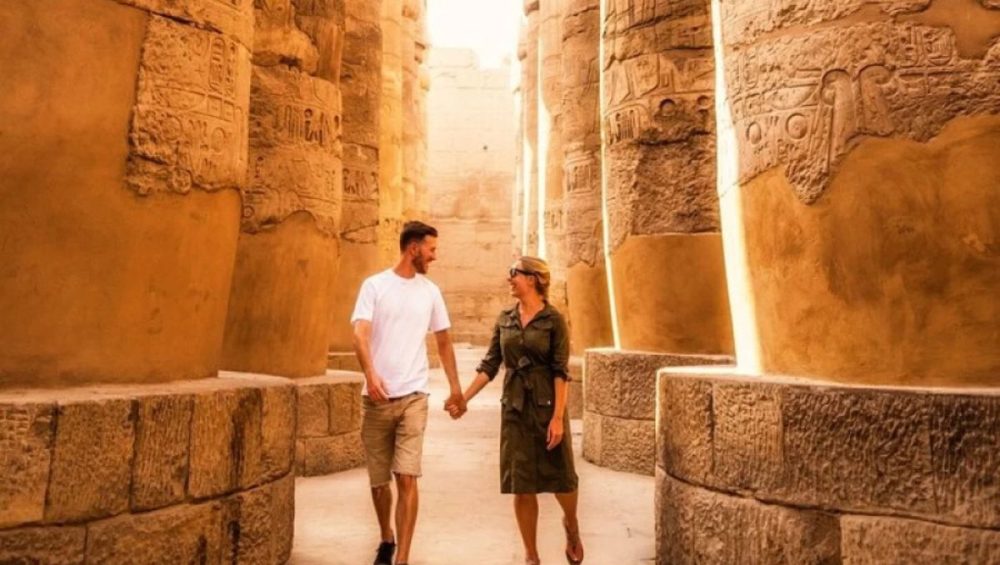
Its most recognizable architectural feature is the Great Hypostyle Hall, with monumental columns arranged in dense rows.
The complex is principally associated with Amun-Ra and the religious traditions of ancient Thebes.
Karnak helps travelers understand how religious authority, royal patronage, and monumental building projects were connected.
Explore the background in the Karnak Temple history guide.
Luxor Temple
If time permits, continue to Luxor Temple.
Situated closer to the modern city center, Luxor Temple has a distinctive relationship with the surrounding streets and urban landscape.
Its architecture reflects contributions from several rulers, including Amenhotep III and Ramses II.
The temple was historically connected with Karnak through ceremonial traditions and processional routes.
Visiting around late afternoon or evening can be attractive when opening hours and your schedule allow.
Can you visit all these sites in one day?
Yes, a full-day guided program can cover the main West Bank monuments and the two major East Bank temples.
However, it is an intensive day.
If you enjoy photography, detailed explanations, or spending time in individual tombs, divide the visits between Days 8 and 9.
Recommended pace: Intensive archaeological sightseeing.
Overnight: Nile cruise.
Day 9: Explore More of Luxor Without Rushing
After disembarking from the Nile cruise, spend an additional night in Luxor.
This is one of the itinerary’s most useful scheduling decisions.
Many travelers leave Luxor immediately after a compressed cruise sightseeing program. An extra day allows you to explore more selectively and appreciate the city beyond the main group itinerary.
Option 1: Take a hot-air balloon ride
A sunrise hot-air balloon flight is one of Luxor’s most recognizable optional experiences.
Depending on weather conditions and flight permissions, balloons may rise above agricultural land and the western archaeological landscape.
The combination of the Nile Valley, cultivated fields, and desert mountains can provide memorable views.
Balloon rides require an early start and remain dependent on operational and weather conditions.
Travelers should choose appropriately licensed and insured operators and consider whether they are comfortable with the activity.
Egypt Vacation Tours lists a hot-air balloon ride in Luxor as an optional experience.
Option 2: Visit additional West Bank monuments
If the Valley of the Kings was your favorite part of the previous day, consider exploring another West Bank attraction.
Medinet Habu is associated with the mortuary temple of Ramses III.
Its reliefs and large architectural spaces provide important evidence of New Kingdom religious and political history.
Deir el-Medina, the ancient workers’ village, offers a different perspective.
It was home to artisans and workers involved in constructing and decorating royal tombs.
Rather than focusing exclusively on pharaohs, this site helps explain the lives of skilled people whose work contributed to the royal burial complexes.
Other possibilities include selected tombs in the Valley of the Queens or additional noble tombs, subject to access and ticket arrangements.
Option 3: Explore Luxor Museum
Travelers interested in sculpture, archaeological context, and museum collections may prefer a quieter morning at Luxor Museum.
The museum contains objects associated with the history of ancient Thebes and the surrounding region.
It offers an opportunity to appreciate artifacts without the scale of Cairo’s larger museums.
For more information, explore the Luxor Museum guide.
Afternoon: Enjoy modern Luxor
Spend the remainder of the day at a relaxed pace.
Walk along the Nile Corniche, visit a café, or explore the area surrounding Luxor Temple.
A felucca excursion can offer a pleasant alternative to another archaeological visit.
Luxor is not only a collection of historic sites. It is a modern Egyptian city with neighborhoods, markets, restaurants, and daily routines.
A little unscheduled time helps visitors appreciate this side of the destination.
Recommended pace: Flexible, with one or two carefully chosen activities.
Overnight: Luxor.
Day 10: Return to Cairo and Explore Historic Cairo
Day 10 brings you back to Cairo for the final night.
Returning a day before your international flight provides a useful buffer against transportation disruptions and avoids unnecessary pressure on departure day.
Morning: Fly from Luxor to Cairo
Choose a domestic flight that provides enough time for transfers and any planned sightseeing.
After reaching Cairo, leave your luggage at the hotel.
You now have an opportunity to experience a different side of the capital.
The previous Cairo days focused primarily on ancient Egypt.
Today is about the city’s later history, religious heritage, streets, and markets.
Afternoon: Historic Cairo
Historic Cairo contains important religious buildings, traditional streets, architectural monuments, and neighborhoods associated with different periods of Egyptian history.
Depending on your interests, choose between Islamic Cairo and Coptic Cairo or arrange a carefully paced combination.
Islamic Cairo features mosques, historic houses, markets, and important examples of medieval architecture.
Highlights may include the area around Al-Muizz Street, the Sultan al-Ghuri complex, and surrounding historic neighborhoods.
Coptic Cairo includes significant churches and religious monuments connected with the history of Christianity in Egypt.
Sites such as the Hanging Church and Coptic Museum provide a different historical perspective from the pharaonic monuments visited earlier.
Avoid treating these areas as interchangeable attractions. Their histories, architectural traditions, and religious significance are distinct.
Evening: Khan el-Khalili Bazaar
Khan el-Khalili is one of Cairo’s best-known traditional market districts.
The surrounding streets contain shops, cafés, workshops, and historic buildings.
Travelers can browse handicrafts, textiles, spices, jewelry, and souvenirs.
Some shops cater heavily to tourists, so compare prices and do not feel pressured to purchase.
For historical context, read the Khan el-Khalili Bazaar guide.
This is also a good time to enjoy a final Egyptian dinner.
Should you stay near Cairo Airport on the final night?
If your international flight departs very early, an airport-area hotel may be convenient.
Otherwise, central Cairo or a familiar hotel can be more enjoyable.
Consider the departure time, anticipated traffic, and the journey to the airport before making the final reservation.
Recommended pace: Moderate.
Overnight: Cairo.
Day 11: Departure from Egypt
Your final day should be simple.
Enjoy breakfast if your flight schedule allows, complete hotel checkout, and travel to the airport with adequate time for international check-in and security.
The amount of time required depends on your airline, terminal, departure period, and current airport procedures.
For most travelers, arranging a reliable airport transfer in advance is preferable to improvising transportation at the last moment.
If your flight departs late in the evening, you may have some free time for a final meal or short activity.
However, avoid scheduling a distant archaeological excursion that could create unnecessary risk.
An 11-day itinerary works best when the final day is treated as part of the travel schedule rather than another full sightseeing day.
Recommended pace: Departure and airport transfer.
Why This Is One of the Best Routes for 11 Days in Egypt
A good itinerary is not just a list of attractions. The order in which you visit them matters.
This route follows a geographically sensible progression through Egypt.
First, you explore the pyramids and museums around Cairo.
Next, you travel south to Aswan, allowing time for Abu Simbel before the Nile cruise begins.
The cruise then carries you north along the Nile to Luxor.
Finally, you return to Cairo for your departure.
This arrangement reduces unnecessary backtracking compared with repeatedly flying between northern and southern Egypt.
It also separates the most intensive sightseeing days with river travel and less demanding activities.
Why include two nights in Aswan?
Many shorter itineraries arrive in Aswan and immediately board a cruise.
That can work, but it makes the Abu Simbel excursion more difficult to schedule.
Two hotel nights give you a dedicated day for Abu Simbel and the flexibility to explore Philae without depending entirely on the cruise program.
The extra time can also be useful if flight timings change.
Why spend an extra night in Luxor?
Three-night Nile cruises frequently include significant Luxor sightseeing before disembarkation.
An additional hotel night lets you visit attractions that may not be included in the cruise package.
It also provides flexibility if you want more time in royal tombs, prefer shorter guided days, or want to take a hot-air balloon flight.
Why return to Cairo before the international flight?
Travel disruptions can happen anywhere.
A final Cairo night creates a buffer between a domestic journey and the international departure.
This is particularly useful for travelers arriving from countries where a missed long-haul flight could be expensive.
It also allows time to visit Historic Cairo, which is sometimes omitted from shorter archaeological itineraries.
What Is the Best Time to Visit Egypt for 11 Days in 2027?
For a trip including Cairo, Luxor, Aswan, and Abu Simbel, October through April generally offers the most comfortable conditions for extensive outdoor sightseeing.
The hottest months can be challenging, particularly in southern Egypt.
However, the ideal season also depends on your tolerance for heat, budget, and preferred travel atmosphere.
| Travel period | General conditions | Main advantage | Main consideration |
| January–February | Mild days, cooler evenings | Comfortable temple visits | Cooler nights and popular winter travel period |
| March–April | Pleasant to increasingly warm | Good for varied sightseeing | Occasional wind and dust conditions |
| May–June | Hot, especially in Upper Egypt | Longer daylight | Midday heat can be tiring |
| July–August | Very hot in Luxor and Aswan | Suitable for travelers prepared for early starts | Outdoor sightseeing may be uncomfortable |
| September | Hot but gradually easing | Potentially quieter travel | Southern Egypt can remain very warm |
| October–November | Generally warm and pleasant | Excellent balance for sightseeing | Demand can be significant |
| December | Mild days and cooler evenings | Comfortable winter escape | Holiday travel may be more expensive |
Is January a good month for an 11-day Egypt itinerary?
January is an excellent choice for travelers who want to explore archaeological sites comfortably.
Cairo can feel cool in the evenings, while Aswan is often warmer during the day.
Pack a light jacket or extra layer, especially for early morning departures and time on the cruise deck.
Is March a good month to travel?
March can offer a comfortable combination of sightseeing conditions and warmer daytime temperatures.
It is a popular period for touring Egypt’s major historical destinations.
However, spring can bring occasional dusty or windy weather, which may affect outdoor activities.
Can you visit Egypt in summer?
Yes, but summer itineraries require greater attention to heat.
The most practical approach is to schedule outdoor monuments early, minimize time in direct midday sun, and reserve afternoons for shaded activities or rest.
Luxor and Aswan can be particularly demanding during July and August.
Families with younger children and travelers sensitive to high temperatures may find winter or autumn more comfortable.
Important 2027 travel dates
Two events are particularly relevant when choosing your 2027 travel dates.
Ramadan is expected to begin around February 8–9, 2027, subject to the official lunar calendar announcement. Many tourist attractions continue operating, but some local schedules, dining patterns, and business hours may change.
August 2, 2027, brings a total solar eclipse visible in Luxor. Egypt’s National Research Institute of Astronomy and Geophysics has published information about the eclipse path, and Egyptian authorities have reported preparations for this astronomical event. Travelers visiting Luxor around this date should anticipate special interest in the destination and verify accommodation and transport arrangements early.
كسوف القرن 2027 – NRIAG+2
The eclipse does not make August a cooler travel period. Heat management remains especially important.
How Much Does an 11-Day Egypt Trip Cost in 2027?
The cost of an 11-day Egypt vacation depends on accommodation, travel dates, cruise category, transportation, group size, and the excursions included.
There is no reliable single price for every traveler.
A private itinerary with domestic flights, a well-rated Nile cruise, and private Egyptologist guides will generally cost more than a trip built around budget accommodation and shared sightseeing.
Egypt trip costs by travel style
| Travel style | Accommodation | Transport | Sightseeing arrangements | Best suited to |
| Budget | Budget hotels and simple rooms | Shared transfers and selected public transport | Mix of independent visits and shared tours | Price-conscious travelers |
| Comfortable | Good midrange hotels and standard Nile cruise | Domestic flights and planned transfers | Guided major attractions | Most first-time visitors |
| Premium | Higher-category hotels and upgraded cruise cabin | Private transfers | Private guided sightseeing | Couples and travelers seeking comfort |
| Luxury | Luxury hotels and premium cruise or dahabiya | Private premium vehicles and flights | Highly personalized experiences | Travelers prioritizing privacy and service |
These are service categories rather than fixed 2027 price quotations.
What should your Egypt travel budget include?
When comparing quotations, request an itemized breakdown covering:
- International flights.
- Cairo–Aswan and Luxor–Cairo domestic flights.
- Four Cairo hotel nights.
- Two Aswan hotel nights.
- Three nights aboard a Nile cruise.
- One Luxor hotel night.
- Airport and intercity transfers.
- Guided sightseeing and entrance fees.
- Abu Simbel transportation.
- Meals not included in hotels or cruise arrangements.
- Entry visa, travel insurance, tips, and personal spending.
Some tour packages include entrance tickets while others charge separately for particular sites.
Special tombs, pyramid interiors, optional excursions, and additional museum experiences may require separate payments.
How can you compare two Egypt tour quotations fairly?
Suppose one company quotes a lower total price than another.
That does not automatically mean it offers better value.
One quotation might include domestic flights, private airport transfers, qualified guides, and archaeological entrance fees.
The other might exclude all of those items.
Always compare the final cost after adding the expenses you would realistically incur.
Pay particular attention to Nile cruise cabin category, guide arrangements, and whether Abu Simbel is included.
Is an all-inclusive Egypt itinerary worth it?
An organized package can be worthwhile when it combines the major logistics into one itinerary.
You may save time coordinating domestic flights, hotels, cruise departure dates, and private drivers.
However, the term all-inclusive does not always mean every cost is covered.
Ask specifically about drinks, monument tickets, special tomb entries, tipping, optional tours, and international airfare.
For 2027 bookings, obtain a current written quotation rather than relying on older package prices displayed online.
How to Travel Between Cairo, Aswan, and Luxor
Transportation is one of the most important parts of planning 11 days in Egypt.
Distances between major destinations are significant, and the fastest mode of transport is not always the most economical.
Cairo to Aswan: Domestic flight or sleeper train?
Flying is generally the most efficient choice when time is limited.
An overnight train is an alternative for travelers who want a different experience or prefer not to take another flight.
However, train travel requires more time and may be less predictable than a direct flight.
Egypt’s official tourism website identifies domestic flights, air-conditioned trains, sleeper services, buses, and private vehicles among the available transportation options.
Experience Egypt
Aswan to Luxor: Cruise or road journey?
A Nile cruise is the preferred option for travelers who want to combine transportation with temple visits and time on the river.
A private road transfer can be more flexible, especially if you want to stay in hotels rather than aboard a ship.
Traveling by road also allows you to choose how much time to spend at Kom Ombo and Edfu, subject to opening hours and driving arrangements.
Luxor to Cairo: Flight or train?
For an 11-day itinerary, flying back to Cairo is usually convenient.
A train may be suitable if you prefer rail travel and have sufficient time.
Avoid choosing a connection that leaves little room before an international departure.
How much transfer time should you allow?
Do not calculate travel time using only the flight duration or road distance.
Include hotel checkout, airport transfers, security, baggage handling, waiting time, and possible traffic.
An apparently short journey may use a substantial part of the day.
This is why the itinerary avoids combining long transfers with multiple major attractions whenever possible.
Nile Cruise vs. Land-Based Travel: Which Is Better?
Both options can work well within 11 days.
The best choice depends on how much flexibility you want and whether sailing on the Nile is part of the appeal of visiting Egypt.
| Factor | Three-night Nile cruise | Land-based itinerary |
| Accommodation | Stay aboard one vessel | Separate hotels in different cities |
| Flexibility | Scheduled cruise program | More control over departure times |
| Temple visits | Usually organized around sailing | Individually scheduled |
| Meals | Often included aboard | Depends on hotels and restaurants |
| Atmosphere | River views and onboard relaxation | Greater immersion in individual cities |
| Suitability | Travelers who enjoy structured trips | Independent travelers and flexible groups |
Is a three-night Nile cruise long enough?
A three-night cruise is sufficient to experience the main Aswan-to-Luxor route and visit major attractions, provided the vessel’s itinerary includes them.
However, it is not a completely leisurely experience.
On some days, passengers may visit several archaeological sites before or after sailing.
Four-night cruises generally provide a different pace and operate in the opposite direction on many vessels.
What about a dahabiya cruise?
A dahabiya is a smaller traditional-style Nile vessel, often emphasizing quieter sailing and a more intimate atmosphere.
Some dahabiyas have relatively few cabins and provide a different experience from larger cruise ships.
They may also follow different sailing schedules or include smaller stops.
Travelers looking for this style of journey can explore the dahabiya Nile cruise from Esna to Aswan.
A dahabiya should not automatically be treated as interchangeable with a standard three-night cruise. Compare the actual route and number of nights before changing your itinerary.
Alternative 11-Day Egypt Itineraries for Different Travelers
The recommended route prioritizes major archaeological attractions and a Nile cruise.
However, not everyone wants the same type of Egypt vacation.
The following alternatives illustrate how to adapt the journey.
Option 1: Eleven days in Egypt with Hurghada and the Red Sea
This alternative is ideal for travelers who want a combination of ancient history and beach relaxation.
A possible route is:
| Days | Destination | Focus |
| 1–3 | Cairo | Giza Pyramids, Grand Egyptian Museum, Saqqara |
| 4 | Aswan | Philae Temple and Aswan |
| 5–7 | Nile cruise | Kom Ombo, Edfu, Luxor |
| 8 | Luxor | Additional archaeological sightseeing |
| 9–10 | Hurghada | Beach, swimming, snorkeling, relaxation |
| 11 | Departure | Depart Hurghada or connect onward |
This version leaves less time for Abu Simbel and assumes suitable flight or onward travel arrangements from Hurghada.
If Abu Simbel is essential, consider removing another excursion or extending the trip.
The Red Sea portion provides a contrast to the archaeological sites of the Nile Valley.
Hurghada is particularly suitable for travelers who enjoy beach resorts, watersports, and boat excursions.
Option 2: Eleven days in Egypt with Marsa Alam
Marsa Alam offers another coastal alternative, especially for visitors interested in marine life and a quieter resort atmosphere.
However, it requires careful transportation planning.
Driving distances and airport connections can affect how much time you actually spend at the coast.
Egypt Vacation Tours lists a Cairo, Luxor, Aswan, and Marsa Alam 11-day tour, which provides a relevant starting point for comparing a history-and-beach itinerary.
Option 3: Eleven days focused entirely on ancient Egyptian history
If ancient history is your main interest, remove the beach component and allocate additional time to archaeological sites.
Potential additions include:
- Dahshur and more of Saqqara.
- Additional West Bank tombs in Luxor.
- Dendera and Abydos, subject to travel time.
- More time at the Grand Egyptian Museum.
- Additional Nubian heritage sites near Aswan.
This option is especially suitable for returning visitors or travelers who prefer in-depth guided explanations.
Do not attempt to include every archaeological site in one trip.
Choose attractions representing different historical periods and types of monuments.
Option 4: Eleven days in Egypt without a Nile cruise
A land-based route can work well for travelers who dislike fixed schedules or prefer hotels.
One possible distribution is three nights in Cairo, three in Luxor, three in Aswan, and one final night in Cairo.
Travel between Luxor and Aswan by road with stops at Edfu and Kom Ombo, or use another suitable transport arrangement.
The benefit is greater control over sightseeing times.
The disadvantage is that you lose the atmosphere of sailing between destinations.
Which itinerary should you choose?
For a first visit centered on ancient Egyptian history, the main Cairo–Aswan–Luxor cruise itinerary is an excellent starting point.
For couples wanting both sightseeing and relaxation, the Red Sea version may be more appealing.
For travelers with a strong archaeological interest, replace some leisure time with additional monuments rather than adding more distant cities.
Where to Stay During Your 11-Day Egypt Itinerary
Hotel location can influence the comfort of your trip almost as much as hotel quality.
A good property in an inconvenient location may create long transfers and reduce sightseeing time.
Cairo accommodation
For the beginning of the trip, consider Giza if the pyramids are your main priority.
Some hotels offer pyramid-facing rooms or rooftops, but views vary significantly.
Central Cairo can be a better base for travelers interested in museums, restaurants, and historic neighborhoods.
For the final night, choose based on your departure airport and flight time.
Aswan accommodation
Hotels overlooking the Nile can provide beautiful views of islands and river activity.
Some properties are located directly on the waterfront, while others are on islands requiring boat transfers.
Island hotels can be atmospheric, but they may be less convenient for very early excursions.
Before booking, ask about transportation arrangements for Abu Simbel departures.
Luxor accommodation
Luxor has hotels on both sides of the Nile.
The East Bank is convenient for Luxor Temple, Karnak, restaurants, and many transportation services.
The West Bank may appeal to travelers who prefer quieter accommodation and easier access to several archaeological areas.
Consider where your cruise disembarks and how you plan to travel to the airport.
Nile cruise accommodation
The vessel’s quality should be assessed separately from the star rating advertised online.
Look carefully at cabin photographs, bathroom facilities, dining arrangements, accessibility, and passenger reviews.
A cabin advertised as having a Nile view may have a window, a French balcony, or a full private balcony. These are not the same feature.
If a private balcony is important, request confirmation of the exact cabin category in writing.
Is 11 Days Enough to See Egypt?
Yes. Eleven days is enough for an excellent first visit to Egypt if you focus on a manageable geographical route.
You can see the Giza Pyramids, the Grand Egyptian Museum, Saqqara, Abu Simbel, the major temples between Aswan and Luxor, and the royal tombs of ancient Thebes.
You can also spend meaningful time sailing the Nile.
However, 11 days is not enough to explore every major region of Egypt comfortably.
Alexandria, Siwa Oasis, the White Desert, Sinai, and several Red Sea destinations deserve additional travel time.
What should first-time visitors prioritize?
The strongest priorities for travelers interested in ancient Egypt are generally Giza, the Grand Egyptian Museum, Luxor’s temples and royal tombs, and at least some time in Aswan.
Abu Simbel is another excellent addition if your schedule and interests allow.
The best sightseeing choices are those that represent different periods and aspects of Egyptian history.
Seeing another pyramid may be less valuable than visiting a museum or temple that helps you understand a different part of Egyptian civilization.
What should you skip when time is limited?
Consider skipping destinations that require long detours without serving your main interests.
A day trip to Alexandria may be appealing, but adding it to a full Cairo–Aswan–Luxor itinerary could create an unnecessarily demanding schedule.
Similarly, Siwa Oasis and the White Desert are better suited to trips with additional days.
Trying to visit Cairo, Alexandria, Siwa, Luxor, Aswan, Abu Simbel, and Hurghada in 11 days would involve substantial travel and limited time at each destination.
Egypt Travel Tips for 2027
Visa and passport requirements
Travelers should check Egyptian entry requirements according to their nationality and passport type.
Egypt’s official e-Visa system lists eligible nationalities, including travelers from the United States, United Kingdom, Canada, Australia, and numerous European countries.
The portal currently states a US$30 single-entry tourist e-Visa fee and advises submitting applications at least seven days before departure. These details were checked in November 2026 and should be reconfirmed for 2027 travel.
Visa2Egypt+1
Official portal: Egypt e-Visa
The portal also states that passports should be valid for at least six months from arrival.
Different requirements may apply to certain travel documents, nationalities, and residency situations.
Booking archaeological tickets
For many Egyptian monuments, tickets can be purchased through the official EgyMonuments platform.
The Grand Egyptian Museum has its own official museum ticketing website.
Check the applicable ticket categories, entry times, and conditions before your visit.
Do not assume that an ordinary entrance ticket includes every interior chamber, special tomb, or optional activity.
Currency and payments
The Egyptian pound is Egypt’s local currency.
Cards are accepted at many hotels and larger businesses, but carrying some Egyptian cash is useful for smaller purchases and situations where card payment is unavailable.
Use reputable banks or exchange services and confirm prices before purchasing.
What should you wear?
Lightweight, breathable clothing is practical for much of the year.
Comfortable walking shoes are essential because archaeological sites often have uneven surfaces, steps, and exposed walking areas.
A hat, sunglasses, sunscreen, and refillable water bottle are useful for long outdoor visits.
Dress respectfully when entering religious buildings, and follow any specific requirements at the location.
Tipping in Egypt
Tipping, sometimes called baksheesh, is common in many tourism-related services.
It is often given to guides, drivers, hotel staff, and other service workers when appropriate.
Amounts vary according to service, trip length, group size, and personal preference.
Before booking a private tour, ask whether gratuities are included in the advertised price.
Avoid assuming that every person offering unsolicited assistance should receive money.
Drinking water and food
Use drinking water from a reliable source and take sensible precautions with food hygiene.
Egyptian cuisine offers many options for travelers who prefer vegetarian meals.
Common dishes include koshari, ful medames, taameya, lentil soup, and vegetable preparations.
Travelers with allergies or dietary restrictions should explain their requirements clearly to their hotel, cruise operator, or guide.
Internet and communication
Mobile data is useful for maps, hotel confirmations, flight details, and communication with guides.
International roaming, a local SIM, or an eSIM may be suitable depending on your phone and provider.
Download important travel documents for offline access before departure.
Common Mistakes to Avoid When Planning 11 Days in Egypt
Trying to visit too many cities
An itinerary becomes less enjoyable when every day involves a hotel checkout or long-distance transfer.
Focus on a few well-connected destinations.
Booking the cruise after everything else
Nile cruises may operate on fixed departure days.
Choose the ship and sailing date before arranging the flights and accommodation around it.
Underestimating Abu Simbel
Abu Simbel requires considerable travel from Aswan.
Treat it as a major excursion rather than a quick sightseeing stop.
Visiting too many monuments in one day
Egypt’s archaeological sites are extensive.
Three major attractions may provide a richer experience than six rushed stops.
Ignoring summer heat
Luxor and Aswan can be extremely hot in summer.
Early starts, shade, hydration, and flexible schedules are particularly important.
Assuming all tours include the same services
Check whether your quotation includes airport transfers, internal flights, entrance tickets, guides, and cruise excursions.
A lower advertised price may exclude important components.
Forgetting the final airport connection
If your international flight departs from Cairo, returning from Luxor or Aswan on the same day may introduce avoidable risk.
An overnight stay in Cairo is often the safer planning choice.
Is an 11-Day Egypt Itinerary Suitable for Families, Couples, and Seniors?
Families with children
Eleven days can work well for families when the schedule includes recovery time.
Children may enjoy the pyramids, boat journeys, museum exhibits, and colorful temple reliefs.
However, long excursions, hot weather, and repeated early departures can be tiring.
Families with younger children should consider replacing Abu Simbel with a relaxed Aswan day or reducing the number of daily attractions.
A private guide and vehicle may make it easier to adjust the program.
Couples and honeymooners
A Nile cruise can provide a pleasant combination of sightseeing and relaxation.
Couples may prefer upgraded hotel rooms, quieter cruise vessels, and more time for evening meals or river views.
A Red Sea extension is another appealing option if relaxation is a major priority.
Senior travelers
Many senior travelers can enjoy this route with suitable planning.
The important considerations are walking distance, steps, uneven terrain, heat, and transportation arrangements.
Some pyramid interiors, royal tombs, and archaeological locations may be physically demanding.
Choose attractions according to individual mobility and comfort rather than assuming all visitors can follow the same pace.
Travelers with accessibility requirements
Accessibility varies substantially among archaeological sites, hotels, ships, and vehicles.
A cruise vessel advertised as comfortable or luxurious should not automatically be assumed to be wheelchair accessible.
Ask about cabin access, elevators, gangways, bathrooms, transfer vehicles, and specific monument pathways before confirming a reservation.
For travelers with significant mobility requirements, a customized land-based itinerary may be preferable to some cruise programs.
How to Customize Your 11-Day Egypt Itinerary
The ideal itinerary depends on what you want to remember most after the journey.
Some travelers prioritize the pyramids and the ancient pharaohs.
Others want more time aboard the Nile, a deeper experience of Nubian culture, or a few days beside the Red Sea.
If you are planning a first visit in 2027, begin with the Cairo–Aswan–Luxor route and make changes only when they serve a clear travel preference.
For travelers who want to avoid managing multiple domestic flights, cruise bookings, and intercity transfers separately, Egypt Vacation Tours can help develop a private itinerary based on travel dates, accommodation preferences, interests, and preferred pace.
Before requesting a quotation, identify your priorities, approximate budget, group size, and whether Abu Simbel and a Nile cruise are essential.
This makes it easier to compare suitable itineraries rather than receiving packages that look similar but provide different experiences.
Frequently Asked Questions About an 11 Days Egypt Itinerary
1. What is the best 11-day Egypt itinerary for first-time visitors?
The best 11-day itinerary for most first-time visitors combines Cairo, Giza, Aswan, a Nile cruise, and Luxor. Spend time exploring the pyramids and Grand Egyptian Museum, visit Abu Simbel if possible, sail between Aswan and Luxor, and discover the Valley of the Kings and major temples. Return to Cairo before your international departure if flying home from the capital.
2. Is 11 days enough to visit Cairo, Luxor, and Aswan?
Yes. Eleven days is enough to explore the main attractions in all three cities at a reasonable pace. Domestic flights help reduce long-distance travel time, while a Nile cruise can connect Aswan and Luxor. The itinerary works best when you choose a limited number of attractions each day and account for transfers, hotel check-ins, and cruise schedules.
3. How many nights do you need for an 11-day Egypt trip?
An 11-day trip typically includes 10 nights if you arrive on the first day and leave on the eleventh. A practical distribution is four hotel nights in Cairo, two in Aswan, three aboard a Nile cruise, and one in Luxor. Other arrangements are possible depending on your international flights, preferred cruise duration, and whether you want to add the Red Sea.
4. Should you visit Luxor or Aswan first?
Either order can work. Visiting Aswan first is convenient when booking a three-night cruise that travels north to Luxor. Starting in Luxor can be better for a four-night cruise traveling south to Aswan. The most important factor is the vessel’s actual departure day and the way it connects with your flights.
5. Can you include Abu Simbel in an 11-day Egypt itinerary?
Yes. Abu Simbel fits well when you allow two nights in Aswan before beginning a Nile cruise. A dedicated excursion avoids having to combine a long journey with cruise embarkation. The temples are especially worthwhile for travelers interested in Ramses II, ancient Egyptian architecture, and UNESCO’s international monument rescue campaign.
6. Is a Nile cruise worth including in an 11-day Egypt vacation?
A Nile cruise is worthwhile if you enjoy structured sightseeing, river scenery, and staying aboard the same vessel while traveling between temples. Three-night cruises can cover the main Aswan-to-Luxor route. However, travelers who prefer independent schedules and hotel stays may be happier with a land-based itinerary and private transportation.
7. Can you see the Pyramids and Grand Egyptian Museum in one day?
Yes, but it requires planning. Begin early at the Giza Plateau, prioritize the main pyramid complex and Sphinx, then spend the afternoon at the Grand Egyptian Museum. Travelers who want to enter several pyramids or explore museum collections in detail may prefer separating the attractions across two days.
8. Is it better to travel independently or book a private Egypt tour?
Independent travel can be rewarding for travelers comfortable arranging transportation, accommodation, tickets, and local logistics. A private tour may be more convenient when visiting several distant destinations in a limited period. Private arrangements can also help families and travelers with specific interests adjust their pace and sightseeing priorities.
9. Can you add Hurghada to an 11-day Egypt itinerary?
Yes, but you will need to reduce time elsewhere. A practical alternative includes Cairo, Aswan, a Nile cruise, a short stay in Luxor, and two nights in Hurghada. This provides a combination of ancient sites and beach relaxation. Choosing a suitable departure airport is essential to avoid spending the final day on unnecessary transfers.
10. What is the cheapest way to spend 11 days in Egypt?
A lower-cost itinerary generally uses budget hotels, selected shared tours, and economical transportation. Reducing domestic flights and choosing simpler accommodation can help, but these decisions may increase travel time. Compare the total cost of flights, tickets, hotels, transfers, and excursions rather than selecting packages solely by their advertised price.
11. What should you pack for 11 days in Egypt?
Pack breathable clothing, comfortable walking shoes, sunscreen, sunglasses, a hat, and layers for cooler evenings. Bring the required travel documents, payment cards, essential medication, charging equipment, and suitable adapters. Travelers visiting in summer should pay particular attention to sun protection and hydration, while winter visitors may need warmer clothing for early mornings and evenings.
12. Is 11 days in Egypt better than 7 or 14 days?
Eleven days provides a useful balance between time and sightseeing coverage. Seven days is enough for a shorter Cairo, Luxor, and Aswan trip, but requires more compromises. Fourteen days allows additional relaxation, a longer Nile cruise, or extra destinations such as the Red Sea. Eleven days is an effective middle ground for travelers wanting Egypt’s essential historical experiences without taking a two-week vacation.
Final Thoughts: How to Make the Most of 11 Days in Egypt
The best 11 days Egypt itinerary is not the one with the most destinations. It is the one that connects the places you genuinely want to see while leaving enough time to appreciate them.
For most first-time visitors, Cairo, Giza, Aswan, and Luxor provide an exceptional introduction to the country.
The pyramids explain the ambitions of Egypt’s Old Kingdom rulers. Saqqara reveals the development of monumental stone architecture. Abu Simbel demonstrates royal power in southern Egypt, while Luxor preserves some of the finest surviving monuments of the New Kingdom.
A Nile cruise connects these experiences through the geography that shaped ancient Egyptian civilization.
By planning the journey around actual travel times, cruise departures, and personal interests, you can experience the country’s greatest historical attractions without making every day feel rushed.
For 2027, begin by confirming your preferred travel dates and cruise availability, then build the hotels, flights, and sightseeing arrangements around them.