What is the best time to visit Egypt?

Many tourists come to Egypt every year to visit its magnificent attractions. The beautiful and diverse weather of Egypt considers being one of the top reasons to travel to it at any time round all year. However, they are always asking themselves that (What is the best time to visit Egypt?)

Despite Egypt’s beautiful variety of temperatures through its several governorates, you should know the nature of the climate of Egypt. It has a hot summer and cool and mild winter.

1 – Spring Season – from March to June Spring Season is the best time to visit Egypt and discover its major sightseeing as the temperature is moderate. At spring, there is a festival called (Sham El Nessim). It falls on the day after the Eastern Christian Easter.

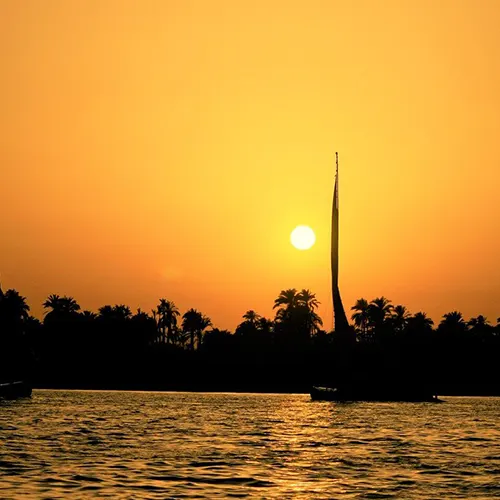
2 – Summer Season – from June to September Summer Season is sometimes hot, especially in the Upper of Egypt, allowing you to explore a different side of Egypt. You will be able to enjoy the Egyptian coastal beaches and resorts as Hurghada, Sharm El-Sheikh, and Dahab. Also, you may enjoy a traditional felucca boat in the Nile River.

3 – Autumn Season – from September to December Autumn Season is as spring season. It is a good time to visit Egypt, as prices become so reasonable. You will be able to discover upper and lower Egypt and visit their major historical and heritage sites.

On October 22nd, you can attend a unique phenomenon occurring in Egypt, as the sun illuminates the Holy of Holies of the great Abu Simbel Temple in Aswan.

4 – Winter Season – from December to March Winter Season is the ideal time so it is the highest tourist season, as the weather is a nice. Also, you can enjoy your Christmas holiday in Egypt while you are visiting the historical and heritage attractions.

On February 22nd, you can attend a unique phenomenon occurring in Egypt, as the sun illuminates the Holy of Holies of the great Abu Simbel Temple in Aswan.

Enjoy visiting Egypt at any time you prefer with Egypt Vacation Tours team.

The Valley of the Kings of Luxor City

The Valley of the Kings is the cemetery of the most famous kings in ancient Egyptian history of the new kingdom. It is located on the west bank of the Nile River in Thebes, or Luxor city now.

It is considered as one of the most important archaeological sites and historical destinations in the world, which motivated the archaeologists to do excavations there.

This valley is divided into two valleys, the east and the west. The east valley is more famous than the west one, as the west valley houses few tombs.

The valley contains 62 tombs and almost twenty unfinished tombs. King Thutmose I was the first King was buried in this valley, while King Ramses VVI was the last one. Then Kings of the 18th, 19th, and 20th dynasties also buried here. The most famous royal tomb in this valley is the tomb of King Tutankhamun that was discovered nearly intact.

The name of Valley of the Kings is not entirely accurate, as there are members of the royal family and a few non-royal who very high-ranking as the tomb of Yuya and Tuya were buried here.

    Most of these tombs have a simple plan and are decorated with religious inscriptions as:
  • The Amduat depicting the journey of the sun god during the 12 hours of the night.
  • The Book of Caves showing the underworld divided into caves where the gods and the dead waiting for the sun god to bring them back to life.

The Valley of the Kings - Egypt Vacation Tours

    Why did the ancient Egyptian choose this place to be the Valley of the Kings?
  • This site was chosen according to the ancient Egyptian beliefs in the afterlife, as they thought that the sun god (Ra) set (died) in the western horizon to be reborn and rejuvenated in the eastern one. So the ancient Egyptians considered the west as funerary associations.
  • This mountain takes the shape of the pyramid, the symbol of rebirth and eternal life in ancient Egyptian beliefs.
  • This valley is isolated what provides more Anti-theft protection for the corpses of kings buried in it.

There are a huge number of workers who were working in the construction of this great valley. So these workers needed a near home to live, so they built Deir El-Medina or the Village of Workers.

History of Karnak Temple of Luxor City

Karnak temple is located on the east bank of the Nile River in Thebes, or Luxor city now. It is considered as a complex, not just a temple, because its walls include several temples as the Khonsu temple, the Opet temple, and the great temple of Amun Ra.

This complex is considered one of the most important ancient Egyptian temples in Thebes, as it was the center for worshipping the god Amun. So this temple was extremely wealthy, and its priesthood held great political power during ancient Egyptian history.

As most ancient Egyptian temples, Karnak temple was constructed on an east-west axis. As in ancient Egyptian mythology, they thought that this design looking like the sun god’s trajectory through the sky. Also, Karnak temple distinguishes with another north-south axis to link between Karnak complex and Luxor temple through the avenue of rams.

Karnak Complex Elements The design of Karnak Complex is very complicated, as due to its religious importance, many kings from the middle kingdom to the Ptolemaic period added buildings to this complex, making it reach a size, complexity, and diversity.

  • This complex starts with an avenue of rams. In front of the 1st pylon, there are 20 rams on each side, dating back to King Nectanebo I of the 30th dynasty.

Avenue of Sphinxes - Egypt Vacation Tours

  • Then, the first open court, containing several elements. The column or kiosk of King Taharqa of the 25th dynasty. This is the only remained column from a colonnade that once had 10 columns. On the left, there are 3 shrines built by king Seti II for the triad of Thebes (Amun, Mut, and Khonsu). On the right, there is the Temple of King Ramses III. As well, there is the open museum court containing the white shrine of king Senusret I, the alabaster shrine of king Amenhotep I, and the red shrine of Queen Hatshepsut. These shrines were discovered into the 3rd pylon and rebuilt again.
  • The second pylon of king Horemheb of the 18th
  • The Great Hypostyle Hall containing 134 columns from the sandstone. This hall was built by King Amenhotep III and completed by kings Seti I and his son Ramses II.
  • Then the 3rd pylon of king Amenhotep III, where the 3 shrines in the open museum court had found.
  • The Court of Thutmose I, where was existing 2 obelisks standing in front of the 4th pylon. It is thought that this pylon was the main entrance for Karnak temple during king Thutmose I’s period. Unfortunately, one of these two obelisks is lost.
  • Another court of King Thutmose I. This court housed 2 obelisks for Queen Hatshepsut. They were made of red granite. Unfortunately, the right obelisk is lost. After the death of Queen Hatshepsut, so King Thutmose III did a mysterious thing. He founded a high wall around those two obelisks. This sparked a lot of arguments among scholars, as they are wondering what the purpose of this wall is.
  • The 5th pylon, which also was built by king Thutmose I, but was damaged.
  • The 6th pylon was built by king Thutmose III. It is the smallest pylon in this complex. This pylon leads to the Ancestral Room founded by King Thutmose III.
  • Then the Holy of Holies of temple.
  • Behind it, there is a courtyard housing remains dating back to the middle kingdom. This courtyard contains a hall called (Akh-Mnw), meaning the Feasts Hall. This hall was built by King Thutmose III. As well, there is another room called The Botanical Room, decorated with depictions of plants, animals, and birds, which King Thutmose III brought from Syria to ancient Egypt.
  • Now, we will go through the north-south axis that can be accessed between the 3rd and the 4th pylons to reach the 7th pylon of king Thutmose III. In this place in 1902, the French Egyptologist Georges Legrain discovered a cache. This cache contained several bronze statues. In front of the 7th pylon, there were 2 obelisks of king Thutmose III. One of them is transferred to İstanbul, as Muhammad Ali Pasha gave it to King Louis.
  • Karnak Complex distinguishes with its sacred lake, where priests purified themselves before performing temple rituals for the god Amun. Besides this lake, you will be able to notice the scarab is considered the biggest scarab in ancient Egypt. This is the scarab of the marriage of King Amenhotep III and his beloved wife Tiye.

the sacred lake - Egypt Vacation Tours
the sacred lake

the scarab of marriage of King Amenhotep III - Egypt Vacation Tours
the scarab of marriage of King Amenhotep III 

  • The 8th pylon was built by Queen Hatshepsut, completed by Thutmose III, and restored by Seti I. Then there is a court.
  • The 9th and 10th pylons. They date back to king Horemheb of the 18th dynasty. Inside these pylons, it is found the rocks of the temple of the god Aton, as king Horemheb used them for filling his pylons.
  • Finally, the temple finished with the avenue of rams leading to Mut temple.

Legends of Colossi of Memnon

Colossi of Memnon are two massive statues on the west bank of the Nile River in Luxor city. They stood at the entrance of the mortuary temple of king Amenhotep III of the 18th dynasty, New kingdom. These statues are the only residual part of this temple.

These two twin statues depict King Amenhotep III, seating on the throne chair and wearing the Nemes, the royal headdress. The statues measure 20 meters tall. They are made of quartzite sandstone. The northern statue presents the king with a small statue for his mother (Mutemwiya), while the southern one presents him with his beloved wife (Tiye). Amenhotep, son of Hapu supervised the construction of these statues.

After an earthquake had occurred in 27 BC, the northern statue was deeply affected, as cracks appearing on it. These cracks resulted to when the winds were passing through the northern statue at dawn, making mysterious sounds and forming dew drops on the statue’s body.

The Greeks linked between these sounds and dewdrops and the crying of Memnon’s mother on her killing son (Memnon). Memnon was the king of Ethiopia, traveled to Asia to help in defending Trojan city, the beleaguered city under attack. But he was killed by Achilles. So they are famous for the Colossi of Memnon.

Achilles killing Memnon - Egypt Vacation Tours
Achilles killing Memnon

Later the Roman Emperor Septimius Severus restored the northern statue that led these sounds to stop.

Read more about sightseeing of Egypt with Egypt Vacation Tours articles.

History of Luxor Temple of Luxor City

Luxor temple is one of the most beautiful remained monuments on the east bank of the Nile River in Thebes, or Luxor city now.

The history of construction of Luxor temple King Amenhotep III of the 18th dynasty started to build this temple, but the main building of the temple was completed by King Tutankhamun and King Horemheb. Then King Ramses II added some elements to the temple.

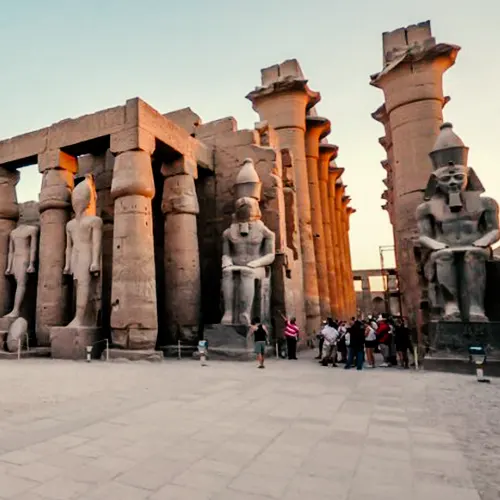
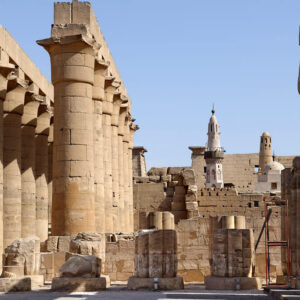
During Amenhotep III’s reign, the main entrance of the temple was on the northern side. After that, you will see the great colonnade consisting of seven pairs. It takes the shape of high open-flower papyrus columns. Then you will move to the courtyard of King Amenhotep III. Then the hypostyle hall, containing thirty-two columns.

the great colonnade of Amenhotep III - Egypt Vacation Tours
The great colonnade of Amenhotep III

The cache of Luxor temple was discovered by the archaeologist Muhammad al-Saghir on the morning of January 22, 1989.  While he was cleaning the courtyard of King Amenhotep III, he found a wonderful collection of statues for gods and kings of the New kingdom. Most of these collections are moved to be displayed at Luxor Museum.

Behind the hypostyle hall, there are four secondary rooms, the room of the Divine birth of King Amenhotep III, Alexander the Great’s shrine, and the Holy of Holies of the triad of Thebes (Amun, his wife Mut, and their son Khonsu).

The divine birth room houses depictions tell an amazing story of how the king’s true father was none other than the god Amun himself.

    The King Ramses II adds:
  • He added a massive pylon decorated with inscriptions of the Kadesh Battle against the Hittites. This pylon was preceded by six colossal statues for King Ramses II himself and two obelisks made of granite. Now, one of these two obelisks is transferred to the Place de la Concorde in Paris.

In front of this pylon, there is the avenue of sphinxes linking between Luxor Temple and Karnak Complex. This avenue was used during the Opet Festival, as Amun used it to move from Karnak Complex to Luxor Temple.

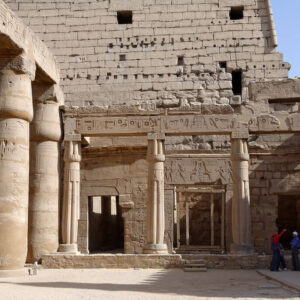
  • Also, King Ramses II built another courtyard in front of the great colonnade of King Amenhotep III. In this courtyard, on the right side, you will see the shrine of Queen Hatshepsut and King Thutmose III.

    the shrine of Queen Hatshepsut and King Thutmose III - Egypt Vacation Tours
    the shrine of Queen Hatshepsut and King Thutmose III

The temple was remained used in the Greco-Roman period. In the Christian period, the hypostyle hall of the temple was changed to be a Christian church.

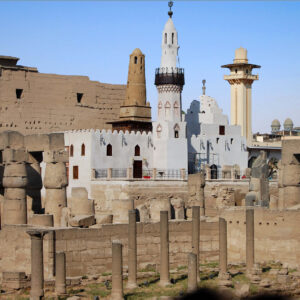
After many years, the temple was covered and hidden by sand and streets, resulting in the construction of the Yusuf Abu al-Hajjaj mosque over the Northeast side of the temple in the courtyard of King Ramses II in 640.

Yusuf Abu al-Hajjaj mosque - Egypt Vacation Tours
Yusuf Abu al-Hajjaj mosque

The History of Aswan High Dam

The construction of the Aswan high dam was a great dream for President Gamal Abdel Nasser to ensure developing Egypt for all Egyptians. The high dam is fed by the River Nile from south.

The History of Aswan High Dam There are two dams in Aswan, Aswan Low Dam and Aswan High Dam. Aswan Low Dam was constructed in 1898 and completed in 1902. But it was not adequate to control the annual flooding, leading to President Gamal Abdel Nasser think in constructing a higher dam in 1952. The construction for the project began in 1960 after getting funding and was completed in 1968. It was officially inaugurated in 1971.

There is a huge reservoir behind the dam, called Lake Nasser. It was finished filling in 1979.  This reservoir is with a reservoir capacity of 132km³.

Nasser Lake - Egypt Vacation Tours
Nasser Lake

The construction of this dam is considered an impressive engineering feat, as it is 360 feet tall and 12,500 feet across.

The Benefits of the Dam Although the construction of the dam led to a rise in the level of the Nile River, which led to immersion of many monuments and archeological sites as Philae Temple.

Despite this, the dam provides several benefits to Egypt, as

  • It provides water for around 33,600km² of irrigation land and contributes to increasing the cultivable land in Egypt.
  • It controls flooding that was threatening the lives of citizens.
  • It generates power, as it was responsible for producing around 50 % of the electricity production in Egypt and providing many villages with electricity for the first time.
  • It helps in improving navigation across the Nile.

Abusir Necropolis – Historical Site

Abusir Necropolis is considered an essential part of the Memphis Necropolis, where the ancient Egyptian kings of the fifth dynasty built their pyramids.

Abusir Necropolis houses fourteen pyramids, but the most famous pyramids there are the pyramids of king Neferirkare, Niuserre, and Sahure, dating back to the fifth dynasty.  Additionally, the temple of the sun distinguishing the fifth dynasty and tombs are belonging to members of the royal family as the mastaba of Prince Nakhtkare.

Abusir Necropolis - Egypt Vacation Tours 3
Abusir Necropolis

    Also, Abusir contains several tombs belonging to high officials through the old kingdom:
  • The third dynasty: the tomb of Ity and the tomb of Hetepi.
  • The fourth dynasty: the tomb of Kaaper, architect, and priest.
  • The fifth dynasty: the tomb of Rahotep, the tomb of Fetekti, and the mastaba of Ptahshepses.
  • The sixth dynasty: the tomb of Qar and his sons.

What do you think Abusir means? The name of Abusir is derived from the ancient Egyptian word (Pw-Wsjr), meaning the House or Temple of the god Osiris.

Kindly submit the Egypt Vacation Tours day tour to enjoy discovering this unique necropolis with our experts.

Dahshur Necropolis – Historical Site

Dahshur is considered as an important part of the Memphis Necropolis, where Pharaonic kings built their pyramids. Dahshur Necropolis is located on the west bank of the Nile River, approximately 40 km southwest of Cairo city.

The Bent Pyramid - Egypt Vacation Tours
The Bent Pyramid

The importance of Dahshur Necropolis lies in reflecting two important stages of the architectural development used by the ancient Egyptian engineers in building the royal pyramids. These stages are shown in the Bent Pyramid and the Red pyramid until they managed and reached the first complete pyramid in the Pharaonic civilization. The first true pyramid is the Red Pyramid, which later led to the construction of the Great Pyramid of Giza (Cheops  Pyramid).

The Red Pyramid - Egypt Vacation Tours
The Red Pyramid

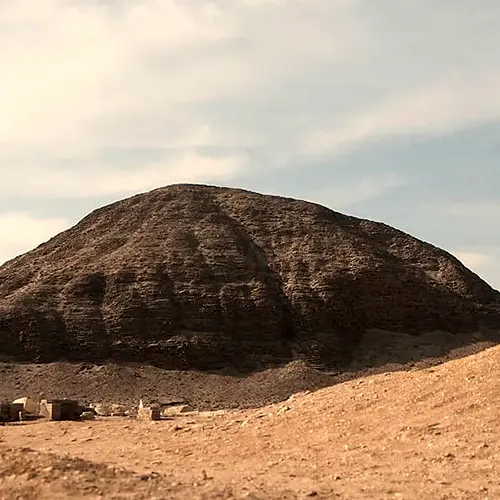
Dahshur Sightseeing: Dahshur site houses several historical attractions as the pyramids of King Amenemhat II and King Senusert III, dating back to the twelfth dynasty, the middle kingdom. Besides some tombs back to the high officials as the Vizier Sa-Iset, and members of the royal families as Kanefer tomb (the son of Sneferu) located on the east of King Sneferu pyramids (the founder of the fourth dynasty).

But the most famous sightseeing in Dahshur Necropolis is the pyramids of King Sneferu (the Bent Pyramid – the Red Pyramid) from the fourth dynasty, the old kingdom, and the Black pyramid of King Amenemhat III from the twelfth dynasty, the middle kingdom.

Enjoy discovering Dahshur Necropolis with Egypt Vacation Tours team by submitting our various day tours and packages.

The Egyptian Royal Mummies Parade

On April 3rd, Pharaohs will be in a New Museum. Egypt waits for a great historical event (Royal Mummies Parade). The Ministry of Tourism and Antiquities is preparing to transfer the royal mummies from the Egyptian Museum in Tahrir Square to a new home, to the National Museum of Egyptian Civilization (NMEC).

For getting ready for the Royal Mummies Parade, the Egyptian government and the Ministry of Tourism and Antiquities develop and decorate Tahrir Square by adding an ancient Egyptian obelisk and four ram-headed sphinxes.

Twenty-Two Pharaonic mummies of Kings and queens will be moved in a royal procession using vintage cars, horses, chariots, and musical shows. This parade will start from Tahrir Square, passing beside the Nile corniche, and reach its final destination in the National Museum of Egyptian Civilization in Fustat.

These Twenty-Two Pharaonic mummies of Kings and queens are eighteen mummies for kings and four mummies for queens. Those kings and queens are Seqnen Ra, Thutmose I, Thutmose II, Hatshepsut, Thutmose III, Thutmose IV, Amenhotep I, Amenhotep II, Amenhotep III, Seti I, Ramses II, Seti II, Ramses III, Ramses IV, Ramses V, Ramses VI, Ramses IX, Ahmose Nefertari, Merit Amon, Siptah, Merenptah, and Queen Tiye.

    Let me tell you about the history of transferring these mummies: These mummies were entered in the Egyptian Museum in three steps:
  • The first cache was found south of Dier El-Bahri Luxor in 1881 in tomb 320. In 1871 a member of the Abdul Rassul family found a corridor. He entered it to find a treasure of gold and coffins. The family kept their discovery secret, but the discoverer of the tomb asked for more money; this started a fight, and the entire story came out what led to that the Egyptian government began to move all forty royal and non-royal mummies to Cairo in 1881 and entered the Egyptian Museum.
  • The second cache was found by Victor Loret in 1898 behind a decorated wall in the Amenhotep II tomb.  The number of royal mummies is 9 mummies.
  • The third cache was found in Deir El-Bahri, also by the Abdul Rassul family near the tomb of Queen Neferu.  This cache had mummies that were dated to the 21st Dynasty and belonged to the priests of Amon.

These mummies, coffins, and sarcophagus were moved to the Egyptian Museum in 1892, and their number was one hundred and fifty-three coffins.

Egypt Vacation Tours team hope to enjoy visiting the royal mummies in their new home with our day tours

Gayer Anderson Museum or Bayt Al-Kritliyya

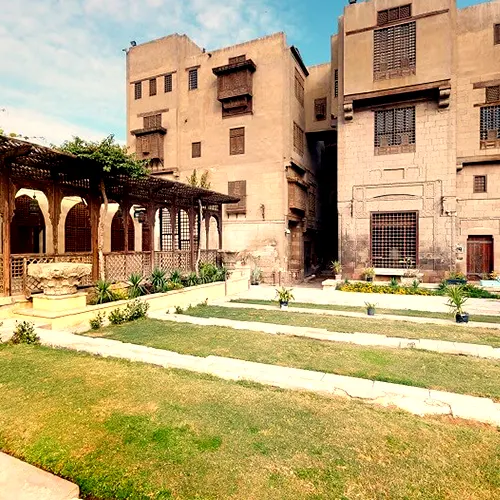
Gayer Anderson Museum or Bayt Al-Kritliyya is one of the most perfect examples of Islamic domestic architecture in Islamic Cairo, It is located beside Ibn Tulun Mosque. This museum consists of two houses.

The first house is on the east. It was founded by Hajj Mohammad Al-Gazzar in 1632. Later, this house was bought by a lady from Crete Island, so it is called Bayt Al-Kritliyya or Al-Kritliyya House.

The second one is on the west. It was built in 1540. It was called the house of Amna bint Salim. Later, these two houses were connected by a bridge.

But who is Gayer Anderson    Robert Gayer Anderson was a doctor in the British army. He decided to stay in Egypt and bought this house in 1935. After Robert Gayer Anderson’s death, this house is changed to be a museum displaying Gayer Anderson’s collections like oil paintings and ancient Egyptian collections.

Let’s take a tour in the rooms of this house 1 – The Sabil Room or the public drinking fountain. Now, this room displays collections exhibiting the legends of the house.

2 – Then, after ascending a few steps on the west side of the house, you with find the loggia. Enjoy its view and taking amazing photos.

3 – Then, the reception hall, distinguishing with its Islamic decorations.

4 – The picture gallery. In this room, you will find the oil paintings and drawings collected by Gayer Anderson.

5 – Then move to the museum room to see the ancient Egyptian collections of Gayer Anderson.

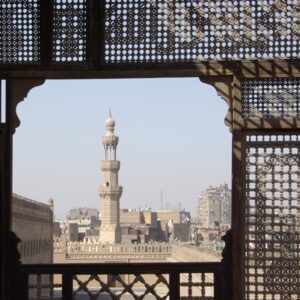
6 – You will ascend to the roof terrace to be amazed by this view overlooking Ibn Tulun Mosque.

Gayer Anderson Museum - Egypt Vacation Tours

7 – At the end of your tour, you will find a room displaying the medical tools of Gayer Anderson because he was an obstetrician and gynecologist.

Enjoy visiting this fabulous house with Egypt Vacation Tours team