Quick Answer: What is the best 13 days Egypt itinerary for 2027?
The best 13-day Egypt itinerary for first-time visitors combines three days in Cairo, two days in Aswan, a three-night Nile cruise to Luxor, and three nights in Hurghada before returning to Cairo. This route includes the Giza Pyramids, Grand Egyptian Museum, Abu Simbel, Karnak Temple, Valley of the Kings, and Red Sea beaches while keeping transfers manageable.
Thirteen days in Egypt gives travelers enough time to experience the country’s most important ancient monuments without spending every day rushing between airports, hotels, and archaeological sites.
The key is choosing the right route.
Egypt’s major attractions are spread across several regions. The Giza Pyramids stand near Cairo, the temples of Abu Simbel are far to the south near Lake Nasser, and the Valley of the Kings lies on the Nile’s west bank in Luxor. Meanwhile, Hurghada offers a completely different experience along the Red Sea coast.
Trying to visit these places in the wrong order creates unnecessary transfers and exhausting travel days.
This 13 days Egypt itinerary for 2027 follows a more practical route: explore Cairo first, fly south to Aswan, travel north along the Nile to Luxor, cross the Eastern Desert to Hurghada, and finish with an overnight stay in Cairo before your international departure.
You will experience the highlights of ancient Egypt, spend time on the Nile, explore modern Egyptian culture, and still have several days to relax.
13 Days Egypt Itinerary at a Glance
This itinerary covers 13 calendar days and 12 nights, including a three-night Nile cruise between Aswan and Luxor.
| Day | Destination | Main Experience | Overnight |
| Day 1 | Cairo | Arrival, hotel check-in, and relaxation | Cairo |
| Day 2 | Giza and Cairo | Giza Pyramids, Great Sphinx, Grand Egyptian Museum | Cairo |
| Day 3 | Cairo and Saqqara | Step Pyramid, Coptic Cairo, optional Khan El Khalili | Cairo |
| Day 4 | Aswan | Domestic flight, Philae Temple, Nile views | Aswan |
| Day 5 | Abu Simbel | Ramses II’s temples and Aswan free time | Aswan |
| Day 6 | Aswan | Nile cruise embarkation and Aswan exploration | Nile Cruise |
| Day 7 | Kom Ombo and Edfu | Riverside temples and Nile sailing | Nile Cruise |
| Day 8 | Luxor | Karnak Temple and Luxor Temple | Nile Cruise |
| Day 9 | Luxor to Hurghada | Valley of the Kings, Hatshepsut Temple, road transfer | Hurghada |
| Day 10 | Hurghada | Red Sea beach and relaxation | Hurghada |
| Day 11 | Hurghada | Snorkeling, marine excursions, or independent leisure | Hurghada |
| Day 12 | Cairo | Return flight and flexible sightseeing | Cairo |
| Day 13 | Cairo | Airport transfer and international departure | — |
Important planning note: This is a sample itinerary, not a confirmed cruise departure or flight schedule. Nile cruise embarkation days, sightseeing sequences, and domestic transport must be coordinated with actual 2027 availability before booking.
Why This Route Works for a 13-Day Egypt Vacation
The greatest advantage of this itinerary is that it follows Egypt’s geography rather than treating every attraction as a separate excursion from Cairo.
Egypt’s famous archaeological sites are connected historically by the Nile, but they are not necessarily close enough for convenient same-day travel.
Cairo and Giza form the northern starting point. Aswan is farther south, near many important Nubian monuments. Luxor sits north of Aswan and contains the remains of ancient Thebes. Hurghada lies east of Luxor across the desert, on the Red Sea.
The route uses each destination as a base instead of repeatedly returning to the same city.
Why start in Cairo?
Cairo is a practical arrival point for many international travelers from the United States, United Kingdom, Canada, Australia, and Europe.
Starting with several nights in Cairo also provides time to adjust after a long flight. You can visit the pyramids and museums without scheduling a domestic connection immediately after arriving in Egypt.
This is especially useful for travelers arriving late in the evening or after an overnight flight.
Why visit Aswan before Luxor?
The suggested itinerary uses a northbound Nile cruise from Aswan to Luxor.
Three-night Aswan-to-Luxor cruises are an established option, although individual vessels operate on different schedules.
Traveling north also places you in Luxor at the end of the cruise, making the onward road journey to Hurghada relatively straightforward.
For this specific combination of destinations, the order helps avoid returning to Aswan after visiting Luxor.
Why include Hurghada?
Ancient temples and museums are extraordinary, but consecutive days of intensive sightseeing can become tiring.
Hurghada adds a different rhythm to the vacation.
Instead of another early departure, travelers can spend time swimming, snorkeling, relaxing at a beach resort, or enjoying the Red Sea coastline.
The contrast between ancient monuments and coastal relaxation is one reason this route works particularly well for couples, families, and first-time visitors.
Why return to Cairo on Day 12?
Returning to Cairo the day before an international flight provides additional flexibility if domestic transport is disrupted.
A same-day connection from Hurghada to an international departure may be possible, but it can introduce unnecessary risk when the flights are booked separately.
For most travelers, an overnight stay in Cairo before departure is the more comfortable arrangement.
Day 1: Arrive in Cairo and Settle into Egypt
Overnight: Cairo | Travel pace: Easy
Your Egypt vacation begins at Cairo International Airport, one of the country’s main international arrival gateways.
After passport control, baggage collection, and any required entry formalities, transfer to your hotel in Cairo or Giza.
There is no need to schedule major sightseeing on arrival day.
International flights can involve long journeys, changes of time zone, and unpredictable arrival times. An uncomplicated first evening will help you enjoy the much more demanding sightseeing planned for Day 2.
Where should you stay in Cairo?
Your choice depends on what matters most during the first three days.
Giza and the Pyramids area
Accommodation near the pyramids is attractive for travelers who want a memorable view of the Giza Plateau or convenient access to nearby attractions.
Some hotels and guesthouses offer views of the pyramids, although the quality of the view depends on the particular room and property.
Be aware that Giza is not equally convenient for every Cairo attraction.
Downtown Cairo
Downtown is suitable for travelers interested in the city’s urban character, restaurants, historic architecture, and central sightseeing.
It can provide convenient access to several cultural attractions but involves longer travel across the city when visiting Giza.
Zamalek
Zamalek is a popular option for travelers seeking a relatively relaxed neighborhood with restaurants, cafés, and Nile views.
It is especially appealing if you prefer spending your evenings outside the hotel.
For this itinerary, a well-located hotel with reliable transportation arrangements is more important than choosing a property solely for its advertised proximity to attractions.
What should you do on your first evening?
Keep the evening flexible.
Depending on your arrival time, you could enjoy dinner at the hotel, take a short walk in the surrounding area, or find a restaurant overlooking the Nile.
If your flight arrives during the morning, a relaxed felucca experience or an easy neighborhood outing may be possible.
However, sightseeing should remain optional.
Arrival-day recommendations
Arrange your airport transfer in advance, particularly if this is your first visit to Egypt.
Confirm the pickup location, hotel address, and driver contact details. Airport terminals and pickup procedures can differ, so checking your arrival information beforehand is useful.
Carry enough local currency for small expenses, and keep your passport and essential documents accessible.
Travelers arriving late should prioritize rest over sightseeing.
Best decision: Protect your energy for the pyramids rather than trying to fit a major museum visit into your arrival day.
Day 2: Explore the Giza Pyramids, Great Sphinx and Grand Egyptian Museum
Overnight: Cairo | Travel pace: Full sightseeing day
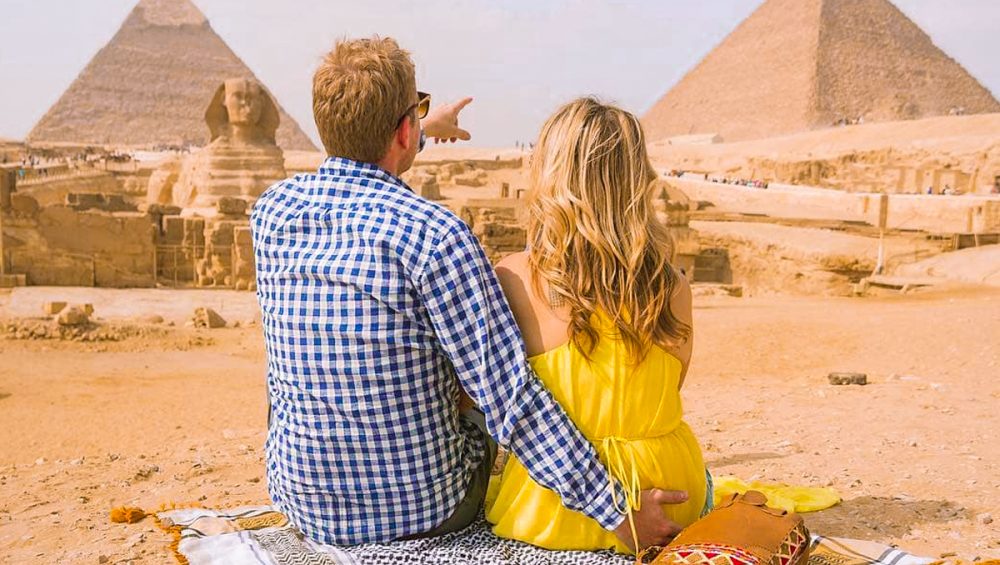
Day 2 introduces two of Egypt’s most important visitor experiences: the monuments of the Giza Plateau and the Grand Egyptian Museum.
These sites complement one another.
The pyramids represent the remarkable engineering and royal burial traditions of Egypt’s Old Kingdom. The museum provides broader context through ancient objects, sculpture, royal collections, and archaeological interpretation.
Together, they create a strong foundation for understanding the rest of your Egypt itinerary.
Morning: Visit the Giza Pyramids
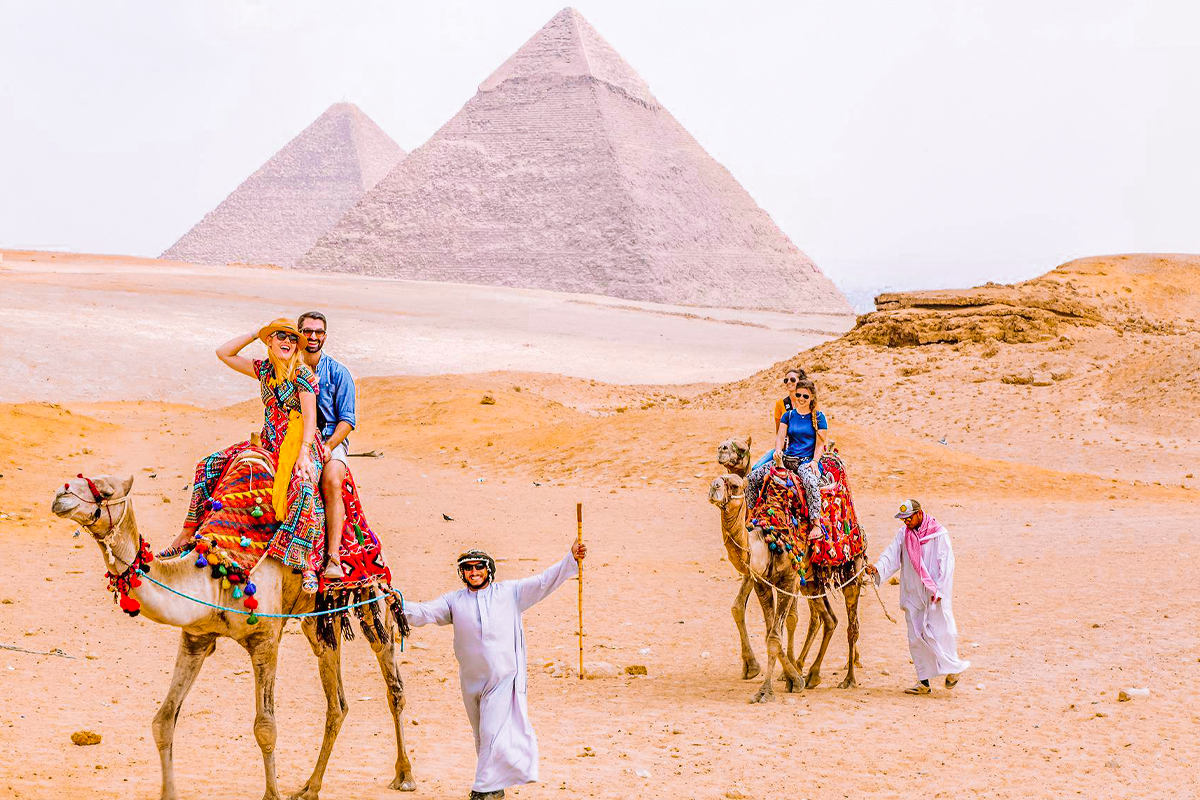
Start the day at the Giza Necropolis, one of the world’s best-known archaeological landscapes.
The plateau contains three principal royal pyramids associated with the Fourth Dynasty:
- The Great Pyramid of Khufu
- The Pyramid of Khafre
- The Pyramid of Menkaure
The Great Pyramid was constructed for Pharaoh Khufu and is the largest of the three.
Visiting the plateau involves more than looking at the monuments from a single viewpoint. Allow time to understand their arrangement, appreciate the surrounding desert landscape, and see how the smaller monuments and ancient burial areas relate to the principal pyramids.
A knowledgeable guide can explain the development of Old Kingdom royal tombs and the role of the pyramid complexes.
Should you go inside a pyramid?
Entering one of the pyramids can be memorable, but it is not essential for every traveler.
Interior passages may be narrow, steep, hot, and physically uncomfortable. Some require crouching or climbing, which can be unsuitable for travelers with mobility restrictions or claustrophobia.
Interior access may require an additional ticket, depending on the monument and current admission arrangements.
If you would rather spend your time outside, you can still appreciate the pyramids’ architecture and historical significance.
For most first-time visitors, the exterior experience should remain the priority.
Visit the Great Sphinx
The Great Sphinx of Giza stands near the valley temple associated with Khafre’s pyramid complex.
Its monumental body combines the form of a reclining lion with a human head.
The Sphinx remains one of ancient Egypt’s most recognizable sculptures, and its location helps illustrate the relationship between royal monuments, temples, and the surrounding necropolis.
A visit typically involves walking through the designated viewing areas, photographing the monument, and learning about its archaeological setting.
Photographic conditions can change significantly throughout the day, so the best viewpoint depends partly on the sun and visitor flow.
Afternoon: Discover the Grand Egyptian Museum
After the pyramids, continue to the Grand Egyptian Museum.
Located near the Giza Plateau, the museum provides a large-scale introduction to ancient Egyptian civilization.
Its architecture, monumental displays, and galleries make it a particularly valuable stop early in the trip.
Rather than attempting to see every exhibit, focus on the collections and themes that interest you most.
Look for displays that explain royal power, religious beliefs, everyday life, artistic techniques, and the relationship between ancient objects and the monuments you will encounter later in Luxor and Aswan.
This approach makes the museum more rewarding than simply walking quickly from gallery to gallery.
How much time should you allow?
A practical planning guideline is approximately three to four hours at the Giza Plateau and several additional hours for the museum, depending on your interests and the ticketed experience.
Allow time for lunch, transfers, entry procedures, and breaks.
The museum uses official admission arrangements that may include timed entry. Check the latest visitor information before finalizing your day.
If you are passionate about archaeology, you may prefer a dedicated full day at the museum and move one of Cairo’s other attractions to Day 3 or Day 12.
Day 2 planning tip
Do not underestimate the walking involved.
Wear comfortable shoes, carry drinking water, and use sun protection. Even during cooler months, exposed areas on the Giza Plateau can feel warm under direct sunlight.
This is one of the most substantial sightseeing days of the entire trip, so avoid adding another major evening activity unless you still feel energetic.
Day 3: Discover Saqqara, Coptic Cairo and Traditional Markets
Overnight: Cairo | Travel pace: Moderate to full
After seeing the famous pyramids of Giza, Day 3 offers a broader perspective on Cairo’s history.
The suggested program combines an important earlier pyramid complex with selected religious and cultural attractions in the city.
Because these sites are spread across different parts of Greater Cairo, the exact sequence should depend on traffic and your sightseeing priorities.
Morning: Explore Saqqara and the Step Pyramid
Travel south of Giza to the Saqqara Necropolis.
Saqqara was one of ancient Memphis’s principal burial areas and contains monuments from multiple periods of Egyptian history.
Its best-known landmark is the Step Pyramid of Djoser.
Built during the Third Dynasty, the pyramid represents a major development in ancient Egyptian monumental architecture.
Rather than having the smooth-sided form familiar from Giza, Djoser’s pyramid is composed of six stepped levels.
The complex is traditionally associated with Imhotep, the architect and high official connected with King Djoser.
Exploring Saqqara after Giza provides an opportunity to compare the development of royal funerary monuments.
You can see how techniques and architectural ambitions changed across the early pyramid-building periods.
Should you add Memphis or Dahshur?
Both are worthwhile, but including everything in one day is not always the best choice.
Memphis offers additional historical context about Egypt’s ancient capital region.
Dahshur contains major Fourth Dynasty monuments, including the Bent Pyramid and Red Pyramid.
If you are particularly interested in early Egyptian history, you could dedicate most of Day 3 to Saqqara, Memphis, and Dahshur instead of returning to central Cairo for the afternoon.
That is a better choice than trying to rush through all the sites without adequate time.
For a general first-time itinerary, Saqqara plus selected historic Cairo attractions provides more variety.
Afternoon: Visit Coptic Cairo
Return toward the city to explore part of Old Cairo.
This district includes important churches and monuments associated with the history of Christianity in Egypt.
One prominent landmark is the Hanging Church, also known as the Church of the Virgin Mary.
Its architectural setting above an older gatehouse contributes to its distinctive name.
Coptic Cairo provides a valuable contrast with the dynastic monuments visited during the previous two days.
It also demonstrates how different periods of Egypt’s history remain visible in the urban landscape.
Depending on opening arrangements and personal interests, you could also consider the Coptic Museum or other nearby religious landmarks.
Dress respectfully when visiting places of worship.
Optional evening: Khan El Khalili Bazaar
If you have sufficient time and energy, finish the day around Khan El Khalili Bazaar.
This historic commercial district is known for its lanes, traditional shops, souvenirs, cafés, and lively atmosphere.
It is an opportunity to experience another side of Cairo beyond archaeological sightseeing.
You might browse handcrafted objects, purchase gifts, or enjoy a relaxed café stop.
However, visitors should expect active selling, bargaining, and busy pedestrian areas.
If shopping does not interest you, there is no reason to force the bazaar into your itinerary.
What should you prioritize if time is limited?
Choose Saqqara as the central historical attraction and select only one major afternoon experience.
An archaeology-focused traveler might spend longer at Saqqara and visit Dahshur.
A traveler interested in religion and culture might prefer Coptic Cairo.
Someone who enjoys photography, urban life, and shopping could shorten the archaeological portion and spend more time in historic Cairo.
Best decision: Finish Day 3 without exhausting yourself. The next morning involves a domestic flight to southern Egypt.
Day 4: Fly from Cairo to Aswan and Visit Philae Temple
Overnight: Aswan | Travel pace: Moderate
Day 4 takes you from the busy capital to Aswan, a city known for its striking Nile scenery, granite landscapes, and Nubian cultural heritage.
The atmosphere in Aswan is different from Cairo.
The river passes between islands and rocky outcrops, traditional sailing boats move across the water, and the surrounding desert creates dramatic views.
Aswan is also a gateway to important monuments in southern Egypt.
Morning: Travel to Aswan
Take a domestic flight from Cairo to Aswan, ideally selecting a departure that leaves enough time for an afternoon activity.
A direct flight usually takes around an hour and a half, but schedules and actual travel times vary.
Remember to allow additional time for airport transfers, check-in, security, baggage collection, and the journey to your hotel.
If possible, avoid choosing an unnecessarily early departure after three busy days in Cairo.
Visit the Temple of Philae
One of Aswan’s essential attractions is the Temple of Philae.
The temple complex is primarily associated with the goddess Isis, who played an important role in ancient Egyptian religious beliefs.
Its surviving monuments include structures developed during the Ptolemaic and Roman periods.
The complex was relocated to Agilkia Island during the international campaign to preserve Nubian monuments threatened by the construction of the Aswan High Dam.
Today, visitors reach the temple by boat.
The approach across the water is part of the experience and provides an excellent opportunity to appreciate the temple’s island setting.
Inside the complex, you can explore decorated walls, columned spaces, gateways, and reliefs connected with the worship of Isis and other deities.
Why is Philae important?
Philae helps illustrate the continuity and transformation of Egyptian religious traditions across different historical periods.
The site remained significant long after the age of the great New Kingdom pharaohs.
Its architecture also demonstrates how Greek and Roman rulers adopted and continued established Egyptian temple traditions.
This makes Philae particularly interesting when compared with the much earlier pyramids of Giza.
Evening: Enjoy Aswan’s Nile scenery
After returning to your hotel, keep the evening relaxed.
If your arrival time and energy permit, consider a short felucca ride on the Nile.
A felucca is a traditional sailing boat, commonly recognized by its large triangular sail.
The experience can be particularly enjoyable in the late afternoon when the light becomes softer.
Alternatively, enjoy dinner overlooking the river or take a quiet walk along the Corniche.
For travelers interested in a more detailed introduction to the destination, the history and attractions of Aswan provide useful context for the next two days.
Where should you stay in Aswan?
Hotels along the river offer convenient access to the city’s main attractions and scenic views.
Properties on islands can offer quieter surroundings, but they may require boat transfers that add time to your daily arrangements.
For a short stay, convenience matters.
Consider your planned Abu Simbel departure, luggage arrangements, breakfast availability, and access to the Nile cruise embarkation point.
Best decision: Choose accommodation that simplifies both the Abu Simbel excursion and the next day’s cruise arrangements.
Day 5: Visit Abu Simbel and Discover More of Aswan
Overnight: Aswan | Travel pace: Early start and long excursion
Abu Simbel is one of the most remarkable archaeological destinations in Egypt.
Located south of Aswan near Lake Nasser, it contains two monumental rock-cut temples associated with Pharaoh Ramesses II and Queen Nefertari.
The journey requires planning, but the experience is often a highlight for travelers interested in ancient Egyptian history.
Early morning: Travel from Aswan to Abu Simbel
Road journeys from Aswan to Abu Simbel generally take around three to four hours each way, depending on transport and conditions.
For this reason, most road-based day trips start early.
A private vehicle offers flexibility, while shared excursions may be more economical.
Flights may also be an option on operating dates, although travelers need to confirm current schedules and overall transfer arrangements before choosing this alternative.
If you dislike very early departures or long road journeys, consider whether an overnight stay near Abu Simbel would suit you better.
That variation would require rearranging this 13-day plan.
Explore the Great Temple of Ramesses II
The principal temple at Abu Simbel is famous for its monumental façade, which features four colossal seated statues of Ramesses II.
The temple was built during the Nineteenth Dynasty and reflects the political, religious, and architectural ambitions of the New Kingdom.
The interior contains halls, statues, and decorated scenes associated with royal power, divine worship, and military achievements.
One of its most impressive features is the way its architectural design combines the surrounding rock with a carefully planned interior.
Seeing Abu Simbel in person provides a different experience from visiting freestanding temples in Luxor and Aswan.
Visit the Small Temple of Nefertari
Nearby stands the smaller temple dedicated to Nefertari and the goddess Hathor.
Its façade includes large statues representing the royal couple.
The temple is especially significant because of the prominence given to Nefertari within its sculptural program.
Together, the two temples offer insight into the royal imagery and religious beliefs of the Ramesside period.
Understand the rescue of Abu Simbel
Abu Simbel’s modern history is almost as remarkable as its ancient construction.
During the international efforts to save monuments threatened by rising water associated with the Aswan High Dam, the temples were dismantled and reconstructed at a higher location.
The project became one of the most celebrated international heritage-preservation efforts of the twentieth century.
Knowing this history adds an extra dimension to your visit.
You are seeing both an extraordinary ancient monument and the result of a major modern conservation achievement.
Afternoon: Return to Aswan
After exploring the temples, return to Aswan.
This is a long excursion, so plan for a relatively quiet afternoon and evening.
You could relax at the hotel, enjoy a meal near the Nile, or take a gentle walk if you have enough energy.
Avoid scheduling another demanding archaeological visit immediately afterward.
Is Abu Simbel worth including in a 13-day itinerary?
For travelers interested in ancient Egypt, Abu Simbel is generally worth the additional travel time.
Its monumental architecture, remote location, and historical significance distinguish it from the temples visited elsewhere on this route.
However, travelers with limited mobility, young children, or a strong preference for slower travel may reasonably choose to spend an additional day in Aswan instead.
The right decision depends on the experience you value most.
Best decision: Visit Abu Simbel before your Nile cruise so you do not need to squeeze a long excursion into a tightly scheduled embarkation or disembarkation day.
Day 6: Board Your Nile Cruise in Aswan
Overnight: Nile Cruise | Travel pace: Relaxed to moderate
Day 6 marks the beginning of one of Egypt’s most distinctive travel experiences: cruising along the Nile between Aswan and Luxor.
The suggested itinerary includes a three-night northbound cruise.
This route allows you to see several important temples while enjoying time aboard a vessel that travels through the Nile Valley.
Morning: Explore Aswan before embarkation
Depending on your confirmed boarding time, you may have an opportunity to visit another Aswan attraction.
One option is the Unfinished Obelisk, located in an ancient granite quarry.
The monument provides valuable evidence of the techniques used by ancient Egyptian stoneworkers.
Because it remained attached to the bedrock, visitors can appreciate aspects of the quarrying process that are less obvious when looking at finished obelisks in temples.
Another option is the Nubian Museum, which explores the history and cultural heritage of Nubia.
The museum is particularly appropriate for travelers seeking a deeper understanding of the region beyond its ancient temples.
If you prefer a less structured morning, spend time relaxing by the Nile before transferring to the cruise vessel.
Boarding and checking into your cabin
Nile cruise ships operate in different comfort categories.
Some resemble floating hotels with restaurants, lounges, sun decks, and swimming pools. Smaller vessels may offer a more intimate experience, with different cabin layouts and sailing arrangements.
Before confirming your cruise, check the exact vessel, cabin category, deck, meal plan, and included sightseeing.
A vessel described as luxury is not automatically the best choice for every traveler. Cabin condition, service, itinerary timing, and overall value often matter more than a marketing label.
What is included in a Nile cruise?
Many Nile cruises offer full-board accommodation, meaning breakfast, lunch, and dinner are included.
However, this does not necessarily mean that drinks, guides, entrance tickets, tips, transfers, or optional excursions are included.
These details vary by operator and booking package.
Ask for a written list of inclusions and exclusions before making payment.
What makes a Nile cruise special?
The Nile has shaped Egyptian civilization for thousands of years.
Ancient settlements, agricultural landscapes, religious centers, and trade routes developed along its banks.
While traveling between Aswan and Luxor, you can observe agricultural fields, palm groves, riverbank communities, and the transition between fertile land and desert.
These landscapes provide context for many of the ancient monuments explored during the journey.
The cruise also introduces a welcome change of pace.
Rather than packing and unpacking every day, you remain in the same cabin as the vessel travels between destinations.
Choosing the correct cruise route
For this itinerary, look for an actual three-night Aswan-to-Luxor cruise, not simply a generic Nile cruise advertised without a clear direction or duration.
The company’s own four-day, three-night Nile cruise from Aswan to Luxor is a relevant starting point for comparing the route and checking the specific sightseeing arrangements.
The exact departure day should determine how you organize the first five days of the vacation.
If the cruise does not sail on your intended Day 6, adjust the Cairo or Aswan nights rather than assuming a departure will be available.
Best decision: Confirm the cruise schedule first, then arrange the domestic flight, Aswan hotel, and Abu Simbel excursion around it.
Day 7: Explore Kom Ombo and Edfu During Your Nile Cruise
Overnight: Nile Cruise | Travel pace: Moderate, with scheduled temple visits
Day 7 introduces two remarkable temple complexes along the Nile.
The scheduled visits and sailing times depend on the vessel, but Kom Ombo and Edfu are standard highlights of the route between Aswan and Luxor.
These temples reveal how religious architecture developed during the later periods of ancient Egyptian history.
Visit the Temple of Kom Ombo
The Temple of Kom Ombo occupies a distinctive position overlooking the Nile.
Its design is unusual because the sanctuary is associated with two principal deities.
One is Sobek, the crocodile god, who was closely connected with the Nile, fertility, and protective religious beliefs.
The other is Horus the Elder, a falcon-associated deity.
The temple’s partly symmetrical arrangement reflects this dual dedication.
Look closely at the decorated columns and reliefs. Their scenes provide insight into religious rituals, divine symbolism, and temple ceremonies.
Kom Ombo also offers an opportunity to appreciate how the physical geography of the Nile influenced the location and orientation of religious monuments.
Explore the Temple of Horus at Edfu
Continue toward Edfu, home to one of Egypt’s best-preserved ancient temple complexes.
The Temple of Horus at Edfu was constructed principally during the Ptolemaic period.
The temple is notable for its imposing entrance pylon, substantial courtyard, decorated walls, and carefully arranged ceremonial spaces.
Its inscriptions and reliefs preserve important material relating to ancient religious rituals and mythology.
The relationship between Horus and Seth is especially relevant to the religious traditions represented at Edfu.
A guided visit can help explain how the temple’s successive spaces were used and why access to the most sacred areas was traditionally restricted.
What is the best way to experience these temples?
Prioritize understanding a few meaningful details rather than trying to photograph every wall.
At Kom Ombo, pay attention to the temple’s dual dedication.
At Edfu, observe how the architecture guides visitors from the monumental entrance toward more enclosed sacred spaces.
These observations make the two sites easier to remember and distinguish.
Transfers between the river and archaeological sites vary by docking location and cruise arrangements. At Edfu, confirm your available transport options and any accessibility considerations in advance.
Enjoy the Nile between temple visits
One of the pleasures of cruising is the time spent traveling between monuments.
Relax on the sun deck, enjoy the scenery, or read about the sites you have visited.
The Nile’s landscape is not merely a backdrop.
Its seasonal patterns, surrounding farmland, and settlements played an essential role in the development of ancient Egyptian civilization.
Modern river life offers a different perspective on that long relationship.
What should you expect from the cruise schedule?
Cruise programs sometimes change their order because of navigation, docking, or operational considerations.
A ship may visit Edfu at a different time than another operator or adjust the sequence of excursions.
Do not assume that the itinerary advertised by one vessel applies to every Nile cruise.
The most important requirement is that the main scheduled excursions are confirmed as part of your actual package.
Best decision: Keep this day entirely within the cruise program rather than arranging independent activities that could conflict with sailing times.
Day 8: Discover Karnak Temple and Luxor Temple
Overnight: Nile Cruise | Travel pace: Full cultural sightseeing day
Luxor is one of the most important archaeological destinations in Egypt.
The modern city occupies part of the region once associated with ancient Thebes, a major religious and political center during the New Kingdom.
Luxor’s monuments are concentrated on both banks of the Nile.
The East Bank contains major temple complexes, while the West Bank includes important royal tombs and funerary monuments.
In this sample itinerary, Day 8 focuses on the East Bank, with West Bank sightseeing scheduled for the following morning.
Your cruise operator may reverse this sequence.
Explore Karnak Temple Complex
Begin with the Karnak Temple Complex, among the most significant religious monuments of ancient Egypt.
Karnak was developed and expanded over many centuries.
Its principal religious focus was the worship of Amun-Ra, along with other deities associated with the Theban religious tradition.
Successive rulers added structures that reflected their political authority and devotion.
What should you see at Karnak?
The Great Hypostyle Hall is one of Karnak’s most memorable features.
Its enormous decorated columns create an architectural space unlike anything encountered during the earlier days of your Egypt vacation.
Notice the scale of the columns, the carved reliefs, and the different architectural phases visible throughout the complex.
The Sacred Lake, obelisks, monumental gateways, and temple courts also contribute to Karnak’s historical importance.
Because the complex is extensive, a guided route helps visitors understand how its different areas relate to one another.
Without interpretation, Karnak’s numerous structures can become difficult to place in their historical context.
Continue to Luxor Temple
The Luxor Temple occupies a prominent position near the Nile in central Luxor.
Although both Karnak and Luxor Temple were closely associated with the Theban religious world, they served different ceremonial roles.
Luxor Temple was particularly connected with royal ideology and important religious celebrations, including the Opet Festival.
Its surviving features include monumental statues, columns, courtyards, and architectural additions from different historical periods.
The Avenue of Sphinxes
A processional avenue historically connected Karnak Temple with Luxor Temple.
Today, the restored route helps visitors understand how these two major religious centers were linked within the ancient ceremonial landscape.
This connection is an important example of why Egyptian temples should not be studied only as isolated buildings.
Their relationships to other monuments, processional routes, settlements, and the Nile were central to their original functions.
Is Luxor Temple better during the day or evening?
Both experiences have advantages.
Daylight allows visitors to examine architectural details and reliefs clearly.
Evening illumination, when available during published visiting hours, creates a different atmosphere and can be especially appealing for photography.
The best choice depends on your confirmed cruise schedule and the amount of time available.
Avoid relying on outdated opening-hour information when planning evening visits.
How demanding is Day 8?
Karnak involves substantial walking, often across open and uneven surfaces.
Luxor Temple requires additional walking and standing, although the visit can usually be shorter.
Drink water regularly and wear comfortable footwear.
If the cruise offers a full-day program covering both banks of Luxor, consider which additional attractions you most want to see rather than accepting an exhausting schedule without adjustments.
Best decision: Focus on Karnak and Luxor Temple today, preserving enough time and energy for the West Bank before leaving Luxor.
Day 9: Valley of the Kings, Hatshepsut Temple and Transfer to Hurghada
Overnight: Hurghada | Travel pace: Full sightseeing and transfer day
Day 9 combines one of Egypt’s greatest archaeological experiences with the journey to the Red Sea.
You will leave the Nile cruise in Luxor and travel to Hurghada, where the second half of the vacation becomes noticeably more relaxed.
Because this is a full day, an early start and carefully arranged transportation are important.
Morning: Visit the Valley of the Kings
The Valley of the Kings was an important royal burial area during Egypt’s New Kingdom.
Many pharaohs were buried in tombs carved into the cliffs and rock formations of the Theban West Bank.
The valley is especially famous for the tomb of Tutankhamun, discovered by Howard Carter and his team in 1922.
However, the site contains many other remarkable tombs.
Their decorated corridors and burial chambers preserve scenes associated with royal funerary beliefs, the afterlife, and religious texts.
Which tombs should you visit?
The selection depends on which tombs are open and the admission arrangements applicable to your travel date.
A standard admission ticket may permit entry to a defined selection of tombs, while certain especially popular tombs can require separate tickets.
Rather than choosing exclusively by fame, consider the quality of wall decoration, historical context, accessibility, and likely crowd levels.
Some tombs have steep stairs or confined passages.
Travelers with mobility concerns should review the specific tomb access before purchasing additional admission.
Visit the Mortuary Temple of Hatshepsut
Continue to the Mortuary Temple of Hatshepsut at Deir el-Bahari.
Hatshepsut was one of the most significant female rulers of ancient Egypt.
Her mortuary temple is celebrated for its terraces, colonnades, and striking relationship with the surrounding cliffs.
The site’s architectural composition is very different from the enclosed temples at Karnak and Edfu.
Its long terraces and open setting create one of the most recognizable views in the Theban landscape.
Reliefs at the complex provide valuable evidence concerning Hatshepsut’s reign, religious presentation, and expedition to the Land of Punt.
Stop at the Colossi of Memnon
Before leaving the West Bank, stop at the Colossi of Memnon.
These two monumental seated statues represent Pharaoh Amenhotep III.
They originally stood at the entrance to his enormous mortuary temple complex.
Today, they survive as prominent landmarks within the West Bank archaeological landscape.
A short visit offers a useful introduction to the scale of the royal funerary monuments that once occupied this area.
Should you add Medinet Habu?
If you are passionate about ancient Egyptian temples and have additional time, consider Medinet Habu, associated particularly with Ramesses III.
Its monumental architecture and decorated walls make it an excellent addition for repeat visitors or travelers with a strong interest in the New Kingdom.
However, including Medinet Habu, several royal tombs, Hatshepsut Temple, and the transfer to Hurghada may make Day 9 unnecessarily exhausting.
For this 13-day itinerary, treat it as an optional substitute rather than a guaranteed extra stop.
Afternoon: Drive from Luxor to Hurghada
After sightseeing, travel east from Luxor toward the Red Sea.
The road journey to Hurghada generally takes around four hours or longer, depending on your departure point, destination hotel, stops, and road conditions.
A private transfer is a convenient choice when traveling with luggage after a cruise.
The route crosses the Eastern Desert, providing a dramatic contrast to the agricultural landscapes along the Nile.
Plan for additional time rather than treating the estimated driving duration as guaranteed.
Evening: Check into your Red Sea resort
Arrive in Hurghada, check into your hotel, and enjoy dinner.
After several days of archaeological exploration, there is no need to schedule another activity.
If your hotel offers a swimming pool or private beach, these can become the focus of the next two days.
Best decision: Arrange the Luxor-to-Hurghada transfer in advance and keep the evening free. If your cruise schedule makes Day 9 too crowded, shorten the West Bank visit or add an overnight stay in Luxor by adjusting another destination.
Day 10: Relax on the Red Sea Beaches of Hurghada
Overnight: Hurghada | Travel pace: Relaxed
After a week of temples, monuments, and early departures, Day 10 is deliberately simple.
Spend the day enjoying the Red Sea.
Hurghada is one of Egypt’s established coastal resort destinations, offering beaches, swimming, marine excursions, and a wide range of accommodation styles.
Why is Hurghada worth visiting?
Hurghada offers a different perspective on Egypt.
The Red Sea is known for its clear water and marine environments, while the region’s beaches provide an opportunity to slow down after several demanding travel days.
For travelers who have spent most of the previous week exploring archaeological sites, this contrast can make the entire holiday more enjoyable.
A relaxing day also helps create a buffer within the itinerary.
You will not need to spend all 13 days sightseeing continuously.
Enjoy a beach or swimming-pool day
For your first full day in Hurghada, consider staying at the resort.
Swim, relax, enjoy a leisurely lunch, and spend time by the water.
Travelers staying at an all-inclusive property may find this particularly convenient.
However, check exactly what your hotel package includes.
All-inclusive accommodation does not necessarily mean that premium drinks, spa services, excursions, or special dining experiences are included.
Which area of Hurghada should you choose?
The ideal location depends on your travel style.
Central Hurghada offers access to urban facilities, restaurants, shopping, and excursions.
Resort areas farther along the coastline may provide larger properties, more private surroundings, and extensive hotel facilities.
Some travelers prefer quieter destinations such as nearby resort developments rather than the busy central districts.
When comparing hotels, examine the actual beach facilities, room condition, distance from the airport, family amenities, and included services.
A beachfront hotel is not always equivalent to a property with easy, sandy access to the sea.
Is Hurghada suitable for families?
Hurghada can work well for families, particularly when selecting a resort with suitable pools, beach access, and age-appropriate facilities.
Families with younger children may prefer a hotel with shallow swimming areas or supervised activities.
Check water access carefully, as some coastal properties have coral or rocky areas that may not be ideal for children entering the sea directly.
For travelers with mobility limitations, ask about ramps, elevators, beach access, and the distance between rooms and facilities.
Best decision: Keep at least one Red Sea day almost completely free. Not every day of a successful vacation needs a scheduled excursion.
Day 11: Snorkeling, Island Excursions or a Flexible Day in Hurghada
Overnight: Hurghada | Travel pace: Flexible
Day 11 can be as active or relaxed as you prefer.
This flexibility is one of the main benefits of including the Red Sea in a 13-day itinerary.
Travelers who enjoy marine activities can join an excursion, while those seeking rest can spend another day at their hotel.
Option 1: Take a snorkeling excursion
The Red Sea is known for its coral reef environments and marine life.
Depending on conditions and the excursion operator, snorkeling trips may visit suitable reefs and coastal locations around Hurghada.
These experiences are particularly appealing to travelers interested in marine ecosystems and underwater photography.
Choose an established operator with appropriate safety procedures, suitable equipment, and clear guidance.
Ask about swimming ability requirements, sea conditions, boat facilities, and supervision.
Avoid touching coral or disturbing marine wildlife.
Option 2: Join a boat excursion
Some visitors choose a boat trip to an island or designated coastal destination in the Hurghada region.
These trips may combine swimming, snorkeling, beach time, and onboard meals.
The experience depends on the specific program and sea conditions.
Before booking, confirm how much time you will actually spend on the water, what activities are included, and whether additional fees apply.
A full-day boat excursion is not necessarily the best option if you mainly want to relax.
Option 3: Explore Hurghada beyond the resort
Travelers interested in local attractions can spend part of the day exploring Hurghada.
Depending on your interests, you could visit local markets, restaurants, marina areas, or cultural attractions.
The Hurghada Museum and its surrounding destination may interest travelers who want to maintain a historical element during their Red Sea stay.
Museum admission and opening arrangements should be checked before visiting.
Option 4: Enjoy a second relaxing day
There is nothing wrong with choosing another beach day.
If you have already visited the pyramids, Abu Simbel, several Nile temples, and the Valley of the Kings, you may appreciate having time without an early alarm.
Relaxation can be a central part of your Egypt vacation rather than an activity that must be justified.
Who should choose which activity?
| Traveler Type | Recommended Day 11 Experience |
| Couples | Private beach time or a comfortable boat excursion |
| Families | Resort facilities or a suitable family-friendly snorkeling trip |
| Marine-life enthusiasts | Guided snorkeling excursion |
| Older travelers | Relaxed resort day or a short coastal outing |
| Cultural travelers | Hurghada Museum and local exploration |
| Travelers seeking rest | Unscheduled beach or pool day |
Best decision: Choose this activity after considering the weather forecast and your energy level. Avoid paying for a nonrefundable marine excursion before understanding the operator’s cancellation and safety policies.
Day 12: Fly from Hurghada to Cairo and Enjoy a Flexible Final Evening
Overnight: Cairo | Travel pace: Easy to moderate
Day 12 brings you back to Cairo before your international departure.
This overnight stay is an important element of the route.
Although same-day international connections may work for some travelers, a separate Cairo overnight provides more flexibility when dealing with domestic flight schedules or possible disruptions.
Morning: Return to Cairo
Travel from your resort to Hurghada International Airport for a domestic flight to Cairo.
Direct services may be available depending on your travel date, but flight schedules, operating airlines, and departure times need confirmation when booking.
If you prefer not to fly, a road transfer is possible, although it requires considerably more travel time.
For most visitors following this itinerary, flying is the more convenient choice.
Optional afternoon: Visit another Cairo attraction
If you arrive with sufficient time, choose one final experience.
One option is the National Museum of Egyptian Civilization, which provides an interpretation of Egypt’s history across multiple periods.
The museum is especially interesting for travelers who want to broaden their understanding beyond the pharaonic monuments visited during the trip.
Another possibility is historic Islamic Cairo, depending on your location and available time.
Alternatively, spend the afternoon shopping, visiting a café, or enjoying a relaxed meal near the Nile.
Should you visit Alexandria on Day 12?
Alexandria is a fascinating Mediterranean city, but adding a full excursion from Cairo on Day 12 would make the day extremely demanding after a domestic flight.
Travelers who strongly want to visit Alexandria should consider replacing one of the other activities earlier in the itinerary or choosing a different 13-day route.
It is better to give Alexandria adequate time than to include it merely as another destination name.
Where should you stay on the final night?
Choose your final hotel based on your international departure time.
If you have an early flight, an airport-area hotel may be the most convenient option.
If your departure is later in the day, central Cairo or another suitable neighborhood may provide a more enjoyable final evening.
Confirm the airport terminal, transportation time, and recommended check-in window.
Best decision: Use the final Cairo night to protect your departure arrangements rather than filling it with unnecessary sightseeing.
Day 13: Depart Egypt
Overnight: None | Travel pace: Departure day
Your 13-day Egypt vacation concludes with breakfast, hotel checkout, and a transfer to Cairo International Airport.
Arrange your transportation according to your flight’s departure time and the airline’s recommended arrival window.
Traffic conditions can affect the journey, so allow an appropriate buffer.
Before leaving the hotel, check that you have your passport, boarding information, valuables, and other essential travel documents.
If you have purchased souvenirs or fragile objects, make sure they are packed appropriately and comply with airline baggage rules.
What will you have experienced in 13 days?
By the end of this journey, you will have explored:
- The pyramids and the Great Sphinx at Giza.
- The Grand Egyptian Museum and the early pyramid traditions at Saqqara.
- Coptic Cairo and selected aspects of modern Egyptian culture.
- Philae Temple and the landscapes of Aswan.
- The monumental temples of Abu Simbel.
- Kom Ombo and Edfu during a Nile cruise.
- Karnak, Luxor Temple, and the Valley of the Kings.
- The beaches and marine environments of Hurghada.
The itinerary provides a broad introduction to Egypt while leaving room to personalize the trip around your own interests.
How Much Does a 13-Day Egypt Trip Cost in 2027?
The cost of a 13-day Egypt itinerary depends heavily on travel dates, hotel category, Nile cruise vessel, transportation, included excursions, and the size of your group.
There is no single reliable price that applies to every traveler.
A package for two people traveling privately will have a different cost structure from a shared group tour, particularly when private guides and vehicles are included.
Similarly, travel during busy holiday periods may cost more than a comparable trip during less popular dates.
Compare three travel styles
| Travel Style | Accommodation | Transportation | Nile Cruise | Best For |
| Budget-conscious | Simple hotels and guesthouses | Shared excursions and selected private transfers | Standard vessel | Travelers prioritizing value |
| Comfort / Mid-range | Comfortable hotels and Red Sea resort | Domestic flights and a mix of private or shared services | Good-quality standard or deluxe vessel | Most first-time visitors |
| Luxury | Premium hotels, upgraded rooms and resort | Private transfers and tailored guiding | Premium vessel or boutique cruise | Travelers prioritizing privacy and comfort |
These are service categories, not confirmed 2027 prices.
What should a complete quotation include?
A properly prepared quotation should separate accommodation, cruise services, transportation, entrance fees, and optional activities.
Check whether the package includes:
- Twelve nights of accommodation, with the correct number of hotel and cruise nights.
- Domestic flights from Cairo to Aswan and Hurghada to Cairo, where applicable.
- Airport and intercity transfers.
- Nile cruise meals and accommodation.
- Guided sightseeing at the listed monuments.
- Entrance tickets, including any separately ticketed tombs or pyramid interiors.
- The Abu Simbel excursion.
- The selected Hurghada meal plan.
- Taxes, service charges, and clearly identified exclusions.
Also ask whether the quote includes gratuities, drinks, personal expenses, optional activities, travel insurance, and international flights.
A lower advertised price is not necessarily better value if several essential services must be purchased separately.
How can you reduce the cost?
Choose hotels according to location, cleanliness, and service rather than luxury branding alone.
Consider shared sightseeing where appropriate, particularly for standard museum and temple visits.
Keep private transfers for journeys where they offer significant convenience, such as the Luxor-to-Hurghada route.
Avoid booking extra excursions simply because they appear in a promotional package.
One of the best ways to control costs is to confirm exactly which experiences matter most before requesting a quotation.
When Is the Best Time for a 13-Day Egypt Itinerary?
The best overall period for this route is generally during the cooler part of the year, particularly from October through April.
These months are often more comfortable for extended sightseeing in Cairo, Luxor, and Aswan.
However, the best month depends on your tolerance for heat, preferred travel pace, and whether beach activities are a priority.
October and November
These months can provide a good balance between cultural sightseeing and Red Sea activities.
Temperatures are generally more manageable than in the height of summer, particularly for visiting outdoor archaeological sites.
November can be appealing for travelers who want cooler sightseeing weather without giving up coastal relaxation.
December to February
Winter is a popular period for exploring archaeological sites.
Cairo, Luxor, and Aswan typically experience cooler conditions than in summer, making lengthy visits more comfortable.
Evenings and early mornings can be chilly, especially on the Nile or in exposed locations.
Pack layers rather than assuming Egypt is warm at every hour.
The Red Sea can still be enjoyable, although swimming comfort depends on water temperature, wind, and individual preferences.
March and April
Spring can offer pleasant sightseeing conditions, although temperatures rise as the season progresses.
Dusty or windy weather is also possible.
If you are planning long visits to desert or archaeological sites, keep your daily schedule flexible.
May to September
Summer brings substantial heat to many inland destinations, especially Luxor and Aswan.
Sightseeing remains possible, but it requires greater attention to early starts, rest breaks, and hydration.
Travelers who are particularly sensitive to heat may prefer to reduce the number of outdoor attractions during summer.
The Red Sea can be suitable for travelers prioritizing resort experiences, although temperatures can also be high.
For more seasonal planning details, consult the guide to the best time to visit Egypt.
How to Organize Transportation During Your 13 Days in Egypt
Transportation is one of the most important factors in making this itinerary comfortable.
Egypt has several major travel corridors, but the most efficient transport option differs by region.
Domestic flights
This itinerary includes two proposed domestic flights:
Cairo to Aswan: This avoids a lengthy overland journey and gives you more time in southern Egypt.
Hurghada to Cairo: This makes the final return to the capital more convenient.
Airline timetables and available routes can change, so confirm operating services for the intended 2027 travel dates.
Nile cruise transportation
The Nile cruise serves as both accommodation and transportation between Aswan and Luxor.
Because most cruises follow established sailing programs, the ship’s actual departure date must be treated as a fixed point around which the rest of the itinerary is planned.
Do not confirm nonrefundable hotel nights or flights until your chosen cruise dates have been checked.
Private road transfers
Private transfers are especially useful for the following journeys:
Cairo airport to hotel, Aswan airport to hotel, Aswan to Abu Simbel, Luxor to Hurghada, and Hurghada hotel to airport.
For families, older travelers, or groups with luggage, these transfers can reduce logistical complexity.
Can you travel through Egypt by train?
Rail travel is an option for certain routes, particularly between Cairo and Upper Egyptian cities.
However, it does not replace every transfer required for this itinerary.
Travelers comparing overnight trains with domestic flights should consider total travel time, comfort, luggage handling, accommodation savings, and the actual class of service.
Trains can be part of an alternative budget itinerary, but they are not automatically more convenient.
How to Customize This 13-Day Egypt Itinerary
Not every traveler wants the same balance of ancient history, cultural experiences, and relaxation.
The recommended route suits many first-time visitors, but several alternatives are worth considering.
Option 1: Replace Hurghada with more ancient Egyptian sites
If archaeological history is your main interest, use the Red Sea days for additional exploration.
You might spend longer in Luxor visiting Deir el-Medina, Medinet Habu, the Valley of the Queens, and lesser-visited monuments.
Another option is to extend your stay in Cairo for Dahshur, Memphis, and additional museums.
This version is particularly suitable for repeat visitors, archaeology enthusiasts, and travelers who prefer intensive cultural experiences.
Option 2: Include Alexandria instead of the Red Sea
Alexandria offers Mediterranean history, distinctive architecture, and a different urban atmosphere.
Replacing Hurghada with Alexandria could create a route emphasizing Egypt’s ancient, Greco-Roman, and later cultural heritage.
However, the transportation sequence would need to be redesigned.
You would normally return from Upper Egypt toward Cairo before continuing to Alexandria.
This itinerary may be preferable for visitors interested in cultural history rather than coastal resort activities.
Option 3: Extend the Nile cruise to four nights
Some travelers prefer the classic four-night route from Luxor to Aswan.
This can provide a different sailing pace and may be attractive when the selected ship’s schedule fits your travel dates.
However, changing the cruise direction affects the entire itinerary.
A four-night southbound cruise does not naturally finish near the Luxor-to-Hurghada road connection.
You would need to reconsider the order of Aswan, Luxor, and the Red Sea.
For the current 13-day itinerary, the three-night northbound cruise is a practical compromise.
Option 4: Choose a private 13-day Egypt tour
A private itinerary offers more control over sightseeing pace, hotel choice, guide arrangements, and optional experiences.
It is particularly useful for families, couples seeking privacy, travelers with specific mobility needs, and visitors interested in specialized archaeological subjects.
A private tour does not mean every experience must be exclusive.
You can combine private guiding and road transportation with a scheduled Nile cruise and a shared marine excursion where those options provide better value.
Egypt Vacation Tours can customize the proposed 13-day route according to travel dates, preferred hotels, cruise availability, and the balance between sightseeing and relaxation.
Practical Travel Tips for Egypt in 2027
Good planning can make a considerable difference to your experience.
The following considerations are especially important for travelers visiting several Egyptian destinations within a relatively short period.
Check entry requirements before booking
Visa eligibility and entry conditions depend on nationality, passport type, and individual circumstances.
Travelers from the United States, United Kingdom, Canada, Australia, and European countries should verify the specific requirements applicable to their passport rather than assuming all visitors follow the same process.
Egypt offers an official electronic visa system for eligible nationalities.
The official e-Visa guidance currently advises applying at least seven days before departure and identifies passport-validity requirements.
Because entry rules can change, confirm the requirements again before traveling.
Allow sufficient time for flights and transfers
Domestic travel days should not be treated as full sightseeing days.
Even a relatively short flight involves airport transfers, check-in, security, and baggage collection.
Building generous margins into your itinerary reduces the chance of missing booked excursions.
Pack for more than one climate
This itinerary combines cities, archaeological sites, desert landscapes, Nile sailing, and a coastal resort.
Pack lightweight, breathable clothing for daytime sightseeing, comfortable walking shoes, sun protection, and a warmer layer for cool mornings or evenings.
Swimwear is useful for Hurghada and possibly the cruise vessel.
For visits to religious buildings, choose clothing appropriate to the location.
Understand tipping customs
Tipping, often called baksheesh, is part of many service interactions in Egypt.
Travelers may choose to tip guides, drivers, hotel staff, and other service providers according to the service received and the arrangements included in their tour.
It is useful to carry small denominations of Egyptian currency.
For more context, consult the guide to tipping in Egypt.
Protect yourself from heat and dehydration
Carry drinking water when visiting archaeological sites.
During hot weather, reduce the amount of time spent outdoors in the middle of the day and use shaded breaks when possible.
Families with young children and older travelers should consider a slower sightseeing pace.
Respect archaeological sites
Follow instructions about photography, restricted areas, and monument access.
Avoid touching decorated walls or ancient surfaces.
Do not climb on monuments unless a specific area is clearly designated for visitor access.
Respect for archaeological sites helps protect Egypt’s cultural heritage.
Check current travel advice
International travelers should review relevant government travel advice, insurance conditions, and local regulations before departure.
Safety conditions can vary by region, and guidance may change.
The fact that an itinerary includes established tourism destinations should not be treated as a guarantee that every journey or activity is risk-free.
Common Mistakes to Avoid When Planning 13 Days in Egypt
Trying to visit too many destinations
Adding Alexandria, Siwa Oasis, Cairo, Luxor, Aswan, Abu Simbel, and the Red Sea to one 13-day itinerary is theoretically possible only with significant compromises.
Long transfers can overwhelm the actual sightseeing.
Select fewer destinations and explore them properly.
Booking flights before confirming the Nile cruise
Cruise departures are not necessarily available every day.
Confirm the cruise first, then coordinate the surrounding hotels, excursions, and flights.
This avoids expensive changes later.
Spending too little time in Cairo
The pyramids are only one part of the region’s historical attractions.
Allow time for the Grand Egyptian Museum and at least one additional cultural experience.
Rushing through Luxor
Luxor contains major monuments on both banks of the Nile.
Visiting Karnak and the Valley of the Kings in a single rushed morning misses much of what makes the destination important.
If archaeology is your primary interest, consider extending Luxor at the expense of a beach day.
Treating Abu Simbel as a short excursion
Abu Simbel is far from Aswan.
Travelers visiting by road should expect a substantial journey, not simply a quick stop before another major activity.
Ignoring hotel location
A lower hotel rate may be less attractive when the property requires inconvenient or expensive transfers.
Always evaluate location together with comfort and cost.
Assuming every tour package includes the same services
Entrance tickets, domestic flights, cruise excursions, drinks, guides, and tips are not automatically included in every package.
Request a detailed written breakdown.
Frequently Asked Questions About a 13-Day Egypt Itinerary
Is 13 days enough to see Egypt?
Yes, 13 days is enough to experience many of Egypt’s most important attractions, including Cairo, Giza, Aswan, Abu Simbel, Luxor, and the Red Sea. However, it is not enough to explore every major region thoroughly. A successful itinerary focuses on a realistic route and balances sightseeing with transport time rather than attempting to visit every famous destination.
What is the best route for 13 days in Egypt?
For a first-time trip combining history and relaxation, a practical route is Cairo, Aswan, a northbound Nile cruise to Luxor, Hurghada, and finally Cairo. This sequence reduces unnecessary backtracking and creates a convenient connection between Luxor and the Red Sea. Cruise departure schedules should determine the final arrangement of travel dates.
Should I include a Nile cruise in my 13-day Egypt itinerary?
A Nile cruise is a worthwhile addition for travelers who want to combine ancient temples with a relaxing river journey. The typical route between Aswan and Luxor includes important sites such as Kom Ombo and Edfu. A three-night northbound cruise can fit into a 13-day itinerary, while longer cruises may require adjusting the remaining destinations.
How many days should I spend in Cairo?
Three days at the beginning of the trip provide enough time for the Giza Pyramids, Grand Egyptian Museum, Saqqara, and selected historic Cairo attractions. Additional time is beneficial for travelers interested in museums, Islamic architecture, or nearby archaeological sites. This itinerary also includes a final overnight stay in Cairo before international departure.
Is it worth visiting Abu Simbel?
Abu Simbel is particularly worthwhile for travelers interested in New Kingdom architecture and the reign of Ramesses II. Its two monumental rock-cut temples are among Egypt’s most distinctive ancient sites. However, a road excursion from Aswan involves several hours of travel in each direction, so visitors should consider their stamina and preferred travel pace.
Is Hurghada worth including on a first trip to Egypt?
Hurghada is worth including if you enjoy beaches, swimming, snorkeling, or relaxing at a resort. The Red Sea provides a useful contrast after intensive archaeological sightseeing. Travelers with little interest in coastal activities may prefer to allocate these days to Luxor, Alexandria, or additional destinations around Cairo.
Is Egypt safe for tourists in 2027?
Safety depends on the destination, current conditions, type of activity, and individual circumstances. Many major tourism experiences take place along established routes, but travelers should still check current official travel advice before departure. Use reputable transportation providers, follow local guidance, maintain appropriate insurance, and avoid assuming that conditions remain unchanged throughout 2027.
Can families with children follow this itinerary?
Yes, families can follow a 13-day Egypt itinerary, but some days may need adjustments. Abu Simbel involves a long excursion, while Luxor’s archaeological sites require substantial walking. Families with younger children may prefer fewer monuments per day, comfortable private transportation, hotels with family facilities, and additional time in Hurghada.
What is the best month for a 13-day Egypt vacation?
November, February, and March are attractive choices for travelers seeking relatively comfortable sightseeing conditions, although the best month depends on personal preferences. December and January can also be excellent for historical attractions, while the Red Sea may feel cooler for some swimmers. Summer travel requires more care because Luxor and Aswan can experience intense heat.
Is a private Egypt tour better than a group tour?
A private tour is often more flexible, allowing travelers to adjust sightseeing times, hotel preferences, and activities. Group tours can provide better value and a social experience, but usually operate according to more fixed schedules. The best choice depends on budget, travel style, group size, and whether you prioritize flexibility or economy.
How far in advance should I plan a 13-day Egypt trip?
Start planning once you have approximate travel dates, especially if you want a particular Nile cruise vessel, specific hotels, or travel during popular holiday periods. Confirm the cruise schedule before arranging surrounding transport. Entry requirements, flight availability, and attraction information should be checked again closer to departure.
Can I customize this 13-day Egypt itinerary?
Yes. You can replace Hurghada with Alexandria, extend your time in Luxor, choose different accommodation categories, or adjust the Nile cruise duration. Egypt Vacation Tours can help organize a customized itinerary based on your travel dates, preferred experiences, budget, and transportation requirements.
Final Thoughts: Is 13 Days the Right Length for an Egypt Vacation?
Thirteen days is an excellent duration for travelers who want more than a short introduction to Egypt but do not have several weeks available.
It allows enough time to explore the great pyramids, understand ancient Egyptian history through museums and temples, visit Abu Simbel, and experience the Nile Valley without changing hotels every night.
The Red Sea adds a welcome opportunity to relax before returning home.
For 2027, the most important planning decision is to build the itinerary around confirmed cruise and domestic transportation schedules.
Once those elements are arranged, the rest of the journey can be adapted to your interests.
If you prefer a personalized experience, Egypt Vacation Tours can help design a 13-day itinerary with your preferred hotels, guided sightseeing, Nile cruise, Red Sea accommodation, and transportation arrangements.
A well-planned Egypt vacation is not about seeing the greatest possible number of attractions. It is about having enough time to appreciate the places you choose.