Quick Answer: What is the best 15 day Egypt itinerary for 2027?
The best 15 day Egypt itinerary combines four nights in Cairo, two nights in Aswan, a three-night Nile cruise to Luxor, two nights in Luxor, and three nights in Hurghada. This route covers the Giza Pyramids, Grand Egyptian Museum, Abu Simbel, famous Nile temples, Valley of the Kings, and Red Sea beaches while minimizing unnecessary backtracking.
Fifteen days is enough to experience several remarkably different sides of Egypt without spending your entire vacation moving between hotels.
You can explore the pyramids built by the pharaohs of the Old Kingdom, examine Tutankhamun’s treasures, cruise past riverside villages, enter the decorated tombs of New Kingdom rulers, and finish your journey beside the clear waters of the Red Sea.
The challenge is choosing the right order.
Egypt’s major attractions are spread across several regions, and a poorly planned itinerary can involve long road journeys, rushed sightseeing, inconvenient flights, and unnecessary transfers.
This 2027 travel guide provides a practical route, realistic daily activities, transport recommendations, accommodation advice, alternative itineraries, and guidance for comparing Egypt tour packages.
Is 15 Days Enough to Explore Egypt?
Yes. Fifteen days is an excellent amount of time for a first visit to Egypt, especially when you want more than a quick introduction to Cairo and Luxor.
With 15 days and 14 nights, you can experience the country’s most recognizable archaeological attractions, enjoy several days along the Nile, and include a relaxing coastal destination.
However, 15 days is not enough to explore every major part of Egypt.
The country contains Mediterranean cities, Western Desert oases, extensive archaeological sites, several Red Sea resorts, and the Sinai Peninsula. Attempting to include all these regions in one itinerary would create an unnecessarily demanding journey.
The better approach is to divide your vacation into five complementary experiences.
| Destination | Nights | Main experience |
| Cairo and Giza | 4 | Pyramids, museums, historic neighborhoods |
| Aswan | 2 | Nubian culture, Philae Temple, Abu Simbel |
| Nile cruise | 3 | Kom Ombo, Edfu, riverside scenery |
| Luxor | 2 | Karnak, Valley of the Kings, royal temples |
| Hurghada | 3 | Red Sea beaches, snorkeling, relaxation |
| Total | 14 | 15 calendar days including arrival and departure |
This structure is especially suitable for first-time visitors arriving through Cairo International Airport who want to combine ancient Egyptian history with a beach vacation.
It also offers enough flexibility to accommodate an early arrival, a delayed flight, or changes to a cruise schedule.
Why Start in Cairo and Finish in Hurghada?
Starting in Cairo allows you to visit the Giza Plateau and major museums while adjusting to your arrival time zone.
Flying south to Aswan then places you at the beginning of a northbound Nile cruise.
A typical three-night Aswan-to-Luxor cruise travels through the main temple corridor of Upper Egypt, passing Kom Ombo and Edfu before reaching Luxor.
From Luxor, you can continue east to Hurghada by road.
This is generally more geographically efficient for a Red Sea finish than cruising south to Aswan and then arranging an additional long transfer back toward the coast.
The final consideration is your flight home. Some travelers can depart internationally from Hurghada, while others need a domestic or connecting flight through Cairo.
Always check the full flight itinerary before committing to the accommodation and cruise dates.
15 Day Egypt Itinerary at a Glance
The following schedule provides a complete overview of the journey.
| Day | Destination | Main activities | Overnight |
| 1 | Cairo | Arrival, hotel check-in, relaxed evening | Cairo |
| 2 | Giza | Pyramids, Sphinx, Grand Egyptian Museum | Cairo |
| 3 | Saqqara & Dahshur | Step Pyramid, early pyramid sites | Cairo |
| 4 | Historic Cairo | Coptic Cairo, Islamic Cairo, museums | Cairo |
| 5 | Aswan | Fly to Aswan, Philae Temple | Aswan |
| 6 | Abu Simbel | Temple excursion, Aswan waterfront | Aswan |
| 7 | Aswan | Local sightseeing, Nile cruise embarkation | Nile cruise |
| 8 | Kom Ombo & Edfu | Two famous riverside temples | Nile cruise |
| 9 | Luxor | Sailing, scheduled Luxor sightseeing | Nile cruise |
| 10 | Luxor | Disembarkation, Karnak, Luxor Temple | Luxor |
| 11 | Luxor West Bank | Valley of the Kings, Hatshepsut Temple | Luxor |
| 12 | Hurghada | Transfer from Luxor, beach relaxation | Hurghada |
| 13 | Red Sea | Snorkeling, swimming, marine excursion | Hurghada |
| 14 | Hurghada | Free beach day or optional excursion | Hurghada |
| 15 | Departure | Transfer to Hurghada Airport or onward connection | — |
Important planning note: This is an adaptable travel plan, not a confirmed cruise sailing schedule. The exact activities on Days 7–10 must be coordinated with your selected vessel. Some cruises visit Luxor’s temples during the voyage, while others arrange particular excursions around embarkation or disembarkation.
A three-night Nile cruise commonly occupies four calendar days, which is why the itinerary separates cruise nights from the day you leave the ship.
Day 1: Arrive in Cairo and Prepare for Your Egypt Adventure
Your 15 day Egypt itinerary begins in Cairo, the country’s capital and its most important international arrival hub.
Most visitors arriving from the United States, United Kingdom, Canada, Australia, or Europe will enter through Cairo International Airport, although alternative arrival airports may be available.
After immigration, baggage collection, and customs, transfer to your hotel.
For a first visit, arranging a reliable airport transfer in advance can simplify your arrival, particularly after an overnight international flight.
Where Should You Stay in Cairo?
Your ideal neighborhood depends on your sightseeing priorities.
Giza: A practical choice if the pyramids are your main interest. Some hotels offer views of the plateau, although properties vary significantly in quality, surroundings, and access.
Downtown Cairo: Suitable for visitors interested in the Egyptian Museum in Tahrir Square, city restaurants, and historic urban life.
Zamalek: Popular with travelers seeking restaurants, Nile views, and a relatively central location for city exploration.
New Cairo or Heliopolis: Potentially convenient for particular airport arrangements or modern hotels, but longer transfers to Giza can affect sightseeing days.
For this itinerary, choose one Cairo hotel for all four nights rather than changing properties within the city.
What Should You Do on Your First Evening?
Keep the first evening flexible.
After checking in, enjoy dinner at your hotel or a nearby restaurant. Travelers arriving early may enjoy a short walk or a relaxed meal overlooking the Nile.
Avoid scheduling a major museum visit immediately after a long international journey.
An early night will make your first full sightseeing day considerably more enjoyable.
Recommended pace: Easy
Main priority: Arrival, recovery, and orientation
Overnight: Cairo
Day 2: Explore the Giza Pyramids, Great Sphinx, and Grand Egyptian Museum
Day 2 introduces two of Egypt’s most important experiences: the ancient Giza Plateau and the Grand Egyptian Museum.
Although both attractions are in the Giza area, each deserves sufficient time.
A full-day itinerary can include both, but visitors who prefer detailed museum exploration may want to divide them across two days.
Visit the Great Pyramids of Giza
Begin with the Giza Necropolis and its ancient monuments.
The plateau contains the three famous royal pyramids associated with Khufu, Khafre, and Menkaure, rulers of Egypt’s Fourth Dynasty during the Old Kingdom.
The Great Pyramid of Khufu is the oldest surviving Wonder of the Ancient World.
Seeing the pyramids from different viewpoints reveals more than their monumental scale.
It also helps you understand how the ancient Egyptians organized royal burial complexes, temples, causeways, and surrounding cemeteries.
A worthwhile visit should include the main pyramid area, an established panoramic viewpoint, and the Great Sphinx.
Should You Go Inside the Great Pyramid?
Entering the Great Pyramid is a memorable experience for some travelers, but it is not essential for everyone.
The interior involves narrow passages, steep sections, limited ventilation, and physical exertion.
Travelers with claustrophobia, mobility limitations, or respiratory concerns may prefer to spend more time exploring the exterior.
Interior entry ordinarily requires an additional ticket and can be subject to capacity restrictions.
For many visitors, the pyramid’s engineering and architectural context are best appreciated from outside, while the decorated royal tombs in Luxor provide a very different interior experience later in the trip.
Discover the Great Sphinx
The Great Sphinx sits on the eastern side of the Giza Plateau.
Its lion’s body and human head have made it one of the most recognizable monuments in Egypt.
The Sphinx is generally associated with the pyramid complex of Khafre, although aspects of its original meaning and historical interpretation continue to be studied.
Allow time to appreciate the monument within its archaeological landscape rather than treating it as a quick photography stop.
Explore the Grand Egyptian Museum
The Grand Egyptian Museum near the Giza Pyramids provides a museum experience that complements the archaeological site.
Its monumental architecture, exhibition galleries, Grand Staircase, and collections present Egyptian civilization through objects recovered from temples, tombs, settlements, and royal burial complexes.
The museum also features the treasures associated with Tutankhamun, whose tomb was discovered in the Valley of the Kings in 1922.
This creates an especially useful connection with your later visit to Luxor.
At the museum, you learn about the artifacts and their historical context. In the Valley of the Kings, you explore the landscape in which the young pharaoh was buried.
For a first visit, prioritize the galleries that interest you rather than attempting to examine every object.
Museum admission arrangements and gallery availability should be verified before the trip.
Can You Visit the Pyramids and Grand Egyptian Museum in One Day?
Yes, provided you begin early and manage your time carefully.
A practical order is:
- Visit the Giza Plateau in the morning.
- Take a lunch break.
- Continue to the Grand Egyptian Museum.
- Return to your hotel for dinner and rest.
Travelers who want an extensive museum visit may be happier dedicating one day to the pyramids and another to the museum.
Egypt Vacation Tours also lists a Giza Pyramids and Grand Egyptian Museum day tour as a possible guided option.
Recommended pace: Full sightseeing day
Main priority: Giza Pyramids, Sphinx, GEM
Overnight: Cairo
Day 3: Discover Saqqara, Memphis, and the Pyramids of Dahshur
While Giza attracts the most international attention, Saqqara and Dahshur help explain how ancient Egyptian pyramid construction developed.
Visiting these sites on your third day provides valuable historical context.
Instead of seeing pyramids as isolated monuments, you begin to understand the architectural experimentation and political ambitions behind their construction.
Saqqara: The Beginning of Monumental Pyramid Architecture
Travel south of Cairo to the Saqqara archaeological site.
Saqqara was an important cemetery associated with ancient Memphis.
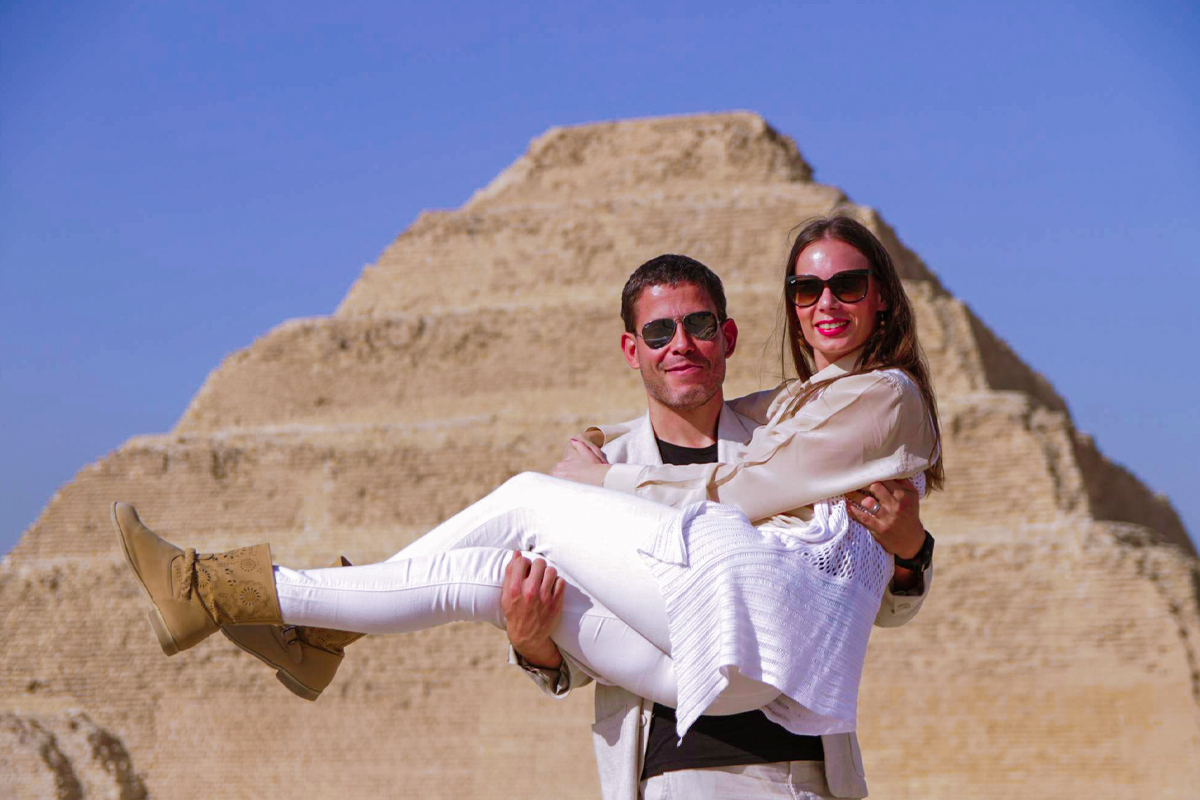
Its most famous monument is the Step Pyramid of Djoser, built during the Third Dynasty.
Unlike the smooth-sided pyramids at Giza, Djoser’s monument consists of stacked architectural levels.
The Step Pyramid complex is associated with Imhotep, an important figure in the development of ancient Egyptian stone architecture.
Beyond the pyramid, Saqqara contains tombs whose reliefs depict agriculture, craft production, food preparation, and other aspects of ancient Egyptian society.
These scenes offer an unusually detailed glimpse into everyday activities that supported the civilization responsible for the pyramids.
If the available tombs and admission arrangements permit, explore at least one decorated non-royal tomb.
Memphis: Egypt’s Ancient Capital
Memphis served as a major political and religious center during important periods of ancient Egyptian history.
The modern archaeological area contains surviving monumental remains and sculptural objects, including a famous colossal statue of Ramesses II.
A visit helps connect Saqqara’s royal cemetery with the ancient settlement and administration that once supported it.
Memphis is best treated as a complementary stop rather than the centerpiece of the day.
Dahshur: The Bent Pyramid and Red Pyramid
Continue to Dahshur, another significant royal necropolis.
The Bent Pyramid and Red Pyramid are associated with Pharaoh Sneferu, the father of Khufu.
Their construction helps illustrate the transition toward the smooth-sided pyramid design later perfected at Giza.
The Bent Pyramid is particularly interesting because the angle of its sides changes partway up.
The Red Pyramid represents a major achievement in early monumental pyramid engineering.
Both monuments make the Giza Pyramids more understandable by showing that their construction was part of a wider architectural development.
Is Saqqara Worth Visiting If You Have Already Seen Giza?
Absolutely, especially for travelers interested in archaeology, history, or architecture.
Giza demonstrates the monumental achievements of mature Old Kingdom pyramid building.
Saqqara and Dahshur reveal earlier experiments and a broader range of funerary monuments.
If you prefer a slower itinerary, prioritize Saqqara and one additional site rather than attempting every available tomb and pyramid interior.
Recommended pace: Moderate to full day
Main priority: Step Pyramid, Memphis, Dahshur
Overnight: Cairo
Day 4: Experience Historic Cairo, Islamic Architecture, and Egyptian Culture
After three days focused primarily on ancient Egypt, Day 4 explores a different side of the country’s history.
Cairo’s cultural identity was shaped by many periods, including Roman, Byzantine, early Islamic, Fatimid, Ayyubid, Mamluk, Ottoman, and modern Egyptian history.
This day introduces the city beyond the pyramids.
Start in Coptic Cairo
Coptic Cairo contains important religious and historical sites associated with Egypt’s Christian heritage.
The Hanging Church, the Church of Saints Sergius and Bacchus, and other historical buildings offer opportunities to explore architecture, religious traditions, and the area’s long history.
Visit respectfully, taking account of religious services, photography restrictions, and dress expectations.
You can also consider the nearby Coptic Museum if you are particularly interested in the development of Egyptian Christian art.
Visit the National Museum of Egyptian Civilization
The National Museum of Egyptian Civilization in Fustat presents Egyptian history across multiple periods.
It is particularly well known for its Royal Mummies Hall.
This museum offers a different emphasis from the Grand Egyptian Museum.
The Grand Egyptian Museum strongly emphasizes ancient Egyptian archaeological collections, while the NMEC presents a wider chronological narrative of Egyptian civilization.
You do not need to visit every major Cairo museum.
For travelers with limited energy, choosing two museum experiences across the four Cairo days is often more rewarding than attempting several in rapid succession.
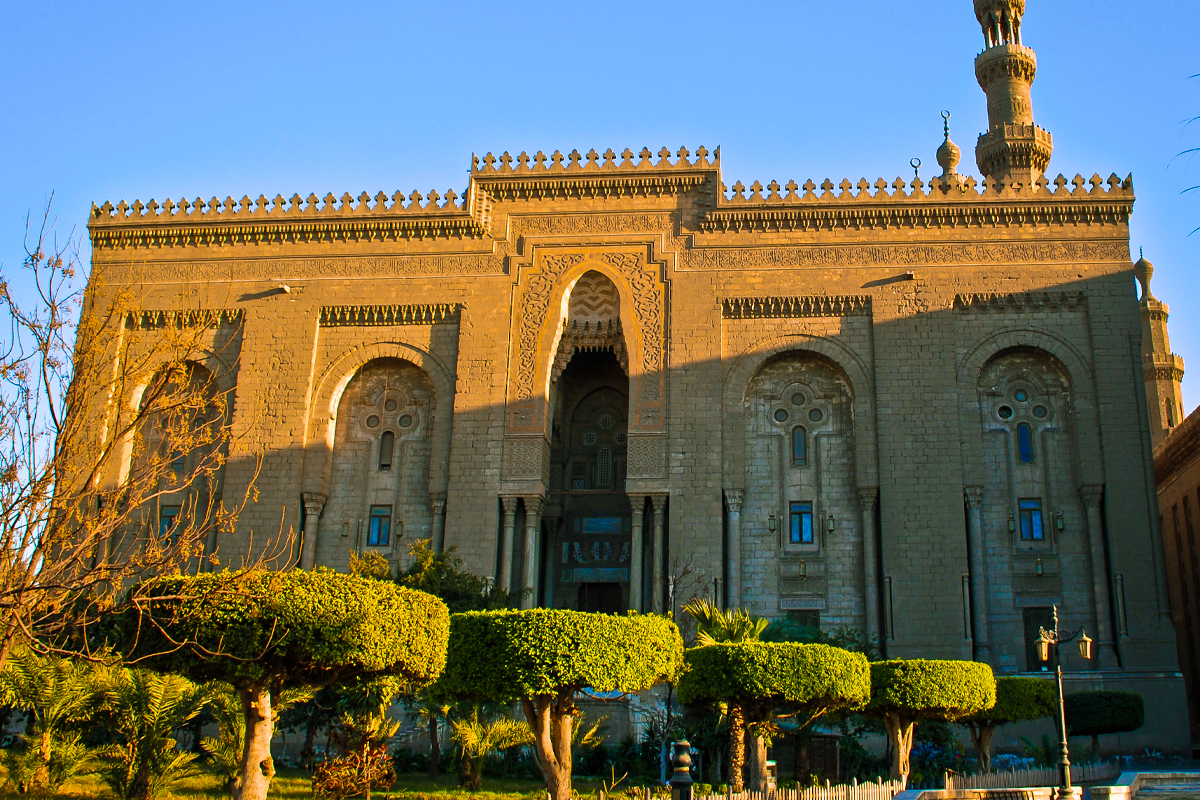
Explore Islamic Cairo
The Citadel of Saladin is one of the city’s major historical landmarks.
Its elevated position, historical buildings, and mosques provide insight into medieval Cairo and the development of the city as a political center.
Continue, depending on time, toward Al-Muizz Street, where numerous historic buildings reflect Cairo’s Islamic architectural heritage.
A knowledgeable guide can help explain the relationships between the city’s different dynasties, buildings, and urban traditions.
Finish at Khan El-Khalili Bazaar
Spend the late afternoon or early evening exploring Khan El-Khalili Bazaar.
The market is known for its narrow lanes, shops, cafés, and lively atmosphere.
It offers an opportunity to experience one of Cairo’s best-known commercial districts.
Look for traditional crafts, metalwork, decorative items, and textiles, but compare prices and quality before making expensive purchases.
If shopping is not your priority, simply enjoy the streets and a café stop.
What Should You Skip If You Are Tired?
Do not try to visit the Citadel, NMEC, every church, the Egyptian Museum in Tahrir Square, and Khan El-Khalili on the same day.
Choose two major sightseeing areas plus an evening activity.
For example, Coptic Cairo and NMEC work well together geographically, while Islamic Cairo and Khan El-Khalili can form another coherent combination.
Recommended pace: Flexible cultural day
Main priority: Coptic or Islamic Cairo, museum, bazaar
Overnight: Cairo
Day 5: Fly to Aswan and Visit the Beautiful Philae Temple
Day 5 begins the Upper Egypt portion of your itinerary.
Take a domestic flight from Cairo to Aswan, ideally early enough to leave time for sightseeing after arrival.
Flight availability and schedules vary, so confirm the transfer before booking other nonrefundable services.
Aswan feels noticeably different from Cairo.
Its river islands, granite outcrops, Nubian heritage, and relatively relaxed atmosphere create an excellent contrast to the capital.
Discover Aswan’s Nile Landscape
After arriving, transfer to your hotel and take time to appreciate the city’s setting.
The history and attractions of Aswan reflect the city’s importance as Egypt’s southern gateway.
Historically, Aswan was connected with trade, quarrying, travel, and cultural exchange between Egypt and regions farther south.
The city remains an important destination for travelers interested in Nubian culture and the temples of southern Egypt.
Visit Philae Temple
One of Aswan’s most memorable attractions is the Temple of Isis at Philae.
The temple complex stands on Agilkia Island and is usually reached by motorboat.
Philae is closely connected with the worship of the goddess Isis, one of the most significant deities in ancient Egyptian religion.
The complex also preserves architectural features dating to the Ptolemaic and Roman periods.
An especially important part of its modern history is its relocation.
The monuments were moved from their original setting during the international campaign to protect Nubian heritage from flooding associated with the Aswan dam projects.
This makes Philae both an ancient religious site and an important example of international archaeological preservation.
Enjoy the Nile at Sunset
If your flight and sightseeing schedule permit, finish the afternoon by the Nile.
A felucca ride can provide a peaceful introduction to Aswan’s river scenery.
Traditional sailing boats offer views of islands, riverbanks, and the surrounding desert landscape.
Trips depend on wind, weather, and local operating arrangements.
For travelers who prefer to remain on land, a waterfront restaurant or hotel terrace offers another enjoyable way to spend the evening.
Recommended pace: Moderate, depending on arrival time
Main priority: Flight to Aswan, Philae Temple
Overnight: Aswan
Day 6: Visit the Great Temples of Abu Simbel
Abu Simbel is one of the most impressive archaeological destinations in southern Egypt.
The famous rock-cut temples stand near Lake Nasser, southwest of Aswan.
They are associated with Pharaoh Ramesses II and represent one of the great achievements of New Kingdom monumental architecture.
What Makes Abu Simbel Special?
The larger temple is dedicated to Ramesses II and several major deities.
Its entrance is dominated by four colossal seated statues of the king.
Inside, decorated halls and monumental sculptures communicate themes of royal power, religion, and the relationship between the king and the gods.
The smaller temple is associated with Queen Nefertari and the goddess Hathor.
Its exterior includes prominent statues of both the king and queen.
One particularly remarkable aspect of Abu Simbel’s history is the relocation of the temples during the twentieth century to protect them from the rising waters of Lake Nasser.
How Do You Get to Abu Simbel from Aswan?
Travelers generally choose between a road excursion and a flight, when a suitable air service is available.
A road excursion takes several hours each way and normally begins early in the morning.
This can make Day 6 one of the longest days of the itinerary.
A private transfer offers more control over departure time and stops, while a shared excursion may provide better value for budget-conscious travelers.
Egypt Vacation Tours offers an Abu Simbel shared day tour that can be considered when planning this part of the trip.
Check whether transportation, guiding, entrance fees, and pickup arrangements are included in the option you select.
Is Abu Simbel Worth the Long Journey?
For many travelers interested in ancient Egyptian history, yes.
The colossal façade, the relationship between architecture and royal ideology, and the temples’ relocation history make Abu Simbel distinct from the other monuments included in the journey.
However, it is not a compulsory excursion.
Families with small children, visitors who struggle with early departures, or travelers with limited mobility may prefer an additional day exploring Aswan.
Alternative: A Relaxed Aswan Day
If you skip Abu Simbel, consider visiting the Nubian Museum, spending time on Elephantine Island, or exploring the surrounding river landscape.
A carefully arranged cultural visit may also introduce Nubian traditions, local food, and the history of communities connected with the Nile.
Avoid treating inhabited Nubian communities as staged attractions. Choose experiences that support local residents and respect their privacy.
For the main itinerary, reserve the afternoon after Abu Simbel for rest.
Do not combine the lengthy excursion with several additional major attractions.
Recommended pace: Long excursion day
Main priority: Abu Simbel temples
Overnight: Aswan
Day 7: Begin Your Nile Cruise from Aswan to Luxor
Today begins one of the defining experiences of your 15-day Egypt tour itinerary: traveling between Aswan and Luxor along the Nile.
A three-night cruise allows you to see several important temples while reducing the need for repeated hotel changes.
The river journey also introduces the landscape connecting Upper Egypt’s major archaeological cities.
What Happens on Your First Cruise Day?
Cruise check-in and embarkation arrangements vary by operator.
Some ships begin their scheduled sightseeing program soon after embarkation, while others allocate time for lunch, cabin access, and local excursions.
Because you have already spent two nights in Aswan, you can use the morning for an additional attraction if the timing permits.
Possible options include the Unfinished Obelisk, the Nubian Museum, or a short local excursion.
Do not arrange a long activity unless you have confirmed the cruise boarding time.
Choosing the Right Nile Cruise
Your cruise should be selected according to the actual itinerary, not merely its advertised star rating.
Consider the following:
| Cruise feature | What to check |
| Departure day | Does it match your Aswan hotel stay? |
| Duration | Three nights or four nights |
| Route | Aswan to Luxor or Luxor to Aswan |
| Sightseeing | Which temples and guided visits are included? |
| Cabin | Window size, deck, noise, and layout |
| Meals | Full board, drinks, and special dietary needs |
| Excursions | Included, optional, or charged separately |
| Transport | Airport, hotel, and pier transfers |
| Guide | Language and group size |
| Accessibility | Steps, elevators, tenders, and walking requirements |
For a northbound journey, the company’s four-day, three-night Aswan-to-Luxor Nile cruise provides a relevant product to compare.
The important distinction is that a four-day cruise normally means three nights onboard, not four.
What Should You Expect on a Nile Cruise?
Most traditional Nile cruise ships function as floating hotels.
Passengers generally have private cabins, meals onboard, communal areas, and arranged sightseeing excursions.
The experience alternates between visiting archaeological sites and watching the river landscape.
You may pass agricultural fields, palm groves, settlements, fishing boats, and sections of desert beyond the cultivated Nile Valley.
Cruise schedules sometimes involve early excursions or periods when the ship remains moored.
Ask about actual sailing time if spending time on the river itself is a major priority.
Is a Nile Cruise Better Than Traveling by Car?
A cruise offers convenience, accommodation, meals, and the atmosphere of river travel.
However, it also means following a vessel’s operating schedule.
Traveling by private vehicle between Luxor and Aswan offers greater flexibility for specialized archaeological interests, including longer visits to particular sites.
For a first-time visitor seeking a balanced combination of comfort and sightseeing, a conventional Nile cruise is often an attractive choice.
Recommended pace: Relaxed embarkation day
Main priority: Cruise boarding and Aswan sightseeing
Overnight: Nile cruise
Day 8: Visit Kom Ombo and Edfu Temples Along the Nile
Day 8 introduces two fascinating temples between Aswan and Luxor.
The precise order and timing will depend on your vessel’s sailing plan.
These monuments help travelers understand how traditional Egyptian religious practices continued and evolved during the Ptolemaic period.
Kom Ombo Temple: A Sanctuary With Two Principal Deities
The Temple of Kom Ombo occupies a distinctive position overlooking the Nile.
The complex is particularly interesting because its architecture reflects worship associated with two principal deities.
Sobek, often represented with a crocodile head, was associated with crocodiles and aspects of fertility and protection.
Horus the Elder, or Haroeris, was another major deity worshipped at the site.
The temple’s arrangement includes parallel architectural elements associated with these religious traditions.
Its reliefs provide important material for understanding ritual practices, royal representations, and ancient Egyptian religious symbolism.
A guide can help you distinguish original ancient features from later restoration work.
Edfu Temple: One of Egypt’s Best-Preserved Temples
Continue to the Temple of Horus at Edfu.
Edfu is especially valuable because much of its architectural structure survives.
The complex includes a monumental entrance pylon, courtyards, columned halls, and sanctuary spaces.
These architectural elements help explain how a major Egyptian temple functioned.
The inscriptions and decorative programs are connected with the worship of Horus and the complex mythological relationship between Horus and Seth.
The temple also provides substantial evidence about rituals, festivals, and religious practices during the Ptolemaic period.
What Makes These Temples Different From Karnak?
Karnak developed across many centuries and contains an extraordinary range of building phases associated with different rulers.
Kom Ombo and Edfu offer a different perspective.
They preserve extensive architectural and religious features associated with later periods of ancient Egyptian history.
Visiting all three helps reveal both continuity and change in temple architecture.
Enjoy the River Between Excursions
One of the advantages of a Nile cruise is the opportunity to rest between sightseeing stops.
Use this time to enjoy the open decks, observe the Nile Valley, or simply appreciate the movement of the river.
There is no need to turn every available hour into another activity.
This balance is part of what makes a longer Egyptian itinerary more enjoyable than a rushed one-week vacation.
Recommended pace: Moderate sightseeing
Main priority: Kom Ombo and Edfu temples
Overnight: Nile cruise
Day 9: Sail Toward Luxor and Discover the Ancient City of Thebes
Your Nile cruise continues toward Luxor, one of the world’s most important archaeological destinations.
The ancient city of Thebes became a major political and religious center during the New Kingdom.
Today, Luxor contains an extraordinary concentration of temples, tombs, and monumental remains.
Traveling Through the Nile Valley
Depending on your vessel’s timetable, this day may involve sailing through the Esna area, reaching Luxor, and taking part in scheduled excursions.
Some three-night northbound cruise programs include visits to both the east and west banks of Luxor before disembarkation.
Others organize sightseeing differently.
This is why the cruise timetable must be matched with your subsequent two-night Luxor hotel stay.
You should avoid paying twice for an included attraction or scheduling the same temple visit unnecessarily.
Understanding Ancient Thebes
The Nile divides Luxor into two historically significant areas.
The east bank contains major temple complexes and the modern urban center.
The west bank contains royal tombs, mortuary temples, and extensive ancient funerary landscapes.
The river’s east–west orientation also carried religious significance within ancient Egyptian beliefs about life, death, and rebirth.
This geographical relationship becomes easier to understand when you see the landscape from the river.
What Should You Do If Your Cruise Includes Luxor Sightseeing Today?
Follow the included excursion program and use Day 10 or Day 11 for places not yet visited.
For example, if your cruise visits Karnak and Luxor Temple today, you can use the following days for the Luxor Museum, Medinet Habu, Deir el-Medina, or a more detailed West Bank experience.
The goal is not to repeat major attractions but to make the best use of the additional time.
Recommended pace: Determined by cruise itinerary
Main priority: Nile scenery and scheduled Luxor visits
Overnight: Nile cruise
Day 10: Disembark in Luxor and Explore Karnak and Luxor Temple
After breakfast, complete your cruise disembarkation arrangements and transfer to your Luxor hotel.
If your cruise has not already included the main East Bank temples, today is an excellent opportunity to visit them.
Karnak Temple Complex
The Karnak Temple Complex is one of Egypt’s greatest religious archaeological sites.
Its construction and development extended across many generations of rulers.
A major part of the complex was dedicated to Amun-Ra, although the wider religious landscape included other deities and sacred areas.
One of Karnak’s most recognizable features is the Great Hypostyle Hall.
Its enormous columns create a memorable architectural environment, demonstrating the monumental scale achieved by ancient Egyptian builders.
Karnak also contains obelisks, courtyards, gateways, reliefs, and sacred spaces associated with different historical periods.
Rather than moving quickly through the site, take time to understand its layout and architectural development.
Luxor Temple
Luxor Temple stands within the modern city.
It is strongly associated with royal renewal and important religious ceremonies, including connections with the Opet Festival.
The temple developed under several rulers, with major contributions from Amenhotep III and Ramesses II.
Its colonnades, statues, and decorated structures make it one of Luxor’s essential landmarks.
The Avenue of Sphinxes historically linked Luxor Temple with Karnak, reflecting the relationship between the two religious centers.
Can You Visit Karnak and Luxor Temple in the Same Day?
Yes.
They are both on Luxor’s east bank and can generally be combined in a well-organized sightseeing day.
A comfortable plan is to visit Karnak first, allow time for lunch or rest, and continue to Luxor Temple later.
This schedule can work particularly well when arrival from the cruise is straightforward.
However, if your cruise already includes both sites, choose an alternative rather than repeating them.
Optional Visit: Luxor Museum
The Luxor Museum is an excellent addition for travelers interested in archaeological objects and the history of ancient Thebes.
Compared with the much larger Cairo museum collections, it provides a more focused experience.
It can also be a useful option during the hotter part of the day.
Spend the evening at your hotel or exploring Luxor’s riverside area.
Recommended pace: Moderate
Main priority: Karnak, Luxor Temple
Overnight: Luxor
Day 11: Explore the Valley of the Kings and Luxor’s West Bank
Day 11 focuses on the archaeological landscape west of the Nile.
This is one of the most rewarding days of the entire 15 day Egypt itinerary.
The West Bank contains royal burial grounds, mortuary temples, and settlements connected with the ancient city of Thebes.
The Valley of the Kings
Begin with the Valley of the Kings.
This royal cemetery contains tombs associated with many New Kingdom rulers.
Unlike the monumental Old Kingdom pyramids, these royal burials were cut into the limestone mountains of the Theban west bank.
The tomb interiors preserve extraordinary painted and carved religious scenes.
Many illustrate the king’s journey through the afterlife and his relationship with divine powers.
The quality, size, and decorative programs differ considerably between tombs.
Not every tomb is continuously open to visitors.
Standard admission may provide access to a selection of open tombs, while certain high-demand tombs can require separate tickets.
Check the current arrangements when planning your visit.
Should You Visit Tutankhamun’s Tomb?
Tutankhamun’s tomb is historically significant because of the famous discovery made by Howard Carter and his team in 1922.
However, it is relatively modest compared with several other royal tombs.
Travelers expecting vast decorated chambers may be surprised.
The historical importance of the discovery is the main attraction, rather than the tomb’s scale.
If you have already explored Tutankhamun’s objects at the Grand Egyptian Museum, visiting his burial place can provide a compelling connection.
Hatshepsut Temple at Deir el-Bahari
Continue to the Mortuary Temple of Hatshepsut.
The temple is dramatically positioned against the cliffs of Deir el-Bahari.
Its terraces and colonnades create a distinctive architectural relationship with the surrounding landscape.
Hatshepsut ruled during the Eighteenth Dynasty and is remembered for her extensive building projects and royal representations.
Her temple includes reliefs associated with important political and religious themes, including her expedition to Punt.
Stop at the Colossi of Memnon
The Colossi of Memnon are two monumental seated statues associated with Amenhotep III.
They once stood before the king’s vast mortuary temple complex.
Today, they remain among the most recognizable features of the Theban West Bank.
A short stop is usually sufficient to appreciate the scale of the statues and discuss the history of the surrounding site.
Add Medinet Habu or Deir el-Medina
For travelers who want additional depth, consider visiting Medinet Habu or Deir el-Medina.
Medinet Habu is associated with Ramesses III and is particularly important for its architectural and relief decoration.
Deir el-Medina was a settlement connected with the skilled workers who constructed and decorated royal tombs.
These sites provide perspectives that differ from the monumental royal tombs.
They help explain the lives of people who built and maintained the ceremonial and funerary landscapes of ancient Egypt.
Is a Hot Air Balloon Ride in Luxor Worth Adding?
A sunrise hot air balloon ride can provide an aerial perspective over Luxor’s West Bank, depending on weather and flight permissions.
However, ballooning is an optional activity, not an essential part of the itinerary.
Operators, permissions, weather conditions, and safety procedures should be checked carefully.
If you choose to take a flight, arrange it for an appropriate morning and coordinate the timing with your archaeological visits.
A balloon flight should never be treated as guaranteed, since departures can be postponed or canceled for operational or weather reasons.
Recommended pace: Full archaeological day
Main priority: Valley of the Kings, Hatshepsut Temple, West Bank
Overnight: Luxor
Day 12: Travel from Luxor to Hurghada and Relax by the Red Sea
After several days exploring temples and tombs, Day 12 introduces the final major environment of your journey: the Red Sea coast.
Travel from Luxor toward Hurghada by prearranged road transfer.
The journey normally takes several hours, depending on the route, traffic, and stops.
Arrange the transfer during the day where practical, and allow flexibility for road or checkpoint procedures.
Why Finish Your Egypt Vacation in Hurghada?
Hurghada provides a convenient contrast to the historical destinations of the Nile Valley.
Instead of another intensive sightseeing day, you can spend the afternoon swimming, relaxing beside the sea, or enjoying your resort.
For many visitors, this is the ideal ending to a trip that has included early starts, archaeological excursions, flights, and boat journeys.
The Red Sea region is known for marine life, coral reef environments, water sports, and resort accommodation.
Where Should You Stay in Hurghada?
Your choice depends on the experience you want.
Central Hurghada: Suitable for visitors who want access to restaurants, shops, and the wider town.
El Gouna: A planned resort community north of Hurghada, offering marina areas, hotels, and recreational activities.
Sahl Hasheesh: A resort area south of central Hurghada, often considered by travelers seeking a quieter hotel-centered stay.
Makadi Bay: Another popular coastal accommodation area, particularly for travelers prioritizing resort facilities and beach time.
Consider the location carefully.
A resort advertised as being in Hurghada may be some distance from the central town or airport.
Is an All-Inclusive Resort Worth It?
An all-inclusive resort can be convenient for a three-night stay when your priority is rest rather than exploring the town.
However, not all packages provide the same inclusions.
Some include meals and selected drinks but charge separately for premium beverages, water sports, specialty dining, or particular recreational facilities.
Review the hotel’s actual meal plan rather than assuming everything is covered.
Recommended pace: Easy travel and relaxation
Main priority: Transfer, hotel check-in, beach
Overnight: Hurghada
Day 13: Discover the Red Sea Through Snorkeling and Marine Experiences
Today is dedicated to the natural attractions of the Red Sea.
After visiting many of Egypt’s most important archaeological sites, the underwater environment provides an entirely different experience.
Choose a Snorkeling Excursion
Hurghada offers access to boat excursions and snorkeling activities.
A well-organized trip may visit suitable reef areas where visitors can observe fish and coral from the water.
Actual routes depend on weather, marine conditions, permits, and the operator.
Choose a licensed provider with suitable safety equipment, clear instructions, and appropriate supervision.
If you are not a confident swimmer, ask whether suitable guided experiences and buoyancy equipment are available.
Never assume that a snorkeling excursion will be appropriate for every traveler.
Protect the Marine Environment
Coral reefs are delicate ecosystems.
Avoid standing on coral, touching marine animals, collecting shells or coral fragments, or feeding fish.
Maintain an appropriate distance from wildlife and follow local marine protection rules.
Choose operators who demonstrate responsible environmental practices.
What If You Prefer Not to Snorkel?
You can still enjoy the Red Sea without participating in water-based excursions.
Alternatives may include a relaxing beach day, suitable boat sightseeing, or resort activities.
Some travelers prefer a spa visit, swimming pool, or a leisurely walk along the beachfront.
There is no need to add an excursion simply to fill the day.
A well-designed itinerary should allow personal preferences to shape the experience.
Recommended pace: Relaxed or moderately active
Main priority: Red Sea experience
Overnight: Hurghada
Day 14: Enjoy a Free Day in Hurghada or Choose an Optional Adventure
Your final complete day in Egypt should be flexible.
After nearly two weeks of travel, many visitors appreciate having time without a fixed sightseeing schedule.
Spend the day at your resort, enjoy the beach, or arrange an optional activity.
Option 1: Relax at the Beach
This is the simplest and often most enjoyable choice.
Enjoy a late breakfast, swim, and spend time beside the sea.
It also provides a buffer if an earlier excursion was postponed.
Option 2: Explore Hurghada
Travelers interested in local life can visit selected parts of the town, restaurants, marina areas, or markets.
Allow appropriate transportation time from your resort.
If you want to shop for souvenirs, compare prices and avoid scheduling purchases too close to your departure.
Option 3: Join a Desert Excursion
Selected operators offer desert excursions from the Hurghada region.
These can involve vehicle-based journeys and cultural or scenic stops, depending on the operator.
Evaluate the activity carefully, including vehicle safety, travel conditions, environmental impact, and suitability for children.
Option 4: Spend More Time in the Water
If sea conditions are favorable and you enjoyed the previous day’s experience, another carefully selected marine excursion may be worthwhile.
Avoid booking more activities than you genuinely want.
Prepare for Your Departure
Use the evening to confirm your flight arrangements, luggage allowance, transfer pickup, and travel documents.
If your return journey involves a connection in Cairo, confirm both flight sectors and allow a sensible connection time.
Recommended pace: Flexible
Main priority: Enjoy the final full day
Overnight: Hurghada
Day 15: Depart Egypt After an Extraordinary Two-Week Journey
Your 15 day Egypt itinerary concludes with a transfer to Hurghada International Airport or another airport appropriate to your confirmed flight booking.
Some travelers may be able to depart directly from Hurghada to their international destination.
Others will need to connect through Cairo or another international hub.
Flight options vary significantly by airline, season, and departure country.
If possible, avoid scheduling a long sightseeing transfer immediately before an important international departure.
A separate domestic connection can introduce additional risk if delays occur.
Travelers with inflexible onward commitments may prefer spending their final night near their international departure airport.
After 15 days, you will have experienced several distinct geographical and historical parts of Egypt, from ancient royal cemeteries to Nile temples and the Red Sea.
What Is the Best Time for a 15 Day Egypt Itinerary in 2027?
For most first-time visitors, October through April offers a comfortable balance for exploring Egypt’s archaeological sites.
Egypt has significant regional and seasonal climate differences.
Cairo can be warm during the day and cool in winter evenings, while Luxor and Aswan experience much more intense summer heat.
The Red Sea coast has its own weather patterns, with opportunities for beach vacations across much of the year.
| Period | Advantages | Main considerations |
| January–February | Pleasant conditions for many archaeological visits | Cool evenings, popular tourist season |
| March–April | Good sightseeing opportunities, spring travel | Occasional dust and strong winds |
| May–June | Longer daylight, potential hotel options | Increasing heat in Luxor and Aswan |
| July–August | Red Sea activities, summer vacations | Extreme heat risk in Upper Egypt |
| September–October | Improving sightseeing temperatures | Some periods remain hot |
| November–December | Generally favorable sightseeing conditions | Holiday demand and busy attractions |
For travelers prioritizing the pyramids, Luxor, and Abu Simbel, the cooler months are usually preferable.
For travelers primarily interested in beach relaxation, different seasons may be attractive.
You can explore the company’s guide to the best time to visit Egypt for additional seasonal planning context.
Special 2027 Event: The Total Solar Eclipse in Luxor
An important consideration for travelers visiting in 2027 is the total solar eclipse on August 2, 2027.
Luxor is within the path of totality, making this event particularly significant for astronomy enthusiasts and travelers interested in witnessing a rare natural phenomenon.
Solar Eclipses+2
If your travel dates include August 2, arrange the Luxor portion of your itinerary around the eclipse rather than assuming the standard sequence will automatically work.
Expect strong interest in accommodation, transportation, and organized viewing arrangements, although actual availability and prices must be checked.
August also brings intense heat to Upper Egypt. Plan conservatively, avoid unnecessary midday exposure, and use appropriate certified solar-viewing equipment according to expert safety instructions.
Never look directly at the partially eclipsed Sun without appropriate protection.
Travelers who are not specifically interested in the eclipse may prefer visiting during a cooler season.
What About Ramadan and Egyptian Holidays in 2027?
Ramadan is expected to fall during February and March 2027, with exact dates subject to the official lunar-calendar announcement.
Tourism generally continues during Ramadan, but some businesses may adjust operating hours, dining arrangements, and schedules.
Respect local customs and confirm any affected excursions.
Christmas, New Year, Easter periods, and major Egyptian holidays can also influence accommodation demand and travel logistics.
When your itinerary involves multiple destinations and a Nile cruise, reserve the most schedule-sensitive elements before committing to every hotel.
How Much Does a 15 Day Egypt Itinerary Cost in 2027?
The total cost of a 15-day Egypt vacation depends on the travel dates, group size, accommodation category, Nile cruise standard, domestic flights, sightseeing inclusions, and guiding arrangements.
There is no single reliable price that applies to every 15-day itinerary.
A privately guided trip with premium hotels and a luxury cruise will cost more than a journey using moderate accommodation, selected shared excursions, and independently arranged activities.
International airfare can also substantially change the overall cost.
What Should Your Egypt Travel Budget Include?
| Expense | Budget-conscious option | Comfort option | Luxury option |
| Cairo hotels | Simple hotel or guesthouse | Well-reviewed midrange hotel | Premium property or suite |
| Aswan hotels | Modest accommodation | Comfortable riverside hotel | High-end Nile-view hotel |
| Nile cruise | Standard cruise cabin | Upgraded cruise category | Premium vessel or luxury suite |
| Luxor hotels | Practical city hotel | Quality hotel with amenities | Luxury riverside property |
| Hurghada resort | Value-oriented hotel | Quality beach resort | Premium beachfront resort |
| Sightseeing | Selected shared tours | Mix of private and shared tours | Private guided excursions |
| Transport | Carefully planned economical options | Private transfers and domestic flight | Premium private arrangements |
| Meals | Independent dining | Mix of included and independent meals | Premium dining and broader inclusions |
The most useful comparison is total trip cost for the same inclusions, not simply the lowest advertised starting price.
A package that appears inexpensive may exclude domestic flights, monument admissions, hotel transfers, or the excursions that motivated you to visit Egypt.
How to Compare Egypt Tour Package Prices
Request an itemized quotation showing:
- Accommodation names, room categories, and number of nights.
- Nile cruise vessel, cabin category, sailing dates, and inclusions.
- Domestic flights and baggage allowances.
- Private or shared transportation.
- Entrance tickets included in the price.
- Additional tickets for special tombs or pyramid interiors.
- Guide arrangements and language.
- Meals, drinks, and hotel taxes.
- Tips, optional activities, and personal expenses.
- Payment terms and cancellation conditions.
This checklist is particularly important when evaluating a complete Egypt travel tour package advertised as all-inclusive.
The term all-inclusive does not always have a uniform meaning between different tour operators.
What Is a “15 Days Egypt Marvelous Tour Package”?
Some travel companies use promotional names such as “15 Days Egypt Marvelous Tour Package” for extended itineraries featuring Cairo, Luxor, Aswan, and other destinations.
This phrase does not identify a standardized national tour product.
One company’s marvelous tour may emphasize a Nile cruise, while another may include Alexandria, the desert, or a Red Sea resort.
The price of a 15-day Egypt marvelous tour package therefore depends on the actual itinerary and its inclusions.
If you are comparing a 15-day Egypt marvelous tour package from the USA, determine whether the advertised amount includes international airfare or covers only services after arrival in Egypt.
Do not assume that a package advertised to American travelers automatically includes flights from the United States.
Are Private Egypt Tour Packages Better Value?
Private tours can offer excellent value for couples, families, and small groups because transportation and guiding can be tailored to the travelers.
They allow you to adjust departure times, spend longer at preferred attractions, and avoid unnecessary stops.
However, private does not automatically mean luxury, and group travel does not automatically mean low quality.
The most important factors are guide expertise, realistic sightseeing schedules, transport standards, and clear inclusions.
How Should You Travel Between Egypt’s Main Destinations?
Transportation planning can make the difference between an enjoyable vacation and an exhausting one.
Egypt’s major cities are spread across considerable distances.
For a 15-day vacation, it is usually better to use different transportation methods for different stages instead of relying entirely on road travel.
| Journey | Recommended transport | Planning advice |
| Cairo Airport to hotel | Prearranged car transfer | Allow for baggage, immigration, and traffic |
| Cairo to Aswan | Domestic flight | Confirm schedules before booking the cruise |
| Aswan to Luxor | Nile cruise | Select dates to match a real sailing |
| Luxor to Hurghada | Prearranged road transfer | Travel during the day where practical |
| Hurghada to departure airport | Airport transfer or connecting flight | Allow sufficient time for international travel |
Should You Fly or Take the Train?
Domestic flights are often the most practical solution when crossing long distances within a limited vacation.
However, they can involve airport transfer time, security procedures, and baggage restrictions.
Trains may suit travelers who prefer overland travel or wish to experience a different form of transportation.
The best option depends on your route, budget, comfort preferences, and the actual available schedules.
Do not compare transportation solely by the advertised journey duration.
Include the time needed to reach the station or airport, complete check-in, and transfer to your next hotel.
Can You Drive Yourself Around Egypt?
Self-driving is possible in some circumstances, but it is not the simplest option for most first-time international visitors.
Driving practices, urban traffic, road conditions, documentation requirements, and route restrictions may differ from what visitors are accustomed to.
For this itinerary, using reputable drivers and prearranged transfers will generally be easier.
Travelers who prefer independent travel can combine domestic flights, approved transport providers, and selected guided excursions.
Alternative 15-Day Egypt Itineraries for Different Travelers
The recommended itinerary is not the only effective way to spend 15 days in Egypt.
Your ideal route depends on what you value most.
Option 1: The Classic Egypt Highlights Tour
Best for: First-time visitors who want history, culture, and time to relax.
Recommended distribution:
- Cairo: 4 nights
- Aswan: 2 nights
- Nile cruise: 3 nights
- Luxor: 2 nights
- Hurghada: 3 nights
This is the primary itinerary described above.
It offers broad coverage without attempting every destination in Egypt.
Option 2: Egypt’s Archaeological Highlights Without the Red Sea
Best for: History enthusiasts, museum lovers, and travelers who prefer cultural exploration over beaches.
Recommended distribution:
- Cairo: 5 nights
- Alexandria: 1 night
- Luxor: 3 nights
- Nile cruise: 4 nights
- Aswan: 1 night
This variation allows additional archaeological visits and a longer Luxor-to-Aswan cruise.
You could include the Egyptian Museum in Tahrir Square, additional tombs in Luxor, and more time exploring historic Cairo.
An Alexandria visit provides a different historical perspective, including the Hellenistic, Roman, and Mediterranean dimensions of Egypt.
Explore the history and attractions of Alexandria when deciding whether it deserves a place in your itinerary.
Because this route has several overnight destinations, confirm the cruise departure day and final airport connection before booking.
Option 3: A Luxury Egypt Itinerary for 15 Days
Best for: Couples, special occasions, and travelers who prioritize premium accommodation and personalized services.
A luxury itinerary can follow the same geographical route as the classic version but upgrade the experience.
Consider:
- Premium Cairo accommodation with convenient access to the attractions.
- Private Egyptologist guiding.
- Flexible sightseeing arrangements.
- Luxury Nile-view accommodation in Aswan.
- A premium Nile cruise or suitable dahabiya sailing.
- Carefully selected restaurants.
- A high-end Red Sea resort.
- Private airport transfers.
A dahabiya is a smaller traditional-style Nile cruising vessel that may provide a more intimate experience than a larger hotel-style cruise ship.
However, not every dahabiya follows the same schedule or includes the same sightseeing stops.
An Esna-to-Aswan dahabiya cruise is one option to investigate if you are willing to adjust the itinerary’s direction and timing.
Option 4: A Family-Friendly 15 Day Egypt Itinerary
Best for: Families traveling with children or multiple generations.
Keep the core destinations but reduce the number of major attractions each day.
For example:
- Prioritize the Giza Pyramids and selected museum galleries.
- Visit Saqqara without attempting every tomb.
- Allow more time around the hotel in Aswan.
- Choose a family-friendly cruise with suitable cabins.
- Limit intense Luxor sightseeing to a manageable selection.
- Preserve the three Red Sea nights for recreation.
Families should also ask about connecting rooms, child policies, food options, early departures, and the accessibility of specific monuments.
Do not assume every historical attraction is suitable for a stroller or visitors with limited mobility.
Option 5: A 15 Day Egypt Itinerary From Cairo With Alexandria Instead of Hurghada
Best for: Travelers arriving and departing from Cairo who prefer to avoid a final long-distance airport connection.
A Cairo-based beginning and ending can make international flight arrangements easier.
One possible division is:
| Destination | Nights |
| Cairo at the beginning | 4 |
| Aswan | 2 |
| Nile cruise | 3 |
| Luxor | 3 |
| Cairo at the end | 2 |
| Total | 14 |
You can use a final Cairo day for Alexandria, a museum, or another activity not covered during the first four days.
This variation reduces the need to build the trip around a Hurghada departure.
It also gives travelers an opportunity to remain near Cairo International Airport before returning home.
How to Choose the Best Tour Package for Egypt
The best tour package for Egypt is not necessarily the most expensive or the one with the greatest number of attractions.
It is the itinerary that matches your interests, travel dates, physical comfort, and expectations.
For a 15-day journey, focus on the following decision criteria.
1. Evaluate the Actual Route
Does the itinerary follow a logical geographical sequence?
Repeated flights between Cairo and Upper Egypt may be unnecessary when the journey can be arranged in one direction.
Look carefully at the order of Cairo, Luxor, Aswan, and the Red Sea.
2. Review the Number of Nights
A package labeled “15 days” may include 14 nights or a different accommodation arrangement depending on arrival and departure times.
Verify the nights independently.
Be particularly careful with cruise descriptions.
A four-day Nile cruise commonly represents three nights onboard.
3. Examine the Sightseeing Schedule
A long list of attractions is not automatically a sign of a better tour.
Some itineraries try to combine destinations that require too much travel time.
Ask how much time is allocated to the Giza Pyramids, Grand Egyptian Museum, and Valley of the Kings.
4. Investigate Egypt Tour Package Reviews
Read recent Egypt tour package reviews across reputable independent platforms.
Look for specific comments about:
- Guide knowledge and communication.
- Vehicle condition and punctuality.
- Accuracy of the published itinerary.
- The condition of the hotels and cruise vessel.
- Responses to unexpected problems.
- Whether additional payments were clearly explained.
- How well the company handles schedule changes.
A useful review describes an actual experience rather than making only a vague statement about the company.
Consider patterns across multiple reviews instead of relying entirely on one exceptionally positive or negative account.
5. Verify What Is Included
Before paying a deposit, obtain the final itinerary, accommodation details, and written cancellation policy.
Confirm whether particular attractions require separate tickets and whether domestic transport is included.
A reliable quotation should explain what happens if an excursion cannot operate as scheduled.
6. Compare a Package With Independent Booking
Independent travel offers flexibility and the ability to choose each component separately.
A guided package offers coordinated services and less time spent arranging logistics.
For travelers unfamiliar with Egypt, a combination can work well: book major transfers and archaeological excursions professionally, then preserve independent time in the evenings and at the Red Sea resort.
Planning a 15 Day Egypt Itinerary From the USA, UK, Canada, or Australia
The same Egyptian itinerary can suit travelers from several international markets, but the flight arrangements may change the most convenient entry and departure points.
Travelers From the United States
American visitors should evaluate whether their flights use Cairo as both the entry and exit airport.
For many itineraries, international connections add substantial time to the journey.
If your chosen airline cannot provide a convenient return from Hurghada, consider flying domestically to Cairo before your international departure.
When comparing Egypt travel packages from the USA, check the airfare basis, airport transfers, and whether flights are sold on one ticket or separate reservations.
Travelers From the United Kingdom
British travelers may find different flight arrangements available through Cairo, Hurghada, or international connecting hubs, depending on their departure airport and dates.
An open-jaw itinerary—arriving in Cairo and departing from Hurghada—may be convenient if appropriate flights are available.
British passport holders should review the current Egypt entry requirements before departure.
Travelers From Canada and Australia
Long-haul travelers may particularly benefit from four initial nights in Cairo to recover from international travel and time-zone changes.
Avoid making the first full day unnecessarily demanding.
For the return, pay close attention to the relationship between domestic connections and onward international flights.
If separate tickets are involved, allow extra protection against missed connections.
Travelers From Europe
Depending on the country and airline, travelers may have opportunities to fly into Cairo and return from the Red Sea coast.
However, flight routes can be seasonal.
Compare the full itinerary before assuming that an open-jaw ticket will be more convenient or economical.
For all nationalities, entry requirements should be verified using official information relevant to the passport used for travel.
Egypt Visa, Safety, and Practical Travel Advice for 2027
A well-planned itinerary should address practical concerns before the journey begins.
Visa and Passport Requirements
Many international travelers require an Egyptian tourist visa.
Eligibility for an electronic visa, visa on arrival, or advance consular visa depends on nationality and circumstances.
Egypt’s official e-Visa portal advises applicants to submit an application at least seven days before departure.
visa2egypt.gov.eg
Travelers should also check passport validity, blank-page requirements, and any additional documentation relevant to their citizenship.
Do not rely on general visa information intended for a different nationality.
Travel Safety
Egypt’s major tourist destinations welcome international visitors, but travel conditions and official advice can change.
Review current government travel guidance from your country before departure.
Choose reputable transportation providers, follow local guidance, maintain normal security precautions, and ensure your travel insurance covers your planned activities.
Certain regions and border areas may be subject to additional restrictions or travel advisories.
Health and Comfort
Egypt’s climate can require adjustments, especially during summer.
Carry drinking water, use sun protection, and schedule physically demanding archaeological visits for cooler periods.
Some historic sites involve uneven surfaces, steep stairways, low passages, and limited shade.
Travelers with medical or accessibility requirements should discuss their needs before booking a particular cruise or excursion.
What Should You Pack?
For a 15-day Egypt vacation, useful items include:
- Lightweight, breathable clothing.
- A warmer layer for cool evenings or air-conditioned transport.
- Comfortable walking shoes.
- Sun protection and a wide-brimmed hat.
- Appropriate swimwear for the Red Sea.
- A reusable water bottle.
- Personal medication and basic travel supplies.
- Travel documents and copies of reservations.
- Suitable clothing for religious and cultural sites.
- Phone charging equipment and appropriate adapters.
Packing efficiently is helpful because the itinerary includes several accommodation changes.
Money and Tipping in Egypt
The Egyptian pound is the local currency.
Cards are accepted in many hotels and established tourist businesses, but cash can remain useful for smaller purchases and certain local services.
Tipping, often called baksheesh, is common in Egypt, although appropriate amounts depend on the service and circumstances.
It is useful to understand local expectations without treating every interaction as an obligation to pay.
For additional guidance, see tipping and baksheesh in Egypt.
Common Mistakes to Avoid When Planning 15 Days in Egypt
Trying to Visit Too Many Destinations
Fifteen days can feel generous, but travel between regions takes time.
Adding Alexandria, Siwa, Luxor, Aswan, Abu Simbel, Hurghada, and Sharm El-Sheikh to the same vacation may leave little opportunity to appreciate the destinations.
Choose your priorities and build the route around them.
Booking Flights Before Checking Nile Cruise Dates
Cruise departures may operate on specific days of the week.
Booking every domestic flight before confirming your vessel can create expensive schedule conflicts.
Select the cruise and coordinate the surrounding hotel nights and transfers.
Underestimating the Heat
Luxor and Aswan can be extremely hot during summer.
Plan outdoor attractions carefully, include breaks, and do not assume a long temple visit will be comfortable in the middle of the day.
Confusing Tour Duration With Accommodation Nights
A 15-day itinerary usually includes 14 hotel or cruise nights when arrival and departure occur on separate calendar days.
Read the actual breakdown rather than relying only on the package title.
Treating Every Excursion as Essential
You do not need to enter every pyramid, visit every tomb, or purchase every optional activity.
For some travelers, skipping one attraction creates the opportunity for a much better overall experience.
Booking the Cheapest Tour Without Reviewing Inclusions
An inexpensive package may exclude several services that are essential to the journey.
Compare accommodation standards, transport, meals, guides, and entrance fees before making a decision.
Forgetting to Allow Recovery Time
International flights, early archaeological departures, and multiple transfers can be tiring.
The Red Sea extension is valuable not only as a destination but also as an opportunity to finish the holiday at a slower pace.
Frequently Asked Questions About a 15 Day Egypt Itinerary
1. How many nights do you need for a 15 day Egypt itinerary?
A typical 15 day Egypt itinerary includes 14 nights, with the first day used for arrival and the final day for departure. In the recommended plan, four nights are spent in Cairo, two in Aswan, three on a Nile cruise, two in Luxor, and three in Hurghada. Always verify the exact accommodation nights in a package quotation.
2. Can you see the main Egypt highlights in 15 days?
Yes. Fifteen days is sufficient to explore the Giza Pyramids, Grand Egyptian Museum, Saqqara, Aswan, Abu Simbel, major Nile temples, Karnak, and the Valley of the Kings. You can also include a short Red Sea stay. However, visiting every major Egyptian destination would require considerably more time.
3. Is a Nile cruise worth including in a 15-day Egypt tour?
For many first-time visitors, a Nile cruise is one of the most rewarding parts of the itinerary. It combines accommodation, river scenery, and visits to temples between Aswan and Luxor. A three-night cruise provides a practical experience, while a longer cruise may suit travelers seeking additional relaxation or different sightseeing arrangements.
4. Is it better to start a Nile cruise from Luxor or Aswan?
Both directions can work well. A three-night cruise from Aswan to Luxor is particularly convenient when you want to continue from Luxor toward Hurghada. A four-night Luxor-to-Aswan sailing may be better for travelers whose final destination is Aswan or who prefer a different itinerary sequence. The vessel’s departure schedule is an important consideration.
5. How much does a 15-day Egypt tour package cost?
The price depends on accommodation, cruise category, group size, private guiding, travel season, and transportation inclusions. International flights may or may not be included. The best way to compare packages is to request detailed quotations for the same dates, hotel standard, cruise type, and sightseeing program rather than relying on an unqualified starting price.
6. Can I book a 15-day Egypt tour itinerary from Cairo?
Yes. Cairo is a practical starting point for a 15 day Egypt itinerary because of its international airport and access to the Giza Pyramids and major museums. You can continue to Aswan or Luxor by domestic flight, cruise along the Nile, and finish in Hurghada or return to Cairo for your international departure.
7. Is Abu Simbel included in every Egypt cruise tour package?
No. Abu Simbel is not automatically included in every Nile cruise or Egypt tour package. Some operators offer it as an optional excursion from Aswan, while others include it in extended itineraries. Check the transport arrangements, entrance fees, departure time, and whether the visit takes place before or after your cruise.
8. Can you visit Alexandria during a 15 day Egypt itinerary?
Yes. Alexandria can be included by replacing one or more activities in Cairo or the Red Sea portion of the journey. The city offers Mediterranean heritage, the Catacombs of Kom El Shoqafa, Qaitbay Citadel, and the Bibliotheca Alexandrina. A one-night stay provides a more relaxed experience than a rushed day trip from Cairo.
9. Is a 15 day Egypt itinerary suitable for families?
Yes, provided the schedule is adapted to the children’s ages and interests. Families should allow adequate rest, choose appropriate accommodation, and avoid combining too many major monuments on the same day. A Nile cruise can simplify accommodation logistics, while the Red Sea provides an opportunity for family recreation.
10. Should I book Egypt one-day tours or a complete package?
Both approaches have advantages. One-day Egypt tours work well when you want flexibility and already have your hotels and transport arranged. A complete 15-day package can simplify domestic flights, cruise reservations, transfers, and guiding. Some travelers choose a combination, using a structured itinerary for major travel arrangements while preserving independent time.
11. Is 15 days too long for a first visit to Egypt?
No. Fifteen days is an excellent duration for travelers who want to explore beyond the most famous attractions. It creates opportunities for cultural visits, a Nile cruise, and time beside the Red Sea. A thoughtfully paced two-week-plus itinerary can be less exhausting than attempting the same amount of sightseeing in seven or eight days.
12. What is the best way to book a 15 day Egypt itinerary for 2027?
Start by confirming your international travel dates and preferred departure airport. Next, select a practical itinerary, check cruise sailing dates, compare accommodation categories, and obtain detailed quotations. Verify visa requirements and any travel advisories before departure. Reserving the main components as a coordinated trip can reduce scheduling problems.
Final Thoughts: How to Make the Most of 15 Days in Egypt
A successful 15 day Egypt itinerary is not about visiting the maximum number of monuments.
It is about seeing the country’s most important destinations in an order that makes geographical and practical sense.
Four nights in Cairo introduce the pyramids, museums, and historical neighborhoods.
Two nights in Aswan provide access to Philae, Abu Simbel, and Nubian heritage.
A three-night Nile cruise connects the temples of Upper Egypt.
Two nights in Luxor offer time to appreciate the temples and royal burial grounds of ancient Thebes.
Finally, three nights in Hurghada allow you to relax beside the Red Sea before returning home.
This combination delivers an exceptional introduction to Egypt’s ancient history, living culture, river landscape, and natural beauty.
For travelers who prefer a fully coordinated vacation, Egypt Vacation Tours offers an existing 15-day all-inclusive Egypt vacation package that can be compared with this suggested itinerary.
That published package follows a different sightseeing and accommodation structure, so request a customized quotation if you want the particular Cairo–Aswan–Nile Cruise–Luxor–Hurghada route described here.
The best itinerary is ultimately the one that gives you enough time not only to see Egypt’s most famous places, but also to enjoy being there.